This post contains affiliate links. If you book through them, we may earn a small commission at no extra cost to you. Learn more.
Most visitors build a Tuscany itinerary entirely inland, moving between Florence, the Chianti hills, and a handful of walled medieval towns without ever glancing toward the coast. That’s a genuine oversight, because the Tuscan shoreline, the Tyrrhenian stretch running roughly from Viareggio down past Livorno and Grosseto to the Monte Argentario peninsula, is one of the more serious yachting coastlines in the Mediterranean, home to some of Italy’s most important shipyards and a string of harbors that range from working ports to some of the most exclusive marinas in the country. Here’s a tour of that coast, port by port, along with the shipbuilding history that put it on the map in the first place.
Plan Your Trip
- Leaning Tower of Pisa tickets, timed entry, book ahead in summer
- Private transfer from Florence Airport, fixed price, booked in advance
- eSIM for Italy, set up before you fly
Why This Coast Matters to Yachting in the First Place
The Tuscan coast isn’t just a place to dock a boat, it’s a place where a significant share of the world’s superyachts are actually built. Viareggio, the coast’s northernmost major town, has been a center of Italian shipbuilding since the 19th century, when the Fratelli Benetti family began constructing wooden fishing boats there in 1873. That yard eventually evolved into Benetti, now one of the most storied superyacht builders in the world, and Viareggio’s harbor district, known as the Darsena, still houses a dense cluster of yards and refit facilities today, including Azimut-Benetti, one of the largest yacht-building groups on the planet. Locals refer to the town, without much exaggeration, as the cradle of Italian yacht construction, and a walk along the Darsena’s canals, past hulls in various stages of build, is a genuinely interesting detour even for visitors with no boat of their own.
This industrial pedigree shapes the whole coast’s character. Rather than a single glamorous strip, the Tuscan coast offers a genuine range: serious working marinas built to service the yachting industry, quieter fishing-village harbors that have only recently added berths for visiting yachts, and a handful of genuinely exclusive ports catering to the largest vessels afloat.
Viareggio: Where the Boats Are Built
Viareggio remains the logical starting point for any coastal itinerary, both for its shipbuilding heritage and for its own considerable charm as a Belle Époque seaside resort, its promenade lined with pastel Art Nouveau and Art Deco buildings dating from the town’s early-20th-century rise as a fashionable bathing destination. The Marina di Viareggio and the surrounding Porto di Viareggio offer well-equipped berthing for a wide range of vessel sizes, and the town’s position, roughly twenty minutes from Pisa International and under an hour from Lucca, makes it a genuinely convenient point to start or end a charter that also takes in inland Tuscany.
Livorno: The Working Port With Medici Roots
Just south of Viareggio, Livorno is less a yachting destination in its own right than a strategically useful stop, and its history explains why it developed the way it did. Grand Duke Ferdinando I de’ Medici declared Livorno a free port in the 1590s, deliberately inviting merchants, including religious minorities barred from trading freely elsewhere in Europe, to settle and do business there without the restrictions imposed in other Mediterranean ports. That policy transformed a minor fishing settlement into one of the busiest commercial harbors in the Mediterranean within a few decades, and Livorno remains Tuscany’s principal working port today, still handling considerable commercial and cruise ship traffic alongside its marina facilities. For yacht itineraries, it functions best as a practical stop, provisioning, refueling, or a base for exploring nearby Pisa, rather than a lingering destination in itself.
The Etruscan Coast and Marina di Scarlino
South of Livorno, the coastline mellows into the stretch known as the Costa degli Etruschi, the Etruscan Coast, named for the ancient civilization that controlled this stretch of shoreline and its mineral-rich hinterland long before Rome existed. San Vincenzo and the coastline around Baratti, where an important Etruscan necropolis sits almost directly on the beach, offer a quieter, more low-key yachting experience, popular with Italian boaters rather than international charter traffic. Further south, Marina di Scarlino, near Follonia, has developed into one of the larger and better-equipped marinas on this stretch, with capacity for several hundred berths and a position that makes it a sensible staging point for the crossing to Elba.
Elba: An Island Big Enough for a Full Detour
Roughly ten kilometers off the Tuscan coast, the island of Elba is large enough, and interesting enough, to justify a multi-day detour from any coastal itinerary. Best known internationally as Napoleon’s place of exile in 1814 and 1815, a period during which he was nominally sovereign of the island and oversaw a genuinely productive burst of infrastructure and reform in under a year, Elba today combines that historical curiosity with some of the clearest water and best beaches anywhere off the Tuscan coast. Portoferraio, the island’s main town and harbor, sits inside a naturally protected bay overlooked by Medici-era fortifications and offers the most complete marina facilities on the island, while smaller harbors around Porto Azzurro and Marciana Marina provide quieter alternatives for anyone wanting to spread a stay across more than one anchorage.
Punta Ala: Purpose-Built for Yachting
Punta Ala, roughly midway down the coast near Castiglione della Pescaia, stands apart from the rest of the Tuscan shoreline for a simple reason: it was essentially built, starting in the 1960s, as a purpose-designed resort and marina development, pine forest cleared for a planned town organized around sailing and golf. The result is one of the more polished, amenity-rich marinas in Tuscany, with a marina club, extensive moorings, and a resort infrastructure that feels distinctly different from the more organically grown harbor towns elsewhere on this coast. It’s a strong choice for anyone wanting reliable facilities and a resort atmosphere alongside the boat, rather than the more rustic charm of a fishing-village harbor.
Monte Argentario: The Coast’s Most Exclusive Corner
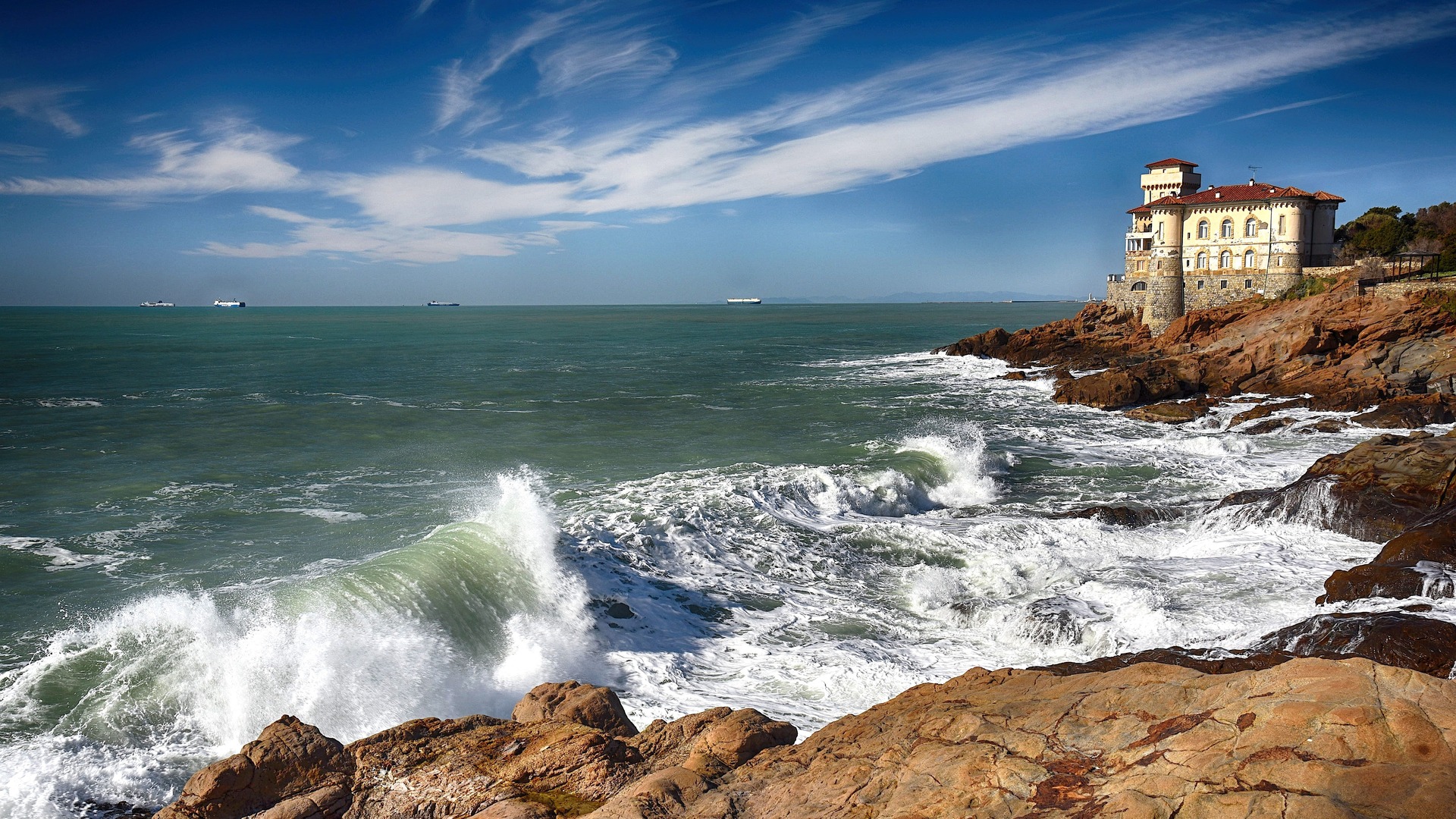
The undisputed high point of Tuscan yachting, in every sense, is Monte Argentario, a rugged, once-island promontory connected to the mainland by three narrow strips of land, its rocky coastline dotted with some of the most sought-after private villas in Italy. Two harbor towns anchor the peninsula: Porto Santo Stefano, the larger and livelier of the two, with a working fishing fleet alongside its yacht berths and a lively evening passeggiata along the harborfront, and Porto Ercole, smaller, quieter, and dominated by a striking set of 16th-century Spanish fortifications built when this coast briefly fell under Spanish control. Caravaggio, fleeing after a series of scandals and a death sentence in Rome, died in Porto Ercole in 1610 under circumstances still debated by historians, a detail that adds an unexpected layer of art history to what is otherwise one of Italy’s most conspicuously wealthy small harbor towns.
Nearby, Cala Galera, a purpose-built modern marina just outside Porto Ercole, ranks among the most complete yachting facilities on the entire Tyrrhenian coast, with berths for several hundred vessels and services aimed squarely at serious yacht owners rather than casual boaters. Anchorages around the wilder, less developed western side of the Argentario peninsula, meanwhile, offer some of the clearest water and quietest coves anywhere in mainland Tuscany, a genuine contrast to the harbor towns just a short sail away.
Tuscany’s Coast at a Glance
| Port / Marina | Character | Best For |
|---|---|---|
| Viareggio | Historic shipbuilding town, Belle Époque seafront | Starting or ending a charter near Pisa and Lucca |
| Livorno | Tuscany’s major working port, Medici free-port history | Provisioning, refueling, practical stops |
| Marina di Scarlino | Large, well-equipped modern marina | Staging point for the Elba crossing |
| Portoferraio (Elba) | Protected bay, Medici fortifications, Napoleonic history | A multi-day island detour |
| Punta Ala | Purpose-built resort marina | Full amenities and a resort atmosphere |
| Porto Santo Stefano | Lively working harbor with a serious yachting scene | Evening atmosphere and easy provisioning |
| Porto Ercole / Cala Galera | Historic fortified town beside a top-tier modern marina | Tuscany’s most exclusive yachting base |
The Tuscan Archipelago Beyond Elba
Elba is the largest and most visited island in the Tuscan Archipelago, but it isn’t the only one worth a detour. Giglio, south of Monte Argentario, offers a smaller, wilder alternative, its main harbor town, Giglio Porto, backed by a steep medieval hilltop village and surrounded by water considered among the clearest anywhere on this stretch of coast. Giannutri, tiny and largely uninhabited, protected as a marine reserve, makes a worthwhile day-anchorage stop for anyone island-hopping between Argentario and Giglio, though facilities here are minimal by design, in keeping with its protected status. Together with Elba, these islands round out a genuinely varied week of cruising without ever leaving Tuscan waters.
Chartering, Berthing, or Both
Visitors approach this coast in a few distinct ways, and it’s worth deciding which fits before booking anything. A full crewed charter, picked up in Viareggio or Livorno and returned a week or two later further south, suits anyone who wants the logistics handled entirely by a captain and crew, moving between the harbors and anchorages above without worrying about berthing fees or provisioning runs. Bareboat or skippered charters, more common out of the marinas around Punta Ala and Monte Argentario, suit experienced sailors who want more control over the pace and route, particularly appealing given how short the hops between this coast’s best anchorages actually are. For anyone who already owns a vessel, or is considering buying one, securing a season-long berth at a marina like Cala Galera or Marina di Scarlino is the more common approach, treating the boat as a fixture of a wider Tuscan base rather than the centerpiece of a single trip.
Best Time to Sail This Coast
Late May through June and September into early October offer the most comfortable conditions, with settled weather, warm but not overwhelming temperatures, and considerably lighter harbor traffic than the height of summer. July and August bring the busiest conditions by far, particularly around Monte Argentario and Elba, where marina berths should be booked well in advance and popular anchorages can feel crowded by midday. Spring and early autumn also tend to bring more reliable wind for anyone sailing rather than motoring, a genuine consideration on a coast where summer afternoons can turn glassy and still.
Pairing the Coast With Inland Tuscany
The real advantage of this coastline is how easily it combines with an inland Tuscan itinerary. Viareggio sits under half an hour from Lucca and a similarly short hop from Pisa, meaning a charter can begin or end with a day or two spent inside Lucca’s intact Renaissance walls or beneath Pisa’s tilted tower before ever setting foot on deck. Livorno puts Florence within about ninety minutes by car, and the wine country further inland, Chianti Classico, Montalcino, and Montepulciano, sits within a comfortable day’s drive of the southern harbors around Punta Ala and Monte Argentario. Few travelers realize how compact this region really is until they’ve tried combining a few days at anchor with a few days among vineyards, but the geography makes it a genuinely natural pairing rather than a stretch.
Where to Stay: compare hotels and current prices in Viareggio, Portoferraio and Monte Argentario on Trip.com.
Keeping a Boat Close to Home on the Tuscan Coast
Many buyers who sail want a house within easy reach of their berth. On this coast that usually means a marina berth rather than a private mooring: stretches of open coast with a private jetty are rare, and moorings on the shore depend on state maritime concessions (demanio marittimo) that are tightly regulated.
- Monte Argentario: Porto Santo Stefano, Porto Ercole and Cala Galera combine the most exclusive villas on the coast with three harbours on one promontory.
- Punta Ala: a purpose-built marina resort where villas, golf and berths sit side by side.
- Elba: island living with harbours at Portoferraio and around the coast, but every trip to the mainland means a ferry.
- Viareggio and the Versilia coast: the most services and shipyards, and a short drive to Lucca and Pisa airport.
Berths are usually rented by the season or year, and long-term berth rights can sometimes be bought; prices and availability vary widely, so ask the marina directly.
Planning to combine a round with a winery visit and a day on the water? Read our guide to yacht, wine and golf on the Tuscan coast, part of our Yacht, Wine and Golf in Italy series.
For more regions, see our hub Yacht Charter in Italy.
The Takeaway
The Tuscan coast rarely gets the attention its inland hill towns and vineyards do, but it deserves a place on the same itinerary rather than a separate trip entirely. From the shipyards of Viareggio, where a meaningful share of the world’s superyachts actually come into being, down through the Medici port history of Livorno to the fortified glamour of Monte Argentario, this stretch of coastline offers a genuinely different, and genuinely serious, side of Tuscany. Combine it with even a few days inland, and it becomes clear this region was never only about wine and Renaissance art. Some of its most interesting history was written on the water the entire time.
Planning a trip? See our guides to the Cinque Terre.
Exploring the Italian Riviera? See our guide to Portofino and Genoa.
Golfers should also read our guide to golf in Tuscany.