This post contains affiliate links. If you book through them, we may earn a small commission at no extra cost to you. Learn more.
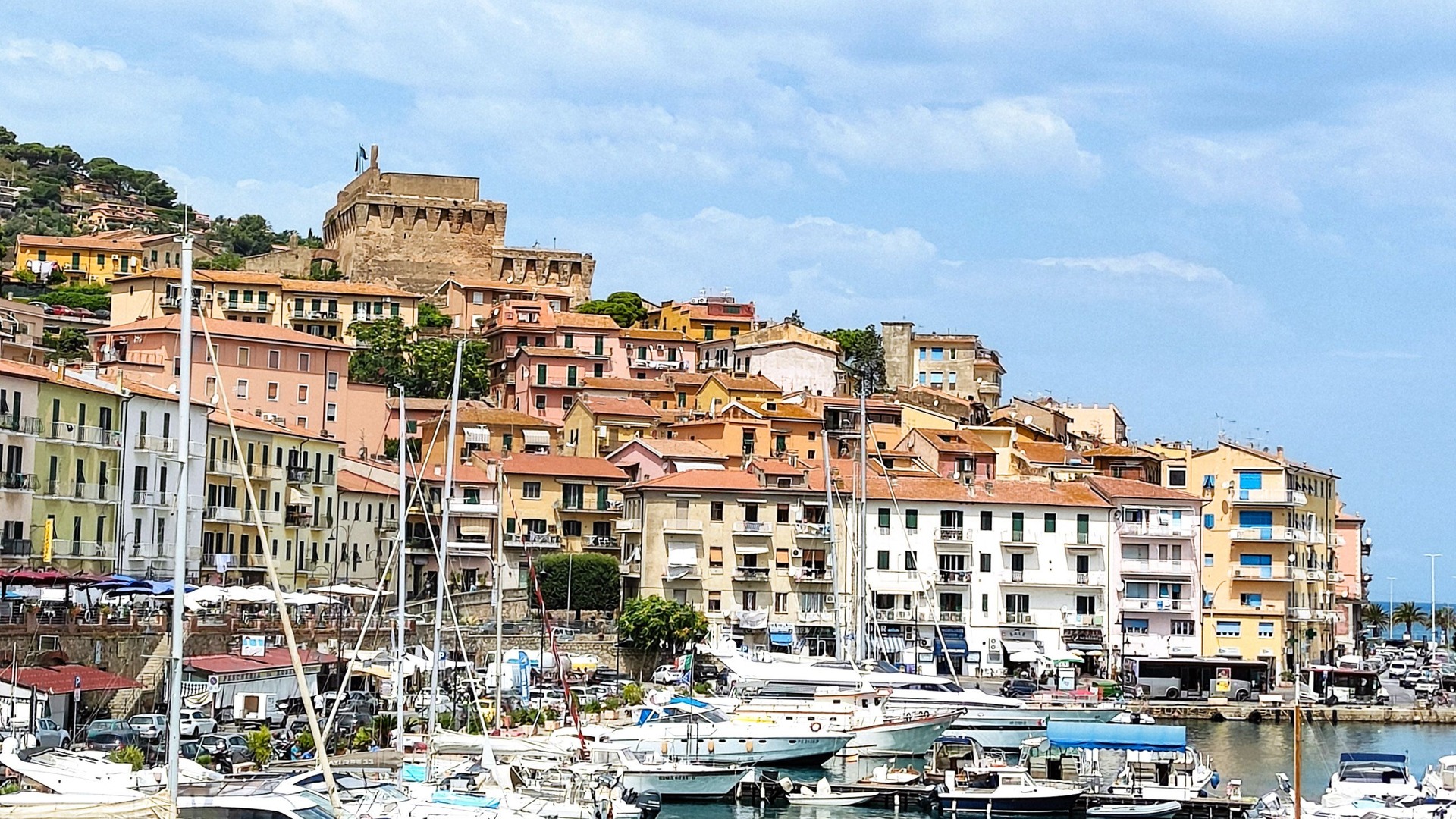
Porto Santo Stefano is the livelier of the two harbor towns on Monte Argentario, the rugged, once-island promontory that anchors the southern end of the Tuscan coast, and it wears that reputation well. Where its smaller neighbor Porto Ercole leans quiet and fortified, Porto Santo Stefano runs on a genuine working fishing fleet, a serious yachting scene, and an evening passeggiata that fills the harborfront well past dinner. Here’s what actually fills the days here: the boats, the tables, and the sights worth building an itinerary around.
Plan Your Trip
- Leaning Tower of Pisa tickets, timed entry, book ahead in summer
- Private transfer from Florence Airport, fixed price, booked in advance
- eSIM for Italy, set up before you fly
A Quick Word on the Town’s Past
Porto Santo Stefano’s natural harbor made it a target for exactly the kind of coastal defense architecture that shaped so much of this stretch of Tuscany. The town spent a period under Spanish control in the 16th and 17th centuries, part of the so-called Stato dei Presìdi, a string of garrisoned coastal strongholds the Spanish Crown maintained along the Tuscan shoreline to guard against Ottoman and Barbary raids, and the fortress overlooking the harbor, along with watchtowers dotting the surrounding coastline, still traces back to that period. The town later passed through Bourbon and eventually Italian unification-era control, developing through the 19th and 20th centuries into one of the most important fishing ports on the Tyrrhenian coast, a working identity it has never entirely traded away even as yachting money moved in around it.
Yachting: A Serious Harbor, Not Just a Pretty One
Porto Santo Stefano’s harbor is a genuine working port first, which is exactly what gives its yachting scene a different texture from the more purpose-built marinas elsewhere on this coast. The main harbor area accommodates a wide mix of vessels, from the working fishing fleet that still lands its catch here daily to a considerable number of visiting yachts, particularly in summer when the town becomes one of the busiest stops on the Monte Argentario circuit. For anyone wanting a more purpose-built marina experience, Cala Galera, just around the headland toward Porto Ercole, offers one of the most complete modern yachting facilities on the entire Tuscan coast, and many visitors base themselves there while treating Porto Santo Stefano as the livelier evening destination a short drive or tender ride away.
The town’s position at the northern tip of Monte Argentario also makes it a natural jumping-off point for exploring the peninsula’s wilder western coastline, where the developed harbor towns give way to genuinely quiet coves and some of the clearest water on the mainland Tuscan coast, along with the short crossing out to the island of Giglio for anyone looking to extend a day on the water into something longer.
Fine Dining: Seafood, and Plenty of It
Given its working fishing fleet, it’s no surprise that Porto Santo Stefano’s food scene revolves overwhelmingly around what comes off the boats each morning. The town is particularly known for palamita and tonno, bonito and tuna, historically significant enough to this coast that a tuna processing tradition once operated in the area, and it’s still common to find both prepared simply, grilled or seared, at restaurants along the harborfront. Caldaro, a rich local fish soup similar in spirit to the cacciucco found further up the coast around Livorno, is another dish specific enough to this stretch of the Maremma coast that it’s worth ordering here rather than waiting to find a version of it elsewhere.
The harborfront itself is lined with a genuine range of dining options, from unpretentious fish counters serving the day’s catch with nothing more than lemon and olive oil to considerably more polished restaurants catering to the yachting crowd that fills the town every summer. Reservations are worth making in advance during July and August, when the combination of visiting boats and Italian holidaymakers fills the better tables well before evening.
Sightseeing: The Fortress, the Old Town, and the Coast Road
The Spanish-built fortress above the harbor, along with the town’s collection of watchtowers, remains the most tangible link to Porto Santo Stefano’s defensive past and offers a worthwhile climb for the view alone, taking in the harbor, the town’s tiered rooftops, and the open water toward Giglio on a clear day. Below the fortress, the old town’s narrow streets are considerably more low-key than the harborfront, worth a slow wander in the cooler part of the day away from the crowds gathered around the boats.
The real sightseeing draw around Porto Santo Stefano, though, is the coast road itself. The Strada Panoramica, circling the wilder western half of Monte Argentario, delivers a genuinely dramatic sequence of clifftop views, hairpin turns, and pull-offs overlooking coves that are otherwise only reachable by boat, making it one of the better scenic drives on the entire Tuscan coast for anyone with a car and a free afternoon. For hikers, several marked trails head into the peninsula’s interior maquis scrubland, considerably less developed than the harbor towns and offering a genuinely quiet contrast to the activity down on the water.
What to Do in Porto Santo Stefano at a Glance
| Category | What to Do | Known For |
|---|---|---|
| Yachting | Harbor moorings, day trips to Giglio, tender runs around the peninsula | A working fishing port alongside serious summer yacht traffic |
| Fine Dining | Harborfront seafood restaurants, evening passeggiata | Palamita, tuna, and caldaro fish soup |
| Sightseeing | The Spanish fortress, watchtowers, the old town | Stato dei Presìdi coastal defense architecture |
| Scenic Driving | The Strada Panoramica around western Monte Argentario | Clifftop views and hairpin coastal turns |
| Hiking | Marked maquis trails across the peninsula’s interior | Quiet contrast to the busy harborfront |
| Marina Access | Cala Galera, a short drive toward Porto Ercole | One of the most complete modern marinas on the coast |
The Fishing Fleet and the Tonnara Tradition
Porto Santo Stefano’s identity as a fishing town runs deeper than the daily catch sold along the harborfront. For much of the 19th and early 20th centuries, the town was home to a significant tonnara, a traditional tuna trap fishery, part of a network of similar operations that once stretched across the Tyrrhenian and Mediterranean coasts before industrial fishing methods largely replaced them. That history is part of why tuna and bonito remain so central to the local table today, and why the town still supports a working fleet considerably larger than most other stops on this stretch of coast, a detail visible every morning when boats return to unload alongside the yachts moored just a short distance away.
Shopping and the Morning Market
Away from the harborfront restaurants, Porto Santo Stefano’s morning fish market is worth timing a visit around for anyone genuinely interested in the town’s working side rather than just its evening scene. Stalls sell the morning’s catch directly, often within an hour or two of the boats docking, and the surrounding streets fill with a mix of locals doing their daily shopping and visitors picking up something to grill back at a rented villa. The old town’s small shops, tucked into the streets rising away from the water, offer a quieter alternative to the harborfront’s more tourist-facing boutiques, particularly for anyone looking for local ceramics or the kind of small, unbranded goods that don’t turn up in the bigger resort towns further along the coast.
The Crossing to Giglio
Porto Santo Stefano also functions as the main mainland ferry port for the island of Giglio, a detail that adds a genuinely useful day-trip option for anyone based here without their own boat. The crossing takes roughly an hour, landing at Giglio Porto, a smaller, steeper harbor town backed by a hilltop medieval village and surrounded by some of the clearest water anywhere on this part of the Tyrrhenian coast. For visitors arriving by yacht rather than ferry, the same crossing is easily made under a boat’s own power, making Giglio a natural extension of a Porto Santo Stefano stay rather than a separate trip requiring its own logistics.
Best Time to Visit
Late spring and June bring the most comfortable balance of warm weather and manageable crowds, before the harbor fills to capacity in July and August with both the summer fishing season in full swing and the peak of Italian holiday traffic. September remains a strong choice too, with warm water, a still-lively evening scene, and noticeably easier dinner reservations than midsummer. Given how central this town is to Monte Argentario’s yachting scene, booking both moorings and restaurant tables well ahead is worth doing regardless of season, but especially so between June and August.
Combining Porto Santo Stefano With the Rest of the Coast
Porto Santo Stefano’s position at the tip of Monte Argentario makes it easy to combine with the peninsula’s other harbor town, Porto Ercole, a short drive around the coast, along with Cala Galera’s marina facilities in between. Further north up the coast, our guides to Marina di Scarlino and Portoferraio on Elba cover two more stops worth folding into a longer trip along this stretch of Tyrrhenian coastline, each with its own distinct character but sharing the same easy blend of yachting, seafood, and coastal history that defines this whole part of Tuscany.
Where to Stay: compare hotels and current prices in Monte Argentario on Trip.com.
Planning to combine a round with a winery visit and a day on the water? Read our guide to yacht, wine and golf on the Tuscan coast, part of our Yacht, Wine and Golf in Italy series.
For more regions, see our hub Yacht Charter in Italy.
The Takeaway
Porto Santo Stefano offers a version of Monte Argentario that feels lived-in rather than staged, a working harbor that happens to also be one of the better yachting and dining stops on the entire Tuscan coast. Spend a day on the water, an evening over grilled tuna at a harborfront table, and an afternoon working the hairpins of the Strada Panoramica, and it becomes clear why this town, rather than its quieter neighbor, is where most of Monte Argentario’s energy actually lives.
Golfers should also read our guide to golf in Tuscany.