This post contains affiliate links. If you book through them, we may earn a small commission at no extra cost to you. Learn more.
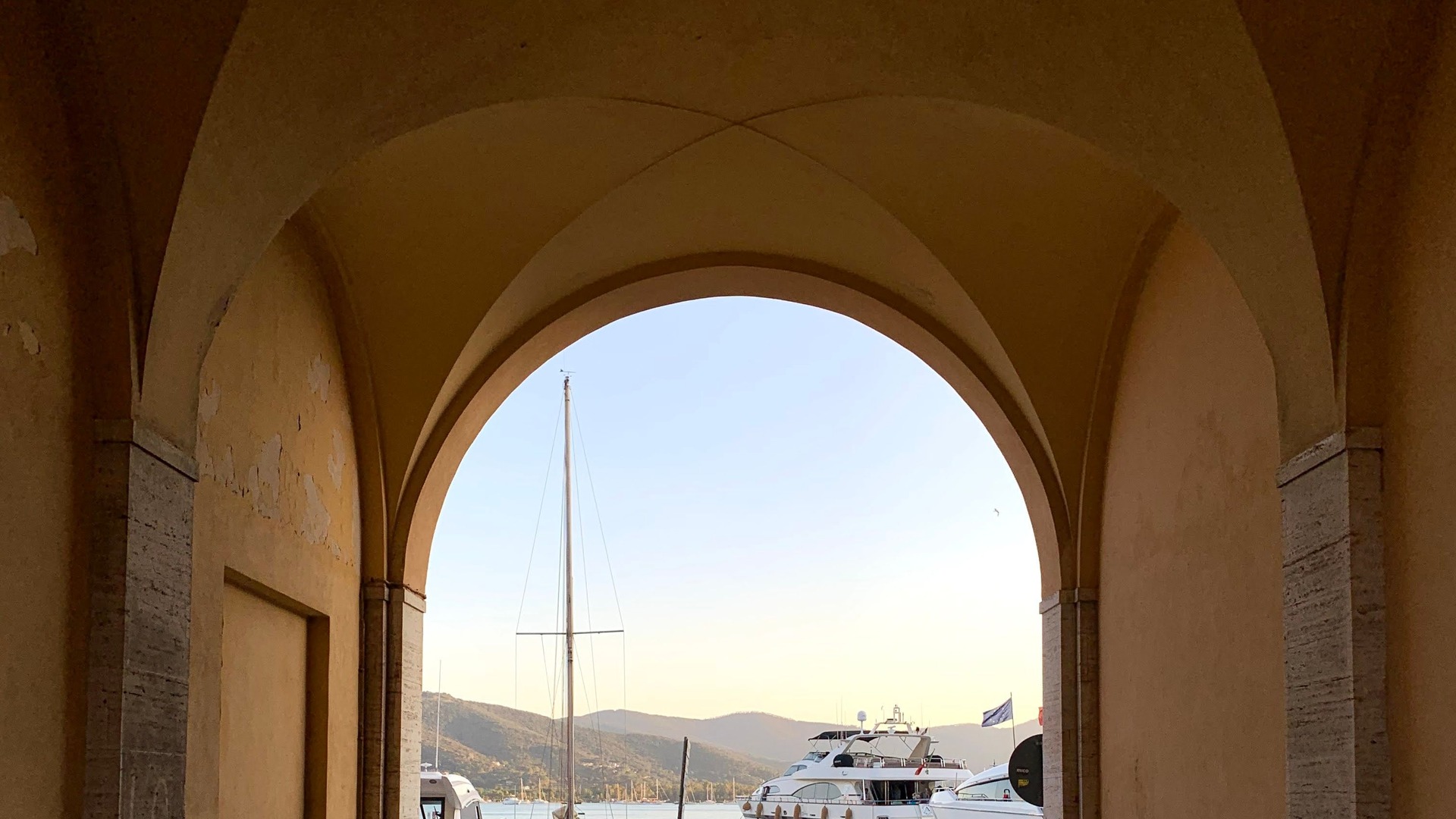
Of all the marinas strung along the Tuscan coast, Marina di Scarlino tends to get mentioned as a practical waypoint rather than a destination in its own right, a useful stop on the way to somewhere else. That reputation undersells it. Tucked into the Gulf of Follonia on the Etruscan Coast, Scarlino pairs one of the larger, better-equipped marinas on this stretch of Tyrrhenian shoreline with a genuinely old hilltop town, a scattering of Etruscan and Roman history, and a position that makes it one of the most convenient bases on the entire coast for reaching Elba.
At a glance: a full-service modern marina in a sheltered Maremma bay, a medieval hilltop town at its back, an Etruscan capital a short drive inland, and one of the shortest crossings to Elba anywhere on the Tuscan coast.
Plan Your Trip
- Leaning Tower of Pisa tickets, timed entry, book ahead in summer
- Private transfer from Florence Airport, fixed price, booked in advance
- eSIM for Italy, set up before you fly
Where Scarlino Sits, and Why That Matters
Marina di Scarlino sits within the Gulf of Follonia, a broad, sheltered bay on the stretch of coastline known as the Costa degli Etruschi, roughly midway between Livorno to the north and the Monte Argentario peninsula to the south. This position is more useful than it might first appear. The marina sits close to Piombino, the mainland port from which ferries make the short crossing to Portoferraio on Elba, making Scarlino one of the most practical staging points on the entire Tuscan coast for anyone planning to add the island to a longer itinerary. It’s also within a reasonably short drive of inland Tuscany’s wine country, close enough that a stay here can realistically combine days at anchor with an excursion into the hills without an exhausting amount of driving in either direction.
A Hilltop Town With Etruscan Roots
The marina takes its name from Scarlino itself, a small medieval hilltop town set back from the coast and visibly older than the modern harbor development below it. The area’s history reaches back well before the Middle Ages: this stretch of coastline sat within Etruscan territory, and the nearby ancient settlement of Vetulonia, one of the twelve principal cities of the Etruscan League, lies a short drive inland, its archaeological park and museum holding some of the more significant Etruscan finds in this part of Tuscany, including elaborate tomb structures and metalwork that speak to the wealth this coastline generated through iron and mineral trade in antiquity. Iron ore mined on Elba and smelted along this stretch of coast is thought to have been one of the foundations of Etruscan wealth in the region, and the metalworking debris still turning up in archaeological digs around the gulf offers a tangible link between the marina’s modern role as a gateway to Elba and a trade route that was already active well over two thousand years ago.
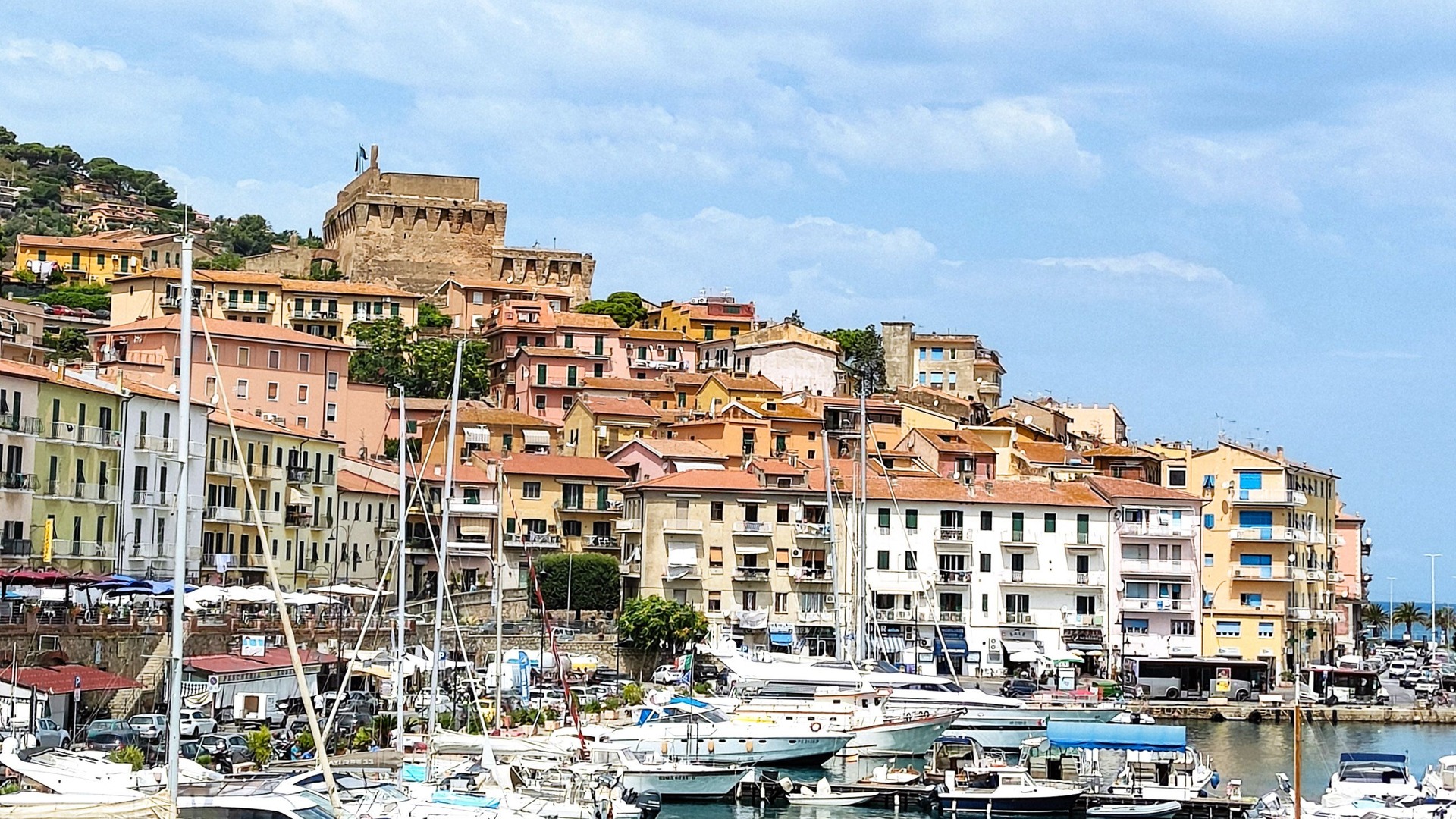
Scarlino’s own hilltop core developed in the medieval period around a fortress, the Rocca di Scarlino, built to watch over the surrounding countryside and coastline, later changing hands between the Pisan and Florentine spheres of influence as control of this part of the Maremma shifted over the centuries, the same broader pattern of rivalry that shaped so much of coastal and inland Tuscany. The fortress, a compact, well-preserved structure with a distinctive keep still visible from the coast road below, and the tight, narrow streets of the old town beneath it, survive largely intact today, offering a genuinely different, quieter atmosphere from the modern marina complex a short drive away on the water. A short climb through the old town to the base of the Rocca rewards visitors with a sweeping view back over the gulf, the marina, and, on a clear day, the outline of Elba itself on the horizon.
The Modern Marina
Marina di Scarlino developed into one of the more substantial yachting facilities on this stretch of coast in the latter half of the 20th century, built around the natural shelter of the gulf and expanded over time into a full-service harbor with capacity for several hundred vessels across a wide range of sizes. It’s generally counted among the larger and better-equipped marinas between Livorno and Punta Ala, offering the kind of consistent services, fueling, haul-out and repair facilities, provisioning, that make it a sensible base for a longer stay rather than just an overnight stop.
Puntone di Scarlino and the Waterfront
Directly around the marina, the small settlement of Puntone di Scarlino has grown up largely to serve the harbor, with a low-key cluster of restaurants, cafés, and shops that lean toward the practical rather than the polished, a genuinely different atmosphere from the more manicured resort feel of somewhere like Punta Ala a little further south. It’s the kind of place where you’re more likely to end an evening at a simple seafood trattoria filled with local boat crews than a design-forward beach club, which is precisely the appeal for anyone who prefers their coastal stops with a bit less polish and a bit more authenticity.
The wider gulf also offers some worthwhile beach time beyond the marina itself. The coastline stretching toward Follonia proper is lined with a mix of sandy public beaches and pine-backed stretches typical of this part of the Maremma coast, considerably less crowded in most seasons than the beaches further north around Viareggio or south around Punta Ala.
What to Eat Around Scarlino
Food here draws on the broader Maremma tradition, Tuscany’s rustic southern coastal and inland zone, known for game, wild boar, and a robust, less refined style of cooking than the more internationally recognized dishes of Florence or Siena. Cinghiale, wild boar, appears constantly on local menus, whether slow-cooked in a rich sauce over pappardelle or cured into salami and other preserved meats sold in shops throughout the area. Being directly on the water, Scarlino and Puntone naturally lean heavily on seafood as well, with local catch showing up in simply grilled preparations or in cacciucco, the Tuscan fish stew whose more famous version comes from Livorno further up the coast but which appears in slightly different local forms all along this shoreline.
Wine-wise, this stretch of coastline sits within the wider Maremma Toscana DOC zone, a considerably younger and less internationally famous appellation than the areas covered in our broader look at Tuscany’s wine country, but one that has developed a serious reputation of its own over the past few decades, particularly for Sangiovese and increasingly for the same international varieties that made nearby Bolgheri, a little further up the coast, one of Italy’s most celebrated modern wine success stories.
Local tip: the weekly market in Scarlino’s old town is a far better source of local cured meats, cheese, and produce than anything sold near the marina itself, worth timing a provisioning run around if the schedule allows.
Nearby Anchorages and Day Trips by Water
The Gulf of Follonia itself offers several worthwhile stops within easy reach of the marina for anyone exploring by tender or making short hops along the coast. Cala Violina, a stretch of pale sand backed by pine forest a little further south within the Bandite di Scarlino nature reserve, is regularly ranked among the most beautiful beaches in Tuscany, protected enough that access by land is deliberately limited, which makes arriving by water one of the more comfortable ways to see it without the midsummer crowds that build up on the footpath in from the road. The wider Bandite di Scarlino reserve, a stretch of largely undeveloped coastal maquis and pine forest, gives this part of the gulf a noticeably wilder character than the more built-up stretches of coastline further north, closer in feel to parts of the Maremma’s protected coastal parks than to a conventional resort shoreline.
Further out, the short crossing to Elba opens up an entirely different day, or multi-day, option. Rather than relying solely on the Piombino ferry, many vessels based at Scarlino simply make the crossing under their own power, a manageable run that puts Portoferraio’s protected bay and Medici-era fortifications within reach for lunch and a return by evening, or the start of a longer stay exploring the island’s quieter anchorages around Porto Azzurro and Marciana Marina.
Sailing Conditions in the Gulf
The Gulf of Follonia’s broad, sheltered shape gives it noticeably calmer conditions than the more exposed stretches of coast further south around Monte Argentario, making it a comfortable base for less experienced sailors as well as a reliable spot to ride out weather that might make anchoring elsewhere on this coast uncomfortable. Prevailing summer breezes here tend to follow the classic Tyrrhenian pattern, a gentle onshore breeze building through the afternoon and dying back in the evening, generally manageable enough that even a fairly modest vessel can make good use of the wind without needing to plan the day entirely around it. Winter conditions are a different story, and the marina’s substantial breakwaters exist for good reason when the occasional strong libeccio blows in from the southwest.
A Practical Base for a Longer Stay
Beyond its convenience as a stopover, Scarlino’s combination of solid year-round marina infrastructure and relatively modest costs compared to the more fashionable harbors further south makes it a genuinely practical choice for anyone considering a season-long berth rather than a single charter. Boat owners based here get the same access to Elba, the Maremma coast, and the wine country inland as they would from a flashier address, generally at a more reasonable rate and with considerably less competition for a good spot during peak season. It’s a pattern that holds across much of this stretch of the Etruscan Coast: the marinas with the least glamorous reputations often turn out to be the ones locals and long-term boat owners actually prefer.
Best Time to Visit
Late spring through early summer and again in September offer the most comfortable conditions here, warm enough for the water and the beaches without the peak crowds and heat of July and August, when both the marina and the nearby coastal towns fill up considerably with Italian holidaymakers. Given how heavily this stretch of coast is used as a jumping-off point for Elba, midsummer also means the ferry crossings from nearby Piombino run at their most frequent but also their busiest, worth booking ahead rather than assuming a same-day crossing will be simple to arrange.
Combining Scarlino With the Rest of the Coast
Scarlino’s real strength is how naturally it fits into a longer coastal itinerary rather than standing entirely alone. Heading north, the shipbuilding town of Viareggio and the working port of Livorno are both within a comfortable few hours by boat or car, while heading south, Punta Ala and the fortified glamour of Monte Argentario are close enough for an easy add-on to the same trip. Our broader guide to the best yacht spots along the Tuscany coast covers how all of these harbors fit together, and Scarlino’s central position on that map, plus its proximity to Elba, makes it one of the more logical places to base a longer stay rather than just pass through.
Where to Stay: compare hotels and current prices in Scarlino on Trip.com.
The Takeaway
Marina di Scarlino rarely makes it onto a shortlist of Tuscany’s most glamorous harbors, and that’s rather the point. Behind the practical, well-equipped modern marina sits a genuinely old hilltop town, an Etruscan archaeological site worth a detour in its own right, and a position on the coast that makes reaching Elba, or the rest of the Tuscan shoreline, about as convenient as it gets. For anyone building a longer stay around this coast rather than a quick overnight stop, Scarlino makes a strong case for itself as a base rather than a waypoint.