This post contains affiliate links. If you book through them, we may earn a small commission at no extra cost to you. Learn more.
Most people planning a trip to Tuscany start with a single image in mind: a cypress-lined road, a glass of red wine, a stone farmhouse on a hill somewhere between Florence and Siena. That image isn’t wrong, but it’s incomplete. Tuscany isn’t one wine region wearing a single postcard — it’s a patchwork of distinct appellations, each built around the same grape, Sangiovese, and each producing something genuinely different depending on the soil, the elevation, and the particular stretch of hillside it comes from. This guide is the map for that patchwork: where the major wine zones actually sit relative to Florence, what separates a Chianti Classico from a Brunello from a Vino Nobile, which towns are worth a full day versus a quick stop, and how to string it all together into a trip that doesn’t feel like a checklist. Think of it as the overview to keep open in one tab while the deep dives on each region live in the others.Plan Your Trip
- Private transfer from Florence Airport, fixed price, booked in advance
- Chianti day trip with wine tastings from Florence
- Florence museum and attraction tickets, skip the ticket queues
- eSIM for Italy, set up before you fly
Tuscany’s Wine Country, at a Glance
Nearly everything worth tasting in this part of Italy sits within about two hours of Florence, which makes the city less a starting point and more the hub the whole region radiates out from. Head south and the road runs straight into Chianti Classico country. Push further south and the hills get bigger, the reds get more serious, and you land in Brunello and Vino Nobile territory. Head northeast instead and the crowds thin out considerably, into a quieter zone most visitors never bother with.| Region | Distance from Florence | Signature Wine | Best For |
|---|---|---|---|
| Chianti Classico | 30–60 minutes | Chianti Classico DOCG (Sangiovese, min. 80%) | An easy, classic day trip |
| Chianti Rùfina | 30–40 minutes | Cooler-climate Sangiovese | A quieter countryside alternative |
| Montalcino | ~1.5 hours | Brunello di Montalcino DOCG (100% Sangiovese) | Serious, age-worthy reds and a full-day outing |
| Montepulciano | ~1.5 hours | Vino Nobile di Montepulciano DOCG (min. 70% Sangiovese) | Renaissance streetscape paired with excellent food |
The Thread That Ties It All Together: Sangiovese
Every region on this list is built around the same grape, and understanding how differently it behaves from one hillside to the next is really the whole point of a Tuscan wine trip. In Chianti Classico, Sangiovese shows firm tannins, bright acidity, and a savory, sour-cherry character shaped by the region’s galestro and alberese soils. Push south to Montalcino and the same grape, grown as a specific local clone, becomes Brunello — bigger, more tannic, and legally required to age for at least five years before release. A short drive further to Montepulciano and it turns into Vino Nobile, rounder and more immediately generous, with a mandatory aging period less than half as long as Brunello’s. None of these wines are better or worse than the others in any absolute sense — they’re different expressions of the same raw material, shaped by soil, altitude, and a different set of DOCG rules governing how long each has to wait before it reaches a glass. Tasting through all three zones in a single trip is genuinely one of the more interesting ways to understand a single grape variety anywhere in the wine world.Chianti Rùfina: The Zone Most Visitors Skip
Tucked northeast of Florence, on the opposite side of the city from Chianti Classico, sits a much smaller and far less visited zone worth knowing about even if it doesn’t make it into every itinerary: Chianti Rùfina. It shares the same grape and much of the same DOCG framework as its more famous cousin to the south, but a cooler, more continental climate at higher elevation produces Sangiovese with a slightly firmer, more mineral edge. Estates here are fewer and further between, tastings are almost always by appointment, and the roads see a fraction of the traffic that Greve or Panzano deal with on a summer afternoon. For travelers who’ve already done a Chianti Classico day and want a second countryside outing without retracing the same ground, or who simply prefer a quieter pace to a well-trodden one, Rùfina is the region’s best-kept secret.Florence: The Base for Everything Else
Most itineraries through this part of Italy start in Florence, and for good reason. The city has its own serious wine culture, from the tiny “buchette del vino” wine windows cut into old palazzo facades to enotecas pouring flights that move through every tier of Chianti Classico in a single sitting. It’s also the only place on this list where you don’t need a car, a driver, or an advance booking to taste seriously well. More importantly, Florence puts every region on the table above within a comfortable day trip. Base yourself here for a few nights, and Chianti, Montalcino, and Montepulciano all become half- or full-day excursions rather than separate legs of a longer journey. The city also has its own Super Tuscan tradition worth seeking out — bars and enotecas that specialize in the international-style blends that broke from Sangiovese-only rules in the 1970s and 1980s by mixing in Cabernet Sauvignon and Merlot, producing some of the most sought-after and expensive bottles Italy makes. Tasting a Super Tuscan next to a traditional Chianti Classico in the same sitting is a genuinely useful way to understand just how much the region’s winemaking has diversified over the past half-century.Getting There and Getting Around
Florence itself needs no car — the old town is compact, walkable, and dense enough with wine bars and enotecas that a rental only becomes useful once the countryside is on the agenda. For day trips into Chianti, Montalcino, or Montepulciano, three options cover nearly everyone: a rental car, which offers the most flexibility for stringing together two or three stops in a single day but demands comfort with narrow, winding roads and zero tolerance for drinking and driving; a private driver, which removes that concern entirely and lets everyone in the group actually taste, at a higher cost; or a small-group tour, which is often the most economical option for a single day of Chianti Classico specifically, though it offers far less flexibility for Montalcino or Montepulciano given the longer drive times involved. Public transport reaches some of the larger towns but isn’t built around estate visits or flexible timing, so it’s rarely the right choice for a wine-focused day anywhere on this list.Chianti Classico: Where Most Trips Begin
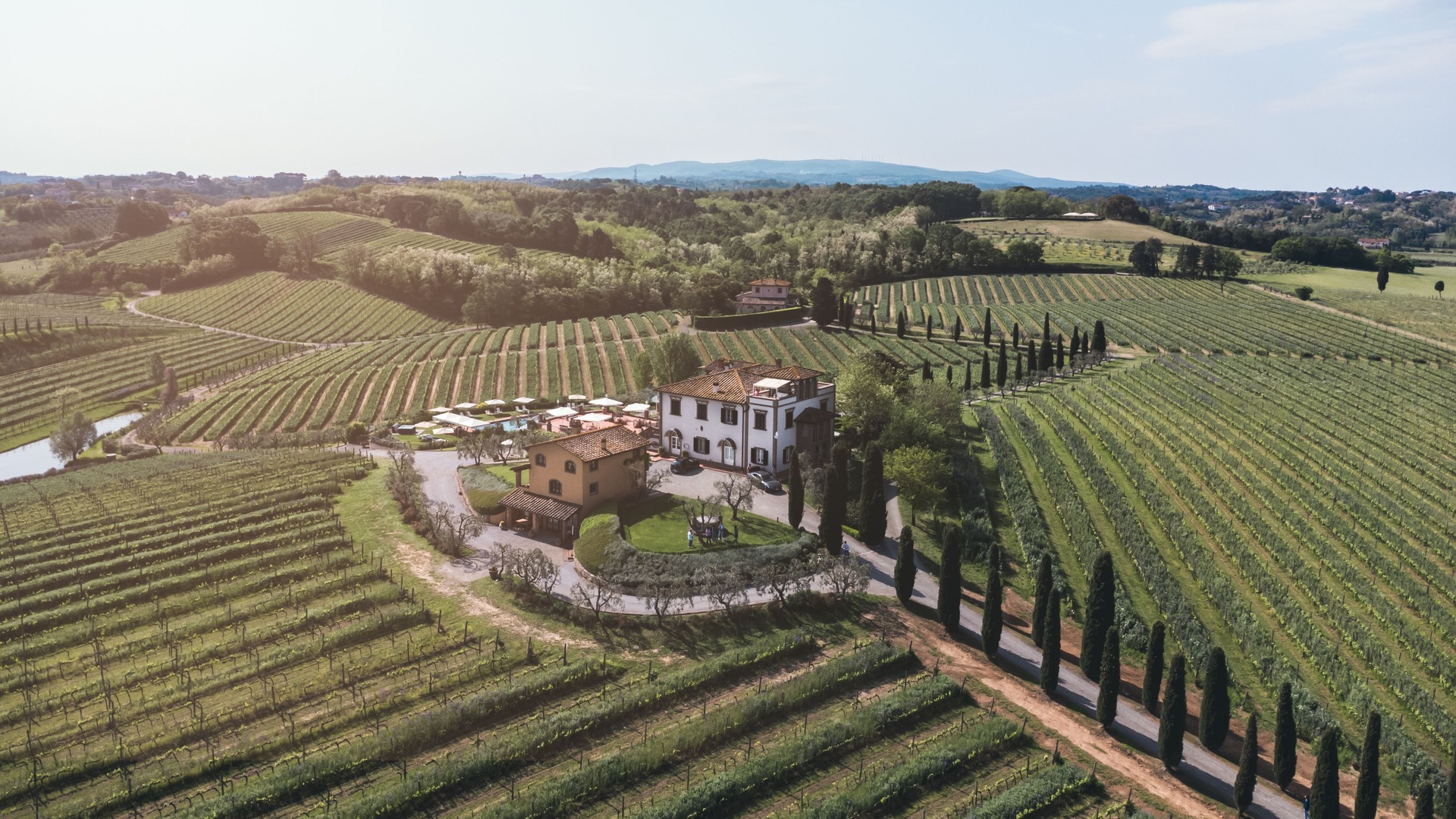
The Chianti Classico zone starts almost the moment Florence ends, a defined stretch of hills between the city and Siena marked out by its black rooster seal, the Gallo Nero. It’s the most accessible serious wine region on this list — narrow roads, small hill villages like Greve, Panzano, and Radda, and hundreds of family-run estates, most of which will happily host a tasting with a phone call ahead. What makes Chianti Classico worth more than a single afternoon is its three-tier system: the fresh, everyday annata, the more structured Riserva, and the top-tier Gran Selezione, introduced in 2014 and built entirely from single-estate fruit. Tasting through all three side by side, something nearly every enoteca and estate in the zone will pour on request, is the fastest way to understand what aging and vineyard selection actually do to Sangiovese.Montalcino and Montepulciano: Tuscany’s Big Reds
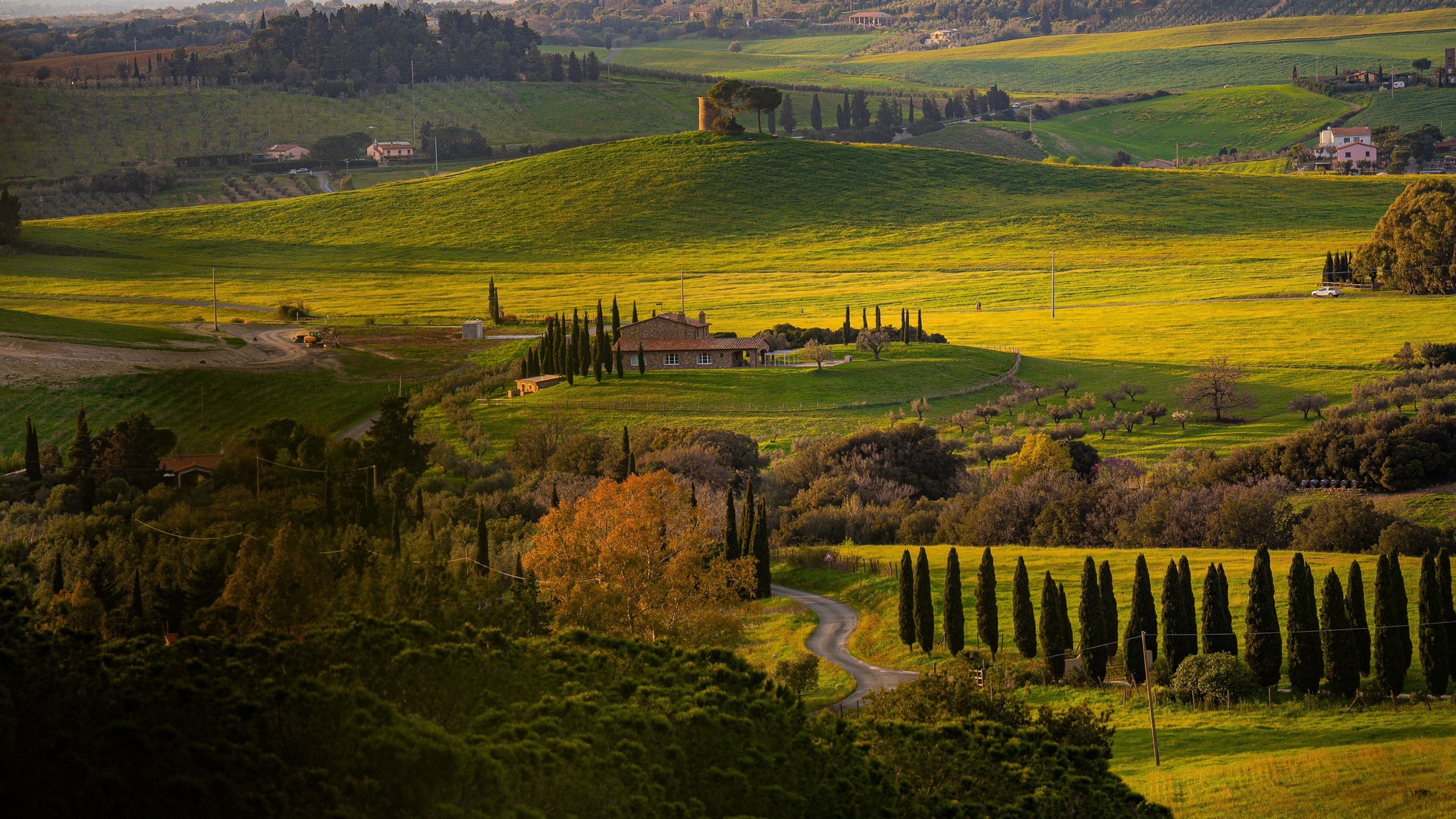
Roughly ninety minutes south of Florence sit the two towns that produce Tuscany’s most serious, most collectible reds. Montalcino makes Brunello, arguably Italy’s most prestigious red and one of the most age-worthy wines produced anywhere, aged a minimum of five years by law before it can even be released. It’s a dramatic, hilltop town built almost entirely around a single wine, sitting at the edge of the Val d’Orcia, a UNESCO landscape of rolling hills and lone cypress trees. Montepulciano, forty-five minutes away, has spent decades in Brunello’s shadow, unfairly. Its Vino Nobile is one of only four Tuscan wines with DOCG status, made from a local Sangiovese clone called Prugnolo Gentile, and the town itself, strung along a narrow limestone ridge with wine cellars carved beneath a Renaissance streetscape, arguably has the more striking historic center of the two. Many visitors pair the two towns on consecutive days specifically to feel the contrast between Brunello’s intensity and Vino Nobile’s more sociable, ready-sooner style.Comparing the Reds: A Quick Reference
| Wine | Sangiovese Content | Minimum Aging | Character |
|---|---|---|---|
| Chianti Classico | Min. 80% | 12 months | Fresh, sour-cherry, savory |
| Chianti Classico Gran Selezione | Min. 80%, single-estate | 30 months | Structured, collectible |
| Vino Nobile di Montepulciano | Min. 70% | 2 years | Round, ripe, ready sooner |
| Brunello di Montalcino | 100% | 5 years | Full-bodied, built to age |
What to Eat Along the Way
Food across the region follows the wine closely, which is really no accident. Bistecca alla fiorentina, the enormous rare-grilled T-bone Florence is famous for, is practically engineered to sit next to a structured Chianti Classico Riserva or a young Brunello. Further south, pici, a thick hand-rolled pasta, shows up in both Montalcino and Montepulciano, usually with a wild boar ragù that stands up well to either region’s tannin. Pecorino ties the whole trip together, sharper and more aged the further south you go, especially around Pienza, the fifteen-minute detour from Montepulciano that no visitor to that town really skips.Best Time to Go
Harvest season, mid-September through October, is the strongest window across every region covered here: estates are at their busiest, the light over the hills turns a deep gold in the late afternoon, and producers are generally more willing to let visitors see the working side of the process. Late spring, particularly May, is the close second, with green countryside and comfortable temperatures for a day of moving between hilltop towns. Summer works but runs hot, especially in the more exposed stretches around Montepulciano and Montalcino, and winter is quiet everywhere, with many smaller estates operating strictly by appointment.Building an Itinerary
A week is enough to do this properly without rushing. A workable shape looks something like this: two or three nights in Florence, using the city as a base for a day trip into Chianti Classico; then a night in or near Montalcino, allowing a full day for Brunello estates and a detour to the Abbey of Sant’Antimo; then on to Montepulciano for a day that combines cellar visits along the Corso with a short hop to Pienza for lunch and pecorino. From there, the trip can wind back toward Florence or continue on elsewhere in Italy entirely.A Sample One-Week Itinerary
For anyone who wants a concrete starting point rather than a set of loose recommendations, here’s one workable way to structure seven days across the regions covered above. It assumes Florence as the arrival and departure point and leaves the pace deliberately unhurried, since a Tuscan wine trip rarely benefits from being rushed.| Day | Base | Focus |
|---|---|---|
| 1–2 | Florence | Wine windows, enoteca flights, orientation in the city |
| 3 | Florence (day trip) | Chianti Classico — Greve, Panzano, one or two estate visits |
| 4 | Montalcino | Travel south, Fortezza enoteca, first Brunello flight |
| 5 | Montalcino | Estate visits, Sant’Antimo Abbey, Val d’Orcia drive |
| 6 | Montepulciano | Corso cellars, Piazza Grande, Pienza detour for pecorino |
| 7 | Florence | Return, final dinner, departure |
A Few Common Questions
Do you need to speak Italian to visit estates? No. Most producers across all four regions, especially those accustomed to international visitors, conduct tastings comfortably in English, though a few words of Italian are always appreciated and occasionally open doors at the smallest, most family-run operations. How far in advance should tastings be booked? For Chianti Classico, a few days’ notice is usually enough, particularly at larger estates. For Montalcino and Montepulciano, where tastings tend to be more formal and Brunello’s prestige drives real demand, booking one to two weeks ahead is safer, especially during harvest season or for smaller, highly sought-after producers. Is it possible to do this trip without a full week? Yes. A long weekend based entirely in Florence with a single day trip into Chianti Classico captures a genuine, if smaller, version of everything described here. The full week simply allows the trip to stretch into Montalcino and Montepulciano as well.Where to Stay: compare hotels and current prices in Greve in Chianti, Montalcino and Montepulciano on Trip.com.
The Takeaway
Tuscany rewards exactly as much time as you’re willing to give it. A long weekend based in Florence, with a single day trip into Chianti Classico, will tell you something real about what makes Sangiovese from this part of Italy so highly regarded. A full week moving from Florence through Chianti and on to Montalcino and Montepulciano will tell you a great deal more — not just about the wine, but about how differently the same grape, the same rolling hills, and the same rustic culinary tradition can express themselves across a relatively small stretch of Italian countryside. Either way, this isn’t a region to check off a list. It’s one built for coming back to, ideally with a little more time on hand the second visit around.If you are passing through Siena on your way to the vineyards, read our guide to Siena Cathedral tickets and the OPA SI Pass before you go.
Planning a trip? See our guides to a Val d’Orcia road trip and San Gimignano.
Planning a trip? See our guide to wine tours from Florence.