
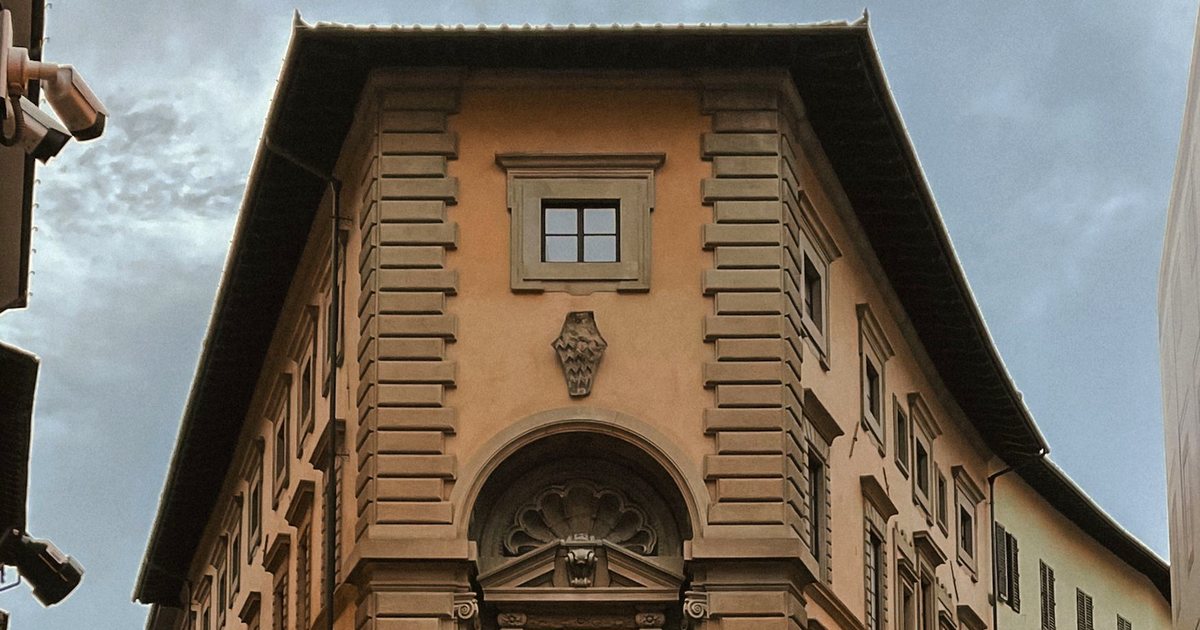
Florence has never been a city that does luxury loudly. Its finest hotels occupy Renaissance palazzi and 19th-century villas, their facades indistinguishable from the buildings on either side — which is, of course, precisely the point. What lies behind those stone doors is another matter entirely. This is a guide to six of the best, and a deep look at the one that stands above them all.
Where you stay in Florence shapes what the city feels like. The difference between a good hotel and an exceptional one is not thread count or breakfast quality — it is whether the building itself is part of the experience, whether the staff understand the city well enough to unlock it for you, and whether you feel, waking up in the morning, that you are genuinely living inside Florence rather than visiting it.
|
6
hotels reviewed
|
€800+
avg. entry rate / night
|
11
acres — Four Seasons garden
|
15th C
oldest palazzo in use
|
| Hotel | From / night | Building | Standout | Best for |
|---|---|---|---|---|
| Four Seasons Florence Editor’s pick | €1,100+ | Two 15th-C palazzi + convent | Largest private garden in Florence (4.5 ha) | The full Florence experience at the highest level |
| Villa Cora | €650+ | Neo-classical villa, 1865 | Pool terrace with panoramic city view | Romantic stays, views, Oltrarno access |
| Portrait Firenze | €900+ | Historic palazzo on the Arno | Ferragamo family ownership; Arno views | Fashion-conscious travellers; discretion |
| AdAstra Florence | €750+ | Restored Renaissance palazzo | Intimate scale; 12 suites only | Those who dislike large hotel energy |
| Hotel Savoy | €700+ | 19th-C Rocco Forte property | Piazza della Repubblica; unbeatable location | First-time luxury visitors; central location |
| Helvetia & Bristol | €550+ | Grand hotel, Via Tornabuoni, 1894 | Historic guest list: Stravinsky, De Chirico, Pirandello | Old-Europe atmosphere; shopping district |
Built in 1865 for Baron Oppenheim and later home to Empress Eugénie of France, Villa Cora sits on the Oltrarno hillside above the Boboli Gardens with views across the entire city. The building is a statement of 19th-century aristocratic taste — frescoed ballrooms, gilded ceilings, a rooftop terrace and pool that may offer the finest vantage point in Florence. The surrounding gardens are immaculate, the service is genuinely attentive without being stiff, and the location — ten minutes‘ walk from the Pitti Palace — places you in the quieter, more residential south of the city. Who should book it: couples, romantics, anyone who prioritises views and a sense of historic occasion over proximity to the centro.
Owned by the Ferragamo family and operated under their Lungarno Collection, Portrait Firenze occupies a historic palazzo directly on the Arno — the address that Florentine families have coveted for five centuries. The hotel is deliberately discreet: no lobby to speak of, no signage visible from the street, and a level of personal service calibrated for guests who do not want to be seen being guests. The suites facing the river have views to the Ponte Vecchio that would cost millions to own; they can be rented by the night. Who should book it: fashion-world travellers, those who value discretion, anyone who wants the Arno view without the palazzo purchase.
Twelve suites in a restored Renaissance palazzo — which is to say, twelve guests at any one time, staff who know your name before you arrive, and a level of personalisation that larger properties structurally cannot offer. AdAstra has positioned itself at the intersection of the historic palazzo experience and contemporary design sensibility: original architectural features preserved, modern comfort integrated without compromise. It is the hotel for those who find large luxury properties impersonal and boutique hotels charming but under-resourced. Who should book it: repeat Florence visitors, those who want the palazzo experience without institutional scale.
The Savoy’s position on Piazza della Repubblica — the great 19th-century square at the geographic heart of the city — means that the Duomo, the Uffizi, and the Ponte Vecchio are all within eight minutes on foot. Rocco Forte’s renovation has made this one of the most consistently well-run hotels in the city: the service is reliable at the highest level, the rooms are elegant without theatrical excess, and the restaurant L’Incontro is a genuinely good place to eat. Who should book it: those visiting Florence for the first time at the luxury level; business travellers; anyone for whom location is the primary criterion.
Open since 1894, the Helvetia & Bristol carries a guest history that reads like a syllabus for 20th-century European culture: Stravinsky, Giorgio De Chirico, Luigi Pirandello, and Francis Poulenc all stayed here. The hotel sits on Via dei Tornabuoni — Florence’s answer to Bond Street — between Gucci, Ferragamo, and Pucci. The rooms retain the grandeur of a Belle Époque hotel without the staleness that often accompanies it. At its price point, it offers better value than several of its more expensive neighbours. Who should book it: those who appreciate historic atmosphere and literary provenance; shoppers; those who want serious luxury at a slightly more accessible rate.
📍Four Seasons I Florence 🇮🇹 pic.twitter.com/z2dGRUY8WU
— 𝕏 Travels, Hotels and Resorts (@em3dia) February 26, 2024
There is a version of the Four Seasons Florence that you can describe in statistics: two historic palazzi, one former convent, 116 rooms and suites, a 4.5-hectare garden — the largest privately held garden in Florence — two restaurants, a spa, and a location ten minutes‘ walk from the Duomo. These numbers are impressive. They do not explain why this is, by a meaningful margin, the finest hotel in the city.
What the numbers cannot capture is the quality of silence. The hotel occupies the Palazzo della Gherardesca — a 15th-century building with a façade that reveals nothing of what lies behind it — and the Conventino, a smaller building across the garden that was originally a convent. Between these two structures, separated by nearly five centuries of Florentine history and connected by a garden of extraordinary beauty, the Four Seasons has built something that functions as a city within the city: a parallel Florence, quiet and proportioned and extraordinarily well-resourced, from which the real one is easily and pleasurably accessible.
| Category | Detail |
|---|---|
| Buildings | Palazzo della Gherardesca (15th century) + Il Conventino (former convent). Connected by the garden. |
| Rooms & suites | 116 total. Junior Suites from ~180 m²; Garden Suite from ~280 m²; Villa La Veduta (private 3-bed villa) |
| The garden | 4.5 hectares. Largest private garden in Florence. 15th-century layout with ancient trees, fountains, sculptures. Entirely private to hotel guests. |
| Dining | Il Palagio (fine dining, frescoed dining room, Tuscany-focused tasting menus); Pool Bar & Grill (garden setting, lunch and aperitivo) |
| Spa & wellness | Full-service spa, indoor pool, fitness centre. Treatment rooms within the historic building fabric. |
| Art | Original 15th and 16th-century frescoes throughout the Palazzo. The chapel contains a complete Renaissance fresco cycle — visible to guests on request. |
| Location | Via del Maglio 1, Florence. 10 min walk to the Duomo; 12 min to the Uffizi; 8 min to the Accademia. |
| Rates | From approximately €1,100 / night (Deluxe room). Suites from €2,200. Villa La Veduta from €8,000 / night. Rates vary significantly by season. |
In a city where space is the true luxury — where the average apartment in the centro storico has no garden, no private outdoor space, no quiet — the Four Seasons garden is not an amenity. It is a proposition. Walking from the hotel’s main entrance into that space — ancient ilex trees, 15th-century stone fountains, the sculpted silence of a garden designed at the same moment as the Medici were commissioning Botticelli — is one of the most jarring transitions available in Florence: from the narrow, crowded streets of the city to a private landscape of extraordinary calm.
The garden is, in a meaningful sense, the reason to choose the Four Seasons over its competitors. It is the reason that room categories facing the garden command a premium over equivalent rooms facing the street — and they are worth it. Breakfast in the garden on a spring morning, with the city invisible and the only sound birdsong and the distant bells of the Duomo, is as close to the Florentine ideal as a hotel stay can get.
The hotel’s fine dining restaurant occupies the frescoed sala nobile of the Palazzo della Gherardesca — a room that would be worth visiting for the ceiling alone. The cooking is rooted in Tuscany but not limited by it: the tasting menu draws on the region’s finest ingredients — aged Chianina beef, Cinta Senese pork, white truffles in season, Chianti and Brunello from cellars the sommelier knows personally — and executes them with the technical ambition of a kitchen that understands it is operating in one of the world’s great food cities. Booking is essential; the room seats fewer than 40.
Throughout the Palazzo, original 15th and 16th-century frescoes survive on ceilings, in corridors, and in the former private chapel. Most guests walk past them without fully registering what they are: not reproductions or hotel decoration, but genuine Renaissance works that have been in this building for five centuries. The concierge team can arrange a private guided tour of the frescoes — a 45-minute walk through the building with an art historian, after hours, before the other guests are moving. It is the kind of experience that makes the Four Seasons more than a luxury hotel and rather something closer to a private palazzo.
| Category | From | Best feature | Verdict |
|---|---|---|---|
| Deluxe Room | ~€1,100 | Historic palazzo fabric, high ceilings | Entry point. Specify garden-facing when booking |
| Junior Suite | ~€1,800 | Separate living area; original fresco ceilings | The sweet spot — space and character combined |
| Garden Suite | ~€2,800 | Direct garden access; private terrace | The definitive Four Seasons experience |
| Conventino Suite | ~€3,500 | Former convent building; maximum privacy | For those who want to feel truly apart from the city |
| Villa La Veduta | ~€8,000+ | Private 3-bed villa within the garden; butler, chef on request | The closest thing to owning a Florentine palazzo for a week |
|
Best season
May–June and September–October. The garden is at its finest in spring; autumn has the best light and the harvest energy from the Chianti hills. July and August are hot and rates peak; winter offers significant savings and empty museums.
|
Ask for specifically
A garden-facing room. The private fresco tour. Breakfast in the garden rather than the dining room. A recommendation from the concierge for an estate visit in Chianti — they have genuine relationships with producers not accessible to the public.
|
|
Book well ahead
Garden Suites and the Villa sell out months ahead in peak season. For May or June stays, book in January. Cancellation policies are strict; travel insurance covering accommodation is advisable.
|
The concierge advantage
The Four Seasons concierge team is among the best in the city. They can arrange dome access at unusual hours, private museum sessions, Chianti winery visits, and restaurant reservations that are otherwise unavailable. Use them extensively.
|
A stay at the Four Seasons Florence is most rewarding when it functions as a base for the city rather than a destination in itself. The garden and the rooms will draw you back, but the experience of Florence — the Uffizi at opening time, the Oltrarno at dusk, the Chianti hills on a Tuesday morning with almost no one else around — is what justifies the distance travelled.
For those for whom the city begins to feel like more than a holiday — who look at the Palazzo della Gherardesca and think not „what a hotel“ but „what would it be like to actually live in a building like this“ — the answer is more achievable than it might appear. See our complete guide to buying property in Florence, including neighbourhood breakdowns, current price data, and the Italian Flat Tax regime that has made the city significantly more attractive to international buyers.
Florence has six genuinely excellent luxury hotels. The Portrait Firenze is the most discreet; Villa Cora the most romantic; the Hotel Savoy the most convenient; the Helvetia & Bristol the most historically layered; AdAstra the most intimate. Each represents the city in a different register, and each is the right choice for a particular kind of guest.
But the Four Seasons Florence is something else — a property that combines historic architecture of the highest order with a garden that has no equivalent in any hotel in Italy, service infrastructure that operates at a level most properties cannot reach, and a culinary programme that treats the surrounding landscape as the ingredient it actually is. It is expensive. It is, by the standards of what it delivers, worth it.
Walking into the garden of the Four Seasons Florence for the first time, the city disappears. The noise, the crowds, the heat — gone. What remains is a 15th-century landscape in perfect silence, in the middle of one of the most visited cities in Europe. That is the trick. That is why it is the best.
best luxury hotels Florence
Florence 5-star hotels 2026
Villa Cora Florence
Portrait Firenze
Hotel Savoy Florence
luxury travel Italy 2026
Palazzo della Gherardesca
Florence palazzo hotel
where to stay Florence
0 Kommentare zu „The Best Luxury Hotels in Florence: Six Contenders, One Clear Winner“