
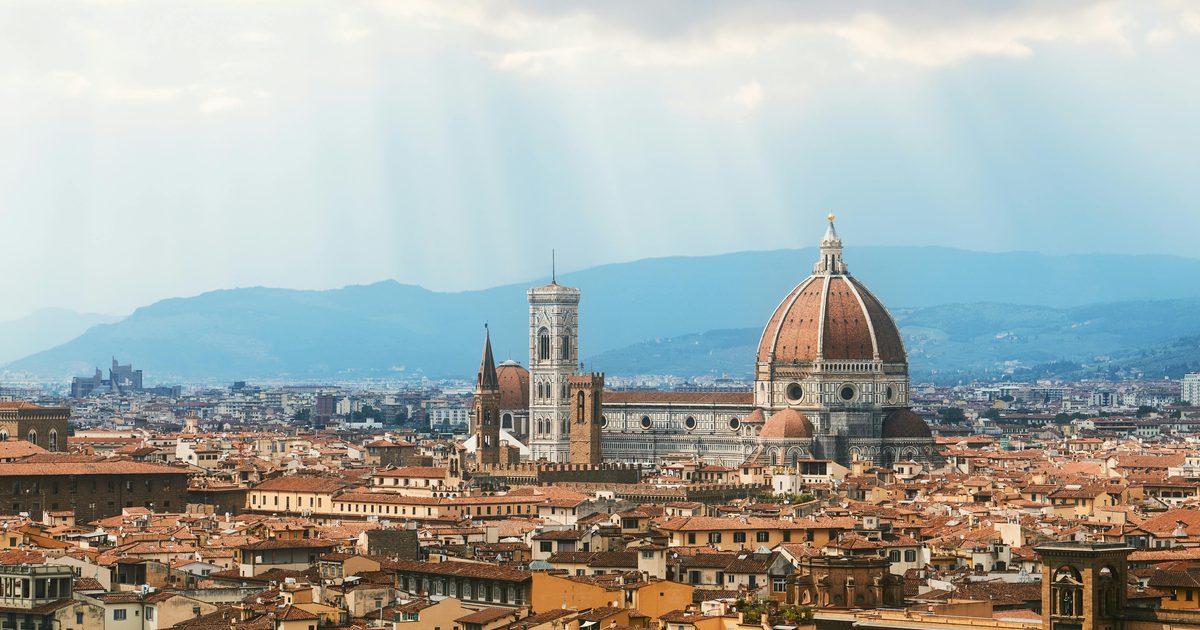
Florence does not compete with other cities. It occupies a category of its own — a small, dense, walkable capital of human civilisation that has produced more art, architecture, and intellectual fire per square kilometre than almost anywhere on earth. For the discerning traveller, it is not merely a destination. It is a reckoning.
This guide goes beyond the surface. You will find the city’s greatest landmarks set in context, the sports and lifestyle scene the brochures omit, the wine culture that rivals any in Europe, and the real estate market that is increasingly attracting international wealth. Whether you are visiting for a long weekend or seriously considering a pied-à-terre in the hills of Fiesole, read on.
|
2.5M+
visitors per year
|
15+
UNESCO monuments
|
€6–12k
per m² top districts
|
1h 30
from Rome by train
|
In an era where travel has become democratised to the point of saturation, Florence remains stubbornly, magnificently itself. It was never built for tourism. It was built for power, beauty, commerce, and faith — by families like the Medici, who treated art patronage as a form of political currency. The result is a city in which almost every building, every piazza, every courtyard rewards a second look.
What makes Florence exceptional for the luxury traveller today is precisely this: the ratio of genuine cultural depth to visitor infrastructure is unlike any comparable city. Rome is vast and exhausting. Venice is beautiful but increasingly theatrical. Florence is compact, walkable, and still functioning as a living city — with university students, leather artisans, wine merchants, and Michelin-starred chefs operating in the same narrow streets as the Medici once did.
This Arno River divides the city cleanly into north and south. The north holds the great monuments: the Duomo, the Uffizi, the Palazzo Vecchio. In the south — the Oltrarno — is the city’s workshop and soul, a quieter quarter of artisan studios, neighbourhood restaurants, and the spectacular Boboli Gardens behind the Pitti Palace.
| Architecture
The Duomo & Brunelleschi’s Dome
The largest masonry dome ever constructed. 463 steps, Last Judgment frescoes, panoramic rooftop. Book online one week ahead. Private early-access sessions available — see our Florence Unveiled guide.
|
Art
The Uffizi Gallery
The greatest Renaissance painting collection in existence. Botticelli, Leonardo, Raphael, Caravaggio. A private guided session with an art historian transforms the experience entirely.
|
Civic History
Palazzo Vecchio & Piazza della Signoria
Florence’s great civic square. Vasari-decorated rooms inside. Rooftop aperitivo at golden hour is one of the city’s finest and most freely accessible pleasures.
|
| Sculpture
Galleria dell’Accademia
Michelangelo’s original David — over five metres of Carrara marble, flanked by the unfinished Prisoners. Focused enough to explore in two hours. Skip-the-line access is essential.
|
Gardens & Palazzi
Pitti Palace & Boboli Gardens
Cross the Ponte Vecchio into the Oltrarno. Four museums inside; terraced gardens open at 8:15 AM, at their finest in early morning light with views across the Chianti hills.
|
Living Heritage
Oltrarno Artisan Quarter
Goldsmiths, leather workers, bookbinders, furniture restorers — techniques unchanged since the Renaissance. Commission a bespoke piece and carry living Florence home with you.
|
Florence and tennis share a long association. Red clay court tennis is a genuinely different game — slower, longer rallies, demanding patience over power. Playing a set on a Florentine clay court as the light fades over tiled rooftops is an experience that belongs to no other city.
|
Circolo Tennis Firenze
The city’s most prestigious club, located in the Campo di Marte district. Multiple red clay courts, clubhouse with dining. Non-members via hotel concierge arrangement. Clay court footwear required.
|
Assi Sport Village
More accessible to visiting players. Clay and synthetic courts for hourly rental, with resident coaching programme. Popular with expats and longer-stay visitors.
|
Florence is one of the best cities in the world to drink serious wine — not because it produces wine itself, but because it sits at the centre of an extraordinary viticultural landscape. Chianti Classico, Brunello di Montalcino, Vino Nobile di Montepulciano, and the Super Tuscans are all within two hours.
| Wine / Zone | Key grape | Style | Min. aging | Availability |
|---|---|---|---|---|
| Chianti Classico | Sangiovese 80%+ | Elegant, mineral, food-friendly | 12 months | Widely available |
| Chianti Classico Riserva | Sangiovese | Serious, structured, age-worthy | 24 months | Good restaurants |
| Gran Selezione | Sangiovese (estate’s best) | Prestige, collector level | 30 months | Estate / specialist |
| Brunello di Montalcino | Sangiovese Grosso | Powerful, tannic, decades of ageing | 5 years | Specialist importers |
| Super Tuscans (Bolgheri) | Cab Sauvignon / Merlot | International, opulent, investment grade | Varies | Collector & auction |
| Name | Character | Don’t miss |
|---|---|---|
| Enoteca Borghese | Classic, deep cellar | Older Brunello & Barolo vintages by the glass. Near Santa Croce. |
| Osteria dell’Enoteca | Michelin-starred | Sommelier pairing menu covering all major Tuscan zones. |
| Il Santino | Natural and artisanal | Remarkable producer list, exceptional small plates. Book ahead. |
| Procacci | Historic institution, est. 1885 | Truffle-butter tartufini at a marble counter. Via dei Tornabuoni. |
The private winery visit remains the definitive Florentine wine experience. A good concierge can arrange access to family estates that do not appear on any tourist website — medieval castles and monastery-turned-vineyards where the owner personally walks you through the vines. We cover this in detail in our Florence Unveiled guide, including the Strada Chiantigiana route and estate lunch experiences.
Florence itself is not a golf city, but Tuscany is a seriously growing golf destination with excellent courses within 30–60 minutes of the city centre. The season runs March through November, with April, May, September, and October offering the most comfortable conditions.
| Club | Distance | Holes / Par | Hcp req. | Access |
|---|---|---|---|---|
| Poggio dei Medici | 25 km — Mugello valley | 18 holes / Par 72 | Not required | Book 1 week ahead |
| Ugolino Golf Club | 12 km — Chianti hills | 18 holes / Par 71 | Required | Members‘ club |
| Golf Club Castelfalfi | 40 km — medieval estate | 18 holes | Not required | Resort — book online |
Florence is the city that gave the world the concept of the masterpiece — the capolavoro. That tradition continues in the Oltrarno, where working studios of goldsmiths, bookbinders, leather workers, and furniture restorers still operate using techniques unchanged since the Renaissance. Visiting these botteghe is not a tourist activity — it is an encounter with a living cultural heritage genuinely at risk of disappearing within a generation.
One of Florence’s defining qualities is that its great Renaissance architecture is still in daily use. The Spedale degli Innocenti — Brunelleschi’s pioneering building, completed in 1445 — still operates as a children’s charity. This Biblioteca Medicea Laurenziana, designed by Michelangelo, is a functioning library. Also, the Piazza della Santissima Annunziata is where local residents sit on the steps with coffee on a Tuesday morning.
| Event | When | Character |
|---|---|---|
| Maggio Musicale Fiorentino | May – June | World-class opera, symphony, and dance at the Teatro del Maggio. One of Europe’s great festivals. |
| Calcio Storico Fiorentino | June | Medieval football-wrestling hybrid in Piazza Santa Croce. Rough, spectacular, deeply local. |
| Scoppio del Carro | Easter Sunday | Centuries-old fireworks ceremony in Piazza del Duomo, timed to the Gloria. |
The Florentine real estate market has undergone a quiet transformation over the past decade — driven by remote-work flexibility, Italy’s Flat Tax regime for high-net-worth foreign residents, and a growing recognition that Tuscany offers a quality of life almost impossible to replicate elsewhere.
|
Top districts — Santo Spirito, San Niccolò
€6,000 – €12,000 / m²
Piano nobile floors with frescoed ceilings are among the most desirable residential assets in Europe.
|
Centro storico apartments
€500,000 – €3M+
UNESCO World Heritage zone. Palazzo floors and Arno-view residences with private terraces at the premium end.
|
|
Rural Tuscany — podere / estate
€800,000 – €3M
Fully restored farmhouse with land, outbuildings, pool, olive groves. Agriturismo income streams add investment logic.
|
Fiesole hills — Florence views
€1.2M – €5M+
Private villa with garden, 20 minutes to the centre. Preferred choice for international buyers seeking a long-term base.
|
Since 2017, Italy has offered foreign residents a €100,000 annual flat tax on all foreign-sourced income, applicable for up to 15 years and extendable to family members for an additional €25,000 per person. This has directly driven demand for premium Florentine and Tuscan real estate from British, American, Swiss, and Northern European buyers.
| Market | Walkability | Cultural density | Liveability | Verdict |
|---|---|---|---|---|
| Florence | Exceptional | Unmatched | High | Best all-round for lifestyle and culture buyers |
| Rome | Manageable | Very high | Complex | Scale works against it for daily residential life |
| Venice | Excellent | High | Deteriorating | Acqua alta risk increasing; resident population declining |
| Amalfi Coast | Poor | Moderate | Seasonal | Spectacular but operationally demanding year-round |
| Lake Como | Good (ferry) | Moderate | Excellent | Different proposition — sport, nature, and privacy focused |
For buyers who want cultural density, urban sophistication, and proximity to world-class wine country, Florence is the stronger choice. For those prioritising lakefront privacy, mountain scenery, and a sport-centric lifestyle, the Lake Como market offers a compelling alternative — our deep guide covers both real estate and lifestyle in full.
| Route | Mode | Journey time |
|---|---|---|
| Rome → Florence | High-speed train (Frecciarossa) | 1h 30 min |
| Milan → Florence | High-speed train | 1h 45 min |
| Venice → Florence | High-speed train | 2h 00 min |
| Florence → Chianti | Private driver / hire car | 30–45 min |
| Florence → Fiesole | Taxi or private car | 20 min |
|
Spring (Apr–Jun)
Best overall — warm, gardens in bloom, Maggio Musicale
|
Summer (Jul–Aug)
Hot and crowded. Book early-morning slots for everything
|
Autumn (Sep–Nov)
Harvest season, golden light, fewer crowds
|
Winter (Dec–Mar)
Local life, empty museums, fraction of peak hotel rates
|
The Four Seasons Florence — set within two historic palazzi with a private garden — and Villa Cora, a 19th-century neo-classical residence above the Oltrarno, are the city’s traditional five-star anchors. AdAstra Florence, a boutique residence in a restored Renaissance palazzo, has raised the standard for intimate luxury in recent years. For an independent villa experience, the zone around Fiesole offers properties with private gardens and Florence views, 20 minutes from the centre.
The city operates on a principle of proportional return. The more you bring to it — curiosity, patience, knowledge, time — the more it gives back. A visitor who spends two days ticking off the Uffizi and the Duomo will leave with photographs. A traveller who spends a week, who crosses the Arno in the early morning, who sits in Santo Spirito at dusk with a glass of Morellino, who commissions a piece from an artisan and returns the following day to collect it — that traveller leaves with something closer to a relationship.
Florence is not a city that rushes to disclose itself. But for those with the disposition and the time to listen, it speaks in a language of unusual richness and depth.
Florence at its most luxurious is not about ostentation. It is about privileged access, profound knowledge, and personalised rhythm — the key that opens the door, the story behind the masterpiece, and the wine that tastes of a specific hillside at a specific hour.
Florence travel guide 2026
luxury Tuscany
Florence real estate
Chianti wine guide
tennis Florence
golf Tuscany
Florentine art & culture
Italian flat tax
Chianti Classico
Brunello di Montalcino
Super Tuscans
0 Kommentare zu „Florence, Italy: The Ultimate Luxury Guide for 2026 — Culture, Wine, Tennis, Golf and Real Estate“