This post contains affiliate links. If you book through them, we may earn a small commission at no extra cost to you. Learn more.
Of all the towns that get lumped together under the broad label of “day trip from Florence,” Lucca is the one that most deserves an overnight instead. It has none of Pisa’s single-monument fame and none of Siena’s sprawling piazza drama, and that’s precisely its appeal: a completely intact Renaissance city, still wrapped in its own defensive walls, still largely closed to cars, still moving at the unhurried pace of a place that never had to reinvent itself for tourism. This is the history behind those walls, the landmarks worth building a day around, and, further down, some general thoughts on where to stay once you’ve decided, as most visitors eventually do, that one afternoon here was never going to be enough.
Plan Your Trip
- Leaning Tower of Pisa tickets, timed entry, book ahead in summer
- Private transfer from Florence Airport, fixed price, booked in advance
- eSIM for Italy, set up before you fly
An Etruscan Settlement That Became a Roman Power Broker
Lucca’s history stretches back further than its famous walls suggest. The area was originally settled by the Ligurians and later the Etruscans, before the Romans established a colony here in 180 BC, laying out the rigid grid of streets that still defines the historic center today — a rare case of a European city where the original Roman street plan remains almost entirely legible on a modern map. Lucca’s Roman importance peaked in 56 BC, when the city hosted one of the most consequential private meetings in ancient history: the Conference of Lucca, where Julius Caesar, Pompey, and Crassus, the so-called First Triumvirate, met to renew their political alliance and effectively decide the future direction of the Roman Republic. That the meeting happened here at all says something about Lucca’s strategic position, sitting at a crossroads between Rome, the Ligurian coast, and the rest of northern Italy.
The clearest surviving trace of this Roman past isn’t a ruin in the conventional sense but a shape: Piazza dell’Anfiteatro, an oval piazza that occupies the exact footprint of Lucca’s 2nd-century Roman amphitheater. Over the centuries, medieval houses were built directly into and on top of the amphitheater’s original stone arches, and by the 19th century the space had been cleared into the open piazza visitors walk through today, its curved outline the only clue that this was once a stadium for gladiatorial games rather than a square for coffee and gelato.
Independence, Rivalry, and a Very Long Wall
Through the medieval period, Lucca spent centuries as an independent city-state, and a fiercely defended one, largely at odds with its two more powerful neighbors, Pisa and Florence. Unlike Siena, which eventually fell to Florence, or Pisa, which was absorbed by 1406, Lucca managed to remain independent from the late 1300s all the way through to the Napoleonic era, one of the longest unbroken runs of self-rule of any city-state in Italy. That independence wasn’t cheap to maintain, and it’s the direct reason the city looks the way it does today.
The current Renaissance-era walls, built primarily between 1544 and 1648, replaced an earlier medieval fortification and were designed as some of the most advanced defensive architecture of their time — a nearly 4-kilometer ring of ramparts, complete with eleven bastions engineered to accommodate cannon fire from every angle. Remarkably, the walls were never seriously tested in battle; by the time they were completed, warfare had already begun shifting in ways that made the fortification more of a deterrent than a necessity. Lucca’s independent streak finally ended in 1805, when Napoleon installed his sister, Elisa Baciocchi, as Princess of Lucca and Piombino. A few years later, in the 1820s, Duchess Marie Louise of Bourbon had the walls, no longer needed for defense, converted into the tree-lined promenade that still crowns the city today.
The Walls Today: Lucca’s Most Distinctive Feature
What makes Lucca genuinely unusual among Tuscan cities is that its walls were never torn down to accommodate modern traffic, the fate that befell the fortifications of most other Italian cities as they expanded in the 19th and 20th centuries. Instead, the full 4-kilometer loop survives intact, now planted with rows of plane and horse chestnut trees and used daily by locals walking, jogging, and cycling along its wide, flat top. Renting a bicycle for a slow loop of the walls, roughly an hour at an easy pace, remains one of the simplest and most genuinely pleasant things to do in the entire city, offering elevated views over both the historic center and the surrounding countryside from the same continuous path.
Lucca’s Landmarks Beyond the Walls
Inside the ramparts, Lucca packs in an unusual density of churches, towers, and piazzas for a city of its modest size. The Cattedrale di San Martino, the city’s cathedral, dates back to the 11th century and holds two genuinely significant treasures: the Volto Santo, a wooden crucifix long venerated as a miraculous relic and the object of an annual torchlit procession every September, and the tomb of Ilaria del Carretto, a marble funerary monument by Jacopo della Quercia widely considered one of the finest works of Italian Renaissance sculpture.
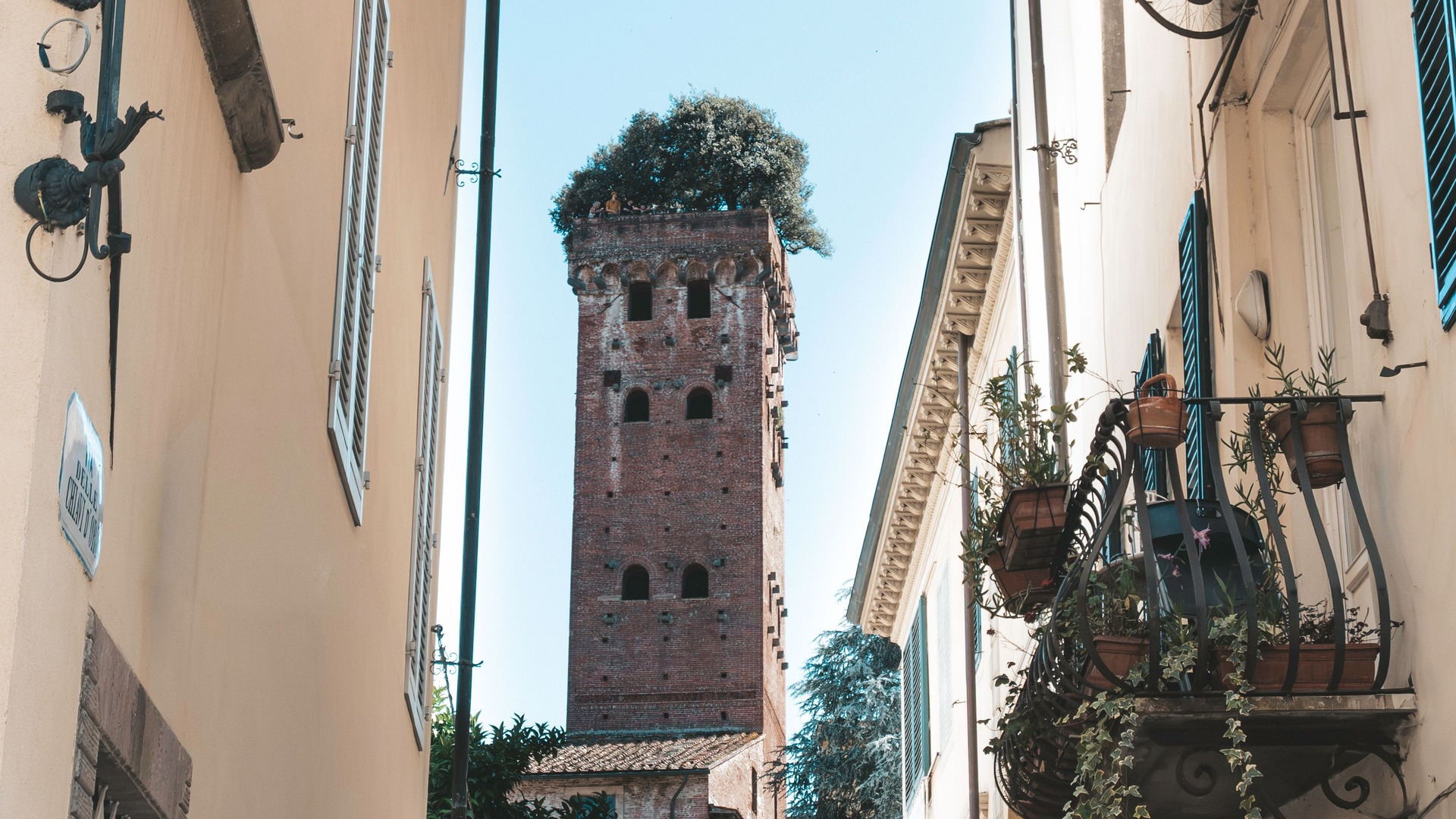
Chiesa di San Michele in Foro, built directly on the site of the old Roman forum, is arguably the more photogenic of Lucca’s churches from the outside, its elaborate marble facade topped by a large statue of the Archangel Michael and stacked with rows of ornate, mismatched columns that took Pisan-style Romanesque architecture to a slightly more theatrical extreme. A short walk away, Torre Guinigi, a 14th-century tower belonging to one of Lucca’s most powerful medieval merchant families, is capped with something found on no other tower in Italy: a small rooftop garden of holm oak trees, planted centuries ago and still growing from the top of the structure today, visible from streets away and worth the climb for the view over the city’s terracotta rooftops alone.
Lucca’s Landmarks at a Glance
| Landmark | Origin | Known For |
|---|---|---|
| City Walls (Le Mura) | 1544–1648 | Intact 4 km ramparts, now a tree-lined park |
| Piazza dell’Anfiteatro | Built over a 2nd-century Roman amphitheater | Oval shape, cafés, medieval houses on Roman arches |
| Cattedrale di San Martino | 11th century | The Volto Santo relic, Ilaria del Carretto’s tomb |
| San Michele in Foro | 12th century onward | Ornate Romanesque facade, built on the old Roman forum |
| Torre Guinigi | 14th century | Rooftop holm oak garden, panoramic city views |
The City of Puccini
Lucca’s cultural reputation extends well beyond its architecture. Giacomo Puccini, the composer behind La Bohème, Tosca, and Madama Butterfly, was born here in 1858 into a family of local musicians, and his childhood home, just off Piazza San Michele, is now a small museum holding personal manuscripts, instruments, and the piano on which he composed his final, unfinished opera, Turandot. The city leans into this legacy well beyond the museum: Lucca hosts regular Puccini opera performances in a dedicated theater near the composer’s home, and the broader Lucca Summer Festival, held each July, has grown into one of Italy’s more significant outdoor music events, drawing major international acts to a stage set up on the city’s ramparts and in its historic squares.
What to Eat in Lucca
Lucchese cuisine draws on the same rustic Tuscan tradition found throughout the region but leans more heavily on its own particular staples. Buccellato, a sweet, anise-and-raisin-studded bread shaped into a ring, is the city’s signature baked good, sold in bakeries across the historic center and traditionally associated with the feast of the Volto Santo in September, though it’s eaten year-round. Tordelli lucchesi, a local variation of stuffed pasta filled with meat and served with a rich ragù, is the dish most residents point to as genuinely their own, distinct from the tortelli found elsewhere in Tuscany.
The surrounding countryside also produces some of the finest olive oil in the region, with the hills around Lucca considered among Tuscany’s top olive oil territory, distinct enough in character to have earned their own protected designation. Farro, an ancient grain long grown in the nearby Garfagnana valley, shows up regularly in soups here, another local ingredient that separates Lucchese cooking from the Chianti or Montalcino version of Tuscan food further south.
Best Time to Visit
Spring and early autumn offer the same advantages here as they do across the rest of Tuscany: comfortable temperatures for walking or cycling the full loop of the walls, and manageable crowds in Piazza dell’Anfiteatro and around the cathedral. July brings the Lucca Summer Festival, a genuinely good reason to visit despite the larger crowds it draws, while late October brings Lucca Comics & Games, one of Europe’s largest comics and gaming conventions, which transforms the historic center in an entirely different, much livelier direction for a long weekend and is worth planning around rather than stumbling into unprepared. Winter is quiet, occasionally misty, and arguably the best season for having the walls largely to yourself.
Lucca as a Base for the Rest of Tuscany
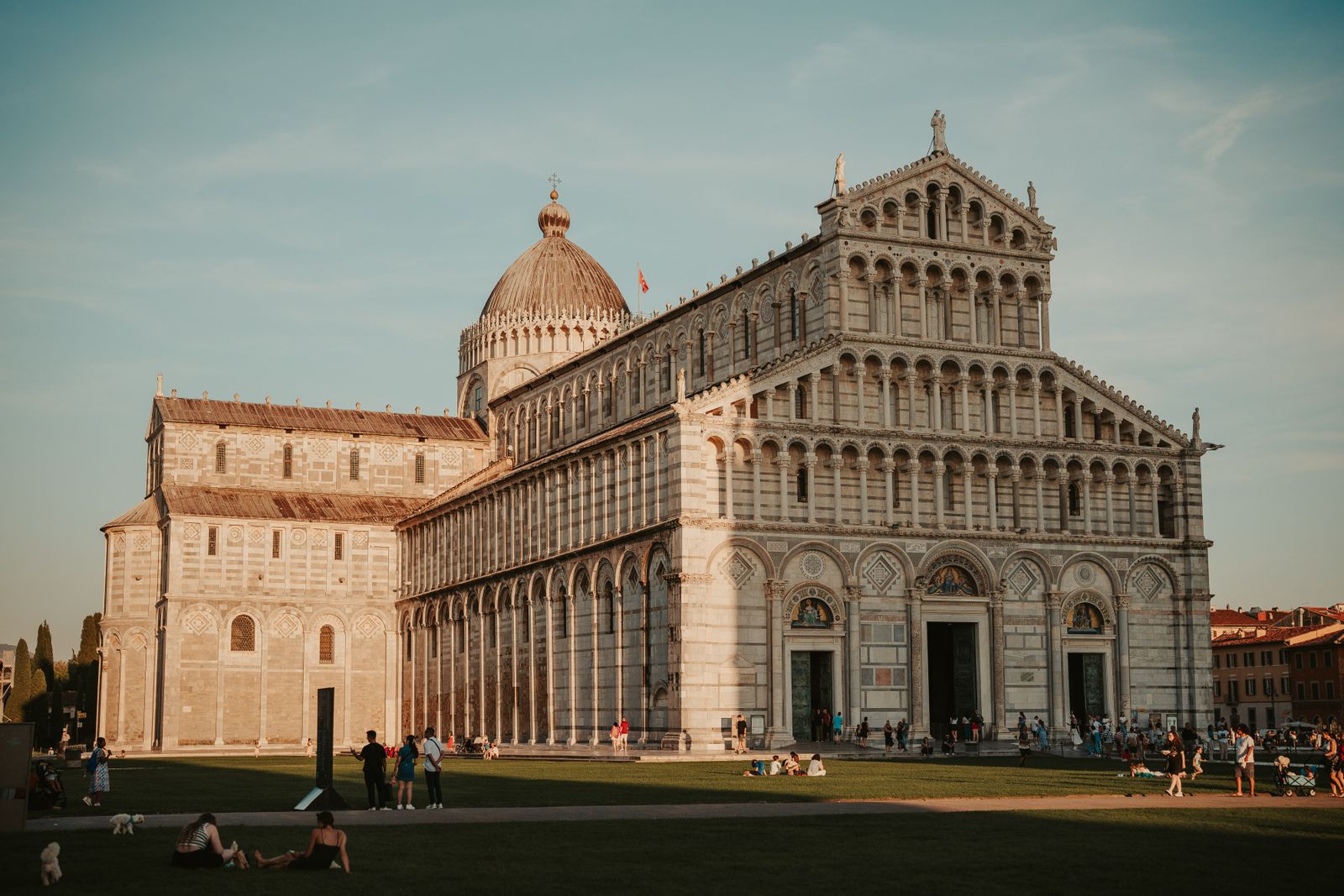
Lucca’s location makes it a genuinely practical base, not just a scenic one. Florence is roughly an hour and a half away by train, and Lucca’s own airport connection runs through Pisa International, only about 25 minutes down the road, making the two towns a natural pairing for anyone flying directly into the region rather than routing through Florence first. Our guide to Pisa’s history and landmarks covers exactly what that short hop looks like — link it here once the Pisa article is live — and from either town, the wine country further south, including Chianti Classico, Montalcino, and Montepulciano, remains within a comfortable day’s drive. Lucca also sits closer to the coast than any of the wine towns, putting the beaches of Viareggio and the Versilia riviera within a twenty-minute train ride, a genuinely useful option for anyone splitting a Tuscan trip between historic towns and actual swimming.
Where to Actually Stay
Lucca’s accommodation scene splits fairly cleanly along one central question: inside the walls or outside them. Staying within the historic center puts every landmark covered above within an easy walk and means experiencing the city at its best moments, early morning and after the day-trip crowds from Florence and Pisa have cleared out in the late afternoon. The trade-off is limited vehicle access, since much of the center is pedestrianized, which is a minor inconvenience for anyone arriving by train but a genuine consideration for travelers renting a car to explore the wider countryside.
Just outside the walls, particularly toward the countryside north of the city, a different style of stay opens up: restored villas and agriturismi set among the same olive groves that supply Lucca’s well-regarded oil, generally with more space, parking, and often a pool, at the cost of needing a short drive or taxi back into the historic center each evening. This countryside option is worth serious consideration for a longer stay, since Lucca’s surrounding hills, gentler and greener than the more dramatic terrain around Montalcino, make for genuinely pleasant villa territory in their own right.
As with Pisa and the wine towns further south, Lucca’s hotel scene favors smaller, character-driven properties, restored palazzi within the walls and converted farmhouses outside them, over large chain hotels, a reflection of the city’s historic building stock and its continued resistance to the kind of mass-tourism development that has reshaped parts of Florence.
Where to Stay: compare hotels and current prices in Lucca on Trip.com.
The Takeaway
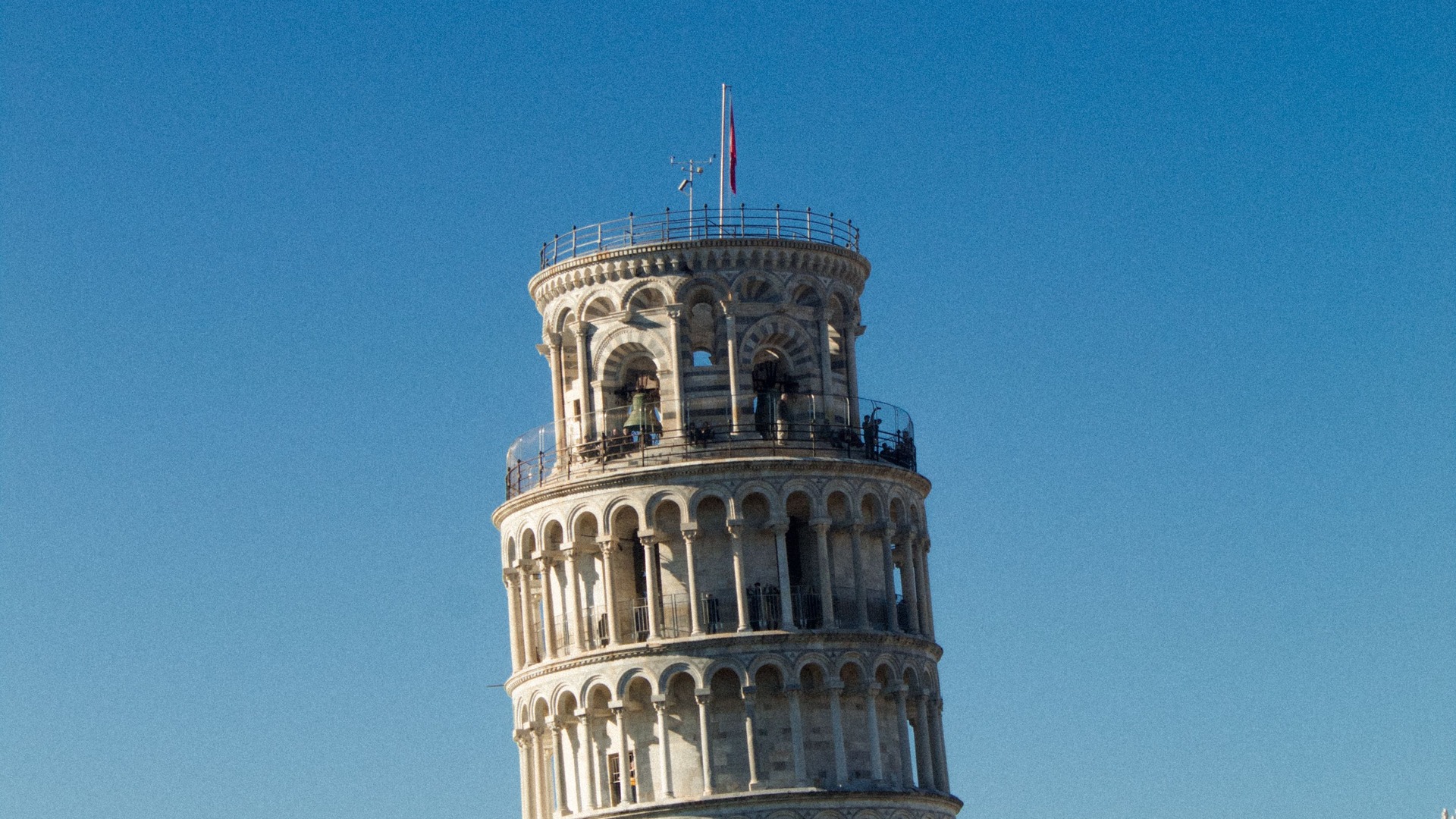
Lucca is the rare Tuscan town that rewards slowing down almost by design. There’s no single monument urging visitors to rush in, snap a photo, and move on, no equivalent of the Leaning Tower dictating the shape of the visit. Instead, there’s a completely intact Renaissance city, still wrapped in walls built to keep Florence and Pisa out, now used for nothing more dramatic than an evening bike ride under the plane trees. Give it a full day, better yet an overnight, and Lucca offers something increasingly rare in this part of Italy: a genuinely historic town that never had to become a theme park version of itself to stay standing.
Planning a trip? See our guides to Leaning Tower of Pisa tickets and the best day trips from Florence.