This post contains affiliate links. If you book through them, we may earn a small commission at no extra cost to you. Learn more.
The Vatican Museums are among the largest and most visited museums in the world: kilometres of galleries built up by the popes over five centuries, ending in the room everyone has come to see, the Sistine Chapel. They are also notorious for queues that wrap around the Vatican walls, crowded corridors in the middle of the day and a confusing mix of official tickets, tours and resellers.
With the right ticket and the right time slot, though, a visit can be calm, focused and unforgettable. This guide explains how Vatican Museums tickets work in 2026, what each option includes, how to combine the museums with St Peter’s Basilica, and what to look for on the way to Michelangelo’s ceiling.
Vatican Tickets at a Glance
- Vatican Museums and Sistine Chapel fast-track ticket: timed entry, no guide
- Full guided tour of the museums, Sistine Chapel and St Peter’s: the complete Vatican in one visit
- Vatican Museums guided tour: the highlights explained by an expert
- St Peter’s Basilica skip-the-line entry with audio guide
- All Vatican Museums tickets and tours
Ticket Options Compared
| Option | Includes | Best for |
|---|---|---|
| Official ticket | Timed entry to the museums and Sistine Chapel; around €20, or €25 online with the booking fee | Planners who book early |
| Fast-track ticket | Timed entry, often available when official slots are gone | Independent visitors |
| Guided tour | Entry and a guide through the main highlights | First-time visitors |
| Full guided tour with St Peter’s | Museums, Sistine Chapel and the basilica | Seeing everything in one morning |
| Combo ticket | Museums and Sistine Chapel with extras | Flexible sightseeing |
| Fast track + hop-on hop-off bus | Museum entry and city bus | Families, short stays |
Official prices as published for 2026; reduced tickets are available for young people and students, and children under six enter free.
How the Vatican Museums Work
The museums are open from Monday to Saturday, with the last entry two hours before closing, and they are closed on most Sundays and on major religious holidays. On the last Sunday of each month, entry is free in the morning, but expect very long queues and crowded rooms; for most travellers, it is not worth the trade-off.
Every ticket is for a specific time slot. Book as soon as your dates are fixed, especially between April and October, when morning slots sell out first. If the official calendar is full, a skip-the-line ticket or a guided tour from a reseller usually still has availability.
Shoulders and knees must be covered, and the rule is enforced at the entrance. Large bags and backpacks must be left in the cloakroom. Photography without flash is allowed in most of the museums, but not in the Sistine Chapel, where guards ask for silence.
What Not to Miss on the Way to the Sistine Chapel
Most visitors rush through the museums to reach the chapel. Slow down, because some of the finest works in Rome are along the way:
- The Pinacoteca: the picture gallery, often skipped, with Raphael’s Transfiguration and Caravaggio’s Entombment.
- The Pio-Clementino Museum: the great classical sculptures, including the Laocoön, rediscovered in Rome in 1506, and the Apollo Belvedere.
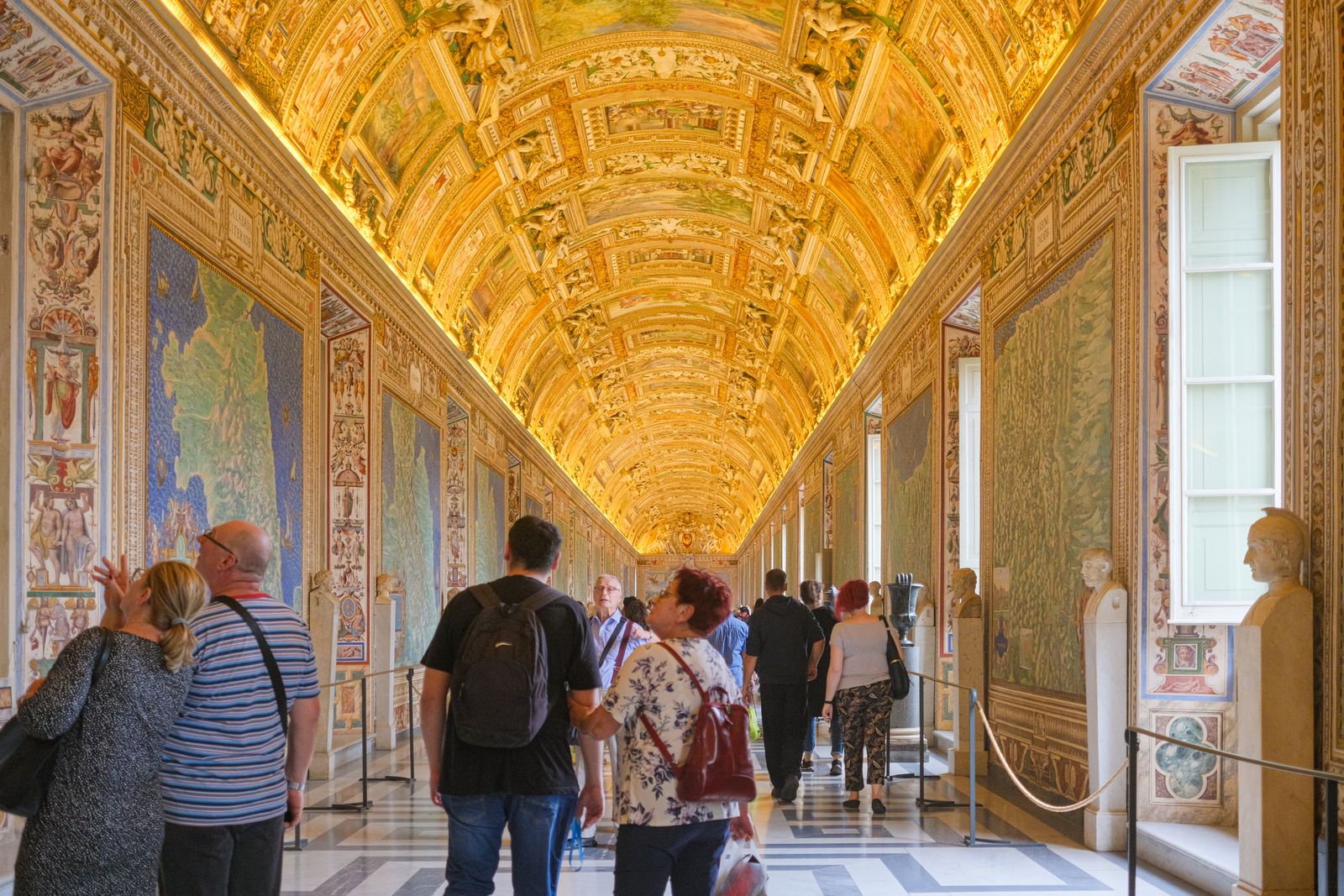
- The Gallery of Maps: a long corridor of painted maps of sixteenth-century Italy under a gilded ceiling, one of the most beautiful rooms in the Vatican.
- The Raphael Rooms: the papal apartments frescoed by Raphael and his workshop, including The School of Athens.
- The Sistine Chapel: Michelangelo painted the ceiling between 1508 and 1512, with the Creation of Adam at its centre, and returned more than twenty years later to paint the Last Judgement on the altar wall. The side walls, by Botticelli, Perugino and Ghirlandaio, are masterpieces in their own right.
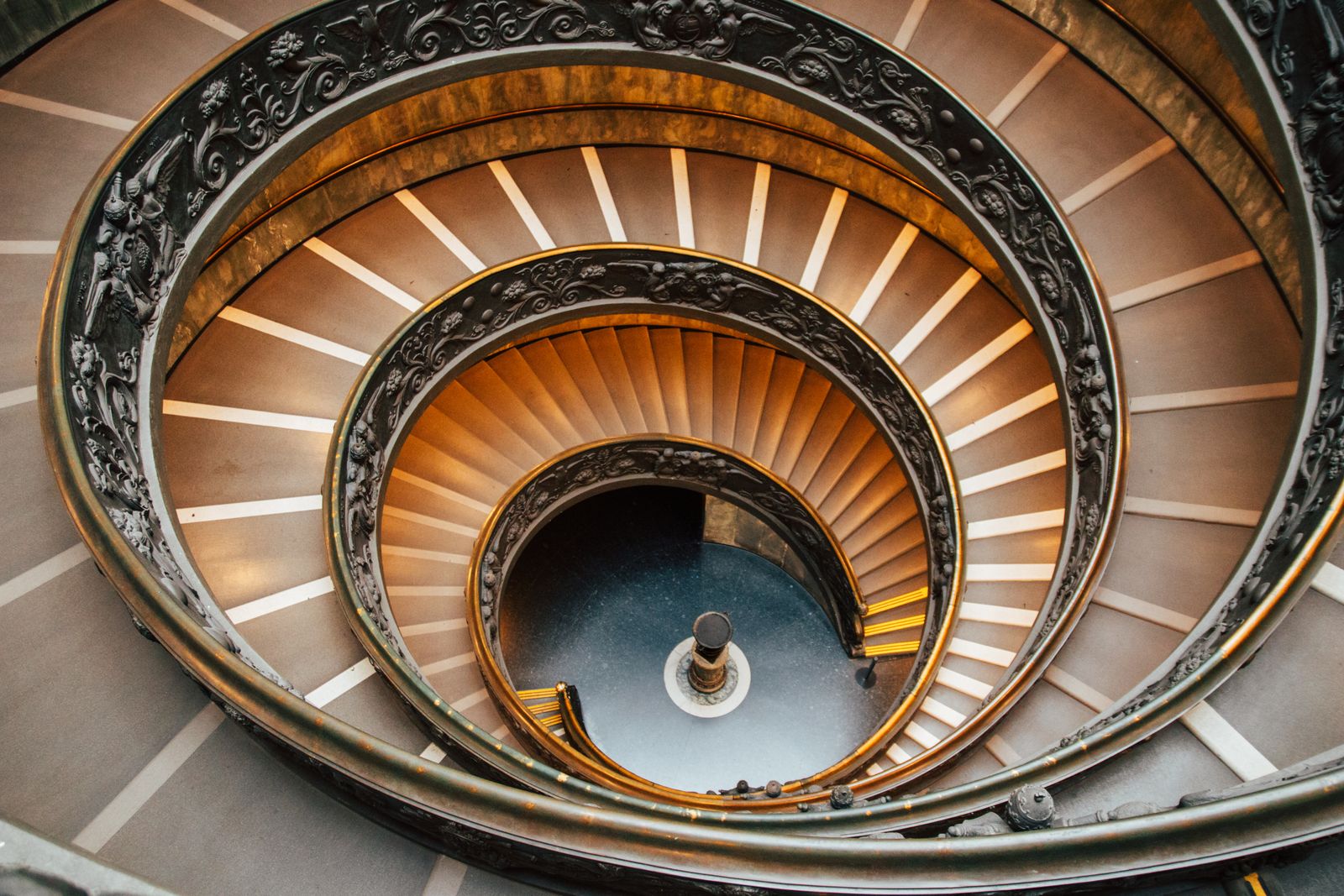
At the end of the visit, the famous double spiral staircase leads you down to the exit. A guided tour is the best way to understand the stories behind the art, and it keeps you moving efficiently through the busiest sections.
St Peter’s Basilica
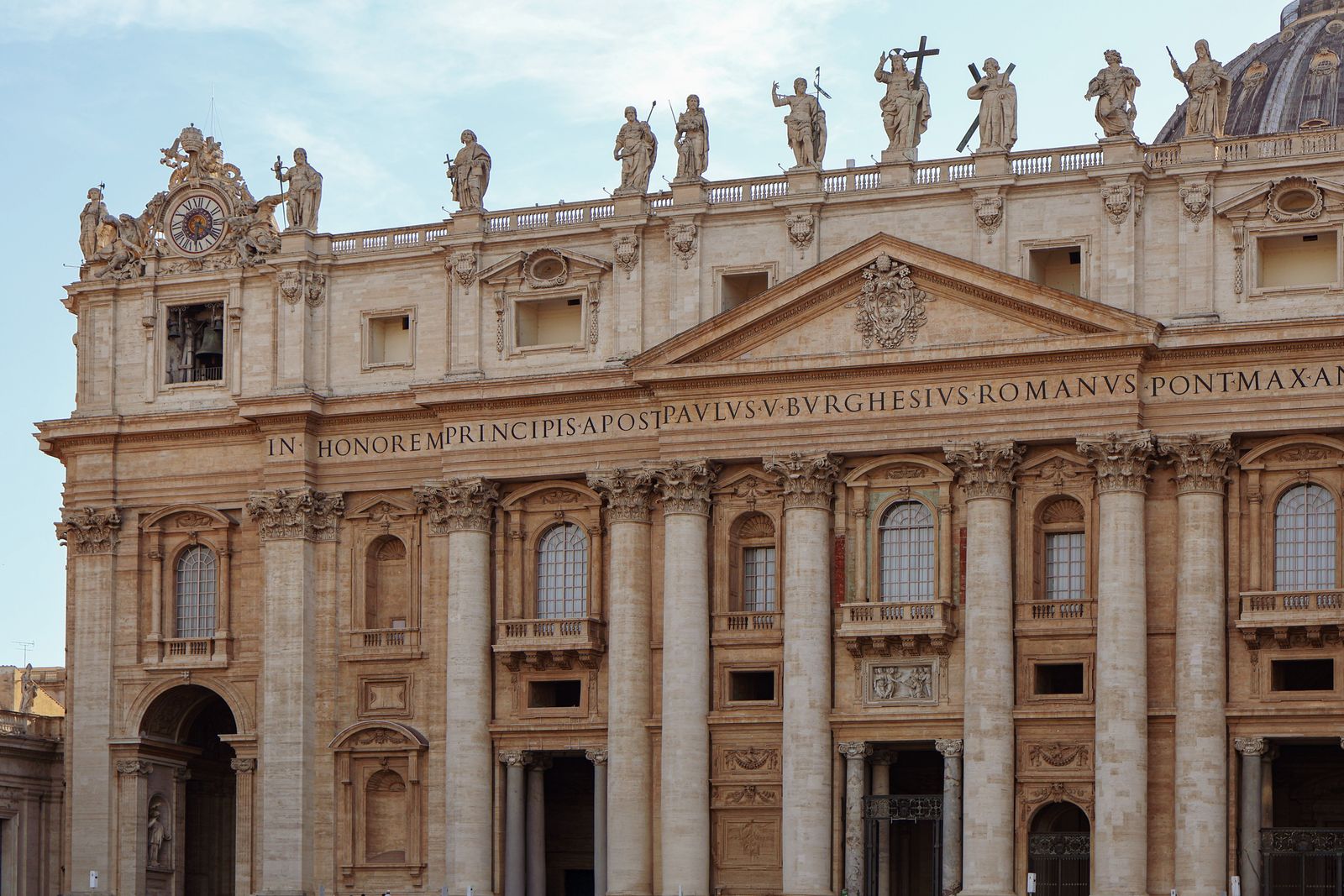
Entry to St Peter’s Basilica is free, but there is a security line in St Peter’s Square that can be very long by mid-morning. Inside, see Michelangelo’s Pietà, sculpted when he was in his twenties, Bernini’s bronze baldachin over the papal altar and the immense dome designed by Michelangelo. You can climb the dome, partly by lift, for the finest view of Rome and the Vatican Gardens.
To save time, book a skip-the-line entry with audio guide or an escorted entry. The most efficient option of all is a full guided tour that combines the museums, the Sistine Chapel and the basilica in a single morning. The basilica is closed during some papal ceremonies, so check the calendar.
When to Go
- Early morning: the first entry slots give you the calmest rooms; head straight for the Sistine Chapel if you want to see it at its quietest, then work backwards.
- Late afternoon: crowds thin out in the last hours before closing.
- Midweek: Tuesdays and Thursdays are usually quieter than Mondays and Saturdays.
- Season: November to February, outside the holidays, is the quietest time of year.
A Short History of the Collections
The Vatican Museums began in the early sixteenth century, when Pope Julius II placed a handful of ancient statues, among them the newly discovered Laocoön, in the courtyard of the Belvedere palace. The same pope commissioned Michelangelo to paint the Sistine Chapel ceiling and Raphael to decorate his private apartments. Successive popes added sculpture galleries, libraries, Egyptian and Etruscan antiquities and, in the twentieth century, a picture gallery and a collection of modern religious art. Today the museums hold tens of thousands of works, of which only a fraction is on display at any time.
A Perfect Vatican Morning
- 7:45: arrive at the museum entrance on Viale Vaticano, ready for one of the first time slots.
- 8:00 to 9:30: the Pio-Clementino sculptures, the Gallery of Maps and the Raphael Rooms while they are still quiet.
- 9:30: the Sistine Chapel. Find a spot along the side wall, look up and take your time.
- 10:30: the Pinacoteca, which many visitors miss, then coffee in the museum courtyard.
- 11:30: walk round to St Peter’s Square for the basilica, or go straight in on a guided tour that continues there.
- 13:00: lunch in the Prati district, a calmer, more residential neighbourhood with excellent trattorie, a few minutes from the Vatican walls.
In the afternoon, walk along the Tiber to Castel Sant’Angelo and across the bridge into the historic centre.
Practical Tips
- Allow time: plan at least three hours for the museums and Sistine Chapel, and another hour for St Peter’s.
- Getting there: the museum entrance is on Viale Vaticano, a ten-minute walk from St Peter’s Square and close to the Ottaviano metro stop.
- Arriving in Rome: a private airport transfer is the easiest start; AirHelp can check compensation for delayed flights.
- Luggage: on arrival or departure day, use Radical Storage rather than trying to bring suitcases to the museums.
- Stay connected: e-tickets and meeting points arrive by email; an eSIM from Airalo or Saily keeps you online.
- Pass option: the Omnia Card with open-top bus combines Vatican entry with transport for a few days in Rome.
More of Rome
For art lovers, the natural next stop is the Borghese Gallery, home to Bernini’s greatest sculptures; book a reserved entrance well ahead. Close to the Vatican, Castel Sant’Angelo and the Pantheon make a good afternoon, and for ancient Rome, the Colosseum arena floor and Roman Forum tour is the highlight. Browse all things to do in Rome.
Prefer to explore at your own pace?
Self-guided audio tours play on your phone, work offline and let you pause for coffee whenever you like. Good options here are the Vatican audio tour for the Museums, Sistine Chapel and St Peter’s or the audio walk from Termini to the Vatican.
Frequently Asked Questions
How much are Vatican Museums tickets in 2026?
The standard ticket costs around €20, or €25 when booked online with the booking fee. Guided tours and resellers cost more but include extras such as a guide or flexible cancellation.
Is the Sistine Chapel included?
Yes. The Sistine Chapel is part of the Vatican Museums visit and cannot be visited separately.
Are the Vatican Museums open on Sunday?
Only on the last Sunday of the month, in the morning, when entry is free. They are closed on other Sundays.
Can I take photos in the Sistine Chapel?
No. Photography is not allowed in the chapel, though it is permitted without flash in most of the museums.
Is St Peter’s Basilica free?
Yes, entry to the basilica is free. You pay to climb the dome, and skip-the-line options save time at security.
Should I book a guided tour or go alone?
On a first visit, a guide saves time and makes sense of the enormous collections. If you have been before or prefer your own pace, a timed fast-track ticket is enough.
Where to Stay: compare hotels and current prices in Rome on Trip.com.
Plan Your Italy Trip
From Rome, continue north to Florence with our luxury guide to Florence, explore Tuscany with Siena Cathedral, or fly south to Sicily, starting with our introduction to the island. Use our Italy travel planner for transfers, car hire and connectivity.
Related guides: read our articles on Borghese Gallery tickets and Pompeii, Herculaneum and Vesuvius.
Travelling south? See our guide to Naples: the Veiled Christ, the underground and the archaeological museum.
More in Rome: Rome beyond the Vatican: the Pantheon, Castel Sant’Angelo and the princely galleries.
Planning ancient Rome? Read our guide to Colosseum tickets.
For the basilica itself, see our guide to St Peter’s Basilica and the dome climb.
To escape the city for a day, see our guide to the best day trips from Rome.
For ancient Rome beyond the centre, see our guide to the Appian Way and Rome’s catacombs.
Hungry in Rome? See our guide to what to eat in Rome.