
June 2026 · Charlotte Hill
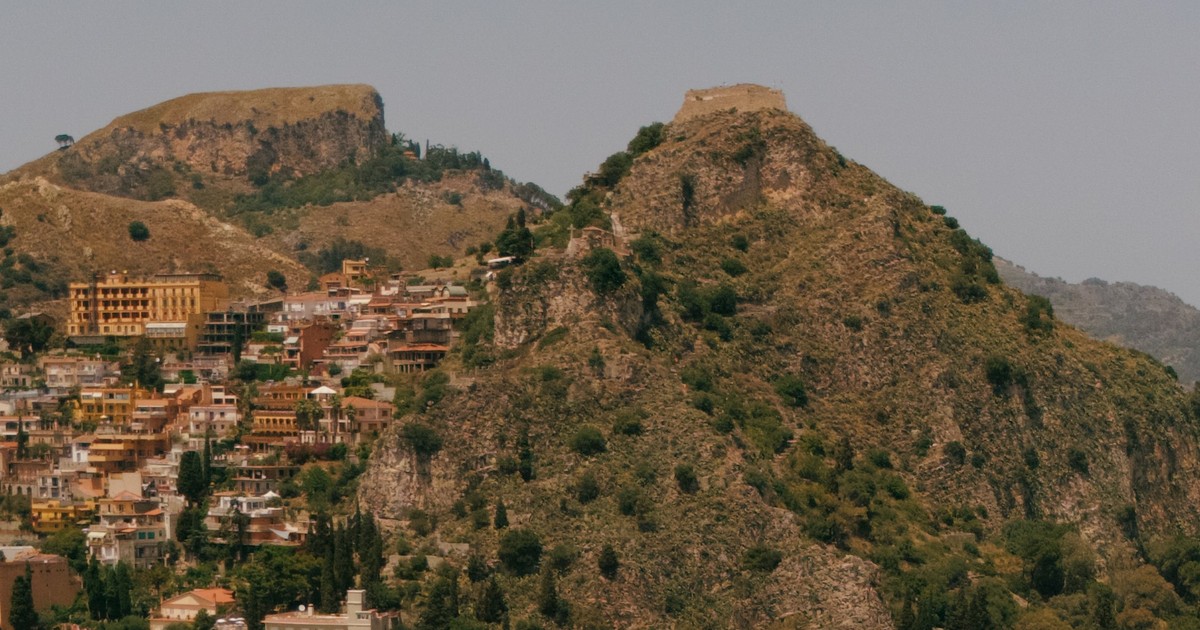
From Taormina’s Greek theatre and the temples of Agrigento to the street markets of Palermo and the volcanic vineyards of Etna – why Sicily is the most layered destination in the Mediterranean, and the part of Italy that rewards the traveller who goes slowly.
Sicily does not operate at the pace of the rest of Italy. The largest island in the Mediterranean – larger than Belgium at over 25,000 square kilometres – it has been colonised, conquered, and shaped by Greeks, Romans, Arabs, Normans, Spanish, and Bourbons in succession, and every layer left something behind. What exists today is a culture entirely its own: specific in its food, its architecture, its attitudes, and its beauty, and increasingly recognised as such. In 2025, Sicily was named European Region of Gastronomy – the first Italian region to receive the honour – a designation that formally acknowledged what travellers have known for decades.
Sicily is, moreover, a destination in transition. Taormina and Cefalù have always attracted visitors. What has changed, however, is the nature of the traveller’s appetite: more people now come to Sicily not for a beach week but to understand it – to eat deeply, to drive inland, to linger. The island rewards that kind of attention in a way that relatively few Mediterranean destinations still can.
One of the most stunning videos ever made of the Greek Theatre of Taormina, with Mount Etna as the breathtaking backdrop
— Mambo Italiano (@mamboitaliano__) July 19, 2025
A true marvel of Sicily, where art and explosive nature come together
Italy 🇮🇹 (Sound on!)pic.twitter.com/kUM7Rx1T48
Sicily: The Shape of the Island
Sicily sits just off the toe of the Italian boot, separated from the mainland by the Strait of Messina at its narrowest point of only three kilometres. Its geography is as varied as its history: the active volcano Mount Etna dominates the east, rising to 3,350 metres and reshaping the landscape with every eruption. The north coast faces the Tyrrhenian Sea with dramatic limestone cliffs and fishing villages; the south and southwest open onto calmer, shallower waters in shades of turquoise that visitors consistently describe as improbably clear.
The interior – often overlooked by travellers who stick to the coast – is a world of its own: rolling wheat plains, medieval hilltop towns, ancient quarries, and the ornate baroque villages of the Val di Noto, eight of which are listed as UNESCO World Heritage Sites. Sicily is genuinely best understood by those who move through it rather than settle in one place.
For a different but equally compelling corner of southern Italy, our guide to Puglia covers the heel of the boot in depth – a natural counterpoint to the volcanic, baroque intensity you find in Sicily.
Where to Go – The Essential Towns and Areas
What to Do in Sicily
Watch the Sun Set Over the Valley of the Temples
The Valley of the Temples in Agrigento is genuinely one of the most extraordinary ancient sites in the world – a ridge of Doric temples in varying states of preservation, set against the sea. The Temple of Concordia, largely intact after twenty-five centuries, is remarkable at any hour, but the site in evening light, when the crowds have thinned and the stone glows orange, is something else entirely. Furthermore, Agrigento served as Italian Capital of Culture in 2025, and the infrastructure around the site – paths, lighting, signage – has been significantly improved as a result.
Eat Your Way Through Palermo
Palermo has one of the most compelling street food cultures in Italy, rooted in centuries of Arabic, Norman, and Spanish influence. The Ballarò and Vucciria markets are the places to start – arancini (fried rice balls, the Palermitan version filled with ragù and peas), pane con la milza (a bread roll with spleen, ricotta, and lemon), and panelle (chickpea fritters) are all available from vendors who have been working these recipes for generations. Moreover, the city has developed a new wave of serious restaurants working with the same local products at a considerably higher register.
Taste Etna Wine
The volcanic slopes of Mount Etna have become one of Italy’s most exciting wine zones over the past decade. Nerello Mascalese – a delicate, aromatic red grape grown at altitude on ancient ungrafted vines – produces wines of striking elegance that consistently confound expectations of Sicilian wine. Additionally, the Contrada system, in which individual lava-flow zones produce wines of distinct character, is the Etna wine world’s equivalent of Burgundy’s terroir. Producers including Benanti, Cornelissen, and Terre Nere offer visits by appointment.
Walk the Island of Ortigia in Syracuse
Ortigia, the historic island-centre of Syracuse, is one of the most rewarding places to spend time in Sicily. The Duomo – a baroque cathedral built directly around the columns of a 5th-century BC Greek temple – summarises three thousand years of Sicilian history in a single building. Each summer, moreover, the Greek amphitheatre above the modern city hosts performances of ancient drama – Sophocles and Euripides performed in the open air, exactly as they were two and a half thousand years ago.
Drive the Val di Noto
The baroque towns of the Val di Noto – rebuilt after the 1693 earthquake destroyed almost everything in the south-east of the island – form a circuit that can be driven over two or three days. Ragusa Ibla, Noto, Modica, and Scicli are the four to prioritise. Each is small enough to understand in a morning but rich enough to justify a longer stay. The most famous product of Modica is its chocolate: ancient in method, made without added fat or emulsifiers, granular and intense, produced in the same way since the Spanish brought cacao from the Americas in the 16th century.
Hike to the Stromboli Crater at Night
Stromboli, the northernmost of the Aeolian Islands, erupts roughly every twenty minutes, day and night, with small explosive bursts visible from the sea. A guided night hike to the crater rim – the summit is at 924 metres – timed to arrive at dark is one of the most genuinely spectacular experiences in Italy. Guides are mandatory above the 400-metre mark; tours depart from the village of San Vincenzo. Book well in advance in summer.
Explore Cefalù in the Early Morning
Cefalù is best understood before the day-trippers arrive. The Norman cathedral – built by Roger II in the 12th century and containing the oldest Byzantine mosaics in Sicily – is most serene in early light. Behind it, the medieval town runs down to a wide sandy beach that is, by almost any standard, remarkable. From Palermo by train, the journey takes under an hour; from the platform, you walk five minutes to the sea. It is one of the most effortless half-days in Sicily.
The Food of Sicily
A Cuisine Shaped by Conquerors
In 2025, Sicily was named European Region of Gastronomy – the first Italian region to receive the designation – and the recognition reflects a cuisine of genuine depth. Sicilian food is the most layered in Italy, because every civilisation that has passed through the island left something on the table: the Greeks brought wheat, wine, and olive oil; the Arabs introduced sugar, citrus, spices, and the technique of making granita; the Spanish contributed tomatoes, peppers, and cacao; and the Normans added their own pastoral and hunting traditions. The result is a cuisine unlike anything on the Italian mainland, and one that continues to evolve.
What to Eat
A few things are worth seeking out specifically. Arancini – fried rice balls – come in two rival versions: Palermo’s round, ragù-and-pea version and Catania’s conical interpretation filled with butter and béchamel, a distinction that locals take seriously. Additionally, pasta alla Norma (rigatoni with fried aubergine, tomato, and ricotta salata) and caponata – a sweet-and-sour aubergine dish with pine nuts, capers, and olives – both demonstrate the Arab influence on the kitchen with particular clarity. For breakfast, however, the essential Sicilian ritual is granita with brioche: semi-frozen almond or coffee granita alongside a soft, buttery roll. Cannoli are best eaten fresh from a pastry counter, the ricotta unmixed, the shell still crisp. Moreover, Modica chocolate – made without cocoa butter, granular and intense – is unlike any other chocolate in Europe.
Where to Eat It
Furthermore, the best way to understand Sicilian food culture is not in a restaurant but in a market. In Palermo, the Ballarò is the place to start: chaotic, theatrical, and entirely itself, with street food vendors working the same recipes their predecessors did. In Catania, the fish market around La Pescheria – particularly vivid in the early morning – reveals how deeply the city’s identity is tied to the sea.
Wine in Sicily
The Grapes and the Zones
Sicily is one of Italy’s most important wine regions – and, increasingly, one of its most interesting. Nero d’Avola is the flagship red: deep, warm, and capable of considerable complexity when handled with restraint. However, the wine that serious buyers are paying closest attention to is Nerello Mascalese from the Etna DOC: a delicate, high-acid red grown at altitude on ancient ungrafted vines above lava flows, with a structure that can age for decades. For whites, moreover, Grillo, Catarratto, and Carricante (the last specific to Etna’s eastern slope) are the grapes worth knowing. Marsala – the fortified wine produced around Trapani – is a DOC product of considerable history, although it is frequently misunderstood in its finer forms.
Producers Worth Knowing
Among the estates worth seeking out: Benanti and Terre Nere for Etna wines with precision and terroir clarity; Planeta, which operates across multiple Sicilian zones and therefore offers the best single introduction to the island’s range; and COS in Vittoria, which produces natural wines from the Cerasuolo di Vittoria DOC – Sicily’s only DOCG. Furthermore, the island’s natural wine scene has expanded significantly in recent years, particularly around Catania and the Etna zone, where young winemakers are working with minimal intervention and organic viticulture.
Where to Stay
Taormina: The Luxury Benchmark
Taormina is Sicily’s primary luxury destination and the place with the widest concentration of high-quality hotels. The Belmond Grand Hotel Timeo – positioned above the Greek theatre, with unobstructed views of Etna and the Ionian coast – is the most celebrated address on the island. Equally compelling is the San Domenico Palace, a converted 15th-century monastery now managed by Four Seasons, with a Michelin-starred restaurant and one of the most theatrical settings in Italian hospitality. Both should be reserved months in advance for July and August. Additionally, the cable car from Taormina’s centre descends to the beach at Mazzarò, where Isola Bella – a small nature reserve connected to the shore by a narrow sandy causeway – offers some of the clearest swimming on the east coast.
Palermo and the Rural Interior
In Palermo, the best boutique options occupy historic palazzi in or close to the old city centre. The Palazzo Natoli Boutique Hotel and the Grand Hotel Wagner are the most established addresses. For travellers who prefer to be outside the city while remaining within reach of it, however, a number of restored rural estates – baglio – in the hills above Palermo and in the wine country of the west offer the Sicilian equivalent of Puglia’s masserie: pools, olive groves, local produce, and quiet.
The Aeolian Islands
On the Aeolian Islands, the design hotels on Panarea and Stromboli are small, expensive in August, and genuinely distinctive. The shoulder season – May, June, and September – brings significantly better value and, moreover, far better access to the islands‘ natural highlights: the volcano hike, the boat circuits, and the underwater clarity that makes these waters among the best in the Mediterranean.
Sicily has two international airports: Palermo Falcone–Borsellino in the west and Catania Fontanarossa in the east. Most visitors enter through Catania, which is better positioned for Taormina, Etna, and Syracuse. Low-cost carriers including Ryanair and EasyJet operate direct routes from major European cities. From Rome or Naples, high-speed rail connects to the Sicilian ferry crossing at Villa San Giovanni, and the train carriages are loaded onto the ferry – a crossing worth doing at least once. A hire car is strongly recommended for anyone intending to explore beyond Taormina and Palermo. The roads through the interior and along the south coast are excellent and largely empty.
When to Go
The Best Months
May, June, and September are the optimal months to visit Sicily. During these windows, the light is extraordinary, temperatures are warm but manageable, the sea is at or near its summer temperature, and the island’s best restaurants have time for their guests. July and August, however, bring intense domestic tourism to the east coast – particularly Taormina, where accommodation prices at peak are the highest in southern Italy. The interior, by contrast – the Val di Noto, Agrigento, the Madonie mountains – remains considerably calmer year-round. October, meanwhile, brings harvest season, the Etna wine scene at its most active, and a specific quality of light in the south-east that landscape photographers seek out deliberately. Furthermore, Palermo’s Festa di Santa Rosalia – a six-day celebration of the city’s patron saint with processions, street music, and communal feasting – takes place in mid-July and is worth building a trip around if the timing aligns.
Go Further West and South
One consistent piece of advice applies across all seasons: the further west and south you travel within Sicily, the quieter it becomes relative to its quality. The south-east – Ragusa, Modica, Noto, and the coast around Pozzallo and Marina di Ragusa – offers an exceptionally high quality of experience with a fraction of the visitor numbers that the east coast attracts in peak season. As a result, the south-east rewards slow travel in a way that few parts of the island still can.
June 2026 · Charlotte Hill
From Taormina’s Greek theatre and the temples of Agrigento to the street markets of Palermo and the volcanic vineyards of Etna – why Sicily is the most layered destination in the Mediterranean, and the part of Italy that rewards the traveller who goes slowly.
Sicily does not operate at the pace of the rest of Italy. The largest island in the Mediterranean – larger than Belgium at over 25,000 square kilometres – it has been colonised, conquered, and shaped by Greeks, Romans, Arabs, Normans, Spanish, and Bourbons in succession, and every layer left something behind. What exists today is a culture entirely its own: specific in its food, its architecture, its attitudes, and its beauty, and increasingly recognised as such. In 2025, Sicily was named European Region of Gastronomy – the first Italian region to receive the honour – a designation that formally acknowledged what travellers have known for decades.
Sicily is, moreover, a destination in transition. Taormina and Cefalù have always attracted visitors. What has changed, however, is the nature of the traveller’s appetite: more people now come to Sicily not for a beach week but to understand it – to eat deeply, to drive inland, to linger. The island rewards that kind of attention in a way that relatively few Mediterranean destinations still can.
One of the most stunning videos ever made of the Greek Theatre of Taormina, with Mount Etna as the breathtaking backdrop
— Mambo Italiano (@mamboitaliano__) July 19, 2025
A true marvel of Sicily, where art and explosive nature come together
Italy 🇮🇹 (Sound on!)pic.twitter.com/kUM7Rx1T48
Sicily: The Shape of the Island
Sicily sits just off the toe of the Italian boot, separated from the mainland by the Strait of Messina at its narrowest point of only three kilometres. Its geography is as varied as its history: the active volcano Mount Etna dominates the east, rising to 3,350 metres and reshaping the landscape with every eruption. The north coast faces the Tyrrhenian Sea with dramatic limestone cliffs and fishing villages; the south and southwest open onto calmer, shallower waters in shades of turquoise that visitors consistently describe as improbably clear.
The interior – often overlooked by travellers who stick to the coast – is a world of its own: rolling wheat plains, medieval hilltop towns, ancient quarries, and the ornate baroque villages of the Val di Noto, eight of which are listed as UNESCO World Heritage Sites. Sicily is genuinely best understood by those who move through it rather than settle in one place.
For a different but equally compelling corner of southern Italy, our guide to Puglia covers the heel of the boot in depth – a natural counterpoint to the volcanic, baroque intensity you find in Sicily.
Where to Go – The Essential Towns and Areas
What to Do in Sicily
Watch the Sun Set Over the Valley of the Temples
The Valley of the Temples in Agrigento is genuinely one of the most extraordinary ancient sites in the world – a ridge of Doric temples in varying states of preservation, set against the sea. The Temple of Concordia, largely intact after twenty-five centuries, is remarkable at any hour, but the site in evening light, when the crowds have thinned and the stone glows orange, is something else entirely. Furthermore, Agrigento served as Italian Capital of Culture in 2025, and the infrastructure around the site – paths, lighting, signage – has been significantly improved as a result.
Eat Your Way Through Palermo
Palermo has one of the most compelling street food cultures in Italy, rooted in centuries of Arabic, Norman, and Spanish influence. The Ballarò and Vucciria markets are the places to start – arancini (fried rice balls, the Palermitan version filled with ragù and peas), pane con la milza (a bread roll with spleen, ricotta, and lemon), and panelle (chickpea fritters) are all available from vendors who have been working these recipes for generations. Moreover, the city has developed a new wave of serious restaurants working with the same local products at a considerably higher register.
Taste Etna Wine
The volcanic slopes of Mount Etna have become one of Italy’s most exciting wine zones over the past decade. Nerello Mascalese – a delicate, aromatic red grape grown at altitude on ancient ungrafted vines – produces wines of striking elegance that consistently confound expectations of Sicilian wine. Additionally, the Contrada system, in which individual lava-flow zones produce wines of distinct character, is the Etna wine world’s equivalent of Burgundy’s terroir. Producers including Benanti, Cornelissen, and Terre Nere offer visits by appointment.
Walk the Island of Ortigia in Syracuse
Ortigia, the historic island-centre of Syracuse, is one of the most rewarding places to spend time in Sicily. The Duomo – a baroque cathedral built directly around the columns of a 5th-century BC Greek temple – summarises three thousand years of Sicilian history in a single building. Each summer, moreover, the Greek amphitheatre above the modern city hosts performances of ancient drama – Sophocles and Euripides performed in the open air, exactly as they were two and a half thousand years ago.
Drive the Val di Noto
The baroque towns of the Val di Noto – rebuilt after the 1693 earthquake destroyed almost everything in the south-east of the island – form a circuit that can be driven over two or three days. Ragusa Ibla, Noto, Modica, and Scicli are the four to prioritise. Each is small enough to understand in a morning but rich enough to justify a longer stay. The most famous product of Modica is its chocolate: ancient in method, made without added fat or emulsifiers, granular and intense, produced in the same way since the Spanish brought cacao from the Americas in the 16th century.
Hike to the Stromboli Crater at Night
Stromboli, the northernmost of the Aeolian Islands, erupts roughly every twenty minutes, day and night, with small explosive bursts visible from the sea. A guided night hike to the crater rim – the summit is at 924 metres – timed to arrive at dark is one of the most genuinely spectacular experiences in Italy. Guides are mandatory above the 400-metre mark; tours depart from the village of San Vincenzo. Book well in advance in summer.
Explore Cefalù in the Early Morning
Cefalù is best understood before the day-trippers arrive. The Norman cathedral – built by Roger II in the 12th century and containing the oldest Byzantine mosaics in Sicily – is most serene in early light. Behind it, the medieval town runs down to a wide sandy beach that is, by almost any standard, remarkable. From Palermo by train, the journey takes under an hour; from the platform, you walk five minutes to the sea. It is one of the most effortless half-days in Sicily.
The Food of Sicily
A Cuisine Shaped by Conquerors
In 2025, Sicily was named European Region of Gastronomy – the first Italian region to receive the designation – and the recognition reflects a cuisine of genuine depth. Sicilian food is the most layered in Italy, because every civilisation that has passed through the island left something on the table: the Greeks brought wheat, wine, and olive oil; the Arabs introduced sugar, citrus, spices, and the technique of making granita; the Spanish contributed tomatoes, peppers, and cacao; and the Normans added their own pastoral and hunting traditions. The result is a cuisine unlike anything on the Italian mainland, and one that continues to evolve.
What to Eat
A few things are worth seeking out specifically. Arancini – fried rice balls – come in two rival versions: Palermo’s round, ragù-and-pea version and Catania’s conical interpretation filled with butter and béchamel, a distinction that locals take seriously. Additionally, pasta alla Norma (rigatoni with fried aubergine, tomato, and ricotta salata) and caponata – a sweet-and-sour aubergine dish with pine nuts, capers, and olives – both demonstrate the Arab influence on the kitchen with particular clarity. For breakfast, however, the essential Sicilian ritual is granita with brioche: semi-frozen almond or coffee granita alongside a soft, buttery roll. Cannoli are best eaten fresh from a pastry counter, the ricotta unmixed, the shell still crisp. Moreover, Modica chocolate – made without cocoa butter, granular and intense – is unlike any other chocolate in Europe.
Where to Eat It
Furthermore, the best way to understand Sicilian food culture is not in a restaurant but in a market. In Palermo, the Ballarò is the place to start: chaotic, theatrical, and entirely itself, with street food vendors working the same recipes their predecessors did. In Catania, the fish market around La Pescheria – particularly vivid in the early morning – reveals how deeply the city’s identity is tied to the sea.
Wine in Sicily
The Grapes and the Zones
Sicily is one of Italy’s most important wine regions – and, increasingly, one of its most interesting. Nero d’Avola is the flagship red: deep, warm, and capable of considerable complexity when handled with restraint. However, the wine that serious buyers are paying closest attention to is Nerello Mascalese from the Etna DOC: a delicate, high-acid red grown at altitude on ancient ungrafted vines above lava flows, with a structure that can age for decades. For whites, moreover, Grillo, Catarratto, and Carricante (the last specific to Etna’s eastern slope) are the grapes worth knowing. Marsala – the fortified wine produced around Trapani – is a DOC product of considerable history, although it is frequently misunderstood in its finer forms.
Producers Worth Knowing
Among the estates worth seeking out: Benanti and Terre Nere for Etna wines with precision and terroir clarity; Planeta, which operates across multiple Sicilian zones and therefore offers the best single introduction to the island’s range; and COS in Vittoria, which produces natural wines from the Cerasuolo di Vittoria DOC – Sicily’s only DOCG. Furthermore, the island’s natural wine scene has expanded significantly in recent years, particularly around Catania and the Etna zone, where young winemakers are working with minimal intervention and organic viticulture.
Where to Stay
Taormina: The Luxury Benchmark
Taormina is Sicily’s primary luxury destination and the place with the widest concentration of high-quality hotels. The Belmond Grand Hotel Timeo – positioned above the Greek theatre, with unobstructed views of Etna and the Ionian coast – is the most celebrated address on the island. Equally compelling is the San Domenico Palace, a converted 15th-century monastery now managed by Four Seasons, with a Michelin-starred restaurant and one of the most theatrical settings in Italian hospitality. Both should be reserved months in advance for July and August. Additionally, the cable car from Taormina’s centre descends to the beach at Mazzarò, where Isola Bella – a small nature reserve connected to the shore by a narrow sandy causeway – offers some of the clearest swimming on the east coast.
Palermo and the Rural Interior
In Palermo, the best boutique options occupy historic palazzi in or close to the old city centre. The Palazzo Natoli Boutique Hotel and the Grand Hotel Wagner are the most established addresses. For travellers who prefer to be outside the city while remaining within reach of it, however, a number of restored rural estates – baglio – in the hills above Palermo and in the wine country of the west offer the Sicilian equivalent of Puglia’s masserie: pools, olive groves, local produce, and quiet.
The Aeolian Islands
On the Aeolian Islands, the design hotels on Panarea and Stromboli are small, expensive in August, and genuinely distinctive. The shoulder season – May, June, and September – brings significantly better value and, moreover, far better access to the islands‘ natural highlights: the volcano hike, the boat circuits, and the underwater clarity that makes these waters among the best in the Mediterranean.
Sicily has two international airports: Palermo Falcone–Borsellino in the west and Catania Fontanarossa in the east. Most visitors enter through Catania, which is better positioned for Taormina, Etna, and Syracuse. Low-cost carriers including Ryanair and EasyJet operate direct routes from major European cities. From Rome or Naples, high-speed rail connects to the Sicilian ferry crossing at Villa San Giovanni, and the train carriages are loaded onto the ferry – a crossing worth doing at least once. A hire car is strongly recommended for anyone intending to explore beyond Taormina and Palermo. The roads through the interior and along the south coast are excellent and largely empty.
When to Go
The Best Months
May, June, and September are the optimal months to visit Sicily. During these windows, the light is extraordinary, temperatures are warm but manageable, the sea is at or near its summer temperature, and the island’s best restaurants have time for their guests. July and August, however, bring intense domestic tourism to the east coast – particularly Taormina, where accommodation prices at peak are the highest in southern Italy. The interior, by contrast – the Val di Noto, Agrigento, the Madonie mountains – remains considerably calmer year-round. October, meanwhile, brings harvest season, the Etna wine scene at its most active, and a specific quality of light in the south-east that landscape photographers seek out deliberately. Furthermore, Palermo’s Festa di Santa Rosalia – a six-day celebration of the city’s patron saint with processions, street music, and communal feasting – takes place in mid-July and is worth building a trip around if the timing aligns.
Go Further West and South
One consistent piece of advice applies across all seasons: the further west and south you travel within Sicily, the quieter it becomes relative to its quality. The south-east – Ragusa, Modica, Noto, and the coast around Pozzallo and Marina di Ragusa – offers an exceptionally high quality of experience with a fraction of the visitor numbers that the east coast attracts in peak season. As a result, the south-east rewards slow travel in a way that few parts of the island still can.
0 Kommentare zu „Sicily, Italy – The Island That Contains Multitudes“