This post contains affiliate links. If you book through them, we may earn a small commission at no extra cost to you. Learn more.
In AD 79, Mount Vesuvius erupted and buried the Roman towns around the Bay of Naples under ash, pumice and volcanic mud. Pompeii and Herculaneum were frozen in time: streets, shops, houses, frescoes, even food on the table. Rediscovered in the eighteenth century, they are the most complete picture of daily life in the ancient world anywhere, and the volcano that destroyed them still rises above the bay.
Visiting all three is one of the great experiences of southern Italy, but the rules have changed in recent years, with named tickets, daily visitor limits and timed entry at Pompeii. This guide explains which tickets to book in 2026, how Pompeii and Herculaneum compare, how to climb Vesuvius and how to fit it all into a day or two.
Our Picks
- Pompeii guided tour: the ruins explained by an archaeologist
- Pompeii entry ticket with audio guide
- Herculaneum entrance ticket: smaller and better preserved
- Vesuvius round trip with crater ticket
- Vesuvius, Herculaneum and Pompeii with transfer: all three in one day
Tickets at a Glance
| Site | Official price (2026) | Time needed | Book |
|---|---|---|---|
| Pompeii, Express ticket | €20, ancient city only | Half a day to a full day | Reserved entrance or with audio guide |
| Pompeii+, with outlying villas | €25, adds the Villa of the Mysteries and other villas | A full day | Guided tour |
| Herculaneum | €16 | About two hours | Entrance ticket |
| Vesuvius crater path | Timed ticket, booked online | Half a day including transport | Skip-the-line ticket |
Reduced tickets exist for young EU visitors, and under-18s enter free. Prices may change; resellers charge slightly more but often include guides or transport.
Pompeii: How the Tickets Work
Pompeii now limits the number of visitors to protect the site. Tickets are named, and your ID is checked against your booking at the entrance, so they cannot be transferred. In the main season, from mid-March to mid-October, entry is timed and capped at 20,000 visitors a day, with most places concentrated in the morning. The site is open from 9:00 to 19:00 in summer, closing earlier in winter, with the last entry an hour and a half before closing.
The Express ticket covers the ancient city itself, which is more than enough for most visitors. Pompeii+ adds the Villa of the Mysteries, famous for its cycle of red frescoes, and several outlying villas connected by shuttle. Book a reserved entrance to secure your time slot, or a ticket with audio guide to explore independently. Because the site is vast and has little signage, a guided tour is the best choice on a first visit.
What to See in Pompeii
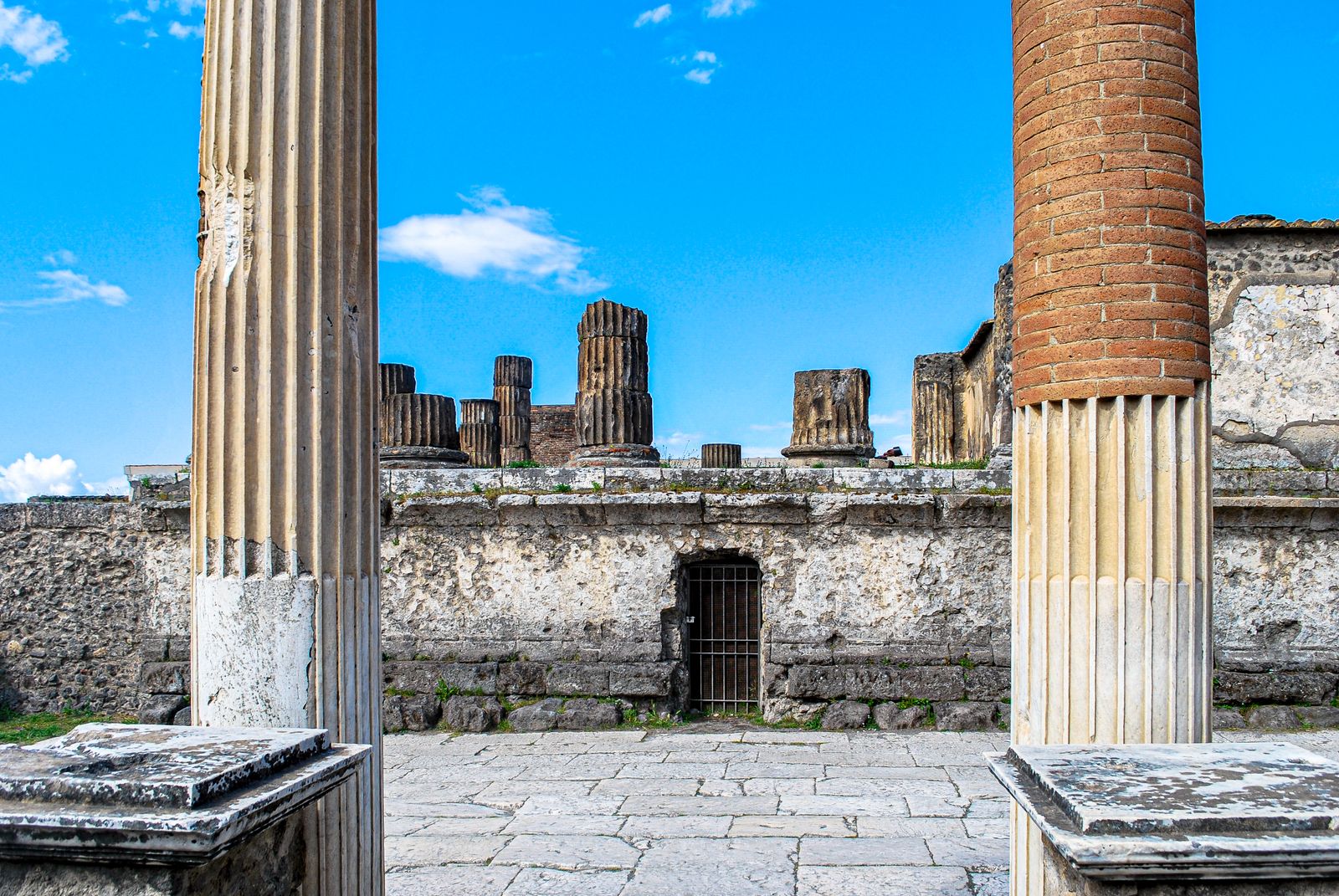
- The Forum: the political and religious centre of the city, with Vesuvius rising behind it.
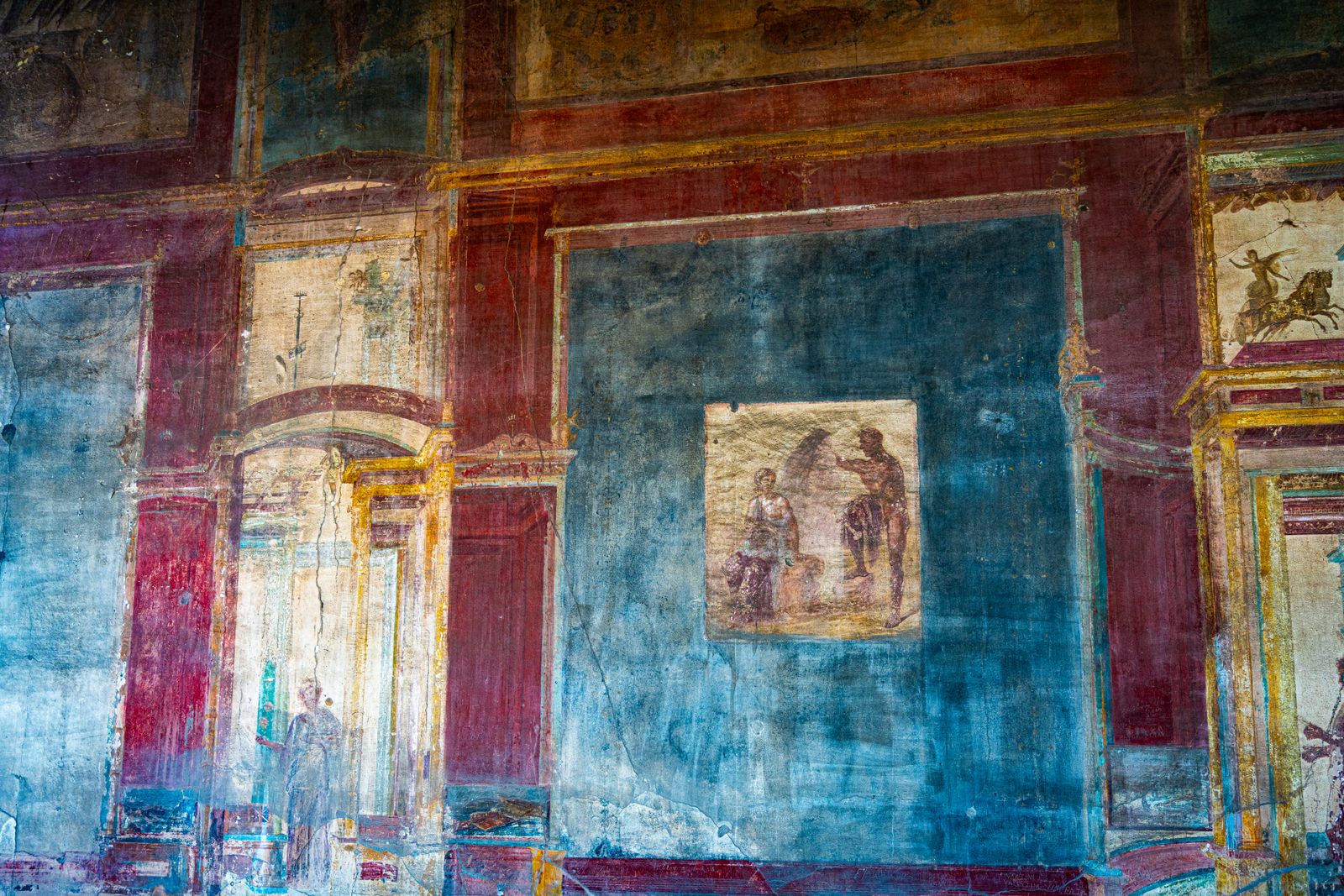
- The House of the Vettii: the home of two wealthy freedmen, with some of the finest frescoes in Pompeii.
- The Lupanar: the town’s brothel, with frank wall paintings and stone beds.
- The Stabian Baths: a complete Roman bath complex with changing rooms, hot and cold pools.
- The Amphitheatre: the oldest surviving stone amphitheatre in the Roman world.
- The Garden of the Fugitives: casts of victims made by pouring plaster into the hollows their bodies left in the ash, a deeply moving sight.
- The Villa of the Mysteries: just outside the walls, with its extraordinary fresco cycle.
Herculaneum: Smaller and Better Preserved
Herculaneum was a smaller, wealthier seaside town, buried not by ash but by deep layers of volcanic mud and debris that hardened over it. That burial preserved what Pompeii lost: upper floors, wooden beams, furniture, doors and even a boat. The frescoes and mosaics are often brighter, and the compact site can be seen in about two hours, with far fewer crowds and no daily cap. Many travellers who see both prefer Herculaneum.
Book a Herculaneum entrance ticket, or combine it with the volcano on the Herculaneum and Vesuvius round trip. The best order for a full day is Herculaneum in the morning, when it is cool and quiet, and Pompeii in the afternoon.

Climbing Vesuvius
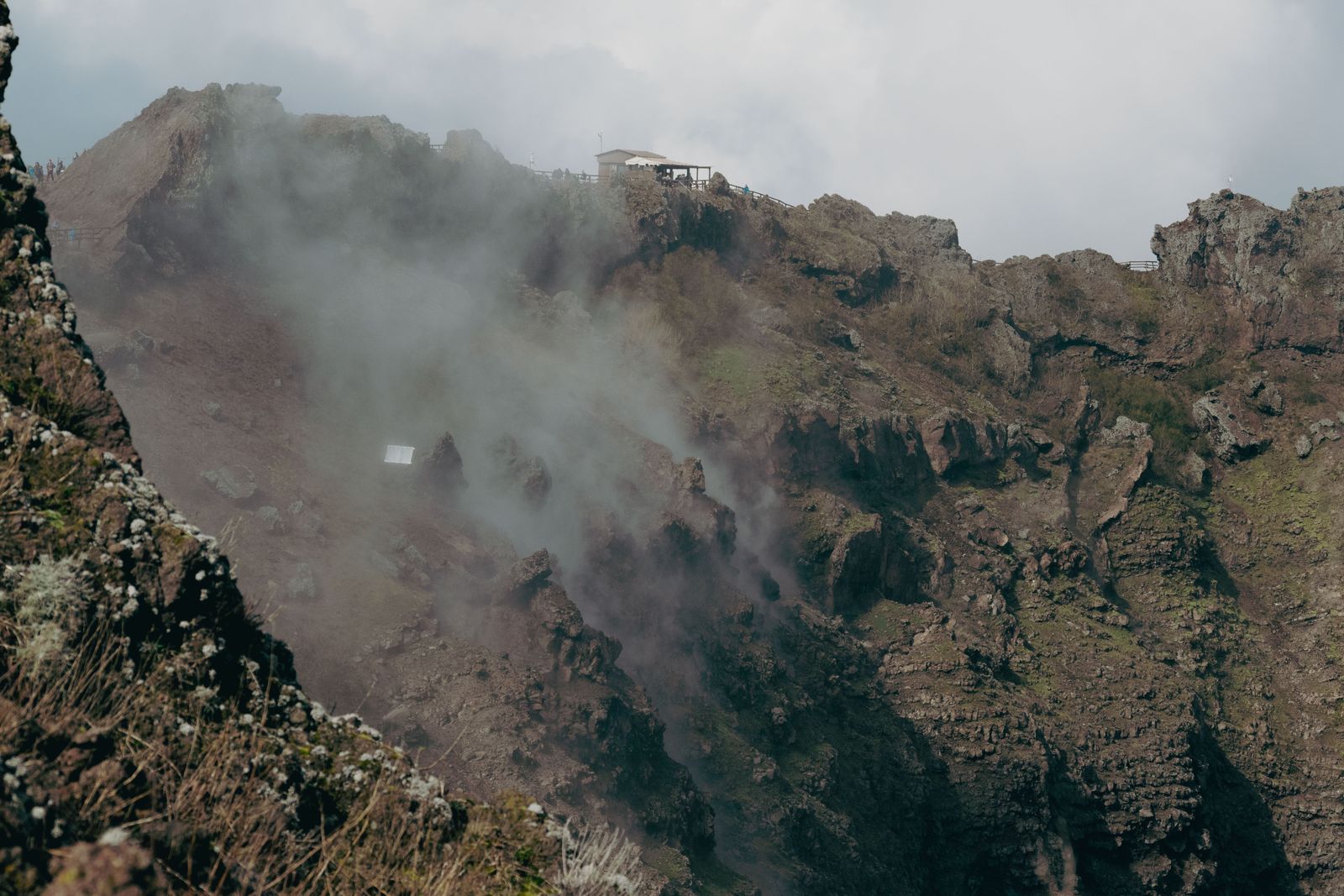
Vesuvius is still an active volcano, although it has been quiet since 1944. A road climbs most of the way up, and from the car park a gravel path leads to the rim of the crater, about half an hour’s walk uphill. From the top, you look down into the crater and out across the whole Bay of Naples to Capri and the Sorrento peninsula. Access is by timed ticket, and the path closes in bad weather or high winds.
Public transport to the summit is limited, so most visitors take a dedicated shuttle. Choose the Vesuvio Express round trip from Ercolano with crater ticket, the round trip from Naples or the fast-track ticket with transport from Pompeii. Wear sturdy shoes and bring water, a hat and a light jacket; it can be windy and cool at the top even in summer.
Beyond the Big Two: Oplontis and Stabiae
If you have more time, the luxury villas buried by the same eruption are some of the most rewarding and least crowded sites in the region. At Oplontis, in modern Torre Annunziata, the vast Villa of Poppaea, thought to have belonged to the family of Nero’s second wife, has huge frescoed rooms, gardens and a swimming pool, and is part of the same UNESCO World Heritage Site as Pompeii and Herculaneum. At Stabiae, near Castellammare di Stabia, a row of grand seaside villas sits on a ridge that once overlooked the bay, with fine frescoes and far fewer visitors. The three-day Pompeii ticket includes both, and they show how the Roman elite lived on this coast before the eruption: in effect, the luxury resorts of their time.
One Day or Two?
With an early start, you can see Herculaneum and Pompeii in one day, or Pompeii and Vesuvius. Doing all three is possible on the combined tour with transfer, but it is a long day. For a more relaxed visit, take two days, or base yourself in Sorrento and combine the ruins with the Amalfi Coast, where a boat tour of Positano, Amalfi and Ravello makes a perfect contrast.
Don’t Miss the Naples Archaeological Museum
Many of the finest objects from Pompeii and Herculaneum are not on site but in the National Archaeological Museum of Naples: the Alexander Mosaic, bronze statues, frescoes removed from the villas and the famous Secret Cabinet of erotic art. Visiting it before or after the ruins brings them to life. While in Naples, see the veiled Christ in the Sansevero Chapel and explore Naples Underground.
Getting There
The Circumvesuviana railway runs from Napoli Garibaldi to both sites. For Pompeii, get off at Pompei Scavi–Villa dei Misteri, a short walk from the Porta Marina entrance, not at the mainline Pompei station in the modern town. For Herculaneum, use Ercolano Scavi. The trains are basic and crowded in summer, so many travellers prefer a private transfer from Naples or the Amalfi Coast.
Practical Tips
- Bring ID: Pompeii tickets are named and checked.
- Heat and shade: Pompeii has very little shade. Bring water, sunscreen and a hat, and visit early or late in summer.
- Shoes: Roman paving stones are uneven; wear comfortable, sturdy shoes.
- Luggage: large bags are not allowed on site. Use Radical Storage in Naples or Sorrento.
- Free days: entry is free on the first Sunday of the month, but expect large crowds.
- Stay connected: an eSIM for Italy helps with timetables and maps; AirHelp can check compensation for flight delays.
Prefer to explore at your own pace?
Self-guided audio tours play on your phone, work offline and let you pause for coffee whenever you like. Good options here are the Pompeii ticket with an archaeologist’s audio tour or the Pompeii archaeologist audio tour (without ticket).
Frequently Asked Questions
Do I need to book Pompeii in advance?
Yes, especially in the main season, when entry is timed and capped. Tickets are named, so book in the name of each visitor.
Pompeii or Herculaneum: which is better?
Pompeii is larger and more famous; Herculaneum is smaller, better preserved and less crowded. If you have time, see both.
How long do you need at Pompeii?
At least three to four hours for the highlights, and a full day to see it properly.
Can you climb Vesuvius?
Yes, with a timed ticket. A shuttle takes you most of the way, followed by a walk of about half an hour to the crater rim.
Can I visit Pompeii from Rome?
Yes, as a long day trip with the high-speed train to Naples and the Circumvesuviana, or on an organised tour, but staying a night in Naples or Sorrento is far more relaxed.
Plan Your Italy Trip
Combine the ruins with the Amalfi Coast by boat, the treasures of the Vatican Museums in Rome, or continue south to Sicily, where the Valley of the Temples is the island’s great archaeological site. Use our Italy travel planner for transfers and connectivity, and browse more tours in Pompeii.
Related guides: read our articles on the Amalfi Coast by boat, Vatican Museums tickets and the Valley of the Temples in Agrigento.
Spending time in the city? See our guide to Naples: the Veiled Christ, the underground and the archaeological museum.
For more time on the water, see our guide to Capri by boat.
More in Rome: Rome beyond the Vatican: the Pantheon, Castel Sant’Angelo and the princely galleries.
Planning ancient Rome? Read our guide to Colosseum tickets.
To escape the city for a day, see our guide to the best day trips from Rome.
Hungry in Naples? See our guide to Naples for food lovers.