This post contains affiliate links. If you book through them, we may earn a small commission at no extra cost to you. Learn more.
Rome has a ticketing problem, and it is the Colosseum and the Vatican. Both sell out weeks ahead, both are crowded even when you get in, and both swallow so much planning energy that many visitors never see the rest of the city properly. Yet some of the most rewarding rooms in Rome are a short walk from the Pantheon, half empty on a weekday morning, and still owned by the princely families who filled them.
This guide is for the second, third or fifth visit, or for anyone who would rather spend a morning with a Caravaggio and a quiet courtyard than in a queue. It covers the Pantheon and Castel Sant’Angelo, which are worth doing properly, the Capitoline Museums, and the private palace galleries that most itineraries ignore: Doria Pamphilj, Colonna and Barberini. Every site comes with the ticket we would book.
Quick answer
One morning, central Rome: the Castel Sant’Angelo and Pantheon skip-the-line combo. One afternoon of serious art without crowds: Palazzo Doria Pamphilj. Ancient Rome without the Colosseum queue: the Capitoline Museums, with the best view over the Forum in the city.
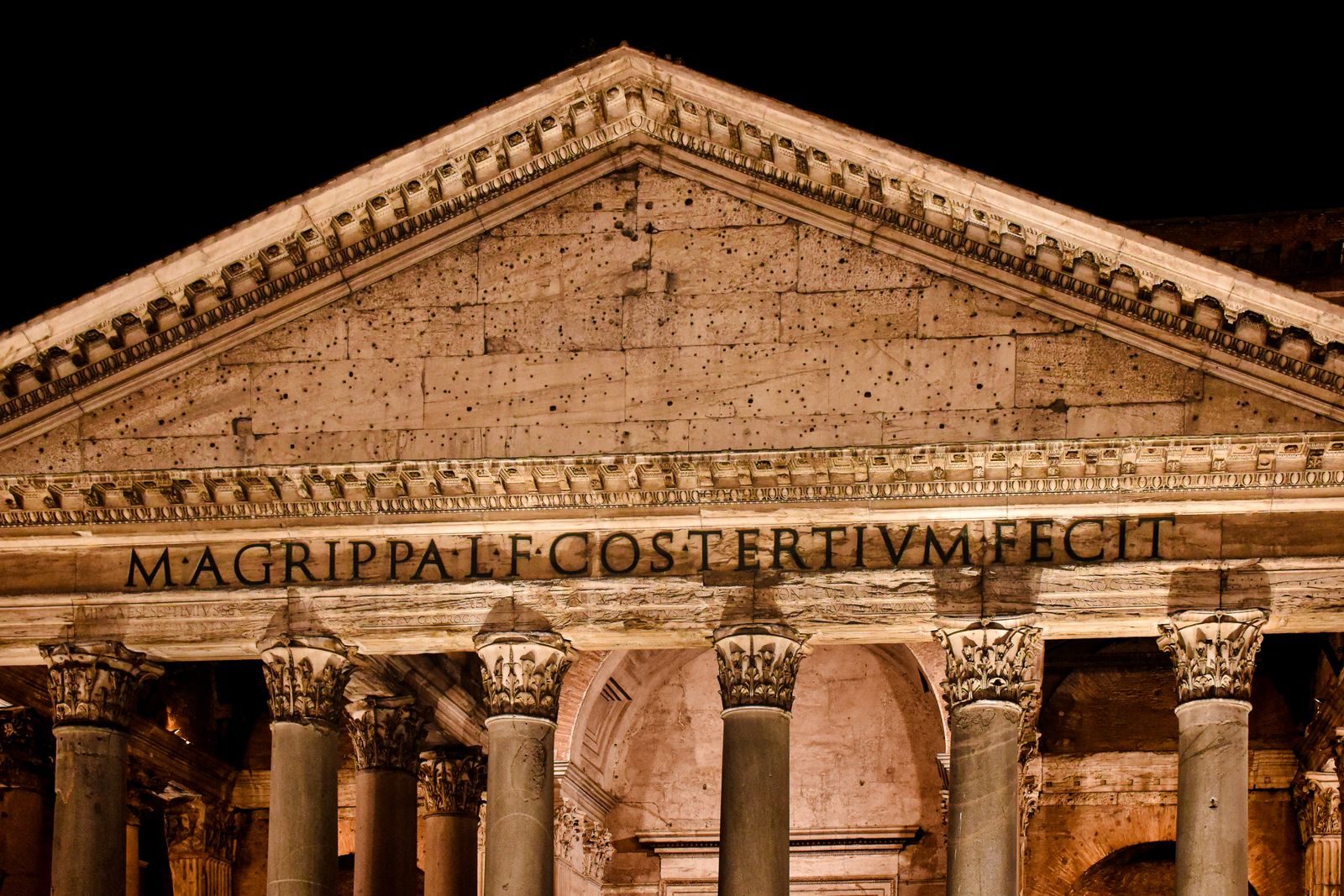
The Pantheon: the best-preserved building of ancient Rome
The inscription on the porch credits Marcus Agrippa, but the building you walk into was rebuilt under Hadrian in the 120s AD. Nearly nineteen centuries later its unreinforced concrete dome is still the largest of its kind in the world, a perfect hemisphere above a drum whose height matches the dome’s diameter, so that a sphere would fit exactly inside. The only light comes from the oculus, the open circle at the top. On a sunny day the disc of light moves slowly across the coffers like the hand of a clock; when it rains, the water falls straight through onto a floor that was designed to drain it.
The Pantheon survived because it became a church in the early seventh century, and it still holds Mass. It is also a burial place. Raphael lies here, at his own request, alongside the first two kings of unified Italy. Since 2023 entry has required a ticket, which ended the free-for-all but not the crowds at the door. A fast-track ticket with digital audio guide lets you walk past the line; the small-group guided tour is worth it if you want the engineering explained by someone who can point at it.
Timing: go at opening or in the last hour. Midday is the worst moment, when tour groups converge from the Trevi Fountain and Piazza Navona.
Castel Sant’Angelo: tomb, fortress, prison, palace
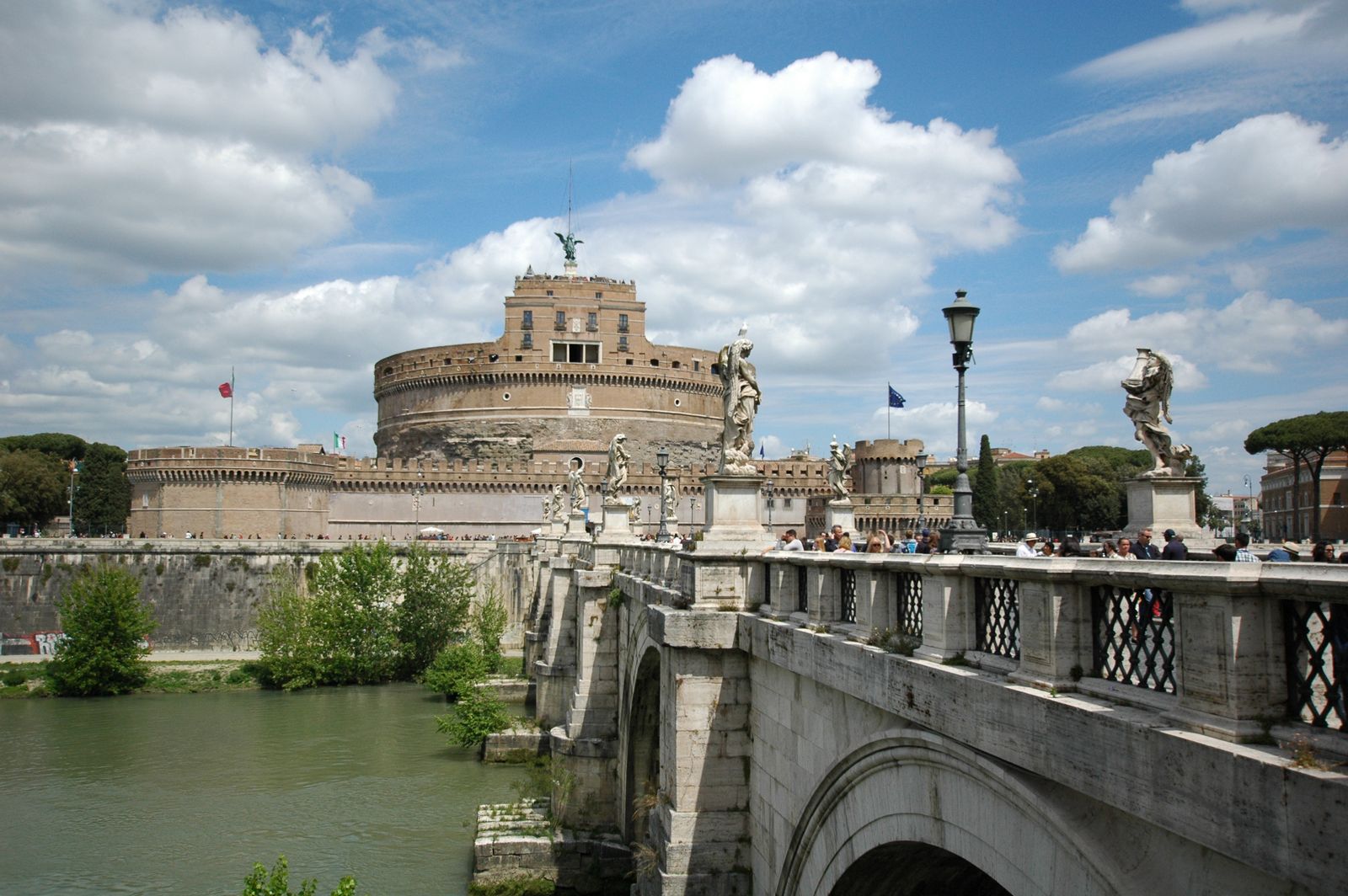
Hadrian, who built the Pantheon, also built his own mausoleum on the far bank of the Tiber. Over the next millennium it was turned into a fortress, a papal stronghold and a prison, and every function left a layer. You enter through the Roman spiral ramp that once carried the emperor’s funeral procession, climb through medieval defences, and emerge in Renaissance papal apartments painted with grotesques and gold. At the top, the terrace beneath the bronze angel has one of the finest views in Rome, straight down Via della Conciliazione to St Peter’s dome.
Opera lovers know the terrace as the setting of the last act of Puccini’s Tosca. Historians know the castle as the place Pope Clement VII ran to in 1527, when imperial troops sacked Rome. He escaped along the Passetto di Borgo, an elevated walkway running from the Vatican to the castle along the old city wall. The Passetto opens to visitors only on selected dates, and the Passetto di Borgo and Castel Sant’Angelo ticket or the Passetto guided tour are the realistic ways in.
For the castle alone, a skip-the-line entry is enough; the guided version adds context that the sparse signage does not.
The Capitoline Museums: the oldest public museum in the world
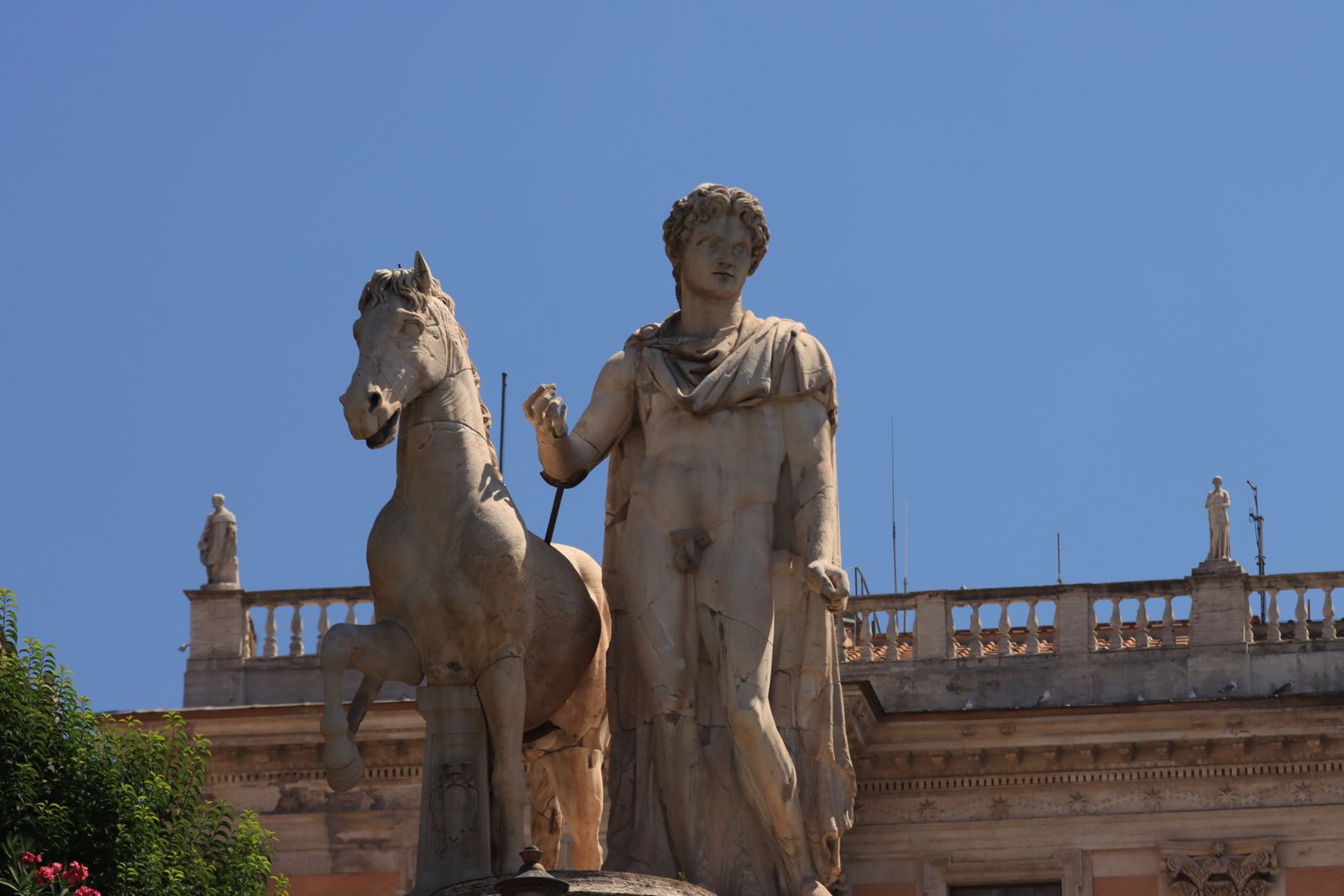
In 1471 Pope Sixtus IV gave a group of ancient bronzes to the people of Rome and placed them on the Capitoline Hill. That gift is usually counted as the founding of the world’s first public museum, and the collection has been growing ever since. It now fills two palaces facing each other across Michelangelo’s piazza, linked by a tunnel beneath it.
The headline pieces are the Capitoline Wolf, the bronze she-wolf that became the emblem of the city, and the original equestrian statue of Marcus Aurelius, the only bronze of a Roman emperor on horseback to survive from antiquity (the one in the square outside is a copy). Add the Dying Gaul, the Capitoline Venus and a picture gallery with Caravaggio’s Fortune Teller and John the Baptist, and you have a full morning. The tunnel between the palaces passes through the Tabularium, the Roman state archive, whose arcade frames the Forum below. Few views in Rome are better and none are less crowded.
Book a standard Capitoline Museums ticket if you like to wander, or the guided tour with multimedia experience if you want the history laid out. Sculpture lovers should also look at the combined ticket with Centrale Montemartini, where ancient statues stand among the turbines of a decommissioned power station south of the centre. It is one of the most striking museum settings in Europe.
The princely galleries: Rome’s best-kept secret
Rome’s great noble families, many of them related to popes, spent centuries buying paintings. Several of their palaces still belong to the same families and open to the public on their own terms. They have none of the crowds of the Vatican and some of the same artists.
Palazzo Doria Pamphilj
On Via del Corso, behind a facade you could walk past a hundred times, the Doria Pamphilj family still lives above one of the most important private collections in Italy. The star is Velázquez’s portrait of Pope Innocent X, a Pamphilj, so penetrating that the pope is said to have called it “too true”. Two early Caravaggios hang nearby, the Rest on the Flight into Egypt and the Penitent Magdalene, along with Titian, Raphael and a Bernini bust of the same pope. The gilded Hall of Mirrors could be in Versailles. The audio guide is narrated by a member of the family, which gives the visit an unusual personal tone. Book the Palazzo Doria Pamphilj skip-the-line ticket.
Galleria Colonna
The Colonna family palace opens only a few mornings a week, which keeps it blissfully quiet. Its Great Hall is one of the most spectacular Baroque interiors in Rome, and on one of its steps sits a cannonball fired during the siege of 1849, left where it landed. Film fans will recognise the hall from the final press conference scene of Roman Holiday. The paintings include Annibale Carracci’s earthy Bean Eater. Opening days are limited, so lock in your slot with a Colonna Gallery ticket before you plan the rest of the week around it.
Palazzo Barberini and Galleria Corsini
Palazzo Barberini, built for the family of Pope Urban VIII with contributions from Bernini and Borromini, now houses the national gallery of ancient art. Raphael’s La Fornarina and Caravaggio’s Judith Beheading Holofernes are the paintings people come for; Pietro da Cortona’s ceiling in the main salon is the one they remember. The same ticket covers Galleria Corsini across the river in Trastevere, a smaller palace collection that pairs well with an evening in that neighbourhood.
| Site | Why go | Time needed | Ticket |
|---|---|---|---|
| Pantheon | The dome, the oculus, Raphael’s tomb | 30 to 45 min | Fast track + audio guide |
| Castel Sant’Angelo | Hadrian’s tomb, papal rooms, the terrace view | 2 hours | Skip-the-line |
| Pantheon + Castel Sant’Angelo | Both in one booking | Half a day | Combo ticket |
| Passetto di Borgo | The popes’ escape route | 1.5 hours | Guided tour |
| Capitoline Museums | Marcus Aurelius, the Wolf, the Forum view | 2.5 hours | Entry ticket |
| Palazzo Doria Pamphilj | Velázquez, Caravaggio, Hall of Mirrors | 1.5 hours | Skip-the-line |
| Galleria Colonna | Baroque Great Hall, limited opening | 1 hour | Entry ticket |
| Barberini + Corsini | Raphael, Caravaggio, Cortona’s ceiling | 2 hours | Combined entry |
| Ara Pacis | Augustus’s altar in Richard Meier’s pavilion | 45 min | Entry ticket |
Two more worth fitting in
The Ara Pacis. Augustus’s Altar of Peace, consecrated in 9 BC, is carved with a procession of the imperial family so lifelike you can spot a child tugging at an adult’s toga. It sits in a glass pavilion by Richard Meier beside the Tiber, a building Romans argued about for years. It takes under an hour and makes a good stop between Piazza del Popolo and the Pantheon. Book an Ara Pacis ticket.
Under the Trevi Fountain. A few steps from the fountain, the site known as Vicus Caprarius preserves Roman houses and a water cistern still fed by the aqueduct that supplies the Trevi itself. A Trevi underground guided tour turns the city’s most crowded square into something more interesting.
A two-day plan
| When | Day one: centro storico | Day two: hills and palaces |
|---|---|---|
| Morning | Pantheon at opening, coffee at Sant’Eustachio, Palazzo Doria Pamphilj | Capitoline Museums and the Tabularium view |
| Lunch | Around Campo de’ Fiori | Monti, the old neighbourhood behind the Forum |
| Afternoon | Piazza Navona, then Castel Sant’Angelo and the terrace | Palazzo Barberini, then the Trevi underground |
| Evening | Aperitivo by the Tiber | Galleria Corsini then a Trastevere sunset food and wine tour |
If you want a single card to cover transport and a set of sights, compare the Rome Tourist Card against what you actually plan to visit; it pays off for heavy sightseers more than for slow travellers.
Where this fits with the big ticket sites
None of this replaces the Vatican or the Borghese, it complements them. Our guides to Vatican Museums and Sistine Chapel tickets and Borghese Gallery tickets explain how to secure those slots, which you should do first. Then build the days around them with the sites above. If you are heading south afterwards, Pompeii, Herculaneum and Vesuvius and Naples are an easy high-speed train ride away.
Arriving and getting around
From Fiumicino, the Leonardo Express runs non-stop to Termini in about half an hour. With luggage, or if you are staying in the historic centre, a private transfer with Welcome Pickups drops you at the door, which matters in streets taxis struggle to reach. Almost everything in this guide is walkable from the Pantheon. For eSIMs, flight compensation and luggage storage, see our Italy travel planner.
Prefer to explore at your own pace?
Self-guided audio tours play on your phone, work offline and let you pause for coffee whenever you like. Good options here are the Pantheon entry ticket and audio tour, Castel Sant’Angelo ticket and audio tour or the Palazzo Barberini and Galleria Corsini ticket.
Charlotte’s pick
If I could recommend only one thing here, it would be Palazzo Doria Pamphilj. It is the most rewarding hour of art in Rome that most visitors never discover: Velázquez, Caravaggio and a Hall of Mirrors, in a palace the family still lives in, without the crowds of the Vatican.
Where to Stay: compare hotels and current prices in Rome on Trip.com.
FAQ
Do I need to book the Pantheon in advance?
Not strictly, but the ticket queue at the door can be long at peak times. A fast-track ticket removes it.
Which is better, the Capitoline Museums or the Roman Forum?
They complement each other. The Forum gives you the ruins in place; the Capitoline gives you the statues that once stood there and a view over the whole site from above. If you have time for one and dislike crowds, choose the Capitoline.
Are the private galleries suitable for children?
Castel Sant’Angelo, with its ramps, cannons and ramparts, is the hit with children. Doria Pamphilj and Colonna suit older children who enjoy paintings, and the visits are short.
When is Galleria Colonna open?
Only on a few mornings each week, with occasional special openings. Check the available dates on the ticket page before you plan around it.
Is the Passetto di Borgo always open?
No. It opens on selected dates and only with specific tickets. If it matters to you, book as soon as your dates are fixed.
Planning ancient Rome? Read our guide to Colosseum tickets.
For the basilica itself, see our guide to St Peter’s Basilica and the dome climb.
To escape the city for a day, see our guide to the best day trips from Rome.
For ancient Rome beyond the centre, see our guide to the Appian Way and Rome’s catacombs.
Hungry in Rome? See our guide to what to eat in Rome.