This post contains affiliate links. If you book through them, we may earn a small commission at no extra cost to you. Learn more.
Entry to St Peter’s Basilica is free, and that is precisely what makes it complicated. Without tickets there are no time slots, so on a busy morning the security line in St Peter’s Square can snake around Bernini’s colonnade for well over an hour. Inside, most visitors walk the nave, photograph the Pietà and leave, missing the dome climb, the papal grottoes beneath the floor and the details that make this the most extraordinary church in Christendom.
This guide explains how to visit St Peter’s well: when to go, how to avoid the line, whether to climb the dome, what lies underneath, how a papal audience works, and how to combine the basilica with the Vatican Museums and Rome’s other great papal church, Santa Maria Maggiore.
Quick answer
For the best single visit, book the St Peter’s guided tour with dome climb. Short on time? An escorted entry with audio guide and optional dome access skips the worst of the wait. Seeing the Vatican Museums too? The full guided tour of the Museums, Sistine Chapel and St Peter’s links all three.

A church built over a tomb
According to tradition, St Peter was executed in Nero’s circus on the Vatican Hill and buried in a cemetery nearby. In the fourth century, Constantine built a basilica directly over the grave. By the Renaissance that building was crumbling, and in 1506 Pope Julius II laid the foundation stone of its replacement. It took 120 years and almost every great architect of the age to finish it. Bramante drew the first plan, Michelangelo designed the dome, Carlo Maderno lengthened the nave and built the facade, and Gian Lorenzo Bernini spent much of his long career filling the interior and framing the square outside.
The scale is hard to grasp until you are inside. Letters on the frieze that look normal from the floor are taller than a person, and the cherubs holding the holy water stoups are the size of adults. Brass markers in the floor of the nave show where other great cathedrals of the world would end if placed inside St Peter’s.
What to see inside
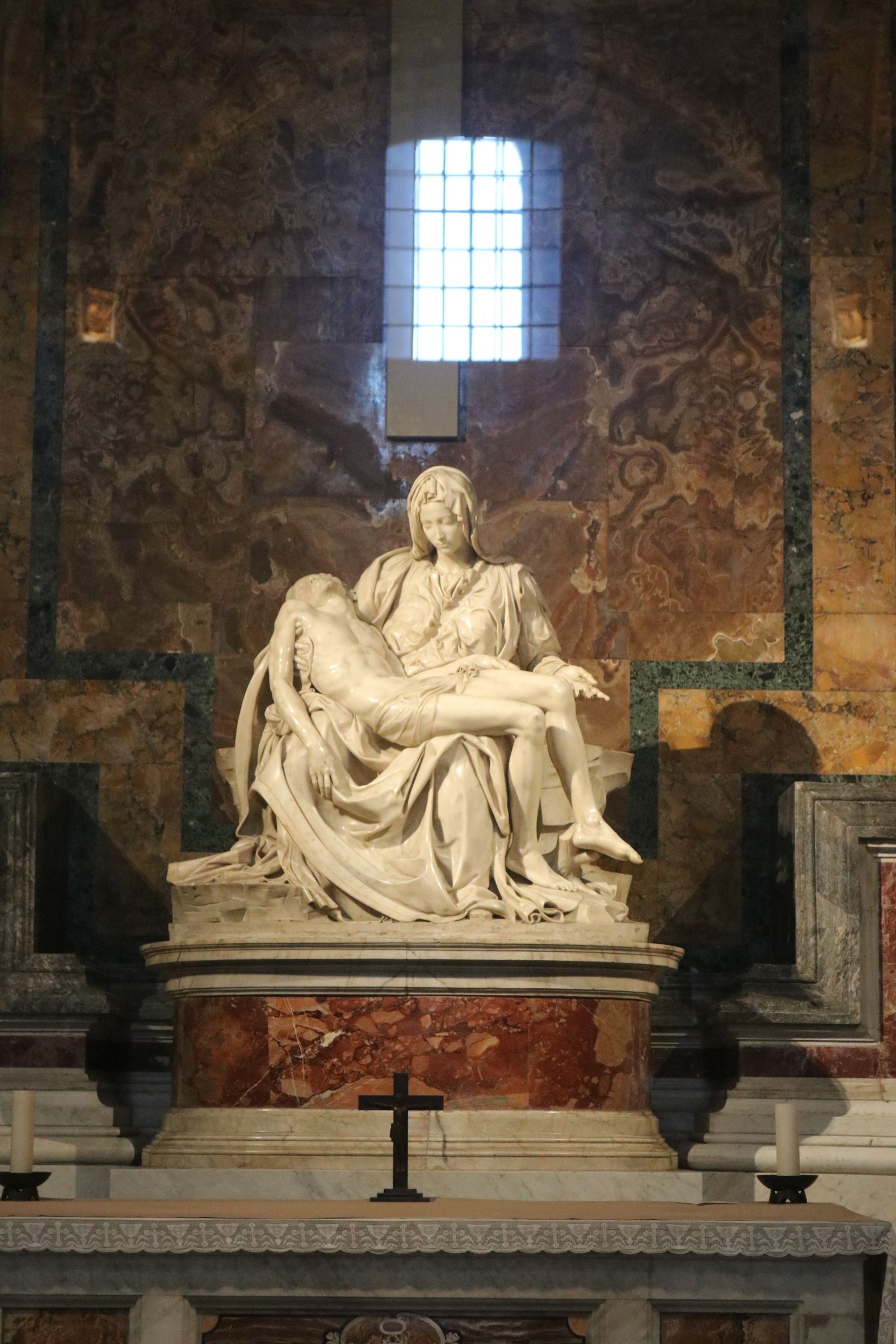
- Michelangelo’s Pietà. In the first chapel on the right, the marble Virgin holding her dead son was carved when Michelangelo was in his early twenties. It is the only work he ever signed, on the sash across Mary’s chest. Since an attack in 1972 it has been behind glass.
- Bernini’s baldacchino. The bronze canopy over the papal altar rises nearly thirty metres on twisting columns. It marks the spot directly above St Peter’s tomb.
- The Chair of St Peter. In the apse, Bernini’s gilded bronze throne floats beneath a window of alabaster where the Holy Spirit appears as a dove in golden light. Late afternoon is the moment to see it.
- The bronze statue of St Peter. His right foot has been worn smooth by centuries of pilgrims’ kisses and touches.
- The mosaics. Almost every “painting” in the basilica is actually a mosaic, made in the Vatican’s own studio to survive the damp. The Vatican Mosaic Studio tour shows how they are still made today.
Climbing the dome
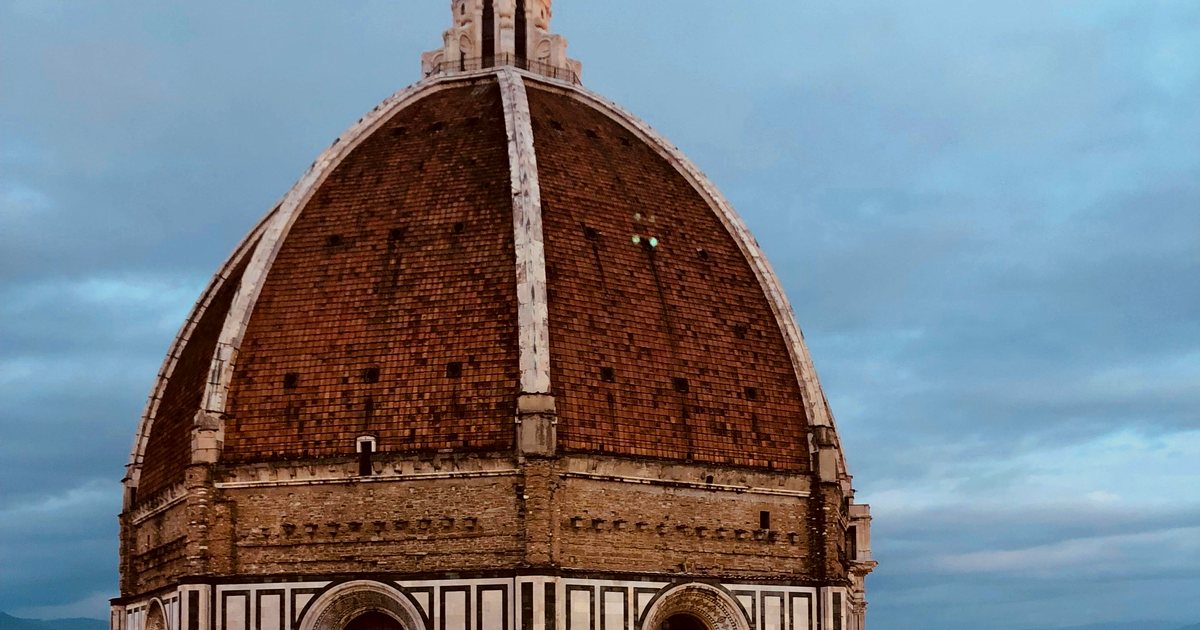
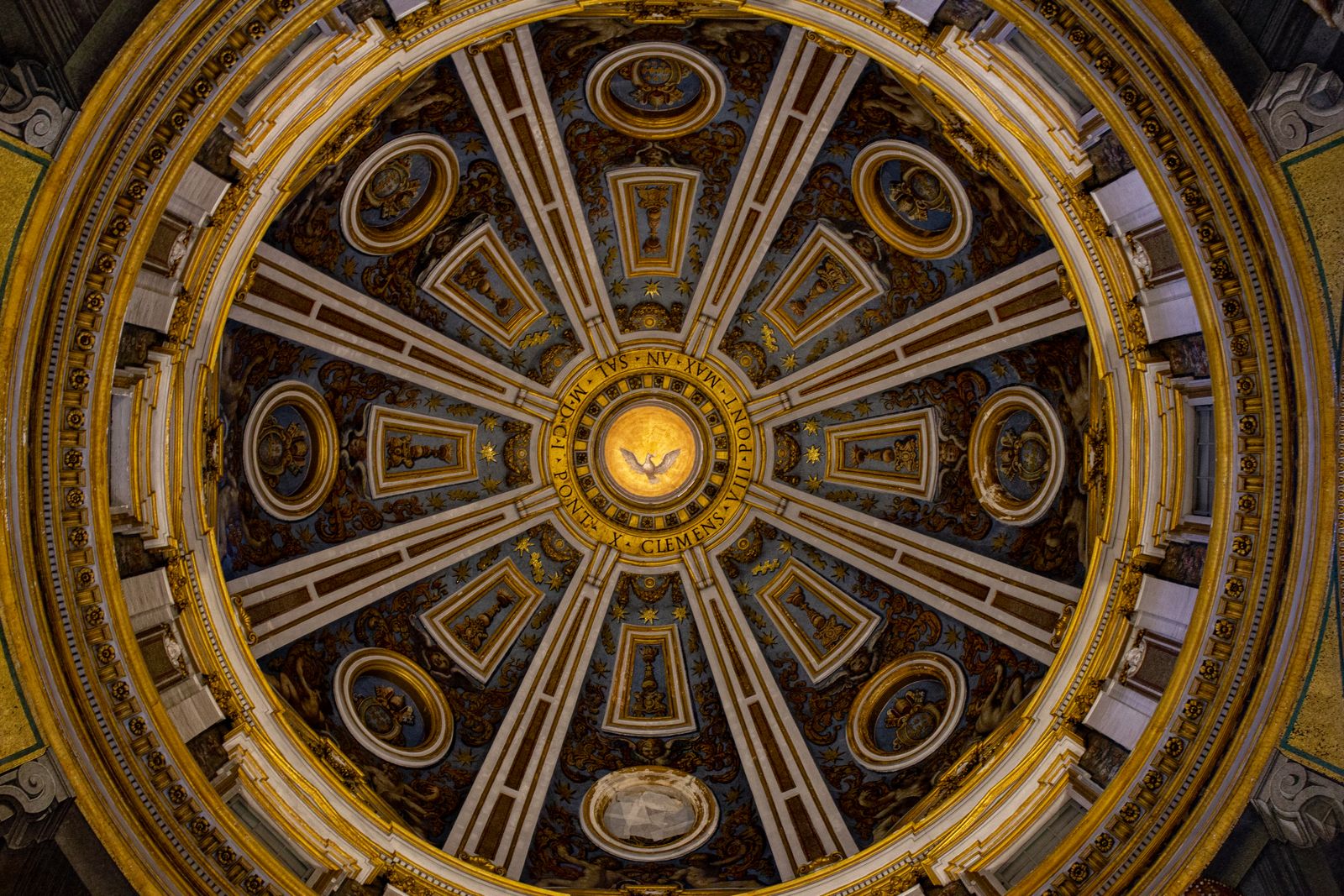
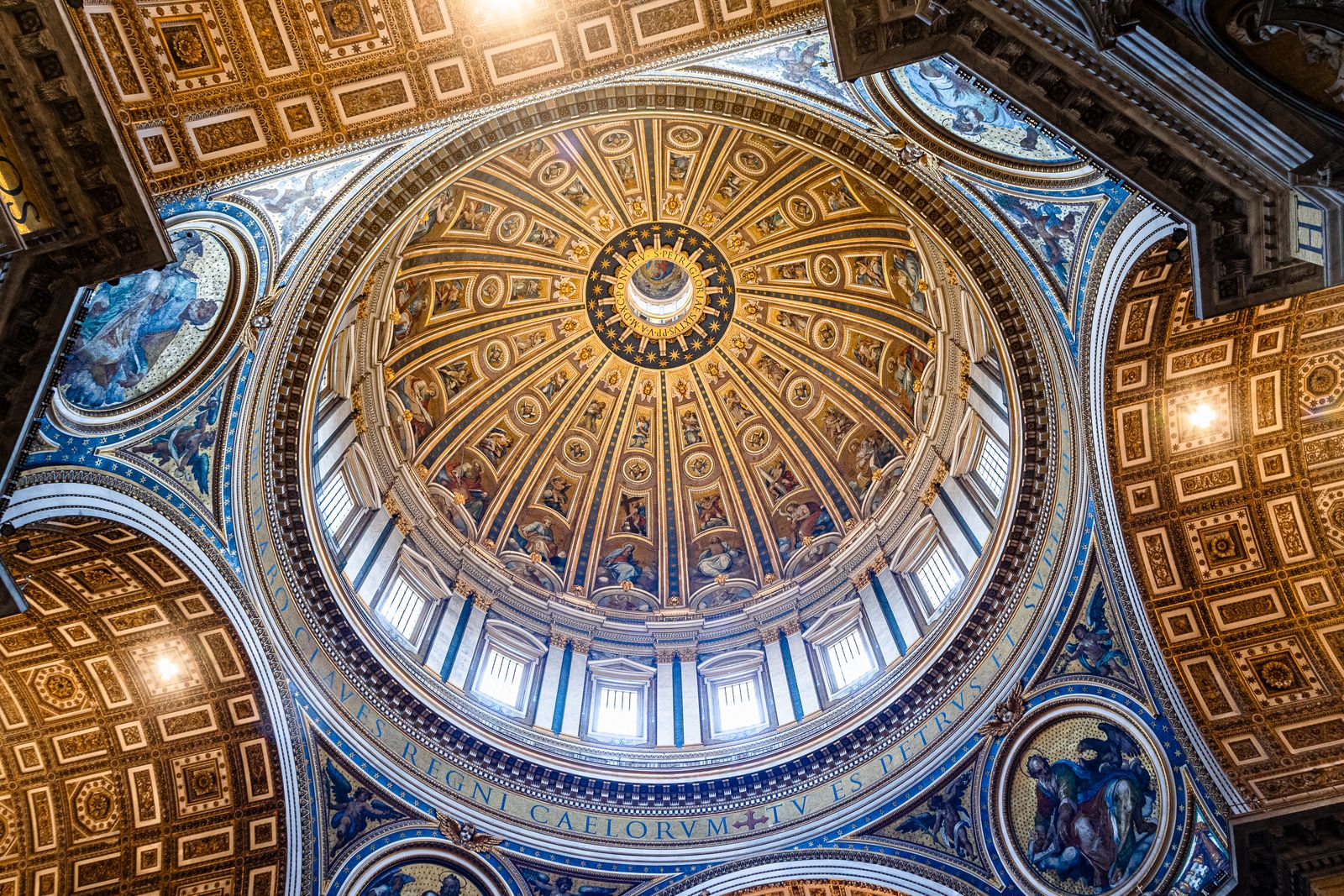
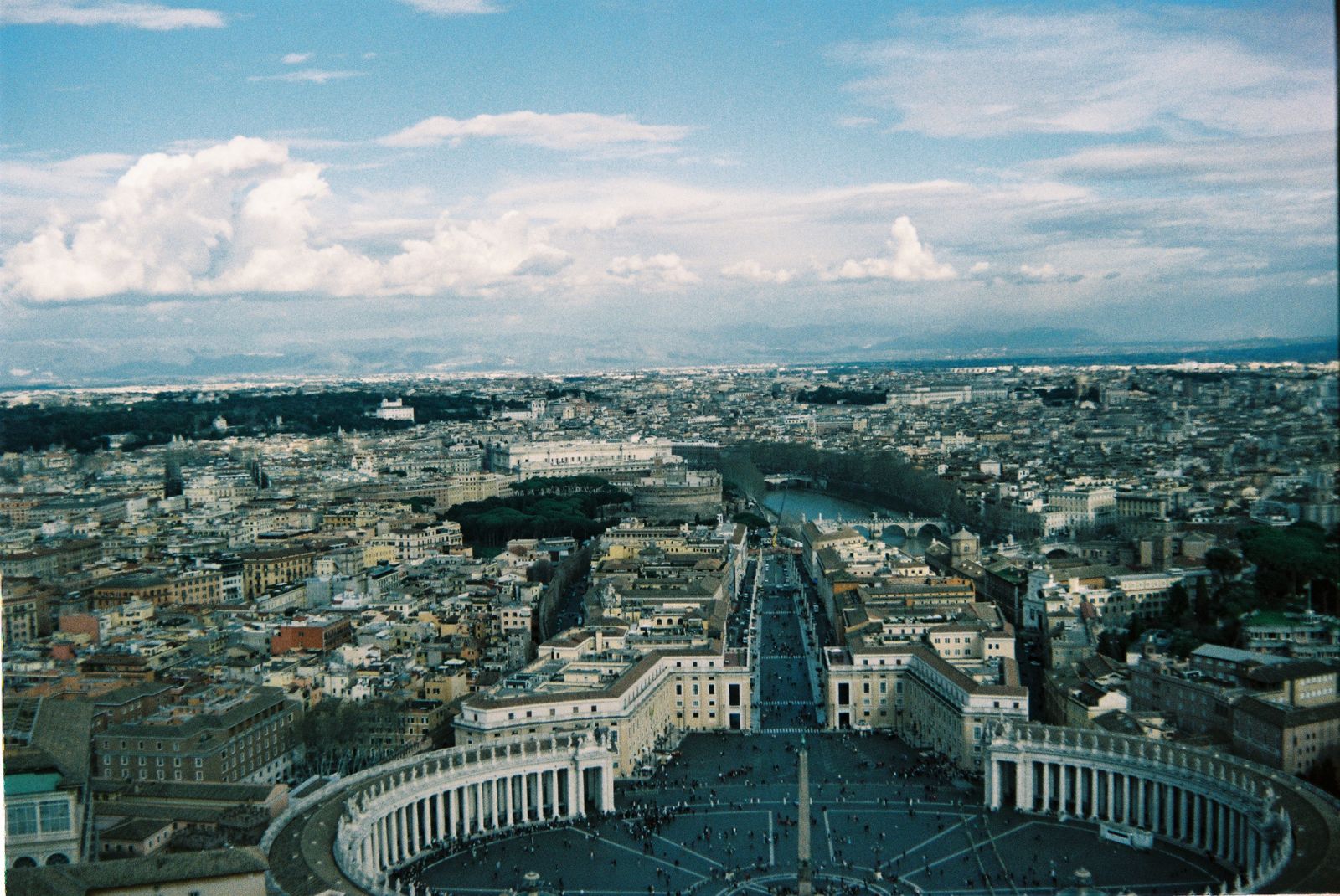
The climb to the top of Michelangelo’s dome is one of the great experiences in Rome. There are two stages. First you reach the gallery inside the base of the dome, where you look straight down onto the baldacchino and the tiny figures on the floor far below, and up into the mosaics of the dome itself. Then the stairs become narrow, steep and slanted as they follow the curve between the inner and outer shells, before you emerge on the lantern terrace with all of Rome laid out around you.
A lift covers the first part of the climb; after that everyone walks the remaining few hundred steps, and there is no way down until you reach the top. It is not suitable for anyone with claustrophobia, heart problems or limited mobility. Allow about an hour, and go early in the day before the heat builds in the stairwells. You can buy dome access separately at the entrance, or combine it with a basilica audio guide and dome access or the guided tour with dome climb.
Beneath the basilica: grottoes and necropolis
Below the floor lie the Vatican Grottoes, a low crypt holding the tombs of many popes and fragments of the earlier basilica. Entry is free and usually takes you out near the main exit. A grottoes express guided tour or the more thorough Vatican underground guided tour explains who is buried where and how the levels fit together.
Deeper still is the Necropolis, a Roman street of tombs uncovered in excavations during the twentieth century, leading to the site identified as the grave of St Peter. Visits, known as the Scavi tour, are run only by the Vatican’s own Excavations Office in very small groups, with a minimum age, and must be requested months ahead. If you secure a place, it is unforgettable.
Attending a papal audience
When the Pope is in Rome, he usually holds a general audience on Wednesday mornings, in St Peter’s Square in warmer months and in the Paul VI Audience Hall in winter. The audience itself is free, with tickets distributed through the Prefecture of the Papal Household. What paid options add is organisation: a host who collects the tickets, gets you through security and helps you find a place, and sometimes a basilica tour afterwards. See the hosted papal audience entry or the papal audience with St Peter’s guided tour. Audiences are cancelled when the Pope travels, and the summer schedule changes, so check close to your date.
Which St Peter’s ticket?
| Option | What you get | Best for |
|---|---|---|
| Guided tour with dome climb | Guide, basilica and dome | The complete visit |
| Escorted entry + audio guide, optional dome | Help through the queue, audio guide | Busy days, independent pace |
| Skip-the-line entry + audio guide | Faster entry, audio guide | Short visits |
| Audio guide + dome by stairs | Dome climb on foot, audio guide | Fit visitors who want the view |
| Vatican underground tour | Grottoes and lower levels | History lovers |
| Papal audience + basilica tour | Audience logistics and a tour | Pilgrims and families |
| Museums, Sistine Chapel and St Peter’s | All three in one guided day | First visit to the Vatican |
| Vatican treasures, Passetto and Castel Sant’Angelo | Basilica, the papal passage and the castle | Second visits, hidden history |
Timing, dress code and security
- Go early or late. The basilica opens early in the morning, and the first hour is the calmest. Late afternoon is the second-best window. Wednesday mornings are busy because of the audience, and the basilica may open later.
- Dress code. Shoulders and knees must be covered, for men and women. Guards turn people away every day. Carry a light scarf in summer.
- Security. Everyone passes through airport-style screening. Large bags, knives and glass bottles are not allowed.
- Closures. The basilica can close at short notice for ceremonies. Major feast days, especially Easter and Christmas, change the schedule completely.
Santa Maria Maggiore: Rome’s other great papal basilica
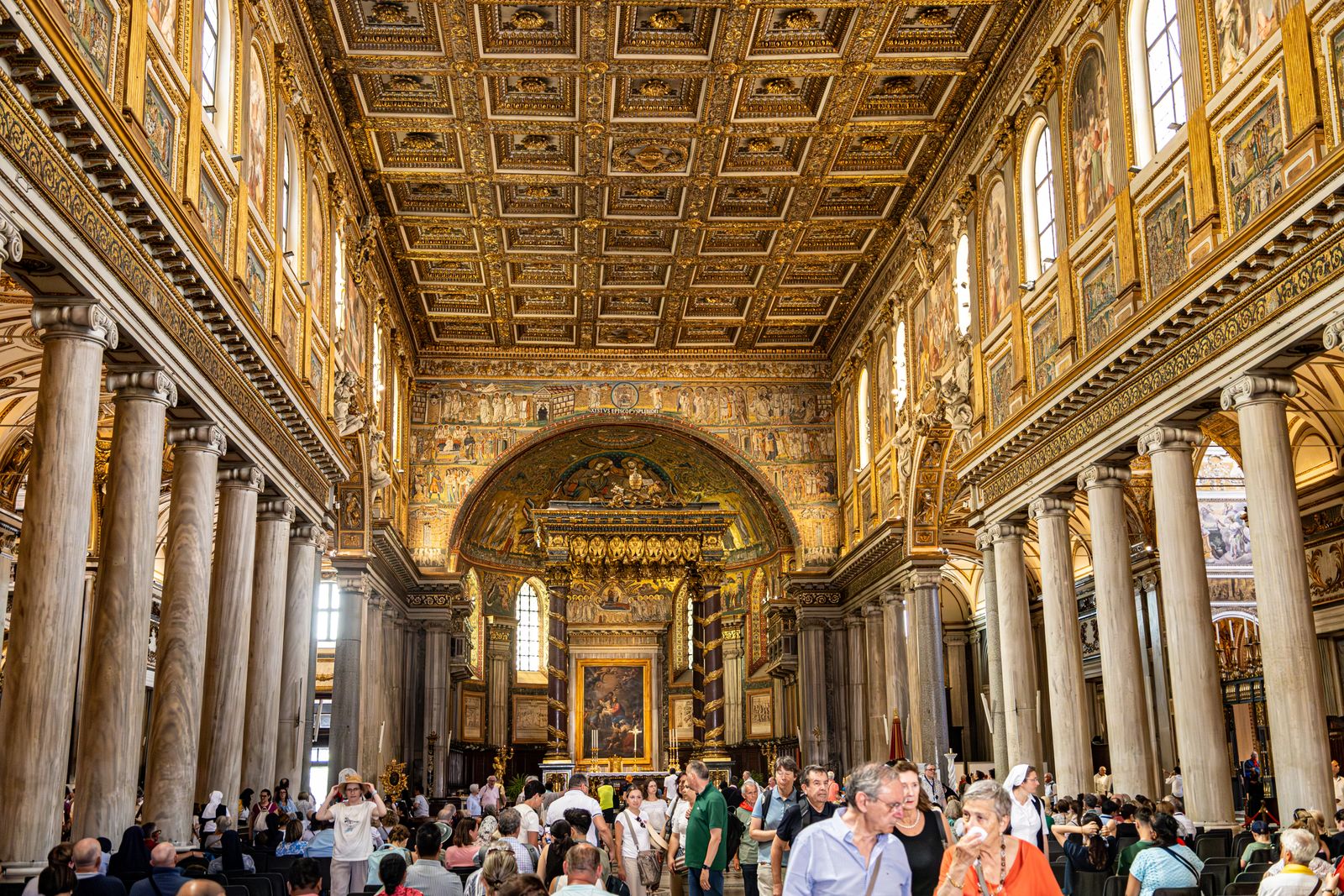
Across the city near Termini station, Santa Maria Maggiore is one of the four papal basilicas and the only one to keep much of its fifth-century structure. Its nave mosaics are among the oldest Christian images in Rome, and the gilded coffered ceiling is said to use some of the first gold brought back from the Americas. Pope Francis, who often prayed here, chose to be buried in the basilica in 2025, and his simple tomb now draws a steady stream of visitors. A priority entrance with museum access includes the loggia mosaics above the facade.
Planning your Vatican day
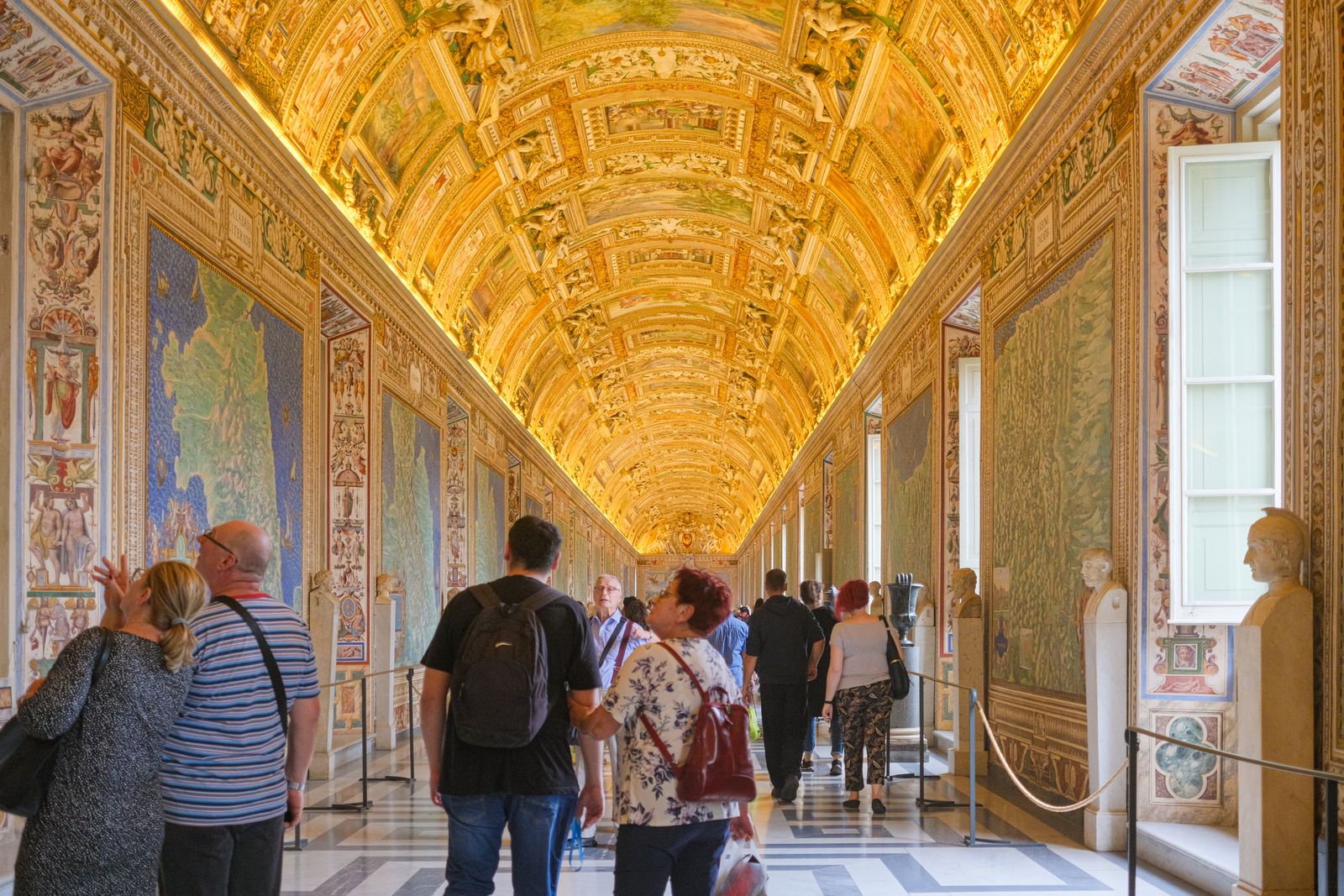
The basilica pairs naturally with the Vatican Museums, but not always in the order people expect. Guided tours of the Museums sometimes exit directly into the basilica through a door from the Sistine Chapel, saving you the square’s security line; independent visitors usually have to walk back round. Our guide to Vatican Museums and Sistine Chapel tickets explains the options. In the afternoon, walk down the river to Castel Sant’Angelo, the Pantheon and the princely galleries, and keep another day for the Colosseum, Forum and Palatine.
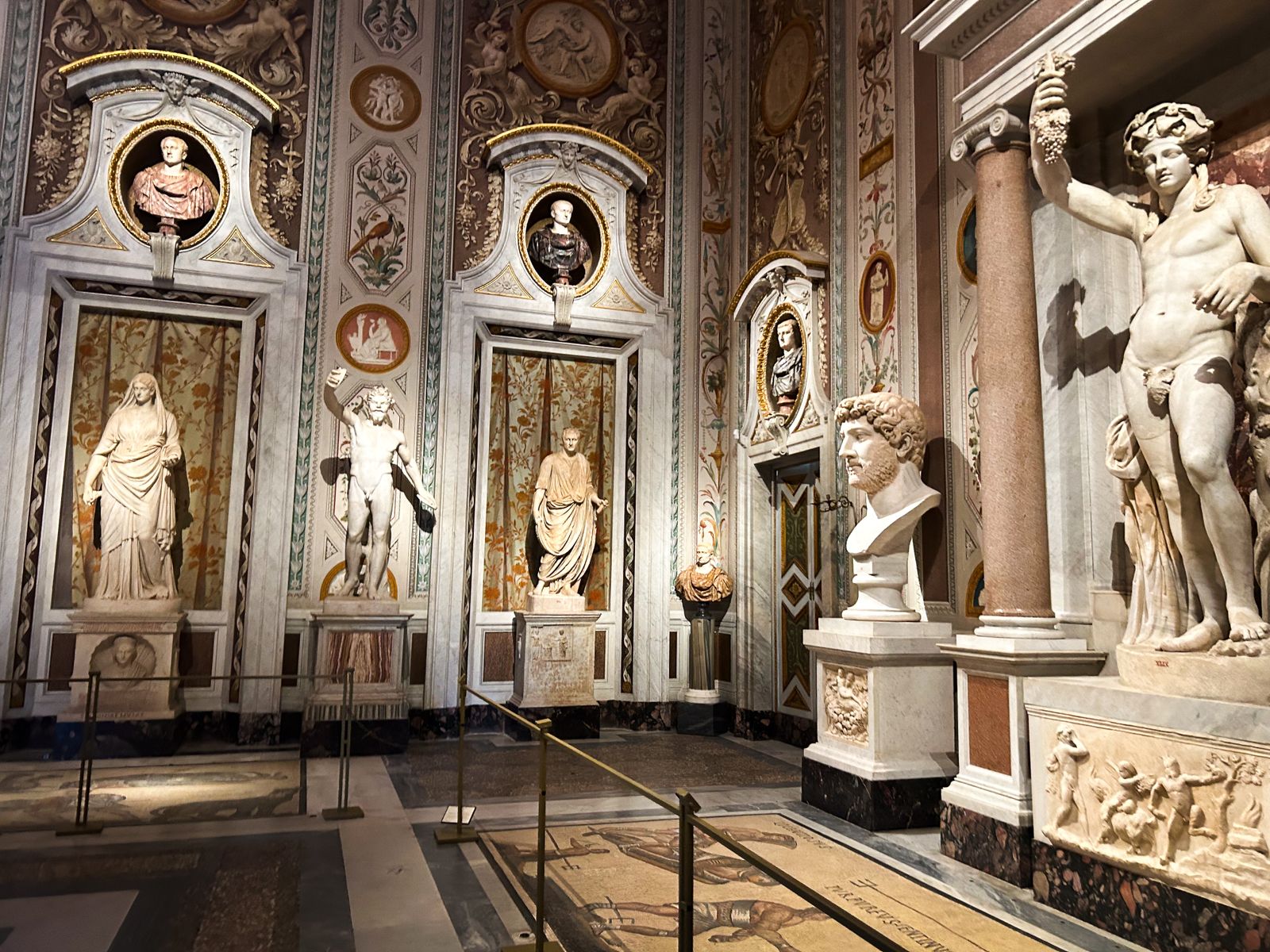
Arriving from Fiumicino, a private transfer with Welcome Pickups takes you straight to your hotel in Prati or the centre. Our Italy travel planner covers eSIMs, luggage storage and flight compensation, and Borghese Gallery tickets explains how to book Rome’s most exclusive museum.
Prefer to explore at your own pace?
Self-guided audio tours play on your phone, work offline and let you pause for coffee whenever you like. Good options here are the Santa Maria Maggiore priority entry and audio tour, Santa Maria Maggiore dome ticket or the Vatican audio tour for the Museums, Sistine Chapel and St Peter’s.
Charlotte’s pick
If I could recommend only one thing here, it would be the guided tour of St Peter’s with the dome climb. The basilica makes far more sense with a guide, and the view from the top of Michelangelo’s dome is the best in Rome. Go early, before the heat builds in the stairwells.
Where to Stay: compare hotels and current prices in Rome on Trip.com.
FAQ
Do I need a ticket for St Peter’s Basilica?
No, entry is free. You only pay for the dome, guided tours, audio guides or organised entry. Paid options save time on busy days.
How long is the queue?
It varies from a few minutes at opening to well over an hour at peak times in spring and summer.
How many steps are there to the top of the dome?
Even with the lift for the first section, you climb several hundred steps, the last ones narrow and slanted.
Can I visit St Peter’s tomb?
Only on the Scavi tour of the necropolis, booked directly with the Vatican’s Excavations Office well in advance.
Can I attend a papal Mass?
Major papal Masses require free tickets from the Prefecture of the Papal Household, and demand is very high. A Wednesday audience is far easier to attend.
To escape the city for a day, see our guide to the best day trips from Rome.
For ancient Rome beyond the centre, see our guide to the Appian Way and Rome’s catacombs.
Hungry in Rome? See our guide to what to eat in Rome.