This post contains affiliate links. If you book through them, we may earn a small commission at no extra cost to you. Learn more.
Roman cooking is the food of shepherds, butchers and Jewish families, of the market and the trattoria. It uses few ingredients, and it is unforgiving: a carbonara has nowhere to hide, and a city full of visitors means plenty of restaurants serving bad versions of good dishes. Eat in the right places, though, and Rome is one of the most satisfying food cities in the world, from four iconic pastas to fried artichokes, crisp supplì and cream-filled buns at breakfast.
This guide tells you what to order, where Romans eat it, how to avoid the tourist traps, and which food tours and cooking classes are worth your time.
Quick answer
Eat the four Roman pastas, fried artichokes in the Jewish Ghetto and supplì from a pizzeria. Walk the Trastevere evening food tour to discover the neighbourhood’s best addresses, try the Rome street food tour by day, and learn to make fresh pasta and tiramisu at a cooking class.
The four Roman pastas
Rome’s pasta canon is built on the same few ingredients: guanciale (cured pork cheek), pecorino romano cheese, black pepper, eggs and tomatoes. Combine them differently and you have the four dishes every trattoria serves.
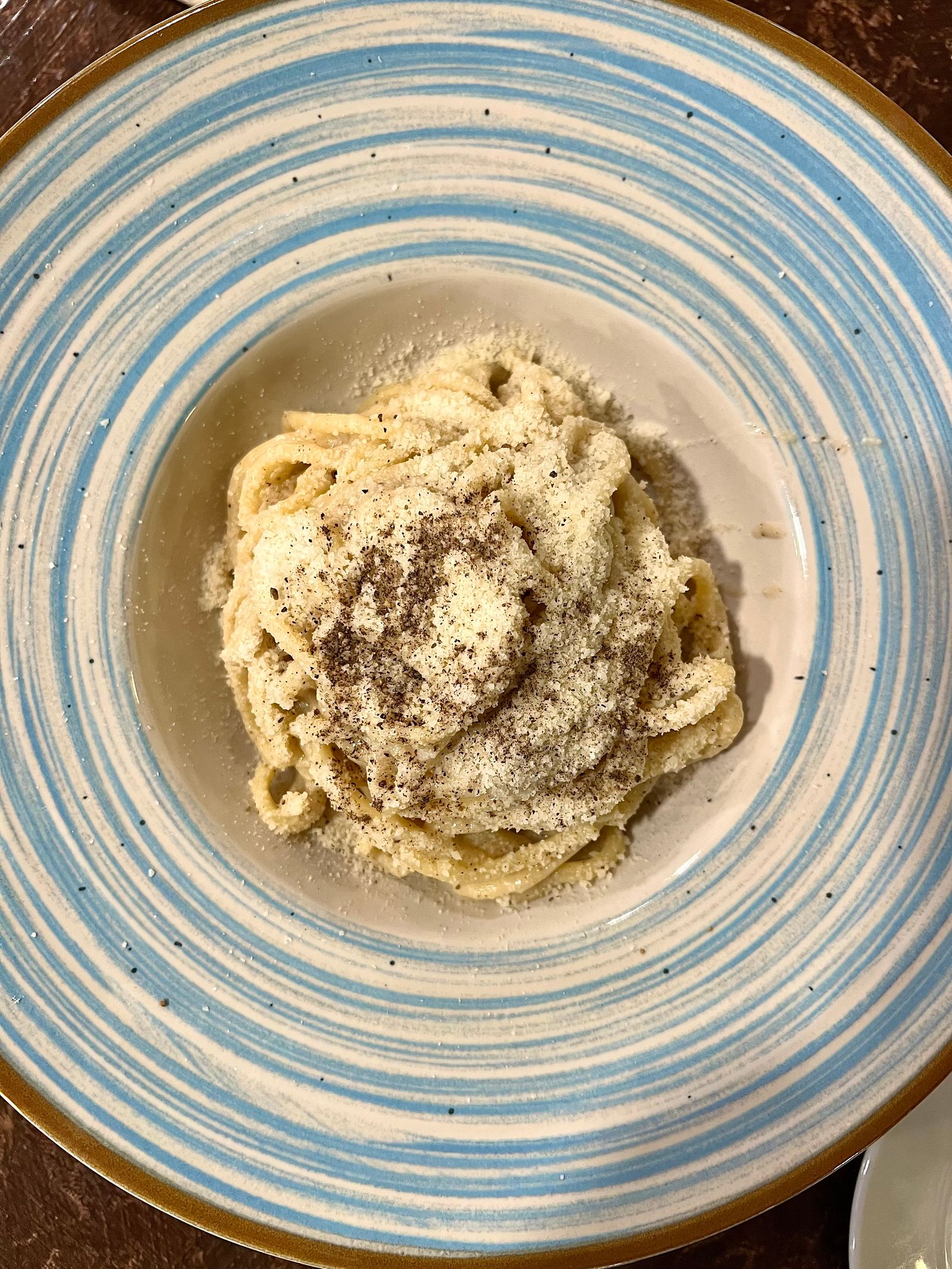
- Cacio e pepe: pecorino and black pepper emulsified with pasta water into a creamy sauce. Simple to describe, hard to make well.
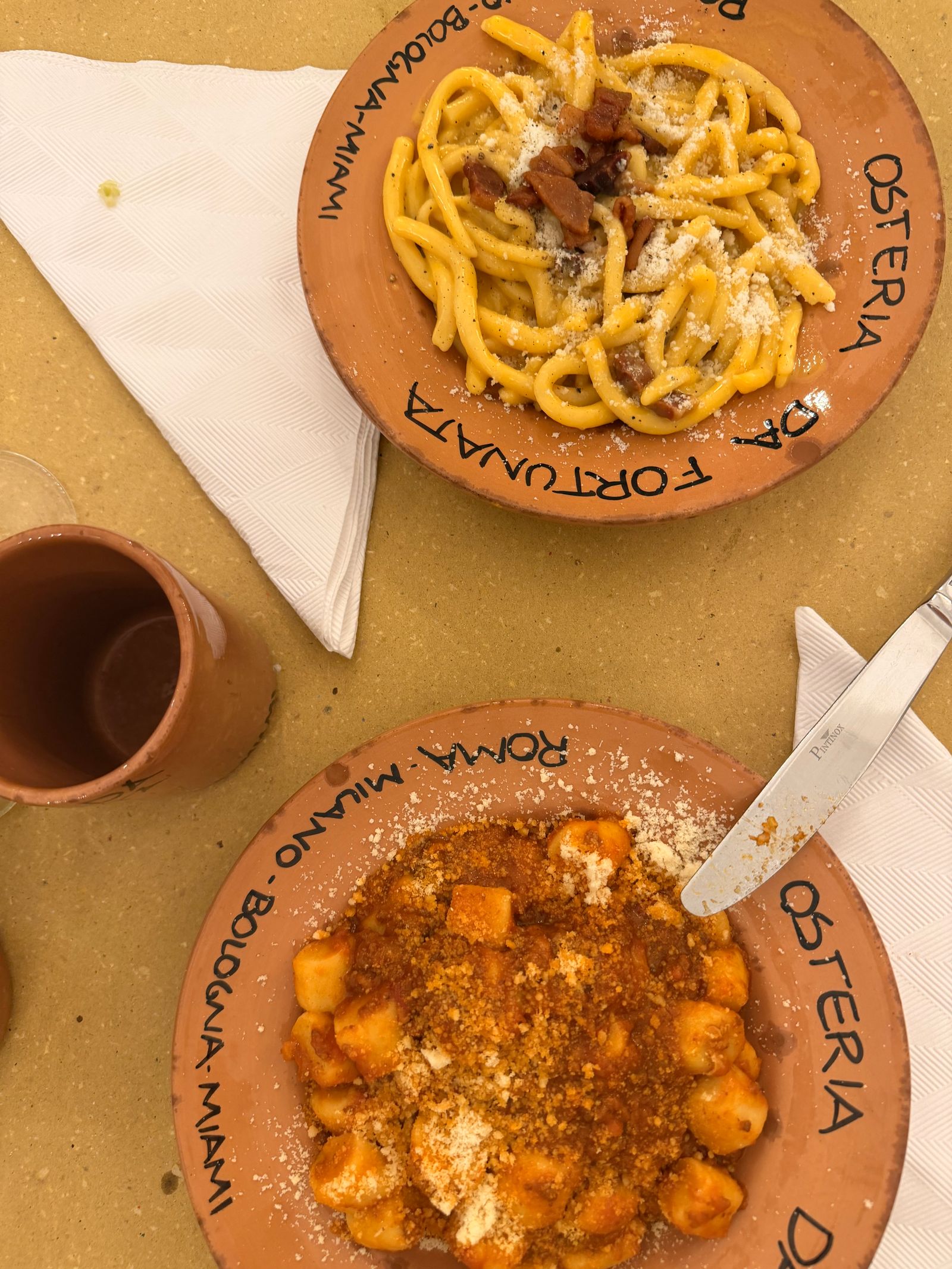
- Gricia: cacio e pepe with crisp guanciale, the ancestor of the other two.
- Amatriciana: gricia with tomato, named after the mountain town of Amatrice.
- Carbonara: guanciale, egg yolks, pecorino and pepper. No cream, no garlic, no onions, and never bacon if you want to keep Roman friends.
They are traditionally served with spaghetti, rigatoni or tonnarelli, a thick, square-cut fresh pasta. The best places are often plain neighbourhood trattorias with paper tablecloths and short handwritten menus.
The Jewish Ghetto: fried artichokes and ricotta tart
Rome’s Jewish community is one of the oldest in Europe, and its kitchen has shaped Roman cooking. In the narrow streets around the Portico d’Ottavia, restaurants serve carciofi alla giudia, whole artichokes deep-fried twice until they open like crisp golden flowers, best in spring. Try also filetti di baccalà, fried salt cod, and fiori di zucca, courgette flowers stuffed with mozzarella and anchovy. For dessert, the historic kosher bakery near the Portico makes a famous crostata of ricotta and sour cherries. Elsewhere in the city, look for carciofi alla romana, artichokes braised with mint and garlic.
Testaccio and the quinto quarto
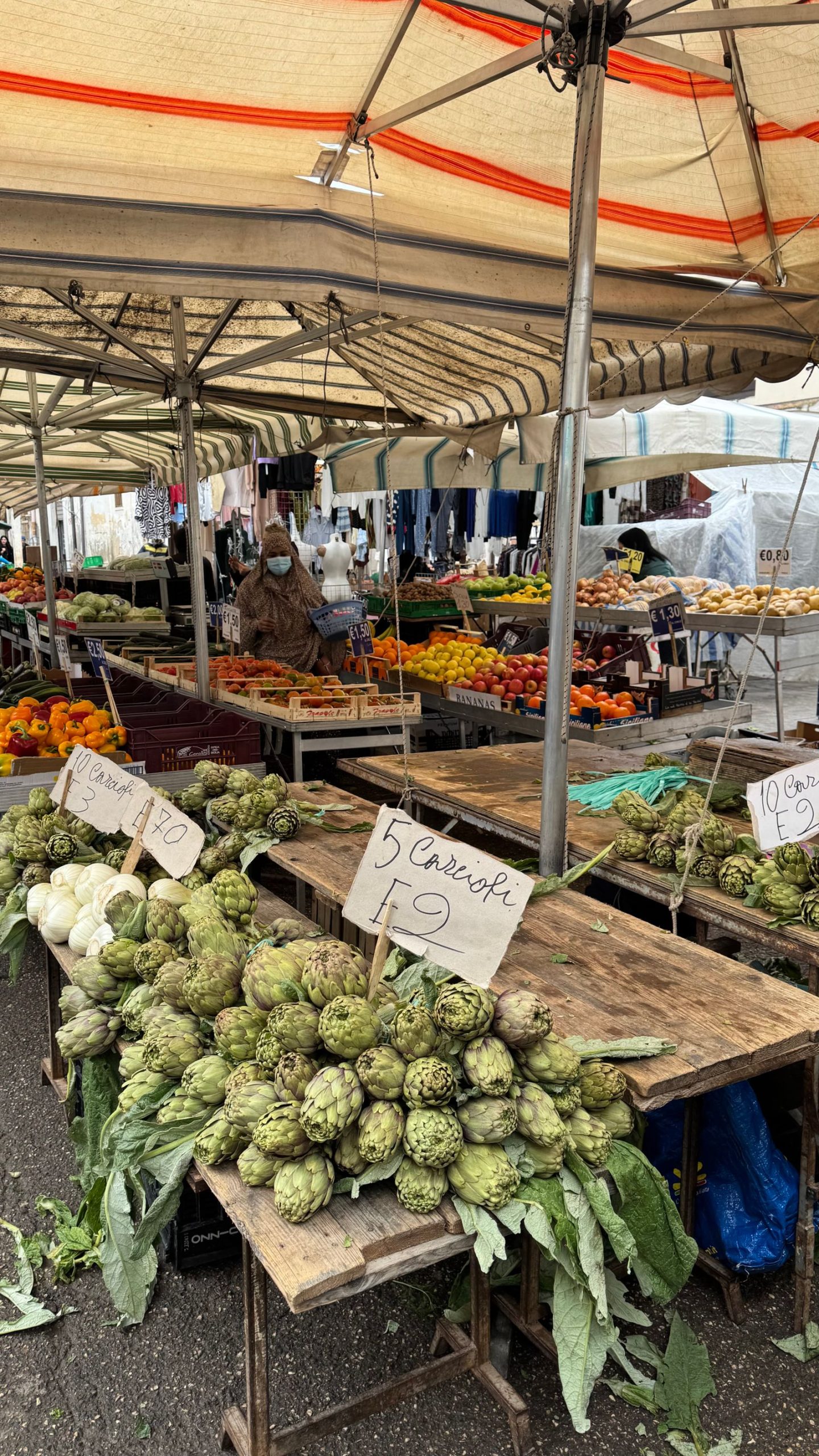
The working-class district of Testaccio grew up around the city’s slaughterhouse, and its cooks made a cuisine from the “fifth quarter”, the offal and cheap cuts left after the prime meat was sold. Coda alla vaccinara, oxtail stewed with tomato, celery and a hint of cocoa, and trippa alla romana, tripe with tomato, mint and pecorino, are the classics. The neighbourhood’s covered market is one of the best places in Rome for a casual lunch, with stalls selling sandwiches, pasta and fried snacks. Testaccio is also where the trapizzino was invented: a triangle of pizza dough filled with Roman stews.
Street food and pizza
- Supplì: fried rice croquettes with tomato and a heart of mozzarella that stretches into strings when you bite, hence the nickname supplì al telefono.
- Pizza al taglio: rectangular pizza by the slice, sold by weight. Point, say how big, and eat standing up.
- Pizza bianca: plain, oil-glossed pizza dough, often split and filled with mortadella.
- Pizza tonda: Rome’s own sit-down pizza, thin and crisp, very different from Naples.
The Rome street food tour with a local guide is the best way to taste these in one walk.

Coffee, maritozzi and gelato
Start the day like a Roman with a maritozzo, a soft sweet bun split open and filled with whipped cream, and an espresso at the bar. Two famous coffee bars near the Pantheon roast their own beans and serve some of the best coffee in the city; try a granita di caffè con panna in summer. Gelato is everywhere, but quality varies: look for natural colours and covered metal containers. In hot weather, the kiosks along the Tiber serve grattachecca, hand-shaved ice with fruit syrups, a summer tradition.
Trastevere at night
Across the river, Trastevere’s cobbled lanes, ivy-covered houses and little piazzas make it Rome’s favourite neighbourhood for an evening out. It has excellent trattorias, wine bars and gelaterie, but also some tourist traps around the main square. The Trastevere sunset food and wine tour takes you to the best addresses and is a lovely way to spend your first night in Rome.
Wine in Rome
The hills south of the city, the Castelli Romani, have supplied Rome with wine since antiquity. Frascati is the crisp local white served by the carafe in many trattorias, while Cesanese is the region’s most interesting red. Rome also has dozens of excellent wine bars, enoteche, pouring bottles from all over Italy. Our guide to the best day trips from Rome includes a wine day in Frascati, and Italian wine regions gives the bigger picture.
Fine dining
For a special occasion, Rome’s top restaurants rival any in Europe. The most celebrated sits on top of a hotel on Monte Mario, with three Michelin stars and views across the whole city; several hotel rooftops in the centre also hold stars and offer dinner with the domes of Rome as a backdrop. Book weeks ahead for weekends.
Main courses and sides
After the pasta, Romans turn to meat. Saltimbocca alla romana is thin veal topped with prosciutto and sage, pan-fried in butter and white wine; the name means “jumps in the mouth”. Abbacchio, young lamb, is roasted with rosemary and garlic or served as scottadito, grilled chops eaten with the fingers. Pair them with seasonal greens: puntarelle, crisp chicory shoots dressed with anchovy and garlic in winter, or cicoria ripassata, wild chicory sautéed with chilli and garlic. On Fridays some trattorias still keep the old tradition of serving fish and chickpeas.
A food lover’s day in Rome
Start with a maritozzo and espresso near the Pantheon, then walk to the Jewish Ghetto for a mid-morning slice of ricotta tart. Spend late morning at the Testaccio market and lunch on cacio e pepe in a neighbourhood trattoria. In the afternoon, cool down with gelato or a grattachecca by the river, and join a food walk in Trastevere at dusk for supplì, wine and a final plate of carbonara. If you have energy left, finish with a nightcap in a Monti wine bar.
Cooking classes and food tours
| Experience | What you get | Time | Book |
|---|---|---|---|
| Trastevere sunset food and wine tour | Tastings in Rome’s most charming district | About 3 hours | Food walk |
| Street food tour | Supplì, pizza and local snacks with a guide | About 3 hours | Street food tour |
| Pasta and tiramisu cooking class | Make ravioli, fettuccine and tiramisu | About 3 hours | Cooking class |
| Rome tourist card | Transport and sights for heavy sightseers | Several days | Tourist card |
How to eat well in Rome
- Avoid menus with photos and waiters calling you in from the street.
- Follow the season. Artichokes in spring, puntarelle salad in winter, fiori di zucca in summer.
- Book dinner. The good trattorias fill up, especially from Thursday to Saturday.
- Understand the courses. You do not need to order antipasto, primo and secondo. A pasta and a side dish is perfectly normal.
- Markets. Campo de’ Fiori is picturesque but touristy; Testaccio and the Trionfale market near the Vatican are where Romans shop.
Between meals, explore with our guides to Colosseum tickets, Rome beyond the Vatican, the Appian Way and the catacombs and St Peter’s Basilica. Arriving at Fiumicino, a private transfer with Welcome Pickups takes you straight to your hotel. For other Italian food cities, see Florence, Naples and Turin.
Charlotte’s pick
If I could recommend only one thing here, it would be the pasta and tiramisu cooking class. Learning to make fresh pasta in Rome is a memory you take home. Pair it with an evening in Trastevere for the full Roman food experience.
Where to Stay: compare hotels and current prices in Rome on Trip.com.
FAQ
What is the most famous dish in Rome?
Carbonara, closely followed by cacio e pepe and amatriciana.
Where is the best area to eat in Rome?
Testaccio for authentic trattorias, Trastevere for atmosphere, the Jewish Ghetto for fried artichokes, and Monti for wine bars.
Is it rude to ask for parmesan on carbonara?
Not rude, but Roman pastas use pecorino. Trust the cook.
How much should I tip?
A cover charge is often included. Tipping is not expected, but rounding up or leaving a few euros for good service is appreciated.
Are cooking classes good for families?
Yes. Making pasta and tiramisu is fun for all ages, and you eat what you make.
When is the best season for food in Rome?
Spring is wonderful for artichokes, broad beans and pecorino, while autumn brings mushrooms, chestnuts and the new olive oil. Summer means lighter dishes, courgette flowers and long dinners outdoors in the piazzas.
Can I find good vegetarian food in Rome?
Yes. Cacio e pepe, artichokes, supplì, pizza and seasonal vegetables make Rome easy for vegetarians; just check that pasta sauces do not include guanciale.
Hungry in Venice? See our guide to what to eat in Venice.
For the region’s food, see our guide to Bologna and the Food Valley.