This post contains affiliate links. If you book through them, we may earn a small commission at no extra cost to you. Learn more.
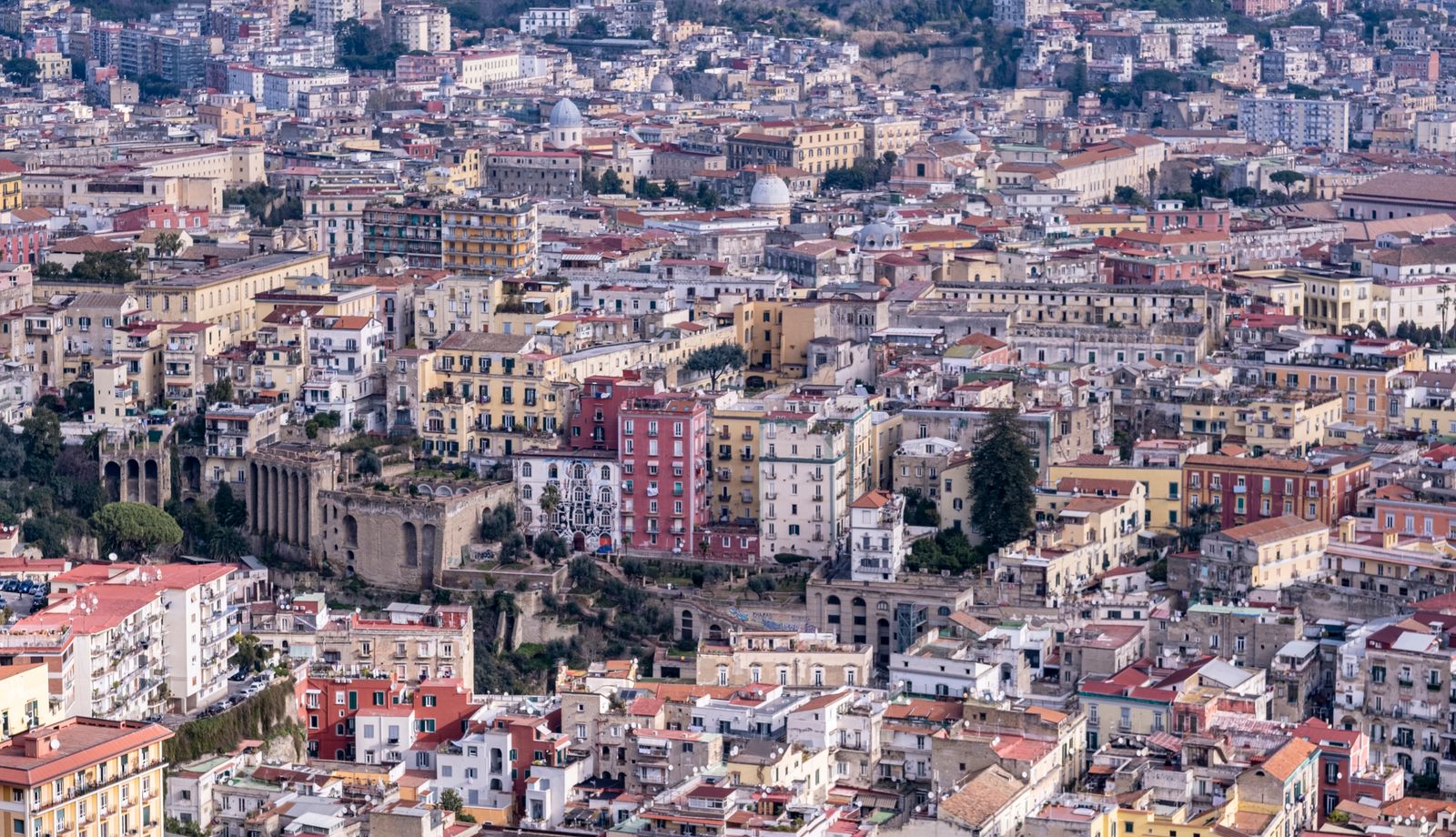
Naples is often treated as a place to pass through on the way to Pompeii, Capri or the Amalfi Coast. That is a mistake. Italy’s third city is one of the most intense, beautiful and surprising in Europe: a historic centre laid out by the Greeks and listed by UNESCO, a museum of ancient art without equal, a hidden city of tunnels and cisterns beneath the streets, baroque churches of astonishing richness and, of course, the best pizza in the world.
This guide covers the tickets worth booking in Naples, from the Veiled Christ to the underground, how to plan two or three days in the city, and how to combine it with the ruins and the coast.
Our Naples Picks
Naples at a Glance
| Experience | Why go | Book |
|---|---|---|
| Sansevero Chapel | The marble Veiled Christ, one of the most astonishing sculptures anywhere | Entry with guided tour |
| National Archaeological Museum | Treasures from Pompeii and Herculaneum, the Farnese sculptures | Entry ticket or guided tour |
| Naples Underground | Greek and Roman tunnels and cisterns 40 metres below the city | Guided tour |
| Galleria Borbonica | A Bourbon tunnel, wartime shelters and vintage cars | Guided tour |
| Catacombs of San Gennaro | Early Christian catacombs with rare frescoes | Guided visit |
| San Lorenzo Maggiore | A Gothic church above an excavated Roman market street | Entry with audio guide |
The Veiled Christ in the Sansevero Chapel
Hidden in a small street of the historic centre, the Sansevero Chapel holds one of the great masterpieces of European sculpture. Giuseppe Sanmartino’s Veiled Christ, completed in 1753, shows the dead Christ lying beneath a transparent shroud, every fold and the face beneath it carved from a single block of marble. It seems impossible, and for centuries legends claimed the veil had been turned to stone by alchemy. The chapel, created by the eccentric Prince Raimondo di Sangro, also contains two other marvels of marble carving and, in the crypt, two mysterious anatomical models.
The chapel is small, so visits are timed and queues can be long; photography is not allowed. Book a ticket with guided tour or combine it with the centre on the walking tour with the Veiled Christ.
The National Archaeological Museum
The Museo Archeologico Nazionale is one of the most important museums of ancient art in the world, and an essential complement to a visit to Pompeii and Herculaneum. Many of the finest objects found there are here rather than on site: the vast Alexander Mosaic from the House of the Faun, bronze statues, wall paintings removed from the villas and everyday objects from kitchens and workshops. The Farnese collection of classical sculpture includes the Farnese Hercules and the Farnese Bull, the largest single sculpture to survive from antiquity, and the Secret Cabinet displays the erotic art that scandalised earlier generations.
Allow at least half a day. A standard ticket lets you explore at your own pace; the guided tour focuses on the highlights and their stories.
The City Beneath the City
Under Naples lies a second city. For more than two thousand years, the Neapolitans quarried the soft volcanic tufa beneath their feet, creating cisterns, aqueducts and tunnels that were later used as wartime shelters. The Naples Underground tour takes you around 40 metres down, through narrow passages lit by candlelight, to see the ancient water system and the remains of a Roman theatre hidden in the basements of ordinary houses. The Spanish Quarters underground tour explores another section of this network.
The Galleria Borbonica tells a different story: a tunnel commissioned by King Ferdinand II in the nineteenth century as an escape route from the royal palace, later used as an air-raid shelter and then as a vehicle pound, where abandoned cars and motorbikes still lie. For something older, the Catacombs of San Gennaro contain early Christian burial chambers and some of the oldest frescoes in the city, and at San Lorenzo Maggiore you can walk along a Roman market street beneath the church.

Spaccanapoli and the Historic Centre
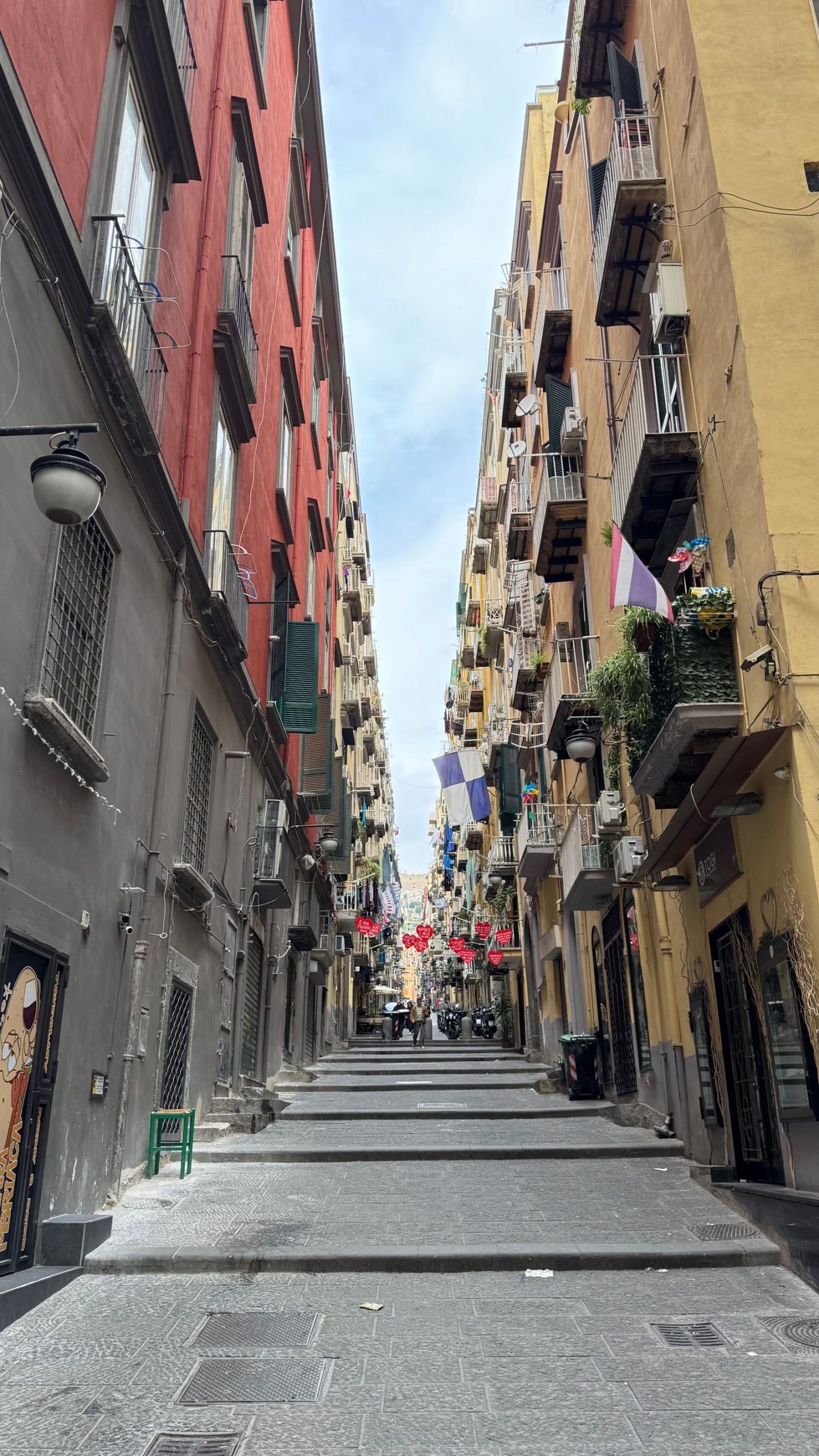
The heart of Naples is a grid of narrow streets laid out by the Greek founders of Neapolis. Spaccanapoli, the long straight street that splits the old town, is lined with churches, palaces, workshops and street food stalls. Walk past the Gesù Nuovo with its diamond-pointed facade, the cloister of Santa Chiara covered in majolica tiles, and Via San Gregorio Armeno, the street of nativity-scene makers. Then cross to the elegant side of the city: Piazza del Plebiscito, the Royal Palace, the Galleria Umberto I and the Teatro di San Carlo, opened in 1737 and the oldest continuously active opera house in Europe. Finish with a walk along the seafront to Castel dell’Ovo, a castle on a small island with views across the bay to Vesuvius.
The hop-on hop-off bus is useful for the hillside viewpoints, and the audio guide app is a good companion for independent walks.
Pizza and the Food of Naples
Naples gave the world pizza, and the art of the Neapolitan pizzaiolo is recognised by UNESCO as intangible cultural heritage. The real thing is soft, with a puffy, slightly charred crust, cooked for barely a minute in a wood-fired oven. Try a classic margherita or marinara at one of the historic pizzerias, a fried pizza from a street stall, and a cuoppo, a paper cone of fried seafood. For dessert, the city’s pastries are legendary: sfogliatella, crisp and layered, and babà soaked in rum, ideally with an espresso in one of the grand old cafés.

Capodimonte and the Views from Above
On a hill north of the centre, the former royal palace of Capodimonte houses one of Italy’s finest picture galleries, with works by Titian, Caravaggio and Botticelli, the Farnese collections and an elegant royal apartment, all surrounded by a vast park. Back towards the sea, take the funicular up to the Vomero district for the views from Castel Sant’Elmo and the Certosa di San Martino, where the whole city, the bay and Vesuvius spread out below you.
Where to Stay
For atmosphere and walking access, stay in the historic centre. For elegance and sea views, choose the waterfront of Chiaia and Via Partenope, facing Castel dell’Ovo, where the grand hotels look out over the bay to Vesuvius.
Day Trips from Naples
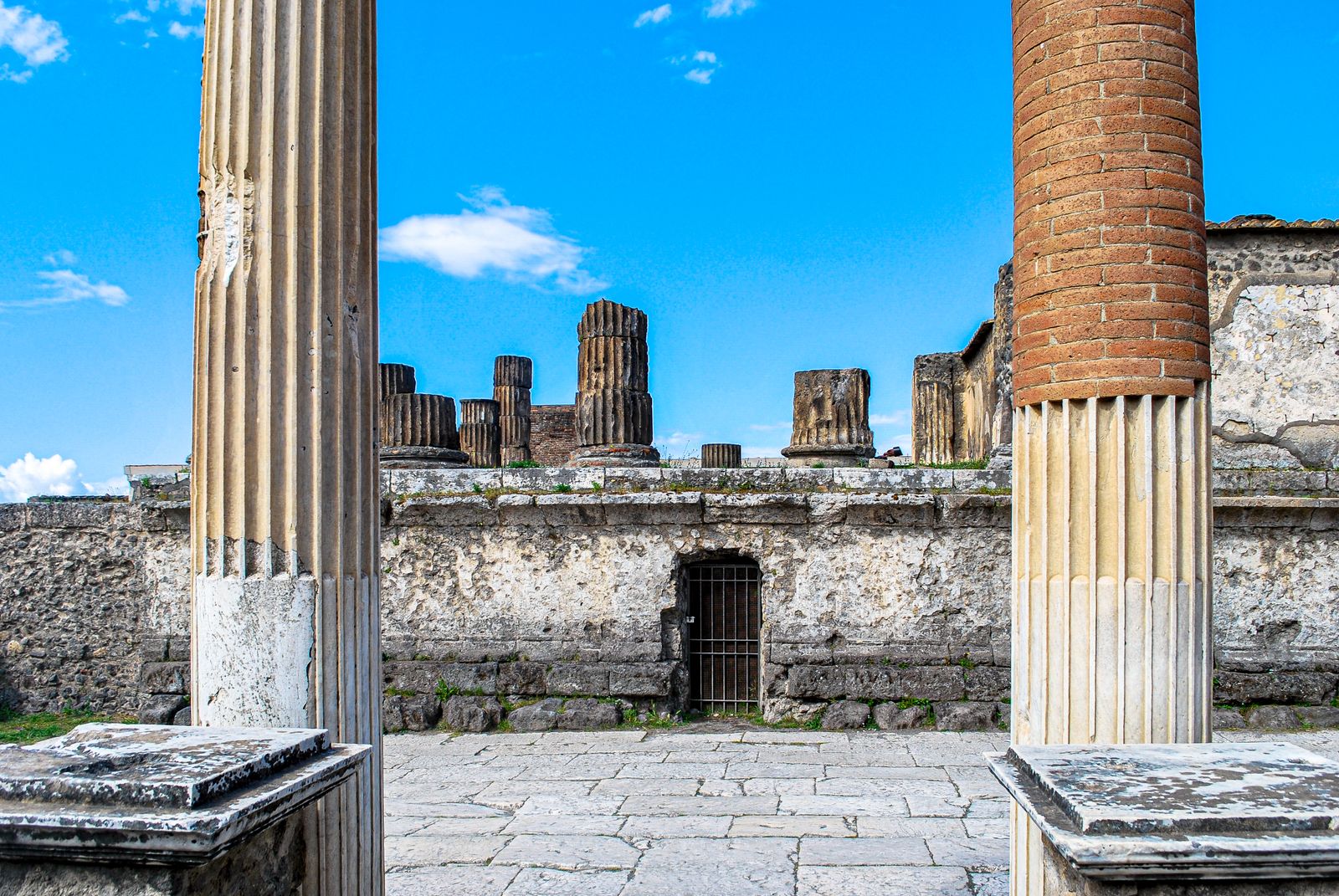
Naples is the best base for exploring the region. Pompeii, Herculaneum and Vesuvius are all within an hour, and there are many Pompeii day trips from Naples with transport included. The Amalfi Coast is a longer but spectacular day; Amalfi Coast day trips from Naples handle the winding roads for you. Ferries to Capri, Ischia and Procida leave from the port near the centre. If you plan to visit several museums and sites across the region, compare the Naples city card and the Artecard Campania, which combine entries with public transport.
A Three-Day Itinerary
- Day 1: the Sansevero Chapel, Spaccanapoli and San Lorenzo Maggiore, with pizza for lunch; the Naples Underground in the afternoon and dinner by the sea near Castel dell’Ovo.
- Day 2: the National Archaeological Museum in the morning, then Herculaneum or Pompeii in the afternoon.
- Day 3: a boat to Capri or a day on the Amalfi Coast, or Vesuvius in the morning and the royal Naples of Plebiscito and San Carlo in the afternoon.
Practical Tips
- Arrival: Naples airport is close to the centre; a private transfer is the easiest start, and AirHelp checks compensation for delayed flights. High-speed trains reach Naples from Rome in about an hour and ten minutes.
- Getting around: the historic centre is best on foot; the metro, including its celebrated art stations, covers longer distances.
- Safety: as in any big city, keep an eye on bags and phones in crowded areas and on public transport.
- Luggage: use Radical Storage near the central station on arrival or departure days.
- Stay connected: an eSIM from Airalo or Saily keeps your tickets and maps on your phone.
Frequently Asked Questions
Is Naples worth visiting?
Absolutely. It is one of the richest cities in Italy for art, history and food, and the best base for Pompeii, Vesuvius and the Amalfi Coast.
Do I need to book the Sansevero Chapel?
It is strongly recommended. The chapel is small and visits are timed, so queues can be long without a booking.
How long should I spend in Naples?
Two days for the city itself, three to four with day trips to Pompeii, Herculaneum or the coast.
What is the Naples Underground?
A network of ancient cisterns, aqueducts and tunnels beneath the historic centre, later used as wartime shelters, visited on guided tours.
Is the Naples city card worth it?
If you plan to visit several museums and use public transport over a few days, it usually saves money.
Where to Stay: compare hotels and current prices in Naples on Trip.com.
More time in Naples? Our guide to the best museums in Naples covers Capodimonte, the Archaeological Museum, the Royal Palace and the city’s three Caravaggios.
Plan Your Italy Trip
Continue with Pompeii, Herculaneum and Vesuvius, the Amalfi Coast by boat and, in Rome, the Vatican Museums. Use our Italy travel planner for transfers and connectivity, and browse more things to do in Naples.
For more time on the water, see our guide to Capri by boat.
More in Rome: Rome beyond the Vatican: the Pantheon, Castel Sant’Angelo and the princely galleries.
Planning ancient Rome? Read our guide to Colosseum tickets.
To escape the city for a day, see our guide to the best day trips from Rome.
Hungry in Naples? See our guide to Naples for food lovers.