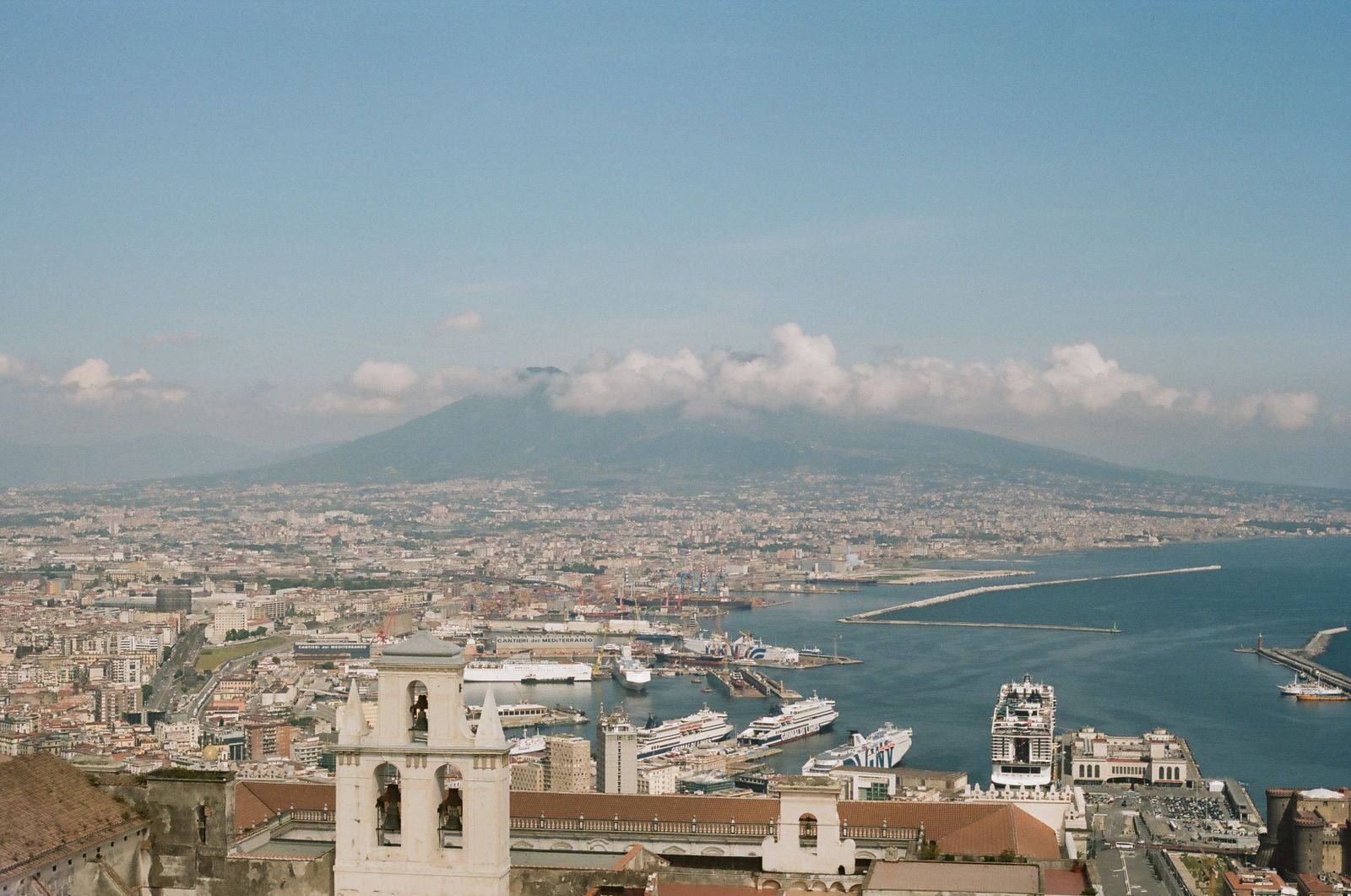
Naples rarely gets the museum reputation of Florence or Rome, yet it holds the Farnese collections, the finest finds from Pompeii and Herculaneum, a Bourbon royal palace and three Caravaggios within a few kilometres of each other. This guide covers the ten sights I would build a culture trip around in 2026, with current hours, prices and the booking details worth knowing before you go.
This article contains affiliate links. If you book through them, we may earn a small commission at no extra cost to you. Read our affiliate disclosure.
Quick answer: Naples’ top museums by type
- Old master paintings: Museo e Real Bosco di Capodimonte, for Titian, Parmigianino, Bruegel and Caravaggio.
- Ancient world: Museo Archeologico Nazionale (MANN), for the Farnese marbles and the Vesuvian frescoes and mosaics.
- Caravaggio trail: Pio Monte della Misericordia and Gallerie d’Italia on Via Toledo, both walkable from the old centre.
- Royal Naples: Palazzo Reale and a guided visit of the Teatro di San Carlo next door.
- Views with your art: Certosa e Museo di San Martino on the Vomero hill.
Check prices and availability
A base on the seafront or near Via Toledo keeps the royal quarter on foot and the old centre a short ride away. Compare hotels across Naples.
The ten sights worth your time
Hours and prices below were checked against the Italian Ministry of Culture listings and recent local sources in autumn 2026. Check each official site the week before you travel.
1. Museo e Real Bosco di Capodimonte
A Bourbon hunting palace on a hill above the city, built to house the Farnese collection Charles of Bourbon inherited from his mother. Do not miss Caravaggio’s Flagellation of Christ, Titian’s Danaë and his portraits of Pope Paul III, Parmigianino’s Antea, Bruegel’s Parable of the Blind, Artemisia Gentileschi’s Judith Slaying Holofernes and the Porcelain Room made for Queen Maria Amalia.
- Hours: 8.30am to 7.30pm, last entry 6.30pm. Closed Wednesdays. The park is free and open daily.
- Ticket: €15 on the Ministry listing. A 2025 local guide reports €12 for entries in the first and last hour; check the official site. Booking is optional, through the Musei Italiani portal or app.
- Time needed: three hours, plus a walk in the park.
- 2026 notes: parts of the armoury, the contemporary third floor and some 19th and 20th century rooms are closed for rearrangement. The Ministry page also says the first floor closes on Sundays and holidays, which contradicts its own main timetable. Our research could not settle this, so confirm before a Sunday visit.
2. Museo Archeologico Nazionale di Napoli (MANN)
The core of Naples’ Roman collections. The essentials: the Farnese Bull and Farnese Hercules on the ground floor, the bronzes from the Villa of the Papyri, the frescoes from Pompeii and Herculaneum, the mosaics collection and the Gabinetto Segreto, the “Secret Cabinet” of erotic art from the buried cities.
- Hours: 9am to 7.30pm, ticket office until 6.30pm. Closed Tuesdays.
- Ticket: €20. Booking is optional; buy on the museum’s official ticket site or by its booking line.
- Lead time: a few days ahead for a first-slot entry in spring or autumn.
- Time needed: three to four hours.
- 2026 notes: the official ticket page lists the mosaics collection as closed from 21 September until works end, scheduled for 30 November, without stating the year. The Secret Cabinet, Egyptian and Magna Graecia sections close on free-entry days. The Alexander Mosaic has been under restoration in public view; check the official site for its current display.
3. Palazzo Reale di Napoli
The royal palace on Piazza del Plebiscito shows the Bourbon court at full scale: the double marble staircase, the court theatre, the throne room and the royal chapel. The hanging garden, reached only on a guided visit, looks straight over the port to Vesuvius.
- Hours: 9am to 8pm, last entry 7pm. Closed Wednesdays.
- Ticket: €15, free under 18. Tickets are open-date through the Musei Italiani portal or at the desk.
- Special access: the Giardino Pensile is seen on small guided visits (maximum 25) for €2 on top of the ticket. In summer 2026 these ran at 10am and 11am; book online.
- Time needed: one and a half to two hours.
4. Teatro di San Carlo
Opened in 1737, the oldest continuously active opera house in Europe, with six tiers of gilded boxes and the royal box facing the stage. A guided visit takes about 45 minutes and is the only way to see the auditorium by day.
- Tours: several daily departures in Italian and English, mornings only on Sundays, subject to rehearsals. The prices we found date from 2020, so check the theatre’s official site for 2026 times and fares.
- Better still: book a performance through the theatre’s own box office; the season runs roughly autumn to early summer.
5. Certosa e Museo di San Martino
A Carthusian monastery on the Vomero hill, below Castel Sant’Elmo. Inside: the church with paintings by Ribera and Battistello Caracciolo, the Prior’s apartments, the great cloister, the Cuciniello nativity of around 800 figures, and terraced gardens looking over the whole bay.
- Hours: 8.30am to 6.30pm, last entry 5.30pm, according to a 2026 local guide. The Ministry listing gives 8.30am to 7.30pm.
- Closing day: our research turned up contradictory information here: the Ministry page says Wednesday, while a local guide updated for July 2026 says Tuesday. It was not clear which applies, so confirm on the official site.
- Ticket: €6 per the local guide; booking optional via Musei Italiani.
- 2026 notes: the Gothic underground, decorative arts and naval sections are closed for works.
- Time needed: two hours. Go mid-morning for clear views.
6. Pio Monte della Misericordia
A charitable institution founded in 1602 that still operates today. Caravaggio’s Seven Works of Mercy hangs above the high altar of its octagonal church, painted for this space in 1607. Upstairs, the Quadreria holds Neapolitan 17th century painting.
- Hours: Monday to Saturday 10am to 6pm (last entry 5.30pm), Sunday 9am to 2.30pm. Closures for events can happen.
- Ticket: €10, sold at the desk or online through the official site. Combined tickets with the Treasure of San Gennaro are offered.
- Time needed: 45 minutes to an hour. Early afternoon on a weekday is usually calm.
7. Gallerie d’Italia, Via Toledo
Intesa Sanpaolo’s museum moved in 2022 to the former Banco di Napoli headquarters at Via Toledo 177. Its star is Caravaggio’s Martyrdom of Saint Ursula, painted in May 1610 and considered his last canvas. The bank’s collection of Neapolitan painting and changing exhibitions fill the rest.
- Hours: Tuesday to Friday 10am to 6pm, weekends 10am to 8pm, per a secondary source. We could not confirm the closing day; check the official site.
- Ticket: we could not verify the 2026 price; check the official site. Free on the first Sunday of the month.
- Special access: the museum runs its own guided visits, some free with compulsory booking.
8. Duomo and the Treasure of San Gennaro
The cathedral holds the Royal Chapel of the Treasure, frescoed by Domenichino and Lanfranco, where the saint’s blood is kept, and the Baptistery of San Giovanni in Fonte with its early Christian mosaics. Next door, the Treasure Museum shows the jewelled mitre and necklace of San Gennaro.
- Cathedral: free entry; one local source says visits now need advance booking. Check the cathedral’s official site.
- Treasure Museum hours: Monday 8.30am to 6pm, Tuesday to Sunday 8.30am to 5pm (Ministry listing). No booking required.
- Ticket: our research turned up contradictory information: the Ministry listing gives €12, while a recent local guide gives €15 with audio guide. Confirm at the desk.
- Dates to note: 19 September, 16 December and the Saturday before the first Sunday of May bring huge crowds for the blood ritual.
9. Monastery of Santa Chiara
Behind the Gothic basilica lies the majolica cloister, its octagonal pillars and benches covered in 18th century painted tiles. The ticket also includes the museum, the remains of Roman baths and an 18th century nativity.
- Hours: Monday to Saturday 9.30am to 5pm, Sunday 10am to 2pm. Basilica free.
- Ticket: €7, sold only at the complex.
- Time needed: one hour.
10. Cappella Sansevero and Underground Naples
Giuseppe Sanmartino’s Veiled Christ in the Cappella Sansevero needs a timed ticket booked well ahead, and the tunnels of Napoli Sotterranea make a good change of pace. We cover both, with booking details, in our Naples tickets guide.
At a glance: comparison table
| Sight | Area | Time needed | Booking lead time | Best for |
|---|---|---|---|---|
| Capodimonte | Capodimonte hill | 3 hours | Optional | Old masters |
| MANN | Museo | 3 to 4 hours | A few days | Pompeii and antiquity |
| Palazzo Reale | Plebiscito | 1.5 to 2 hours | Days ahead for the garden | Court life |
| Teatro di San Carlo | Plebiscito | 45 minutes | Check official site | Opera lovers |
| San Martino | Vomero | 2 hours | Optional | Views and Baroque |
| Pio Monte | Historic centre | 1 hour | Optional | Caravaggio in situ |
| Gallerie d’Italia | Via Toledo | 1 hour | Walk in | Caravaggio’s last work |
| Duomo and Treasure | Historic centre | 1.5 hours | Check official site | Faith and goldsmiths |
| Santa Chiara | Historic centre | 1 hour | Desk only | A quiet hour |
A three-day culture itinerary
Day one, ancient Naples: the MANN at 9am, lunch in the historic centre, then the Duomo, the Treasure of San Gennaro and Pio Monte della Misericordia on Via dei Tribunali. For where to eat between visits, see our Naples food guide.
Day two, royal Naples: Palazzo Reale and its hanging garden in the morning, a San Carlo tour before lunch, then a stroll up Via Toledo to the Gallerie d’Italia. Finish with the Santa Chiara cloister and, if you secured a slot, the Veiled Christ.
Day three, the hills: Capodimonte at opening, a walk in the Real Bosco, then a taxi across to San Martino for the late afternoon light over the bay. With a fourth day, add a site from our Pompeii, Herculaneum and Vesuvius tickets guide, which puts what you saw at the MANN back in context.
How to beat the queues
- Take the first slot: the MANN and Capodimonte are calm for the first hour, especially midweek.
- Know the closing days: MANN on Tuesday, Capodimonte and Palazzo Reale on Wednesday. Plan around them.
- Avoid free first Sundays if you want space: state museums are free and some sections close.
- City passes: Naples Pass and Turbo Pass holders enter Pio Monte free; compare what each pass covers on its official site before buying.
- Buy open-date tickets for Palazzo Reale online; you can change the date up to a week before.
Dress codes for churches
The Duomo, Pio Monte and Santa Chiara are working churches. Cover shoulders and knees, remove hats and keep voices low during services. Avoid visits during Mass, and expect the Duomo to be packed on San Gennaro feast days.
Charlotte’s tip: see Caravaggio in order
See the three Neapolitan Caravaggios in the order he painted them: the Seven Works of Mercy at Pio Monte, the Flagellation at Capodimonte, then Saint Ursula on Via Toledo. You watch his light darken and his figures crowd together in just three years.
Check prices and availability
Museum days start early. Compare hotels on the seafront, in Chiaia and near the port before you book your slots.
Where to stay for culture lovers
Grand Hotel Vesuvio
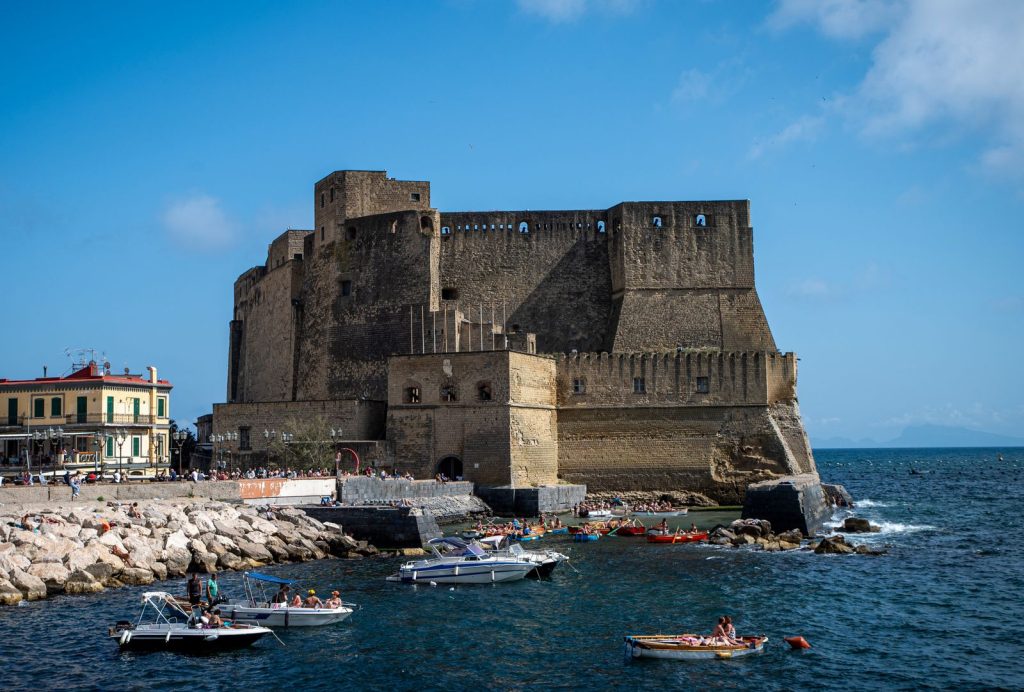
Open since 1882 on Via Partenope, facing Castel dell’Ovo. Palazzo Reale and the San Carlo are roughly 15 minutes on foot along the seafront, and the MANN is a short taxi ride. The Caruso roof garden restaurant and a spa with an indoor pool make it a comfortable base after long museum days.
Best for: a classic seafront grand hotel close to the royal quarter.
Check rates at Grand Hotel Vesuvio
Grand Hotel Parker’s
A Relais & Châteaux member on Corso Vittorio Emanuele, opened in 1870, with 67 rooms and wide views over the bay. It sits on the hillside between Chiaia and the Vomero, a short taxi ride from San Martino. Its fine-dining restaurant George and a rooftop bar keep evenings in-house; the wellness area was reported under renovation, so ask the hotel.
Best for: San Martino and a quiet, bookish atmosphere.
Check rates at Grand Hotel Parker’s
Romeo Hotel
A contemporary hotel designed by Kenzo Tange’s studio, facing the port. Palazzo Reale, the San Carlo and the Gallerie d’Italia are each about ten to fifteen minutes on foot, and Capri and Ischia ferries leave nearby. Expect a rooftop terrace, a spa and the owner’s art collection in public areas; ask the hotel about current restaurants.
Best for: modern design and combining museums with the islands.
Eurostars Hotel Excelsior
A 1908 Belle Époque building on Via Partenope with 122 rooms, a few doors from the Vesuvio and opposite Castel dell’Ovo. The royal quarter is about 15 minutes on foot. The rooftop restaurant La Terrazza looks across the bay to Vesuvius.
Best for: seafront views at a gentler price than the five-star addresses.
Check rates at Eurostars Hotel Excelsior
If you continue down the coast, our guide to tennis hotels on the Amalfi Coast and Sorrento covers the next stop, and Capri by boat makes an easy day out from the port.
Frequently Asked Questions
Do I need to book the Naples museums in advance?
For the MANN, Capodimonte, Palazzo Reale and San Martino, booking is optional. The Palazzo Reale hanging garden and the Cappella Sansevero need advance booking.
Which museum should I choose if I only have one morning?
The MANN, if Pompeii is on your trip. Capodimonte, if paintings matter more to you.
Where can I see Caravaggio in Naples?
At Pio Monte della Misericordia, Capodimonte and the Gallerie d’Italia on Via Toledo.
Are Naples museums free on certain days?
State museums and the Gallerie d’Italia are free on the first Sunday of the month. Expect crowds and some closed sections.
Planning more of Naples and Campania?