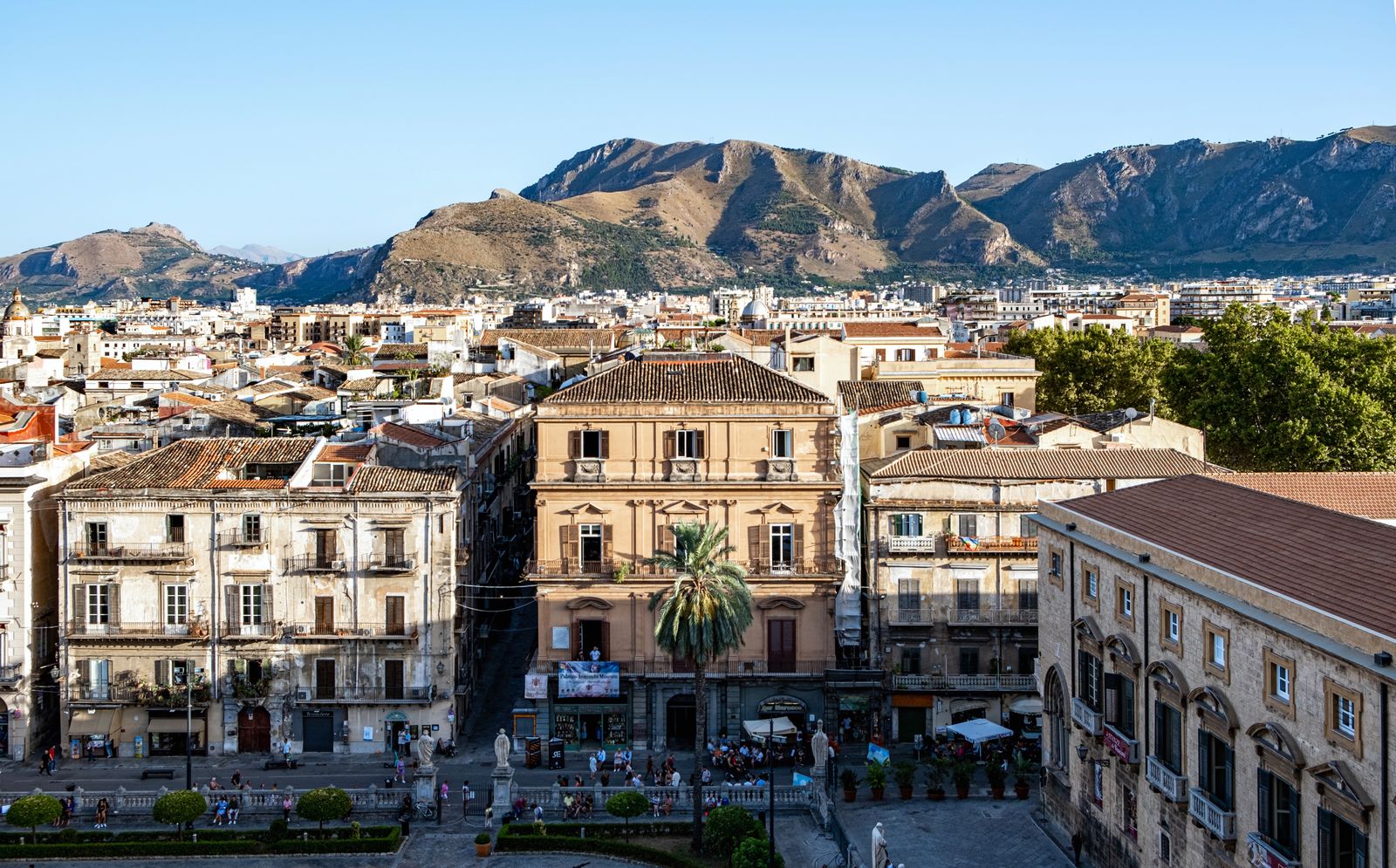
Palermo does not have one blockbuster museum. It has something rarer: a whole city of Arab-Norman mosaics, Gothic palaces and baroque stucco, much of it in working churches with their own hours and quirks. Nine Arab-Norman monuments in Palermo, Monreale and Cefalù share one UNESCO World Heritage listing. This guide covers the ten sights I would build a culture trip around in 2026, with current hours, prices and special access.
This article contains affiliate links. If you book through them, we may earn a small commission at no extra cost to you. Read our affiliate disclosure.
Quick answer: Palermo’s top sights by type
- Unmissable mosaics: the Cappella Palatina in the Royal Palace, then Monreale Cathedral and its cloister.
- Finest picture gallery: Palazzo Abatellis, for the Triumph of Death and Antonello da Messina’s Annunciata.
- Baroque at its most theatrical: Giacomo Serpotta’s stucco oratories of Santa Cita, San Domenico and San Lorenzo.
- Ancient Sicily: the Museo Archeologico Salinas and the metopes of Selinunte.
- Palaces and views: Palazzo Butera, the cathedral rooftops and the Teatro Massimo.
- Best excursion: Cefalù Cathedral, about an hour east along the coast.
Check prices and availability
Most sights lie within a 20 minute walk of the Quattro Canti.
The ten sights worth your time
Hours and prices were checked against official sites and the City of Palermo’s listings in autumn 2026. Churches close for services at short notice, so recheck the week you travel.
1. Palazzo dei Normanni and the Cappella Palatina
Roger II’s palace chapel, begun in the 1130s, is the high point of Arab-Norman art: Byzantine gold mosaics with Christ Pantocrator in the dome, a carved and painted wooden muqarnas ceiling by Fatimid craftsmen, and an inlaid marble floor. The full itinerary adds the Royal Apartments, with the mosaic Sala di Re Ruggero, and the gardens.
- Hours: daily 8.30am to 4.30pm (last admission), Sundays and holidays 8.30am to 12.30pm. Closed 25 December and 1 January.
- Ticket: the Fondazione Federico II’s official site lists €14.50 Thursday to Monday (chapel, Royal Apartments and gardens) and €10 on Tuesday and Wednesday, when the apartments are not included. The city’s tourism listing still shows €19 and €15.50. Our research turned up contradictory figures here, so check the foundation’s site before you go.
- Booking: online on the foundation’s site or at the ticket office; not compulsory. A few days ahead suffices.
- Time needed: two hours. Arrive at opening.
- 2026 note: the chapel’s mosaics are under restoration and the foundation warns that hours may change and some areas may close temporarily. On Sundays the chapel closes to tourists for Mass; the foundation gives 9.30am to 11am, the chapel’s own site 9.30am to 11.30am, so plan around both.
- Special access: private visits can be requested from the foundation on weekdays.
2. Monreale Cathedral and cloister
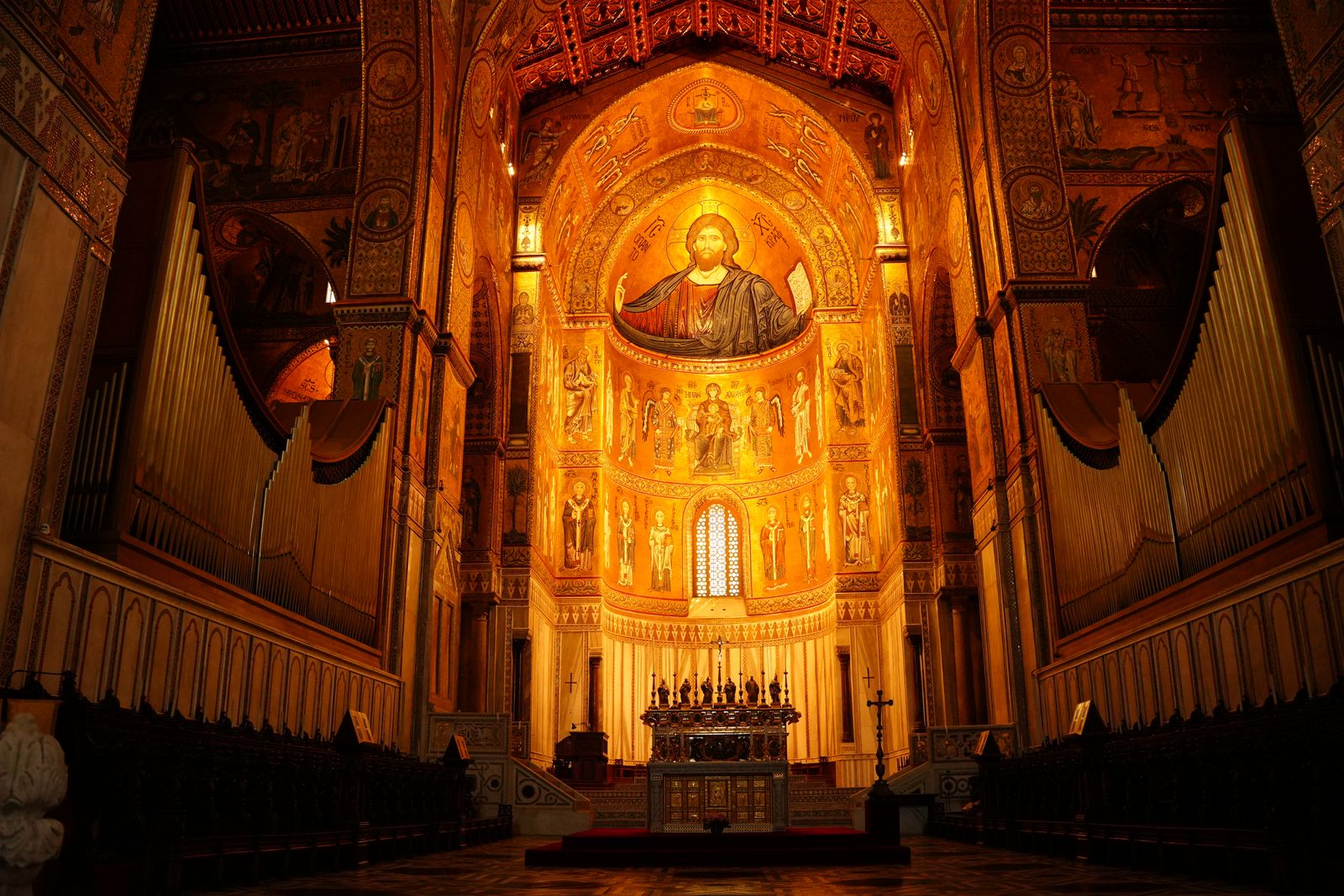
Fifteen minutes uphill from Palermo, William II’s cathedral holds one of the largest mosaic cycles in the Christian world, ending in a colossal Christ Pantocrator in the apse. The Benedictine cloister next door has over 200 paired columns, many inlaid with mosaic, under carved biblical capitals. The terraces look down the Conca d’Oro to the sea.
- Hours: the city’s listing gives the cathedral Monday to Saturday 9am to 12.45pm and 2pm to 4.45pm, Sundays and holidays 2pm to 5pm. The cloister opens Monday to Saturday 9am to 7pm and Sundays 9am to 1.30pm, with last entry 30 minutes before closing.
- Ticket: cathedral entry is free; the terraces and treasury are on a separate paid route, so check the price on site. The cloister costs €7 on the official CoopCulture ticket site, with a €2 supplement during exhibitions.
- Booking: cloister numbers are capped; book online a few days ahead from April to October.
- Time needed: two to three hours with the cloister and terraces.
3. Palermo Cathedral, treasury and rooftops
The exterior layers Norman, Gothic and Catalan work, but the paying areas are the reason to come: the porphyry tombs of Roger II and Frederick II, the treasury with Constance of Aragon’s jewelled crown, the crypt, and a walk across the rooftops above the domes.
- Hours: monumental areas Monday to Friday 9.30am to 2.30pm, Saturday 9.30am to 6pm, Sunday 9am to 1pm, according to the city’s November 2025 listing.
- Ticket: the nave is free. A 2026 visitor guide gives €13 for the full route and €7 for the rooftops; the city lists a range of €1 to €18 depending on the route. Check the cathedral’s official site.
- Time needed: 75 minutes.
- Special access: summer evening rooftop openings ran on selected Saturdays until midnight in 2025; check whether they return in 2026.
4. Palazzo Abatellis (Galleria Regionale della Sicilia)
A late Gothic palace in the Kalsa, redesigned inside by Carlo Scarpa, holding Sicily’s finest paintings. Do not miss the detached fresco of the Triumph of Death, Antonello da Messina’s Virgin Annunciate, Francesco Laurana’s marble bust of Eleonora of Aragon, and the Malvagna Triptych by Jan Gossaert.
- Hours: Tuesday to Saturday 9am to 7pm, Sundays and holidays 9am to 1.30pm. Closed Mondays.
- Ticket: €10 per the city listing; free on the first Sunday of the month. No timed booking needed.
- Time needed: 90 minutes. Weekday afternoons are quiet.
5. Museo Archeologico Salinas
In a former convent near the Teatro Massimo, the Salinas holds the carved metopes from the temples of Selinunte, the lion-head water spouts from Himera, the bronze Ram of Syracuse and the Palermo Stone fragment of Egyptian royal annals.
- Hours: Tuesday to Saturday 9am to 6.30pm, Sunday 9am to 1pm. Closed Mondays.
- Ticket: €8; free on the first Sunday of the month.
- Time needed: 90 minutes.
6. La Martorana and San Cataldo
Two UNESCO churches side by side on Piazza Bellini. La Martorana has 12th century mosaics, including Roger II crowned by Christ, under a baroque shell; San Cataldo, with its three red domes, is bare inside and atmospheric.
- Hours: Martorana Monday to Saturday 10am to 1pm, Sunday Mass only. San Cataldo daily 9am to 1.30pm and 2pm to 5pm.
- Ticket: about €2 and €2.50 respectively, per the city listing.
- Time needed: 45 minutes for both.
7. Serpotta’s oratories: Santa Cita, San Domenico and San Lorenzo
Giacomo Serpotta turned white stucco into something close to marble sculpture. In Santa Cita, look for the Battle of Lepanto panel and the cherubs that swarm the walls; in the Oratorio del Rosario di San Domenico, Van Dyck’s altarpiece of the Madonna of the Rosary; in San Lorenzo, Serpotta’s allegorical virtues around the empty frame of Caravaggio’s Nativity, stolen in 1969 and now shown as a high-definition reproduction.
- Hours: Santa Cita and San Domenico daily except Tuesday, 9am to 1.30pm and 2pm to 5pm. San Lorenzo is listed daily 10am to 6pm; check the official site.
- Ticket: €6 for a combined ticket to Santa Cita and the Rosario oratory, according to the city listing, with a discount on the Circuito del Sacro pass run by the Amici dei Musei Siciliani. Check San Lorenzo’s price on site.
- Time needed: 30 minutes each.
8. Teatro Massimo
Italy’s largest opera house, completed by Ernesto Basile in 1897. The tour covers the horseshoe auditorium and the most interesting halls.
- Hours: guided tours daily 9.30am to 7pm, last tour 6.20pm, in Italian, English, French, Spanish and German.
- Ticket: from 1 July 2026, €14 full and €7 under 26, sold at the box office and through the theatre’s official online ticketing.
- Special access: a backstage tour adds €5, subject to rehearsals. Groups can book a cocktail tour in the Royal Box sitting room (€55, 15 to 30 people) or a concert and cocktail tour (€95), at least seven days ahead.
- Time needed: 40 minutes.
9. Palazzo Butera
Restored by collectors Massimo and Francesca Valsecchi, this sea-facing palace mixes Annibale Carracci and Edward Lear with Gilbert & George and William Morris furniture. The roof terrace looks over the Gulf of Palermo.
- Hours: Tuesday to Sunday 10am to 8pm, last entry 7pm, per the palace’s official site.
- Ticket: €10, or €7.50 reduced for Palermo residents and students, and free under 18, per the palace’s official site. A Teatro Massimo and Palazzo Butera combined ticket costs €19 from July 2026.
- Time needed: 90 minutes.
10. Excursion: Cefalù Cathedral
The third great Norman church, with a Pantocrator mosaic many consider the most beautiful of all, set against the sea and a rock. Paid routes add the towers, treasury and cloister.
- Hours and tickets: the last published prices we found were from 2024 (€10 to €13 by route), sold at the cathedral’s own ticket offices and site. Check the official site for 2026.
- Time needed: half a day; the train takes about an hour.
Also on the UNESCO route: San Giovanni degli Eremiti (€8) and La Zisa (€8, closed Mondays), whose ground floor portico was closed for works in spring 2026. For guided walks and day trips, see our Palermo tours and day trips guide.
At a glance: comparison table
| Sight | Area | Time needed | Booking lead time | Best for |
|---|---|---|---|---|
| Cappella Palatina | Albergheria | 2 hours | A few days | Mosaics, first-timers |
| Monreale | Monreale | 2 to 3 hours | A few days (cloister) | Mosaics, views |
| Cathedral | Cassaro | 75 minutes | None | Rooftops, royal tombs |
| Palazzo Abatellis | Kalsa | 90 minutes | None | Painting lovers |
| Museo Salinas | Centre | 90 minutes | None | Archaeology |
| Serpotta oratories | Vucciria, Kalsa | 30 minutes each | None | Baroque, Caravaggio story |
| Teatro Massimo | Centre | 40 minutes | Same day; a week for group tours | Opera fans, families |
| Palazzo Butera | Kalsa seafront | 90 minutes | None | Design, sea views |
| Cefalù Cathedral | Cefalù | Half day | None | A day by the sea |
A two or three day culture itinerary
- Day 1, Norman Palermo: Royal Palace at 8.30am, then the cathedral rooftops (closing 2.30pm on weekdays) and La Martorana before it shuts at 1pm. After lunch, San Cataldo and San Giovanni degli Eremiti, both open in the afternoon.
- Day 2, Monreale and Baroque: Monreale at 9am for the mosaics, cloister and terraces. Back in town, Santa Cita and San Domenico in the afternoon, and a Teatro Massimo tour or an evening performance.
- Day 3, the Kalsa: Palazzo Abatellis, San Lorenzo, then lunch and Palazzo Butera with its terrace. Add the Salinas, or swap the day for Cefalù.
Avoid the Royal Palace on Tuesday or Wednesday if you want the Royal Apartments.
How to beat the queues
- Take the first slot: tour groups fill the Royal Palace from mid-morning.
- Buy online where possible: the Royal Palace, Monreale cloister, the Salinas and Palazzo Butera all sell on their official sites.
- Use the passes: the Circuito del Sacro discounts the oratories; a Teatro Massimo combined ticket covers Palazzo Butera.
- Skip the first Sunday: free regional museums mean crowds.
Dress codes for churches
The Cappella Palatina enforces its rules: shoulders and knees covered, no crop tops, shorts or miniskirts, and men remove hats. Monreale and the cathedral apply similar standards. Carry a light scarf in summer and avoid Sunday mornings.
Charlotte’s tip: see the mosaics twice
Visit Monreale in the morning and the Cappella Palatina another day at opening. The light changes the gold completely, and the comparison is the real lesson of Arab-Norman Sicily. Bring small binoculars for the upper tiers.
Where to stay for culture lovers
These four hotels sit within walking distance or a short ride of the main sights. For more, see our guide to where to stay in Palermo, or our wider pick of the best luxury hotels in Sicily.
Rocco Forte Villa Igiea
The Florio family’s Art Nouveau palace in Acquasanta, restored by Rocco Forte and reopened in 2021, with terraced gardens, a pool, a spa and a sea-view tennis court. It is about ten minutes by car from the centre, and the hotel runs a complimentary shuttle into town. Ernesto Basile, architect of the Teatro Massimo, reshaped it. Read our full Villa Igiea review.
Best for: culture by day, a resort by evening.
Check rates at Rocco Forte Villa Igiea
Grand Hotel et des Palmes
Built in 1874 for the Ingham-Whitaker family and turned into a hotel by Basile, this is where Wagner stayed in 1881 and 1882 and is said to have finished Parsifal. It sits on Via Roma, a short walk from the Teatro Massimo and the Salinas. Ask the hotel about current facilities, including its seasonal rooftop.
Best for: music lovers and a central, historic address.
Check rates at Grand Hotel et des Palmes
Grand Hotel Wagner
A traditional grand hotel with 61 rooms on Via Riccardo Wagner, about a five minute walk from both the Teatro Massimo and the Politeama.
Best for: opera evenings and the Via Libertà shops.
Check rates at Grand Hotel Wagner
Palazzo Natoli Boutique Hotel
An 11 room, four star boutique hotel in a historic palazzo on Via Santissimo Salvatore, a few steps from Via Maqueda and the Quattro Canti. The cathedral is about a five minute walk and the Royal Palace roughly ten. Some rooms have balconies.
Best for: walking everywhere from a small, personal base.
Check rates at Palazzo Natoli Boutique Hotel
Check prices and availability
Spring and autumn suit sightseeing best, and central hotels fill first.
Staying longer? Pair Palermo with a Sicily Baroque road trip, a few days among the vineyards from our Sicilian wine guide, or a morning hit at one of the tennis courts in Sicily.
Frequently Asked Questions
Do I need to book the Cappella Palatina in advance?
Booking is not compulsory, but buying online on the Fondazione Federico II’s site saves time in spring and on weekends. Go at 8.30am, and avoid Tuesday and Wednesday if you want the Royal Apartments.
Is Monreale worth it if I have seen the Palatine Chapel?
Yes. The chapel is intimate, Monreale monumental, and its cloister has no equal in Palermo.
How many days do I need for Palermo’s sights?
Two full days cover the essentials; three add the Kalsa palaces or Cefalù.
Which sights close on Mondays?
Palazzo Abatellis, the Museo Salinas, La Zisa and Palazzo Butera. The oratories of Santa Cita and San Domenico close on Tuesdays instead.