This post contains affiliate links. If you book through them, we may earn a small commission at no extra cost to you. Learn more.
In January 1693 an earthquake destroyed much of south-eastern Sicily. What happened next is the reason to visit: the towns were rebuilt almost at once, in the same honey-coloured limestone and the same exuberant late Baroque style, and in 2002 eight of them were added to the UNESCO World Heritage List as the Late Baroque Towns of the Val di Noto. Noto, Modica, Ragusa and Scicli sit close together, and a car turns them into one of the most rewarding short road trips in Italy.
Plan Your Trip
- Compare car hire in Sicily with Localrent, pick up at Catania Airport
- GetRentacar as a second price comparison
- Private transfer from Catania Airport if you prefer not to drive
- Tours and day trips across Sicily for the days without a car
- eSIM for Italy for maps and parking apps on the road
The Route at a Glance
| Town | Don’t miss | Time needed |
|---|---|---|
| Noto | The cathedral and the main street, Corso Vittorio Emanuele, lined with churches and palazzi | Half a day, ideally into the evening |
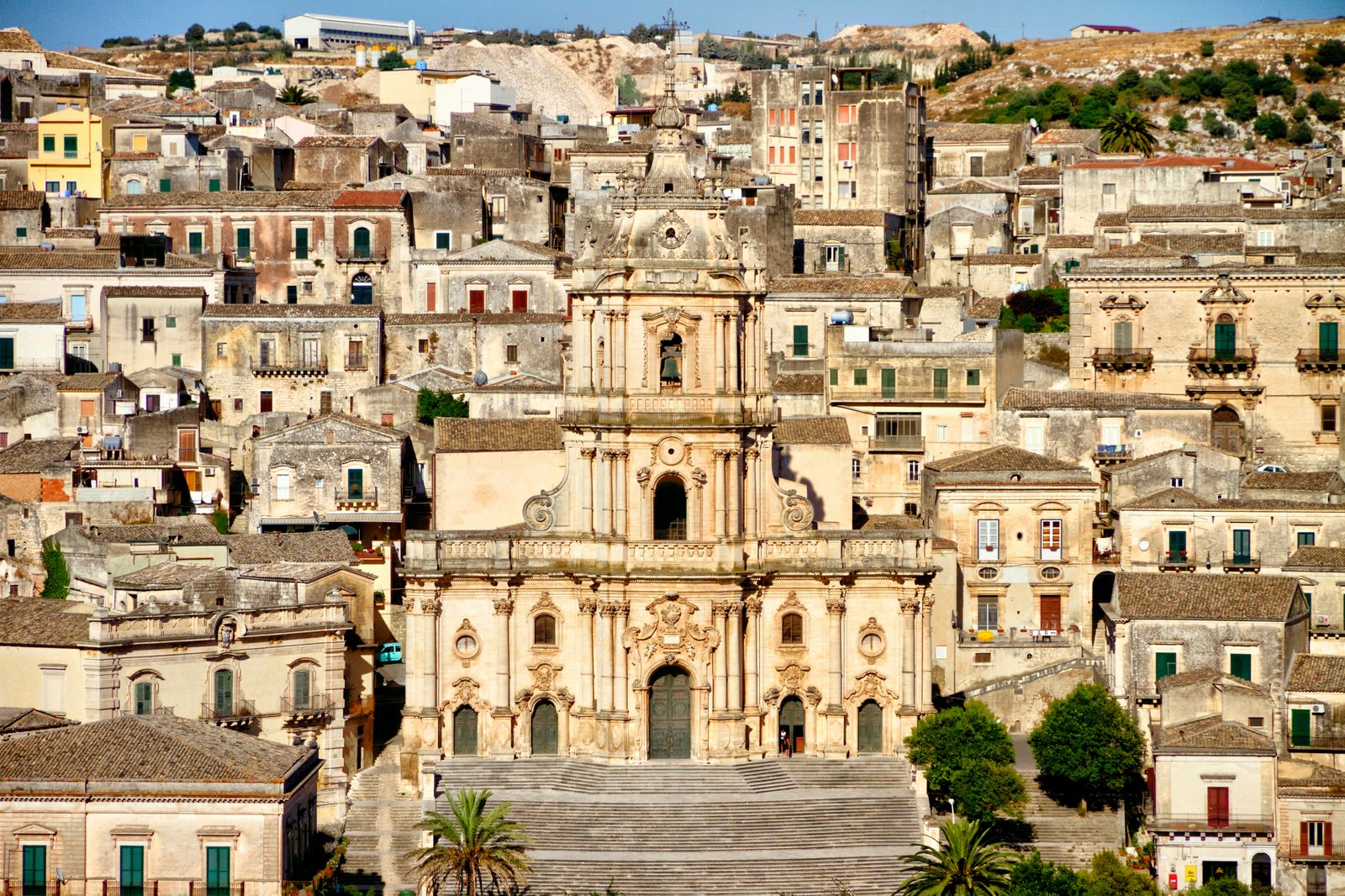
| Modica | The church of San Giorgio above its long staircase, and the town’s cold-worked chocolate | Half a day |
| Scicli | Via Francesco Mormino Penna, one of the most harmonious Baroque streets in Sicily | Two to three hours |
| Ragusa Ibla | The Duomo di San Giorgio, the lanes of the lower town and the view from the upper town | Half a day to a full day |
The four towns are short drives apart, so you can base yourself in one place and visit the others on day trips, or move every night or two.

Day One: Noto
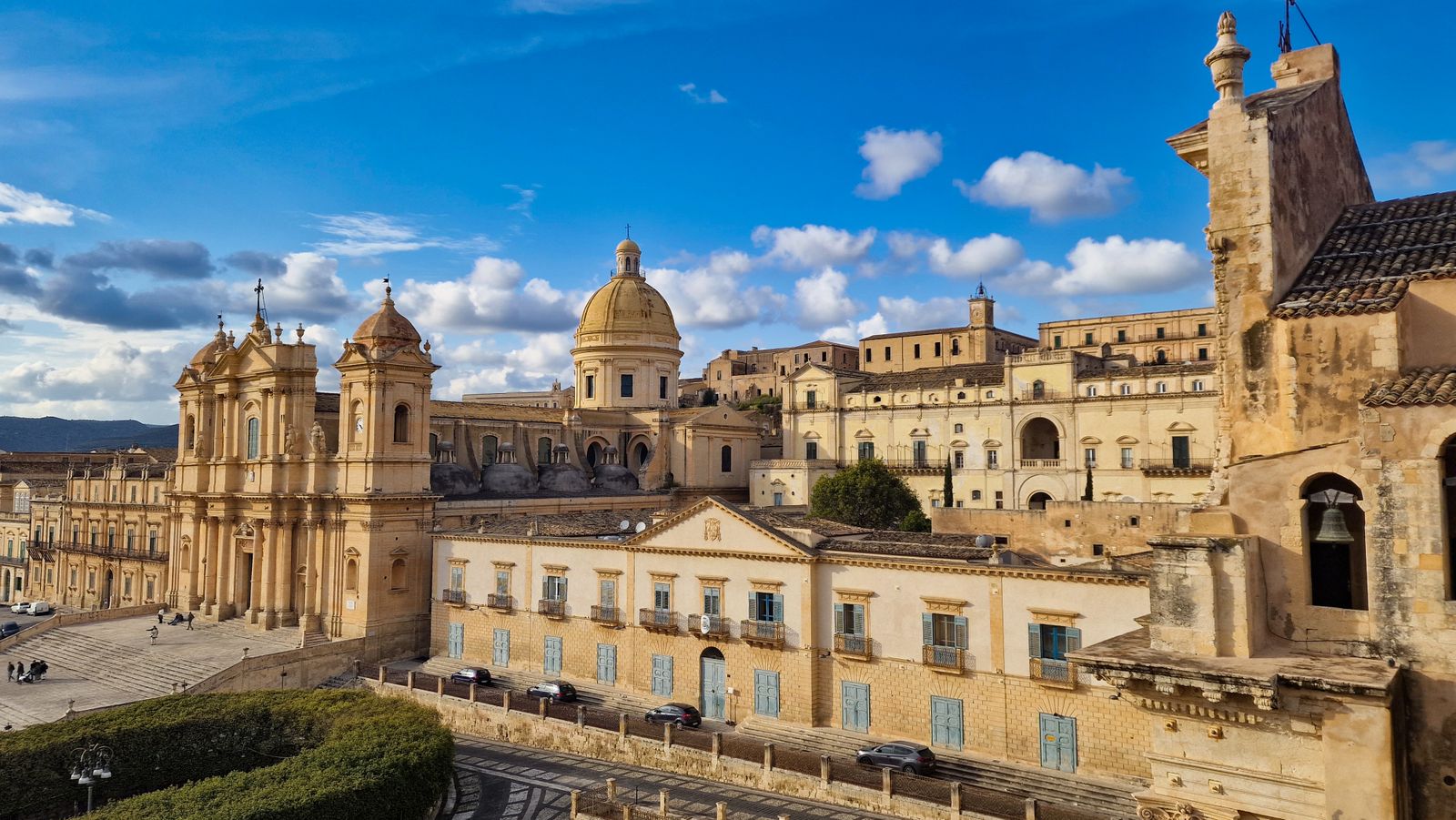
Noto was rebuilt on a new site after the earthquake, and its planners gave it a grid of straight streets and a main axis designed for theatre. Walk the Corso Vittorio Emanuele from end to end, past churches, convents and palazzi, and climb the steps to the cathedral. Its dome collapsed in March 1996, the result of weaknesses left by earlier earthquake damage; after more than a decade of reconstruction it reopened in June 2007.
Noto is at its most beautiful in the late afternoon, when the stone turns gold, and in the evening, when the Corso fills with people. With extra time, the Vendicari nature reserve and the fishing village of Marzamemi are both close by and make a good afternoon by the sea.
Day Two: Modica and Scicli
Modica is built up the sides of a gorge, divided into a lower town and an upper town, Modica Alta. The church of San Giorgio, at the top of a long staircase, is the image most people take home. Modica is also known for its chocolate, made “cold” without conching, which keeps the sugar crystals intact and gives it a grainy texture quite unlike other chocolate. The tradition dates back to the period of Spanish rule, and in 2018 the EU recognised Cioccolato di Modica with protected geographical indication status. Buy it from one of the historic producers in town and try a few flavours before you choose.
In the afternoon, drive to Scicli, the quietest of the four towns. Via Francesco Mormino Penna, lined with Baroque churches and palazzi, is worth the trip on its own. Scicli is also one of the filming locations of the Italian television series about Inspector Montalbano, which we cover in our guide to Marina di Ragusa.
Day Three: Ragusa Ibla
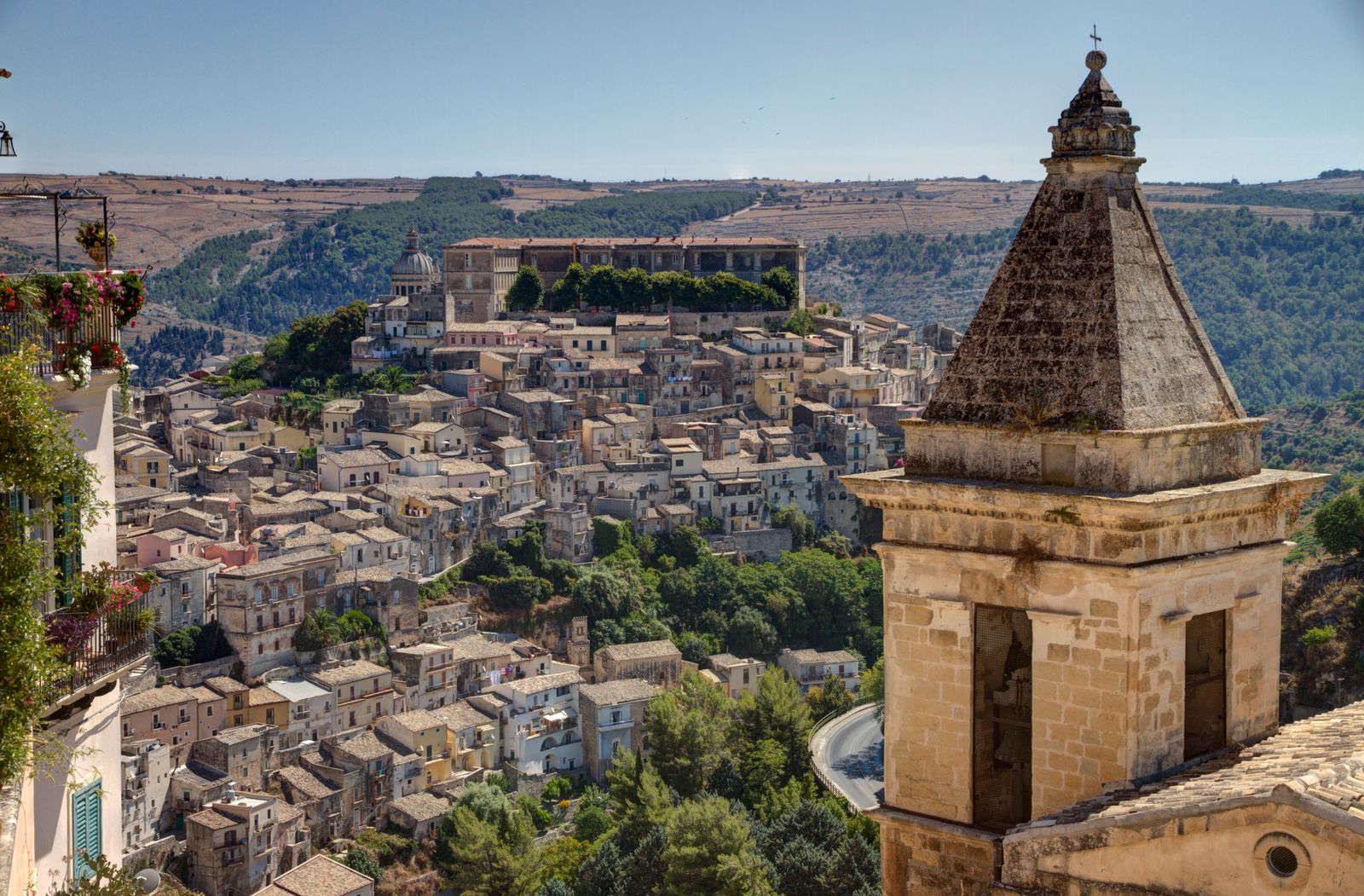
Ragusa is two towns in one. After the earthquake, part of the population built a new town on the ridge above, Ragusa Superiore, while others rebuilt the old town, Ragusa Ibla, on its medieval street plan. The best way to arrive is on foot from the upper town, down the steps past the church of Santa Maria delle Scale, with Ibla spread out below you. The Duomo di San Giorgio, at the top of its sloping piazza, is one of the finest Baroque churches on the island.
Ibla rewards slow wandering: small piazzas, courtyards and quiet lanes away from the main square. Stay for dinner if you can; the town has some of the best restaurants in this part of Sicily. The coast at Marina di Ragusa is a short drive away for a final evening by the sea.
With More Time: The Other UNESCO Towns
The UNESCO listing covers eight towns, and the four above are only the most famous. With an extra day, add Palazzolo Acreide in the hills west of Syracuse, which combines Baroque churches with the remains of the ancient Greek city of Akrai, or Caltagirone further inland, famous for its ceramics and its long staircase decorated with majolica tiles. Catania and Militello in Val di Catania complete the list.
What to Eat Along the Way
- Modica chocolate: grainy, intense and made without conching, in flavours from vanilla and cinnamon to chilli and citrus.
- Ragusano cheese: a stretched-curd cheese from the milk of the local Modicana cattle, made in the Ragusa area for centuries.
- Granita with brioche: the Sicilian summer breakfast, best in Noto and the towns of the south-east.
- Scacce: folded flatbreads filled with tomato, cheese or vegetables, a local snack in Ragusa and Modica.
- Local wine: the red Nero d’Avola takes its name from Avola, just south of Noto, and Cerasuolo di Vittoria comes from the province of Ragusa.
Driving Tips for South-Eastern Sicily
- Hire the car at Catania Airport: it is the main gateway to this corner of Sicily, and you avoid driving in Catania itself. Compare prices on Localrent before you book.
- Park outside the historic centres: many old towns have limited traffic zones. Use the car parks on the edge of town and walk in.
- Choose a small car: the streets in Ibla and Modica Alta are narrow and steep.
- Travel in spring or autumn: summer heat in the interior is intense, and the towns are far more pleasant to walk in April, May, September and October.
Shorter and Longer Versions of the Route
Two days: spend the first afternoon and evening in Noto, then drive to Modica the next morning, continue to Scicli for lunch and end the day in Ragusa Ibla for dinner.
Five days: start with two nights in Ortigia, add a morning at the Vendicari reserve and an evening in Marzamemi, then follow the three-day route above and finish with a night by the sea at Marina di Ragusa.
Practical Tips for Visiting the Churches
- Dress code: cover shoulders and knees when entering churches; a light scarf in your bag solves the problem in summer.
- Midday closures: many churches and smaller shops close for a few hours in the early afternoon. Plan interiors for the morning and late afternoon, and use the middle of the day for lunch.
- Climb for the views: several churches, including the cathedral area in Noto and San Giorgio in Modica, have terraces or nearby viewpoints over the rooftops; ask locally which are open.
- Evenings matter: the stone is at its most beautiful in the last hour of daylight, and the main streets come alive after dark, especially in summer.
Prefer to explore at your own pace?
Self-guided audio tours play on your phone, work offline and let you pause for coffee whenever you like. Good options here are the Noto audio tour, Ragusa Ibla baroque audio tour or the Scicli audio walk.
Frequently Asked Questions
How many days do you need for the Baroque towns?
Three days covers Noto, Modica, Scicli and Ragusa Ibla at a relaxed pace. With two days, combine Modica and Scicli on one day and Noto on the other, and visit Ragusa Ibla in the evening.
Can you visit without a car?
It is possible by bus, but connections between the towns are limited, especially on Sundays. A car makes the trip far easier; compare car hire on Localrent.
Which town is the most beautiful?
Each has its own character: Noto is the most theatrical, Ragusa Ibla the most atmospheric, Modica the most dramatic in its setting and Scicli the quietest.
Where should I base myself?
Modica or Ragusa Ibla are the most central for the four towns. Noto works well if you also want time on the coast at Vendicari and Marzamemi.
When is the best time to go?
Spring and autumn. Summer is hot in the inland towns, but the long evenings in Noto and Ragusa Ibla are lovely if you plan sightseeing early and late.
Where to Start and Where to Stay
Many visitors combine the Baroque towns with Syracuse: spend a night or two in Ortigia first, then drive south. For swimming along this coast, see our guide to Sicily’s best bays and coves, and for hotels across the island, our guide to the best luxury hotels in Sicily. Our Sicily travel guide covers the rest of the island.
Related guides: read our articles on boat tours from Syracuse and Ortigia, getting from Catania Airport to Taormina and Syracuse, Sicilian wine and golf in Sicily.
Hungry in Sicily? See our guide to Sicilian food.