This post contains affiliate links. If you book through them, we may earn a small commission at no extra cost to you. Learn more.
Few harbor stops anywhere in the Mediterranean pack as much layered history into as small a footprint as Ortigia, the tiny island old town at the heart of Syracuse. Barely a kilometer long, connected to mainland Sicily by two short bridges, Ortigia has been continuously inhabited since Greek settlers first arrived here in the 8th century BC, and its harbor has sheltered everything from ancient triremes to modern cruising yachts across nearly three thousand years of uninterrupted maritime use. Here’s the history behind that remarkable continuity, and what it actually means to bring a boat into one of the oldest working harbors in the Western world.
Plan Your Trip
- Private transfer from Catania Airport, booked in advance with a fixed price
- Tours and day trips across Sicily: Mount Etna, the Egadi Islands, the Valley of the Temples
- Ancient Theatre of Taormina guided tour, tickets included
- eSIM for Italy, set up before you fly
A Greek Foundation Older Than Rome
Ortigia’s history begins in 734 BC, when settlers from Corinth founded a colony here, drawn by the same natural advantage that still matters to sailors today: a well-protected harbor formed by the small island’s position, sheltered from the open sea. The colony they established, Syracuse, grew with startling speed into one of the most powerful and wealthy city-states in the entire Greek world, eventually rivaling Athens itself in population and military strength during the city’s classical-era peak. Syracuse’s naval power was significant enough to draw Athens into a catastrophic military overreach: the Sicilian Expedition of 415 to 413 BC, in which an Athenian fleet and army, sent to conquer the city during the Peloponnesian War, was instead comprehensively destroyed in Syracuse’s own Porto Grande, the great harbor still visible today on Ortigia’s western side, a defeat historians generally regard as marking the beginning of Athens’s ultimate downfall in the war.
Physical evidence of this Greek golden age survives astonishingly well for a site this old. The Temple of Apollo, near the bridge connecting Ortigia to the mainland, dates to the early 6th century BC and is considered one of the oldest surviving Doric temples anywhere in the Greek world, predating even many of the more famous temples on the Greek mainland. Even more remarkably, columns from a second ancient temple, dedicated to Athena and built in the 5th century BC, remain visibly embedded within the walls of Ortigia’s Baroque cathedral, a genuinely rare case of an ancient pagan temple’s structure surviving in continuous use, first converted to a Christian basilica in the Byzantine era and later encased in its current ornate Baroque facade after the 1693 earthquake, meaning worshippers and visitors alike still stand between the same Doric columns raised for Athena two and a half thousand years ago.
The Spring That Justified a Colony
According to Greek mythology, the Fountain of Arethusa, a freshwater spring emerging remarkably close to the sea on Ortigia’s edge, was once the nymph Arethusa herself, transformed into a spring by Artemis while fleeing the river god Alpheus, who pursued her all the way from the Peloponnese beneath the Ionian Sea. Whatever its mythological origins, the spring’s genuine freshwater source, an unusual enough phenomenon this close to open seawater, is thought to have been a significant practical factor in the original Corinthian settlers’ choice of this specific spot, providing a reliable water supply that made the small island genuinely defensible and self-sufficient in a way few other nearby sites could match. The fountain remains a functioning, publicly visible feature of Ortigia today, complete with papyrus plants, a species otherwise rare in Europe, growing along its edge.
Castello Maniace: Guarding the Harbor
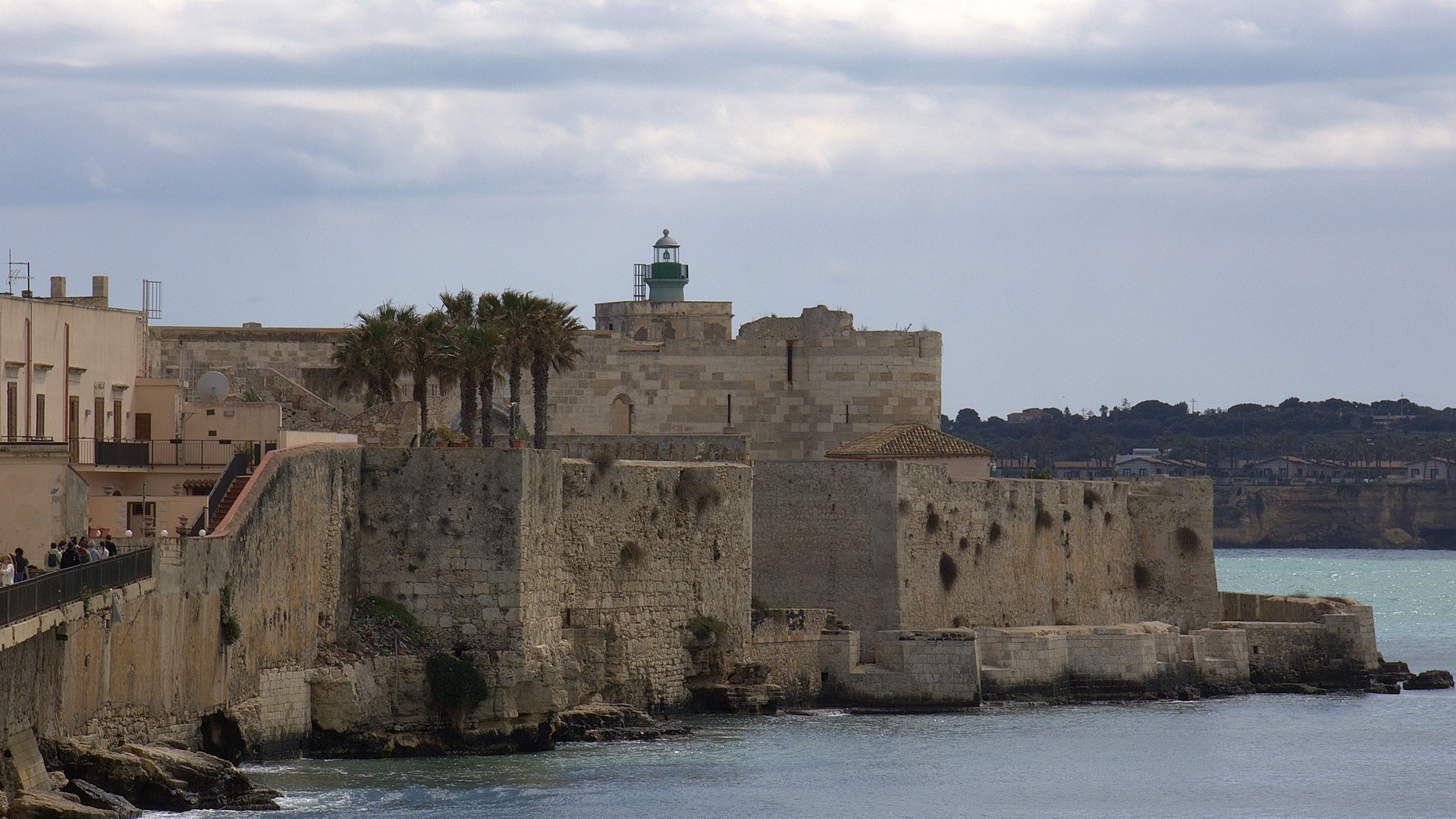
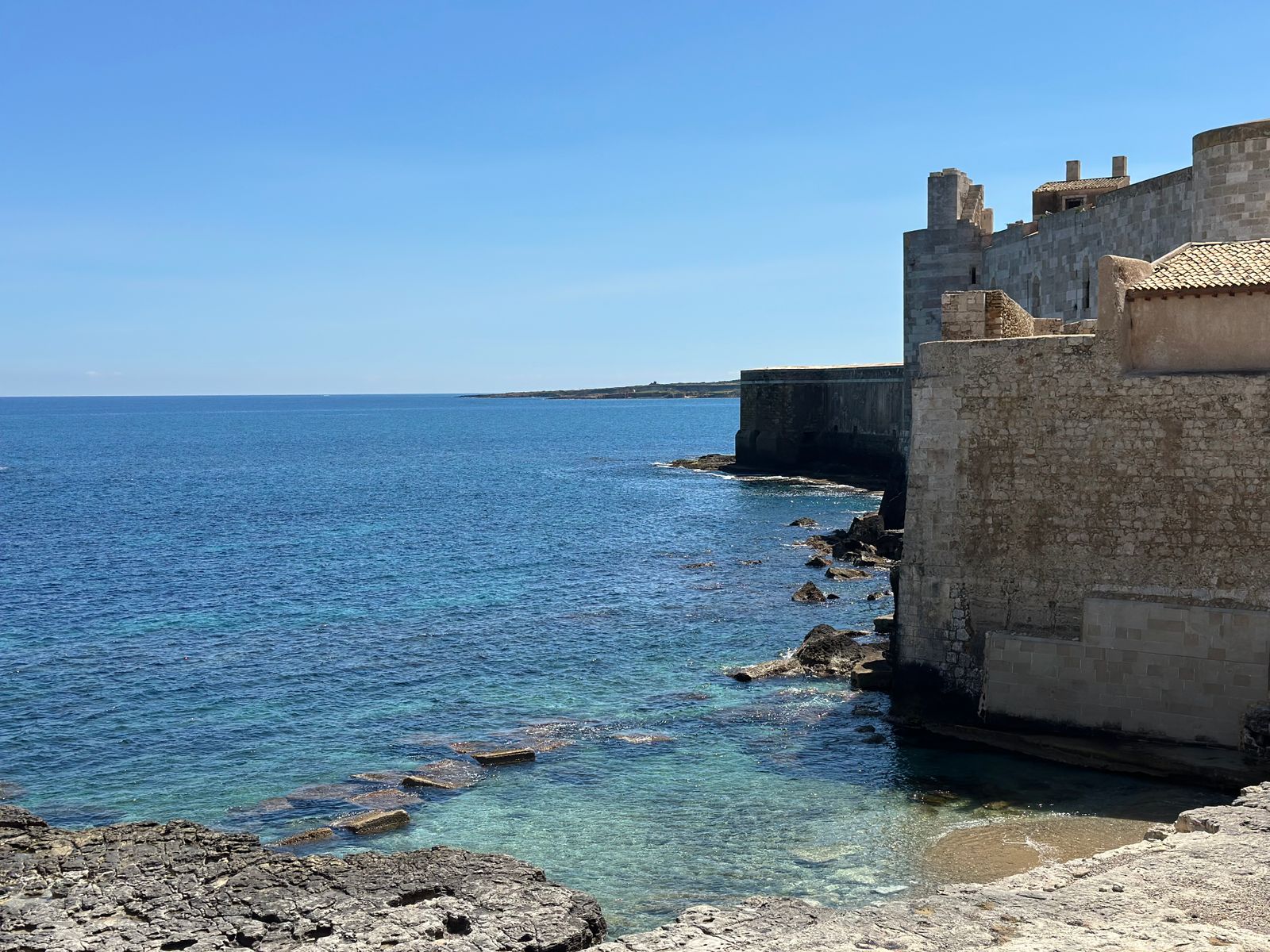
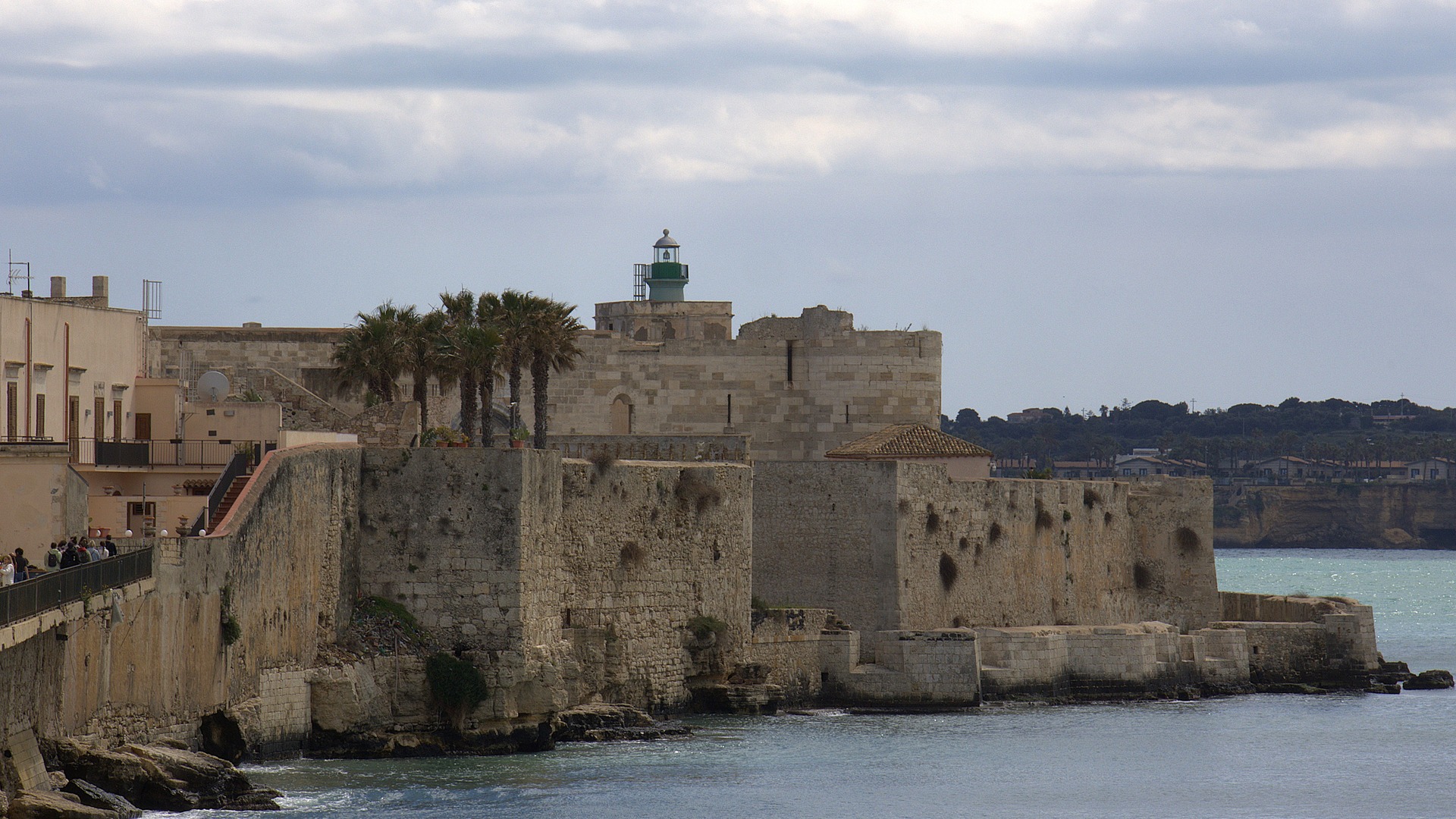
At Ortigia’s southern tip, directly overlooking the approach to the Porto Grande, the Castello Maniace stands as the island’s most imposing defensive structure, built in the 13th century under the Holy Roman Emperor Frederick II, one of the medieval period’s most intellectually formidable rulers, whose Sicilian court blended Latin, Greek, Arab, and Jewish scholarship in a way largely unmatched elsewhere in contemporary Europe. The castle’s severe, geometrically precise design reflects Frederick’s well-documented interest in military architecture and mathematics, and its position at the harbor mouth meant that for centuries, any vessel entering or leaving Ortigia’s protected waters did so under the direct watch of whoever controlled this fortress, a strategic reality that shaped the island’s defensive history for the better part of a millennium.
Rebuilt in Gold After Disaster
Like much of southeastern Sicily, Ortigia was devastated by the massive 1693 earthquake that leveled towns across the region, and its subsequent reconstruction in the local golden limestone, in the same ornate late Baroque style seen in Noto, Ragusa Ibla, and Modica, is what gives the island’s streets their remarkably unified, luminous appearance today. Piazza Duomo, built directly atop the ancient Greek acropolis and lined with Baroque palazzi glowing gold in the afternoon light, is widely considered one of the most beautiful public squares anywhere in Italy, a genuinely rare case of a disaster producing, through the accident of a unified rebuilding effort, one of the country’s great architectural set pieces.
Bringing a Boat to Ortigia: What Sailors Should Know
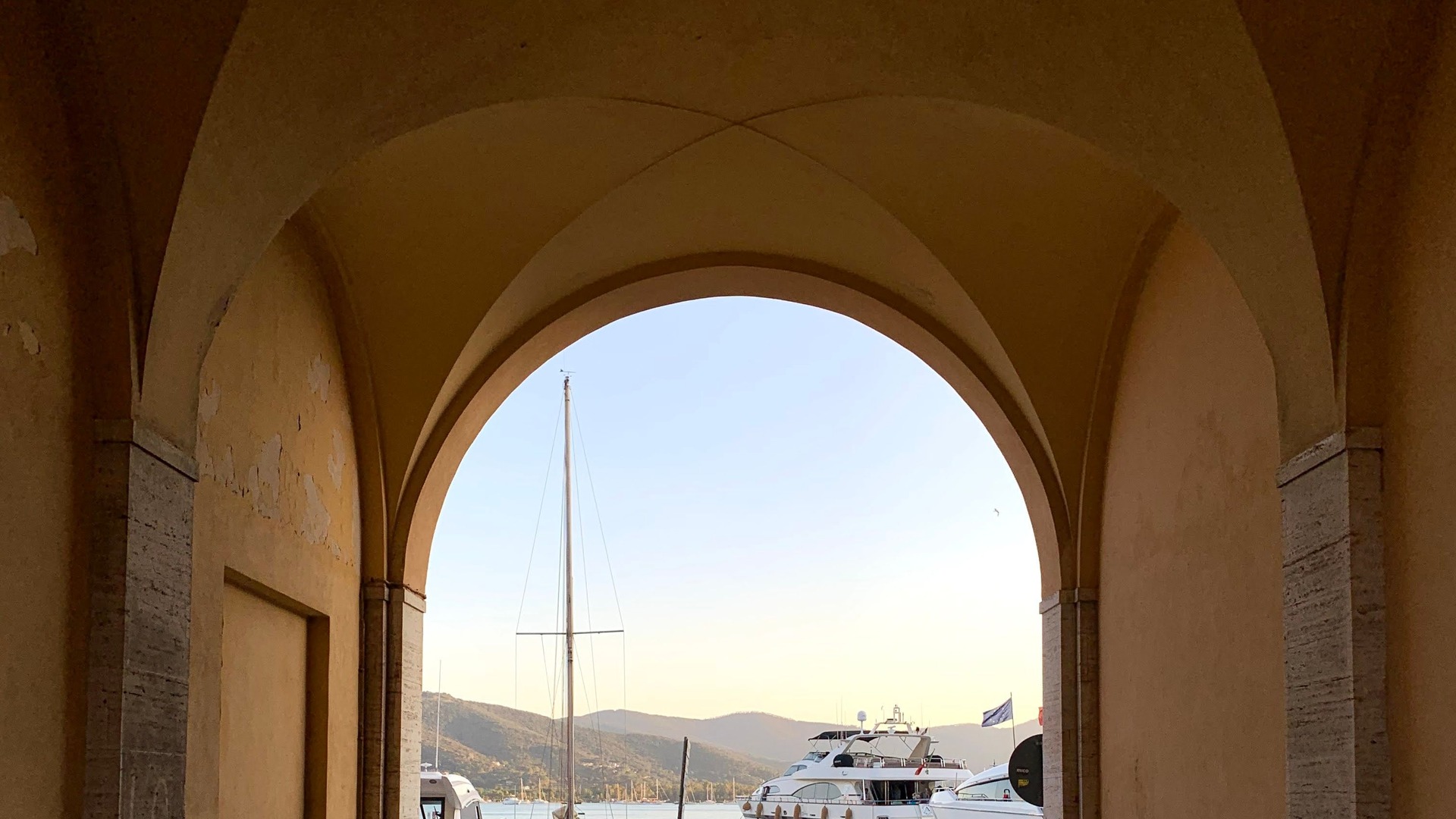
Ortigia’s status as a working harbor for nearly three thousand years means it remains a genuinely serious yachting destination today, though one that rewards a bit of local knowledge before arrival. The Porto Grande, the same broad harbor where the Athenian fleet met its end, offers substantial anchoring space and is generally well sheltered, while smaller marina facilities directly around Ortigia’s edge provide berthing closer to the old town itself, considerably more convenient for visitors wanting to walk straight into the historic center rather than tender in from an anchorage further out. Given the harbor’s ancient origins and ongoing archaeological significance, some areas of the seabed within the Porto Grande are subject to anchoring restrictions to protect submerged historical remains, and checking current local regulations before dropping anchor is a genuinely worthwhile precaution rather than a bureaucratic formality.
| Consideration | What to Know |
|---|---|
| Porto Grande | Broad, generally well-sheltered anchorage with historic significance |
| Marina berths near Ortigia | Closer to the old town, more convenient but limited in number |
| Anchoring restrictions | Some seabed zones protected for archaeological reasons; check locally |
| Approach conditions | Generally straightforward, though summer traffic increases significantly |
| Nearby provisioning | Ortigia’s own market and shops cover most needs within walking distance |
Layers Beyond the Greeks: Arab, Norman, and Spanish Ortigia
While the Greek and Baroque chapters of Ortigia’s history tend to dominate the narrative, the centuries in between left their own significant mark. Arab rule, established in the 9th century after a prolonged siege, brought new agricultural techniques, irrigation methods, and citrus cultivation to Sicily more broadly, innovations that reshaped the island’s economy long after Arab political control ended. The Normans who followed in the 11th century, and later the Hohenstaufen dynasty under Frederick II, blended these Arab administrative and scientific advances with Latin Christian rule in a genuinely unusual multicultural synthesis, visible in Sicily’s architecture, cuisine, and even its dialect to this day. Spanish rule, beginning in the 15th century and lasting for several centuries afterward, added its own layer, further shaping Ortigia’s strategic role as a naval and administrative center for the Spanish crown’s Sicilian holdings.
Where to Stay
Ortigia’s accommodation scene favors small, historic properties over large hotels, a natural consequence of the island’s tightly packed medieval and Baroque street plan. Restored palazzi converted into boutique hotels put every historic sight covered above within an easy walk, while a handful of properties directly overlooking the Porto Grande or the Fountain of Arethusa command a premium for genuinely striking water views. For anyone arriving by boat, staying aboard rather than booking a room ashore is equally common, given how central the harbor itself is to the island’s whole layout, with the old town’s restaurants, market, and monuments all within a short walk of any berth or anchorage.
What to Do Once You’ve Tied Up
Ortigia rewards slow exploration on foot rather than a rushed itinerary. Beyond the Duomo, the Temple of Apollo, and the Fountain of Arethusa already covered above, the island’s daily market, held each morning near the Temple of Apollo, offers one of the liveliest and most colorful food markets anywhere in Sicily, a genuine sensory introduction to the island’s produce, seafood, and spices. The Ortigia waterfront promenade, particularly along the Foro Italico facing the Porto Grande, makes for one of the best sunset walks in southeastern Sicily, timed well with an aperitivo at one of the bars overlooking the water. For a longer historical detour, the mainland Neapolis Archaeological Park, a short walk or taxi ride from Ortigia, holds Syracuse’s dramatic Greek theater and the eerie limestone quarry known as the Ear of Dionysius, both essential context for understanding just how significant this city once was.
What to Eat
Ortigia’s food scene mixes serious Sicilian seafood tradition with the island’s characteristic North African and Spanish culinary influences. Look for pasta with sea urchin or bottarga, whole grilled fish sold by weight at harborside trattorias, and granita paired with brioche for a proper Sicilian breakfast, best eaten at one of the historic cafés near the market rather than a tourist-oriented spot on the main piazza. The market itself is also the best place to sample or buy local specialties directly, from Sicilian olives and capers to fresh ricotta, well suited to provisioning a boat’s galley rather than only eating ashore.
Best Time to Visit
Late spring through June and September into October offer the most comfortable conditions for both walking the old town and anchoring in the harbor, avoiding the intense heat and crowded streets of peak summer. July and August bring considerably heavier harbor traffic and a noticeably busier old town, particularly around the Duomo and the market, while the shoulder seasons allow for a genuinely more relaxed pace of both sightseeing and sailing.
Combining Ortigia With the Rest of the Coast
Ortigia’s position on Sicily’s southeastern coast makes it a natural stop alongside the other harbors covered in our wider Sicily coverage. Marina di Ragusa, with its more extensive modern facilities, sits a comfortable run to the south and makes a sensible logistical base for anyone wanting more reliable services than Ortigia’s historic harbor alone can offer, while the small, atmospheric harbor at Marzamemi rounds out a rewarding stretch of southeastern Sicilian coastline between the two.
Where to Stay: compare hotels and current prices in Syracuse on Trip.com.
The Takeaway
Few harbors anywhere allow a sailor to anchor in the same waters where an Athenian invasion fleet met catastrophe, walk past temple columns older than the Parthenon, and still be back aboard in time for a sunset aperitivo, all within a single small island. Ortigia offers exactly that rare combination: a genuinely serious yachting stop wrapped around one of the most historically significant square kilometers anywhere in the Mediterranean, a destination where the history isn’t a museum backdrop to the sailing but very much the reason the harbor exists in the first place.
Planning a trip? See our guides to boat tours from Syracuse and Ortigia and a baroque road trip through Noto, Modica and Ragusa.
Prefer to explore at your own pace?
Self-guided audio tours play on your phone, work offline and let you pause for coffee whenever you like. Good options here are the Ortigia architecture audio tour.
Hungry in Sicily? See our guide to Sicilian food.