This post contains affiliate links. If you book through them, we may earn a small commission at no extra cost to you. Learn more.
Of the modern marinas built along Sicily‘s southern coast, Marina di Ragusa stands out for pairing genuinely serious yachting infrastructure with one of the richest concentrations of Baroque culture found anywhere on the island. This is a harbor built for boats first, but it happens to sit within easy reach of UNESCO-listed hill towns, a food culture built around some of Sicily’s most distinctive products, and the same golden stone architecture that made this corner of the island world-famous through television long before most sailors ever charted a course here. Here’s what the harbor itself offers, and what the surrounding culture makes worth the stop.
Plan Your Trip
- Private transfer from Catania Airport, booked in advance with a fixed price
- Tours and day trips across Sicily: Mount Etna, the Egadi Islands, the Valley of the Temples
- Ancient Theatre of Taormina guided tour, tickets included
- eSIM for Italy, set up before you fly
From Fishing Village to Serious Marina
Marina di Ragusa began as a modest seaside settlement serving the inland town of Ragusa, a relationship reflected in its very name, and for much of the 20th century it functioned primarily as a summer bathing resort for Ragusans rather than a destination in its own right. That changed significantly with the development of its modern marina, built to a considerably higher standard than many of the smaller, historically rooted harbors found elsewhere along Sicily’s coast. The investment paid off: Marina di Ragusa has grown into one of the largest and best-equipped yachting facilities in southern Sicily, drawing not just Italian boat owners but a genuinely international community, including a long-established expatriate population, largely British and northern European, that has settled in the town year-round rather than treating it as a seasonal stop.
That international presence gives the town a slightly different character from the more purely Sicilian atmosphere of smaller harbor villages nearby, a genuinely cosmopolitan mix of local fishing tradition, serious sailing culture, and a settled foreign community that has opened its own cafés, shops, and services alongside the existing Sicilian establishments.
The Marina at a Glance
| Feature | Detail |
|---|---|
| Character | A large, modern, full-service marina with year-round activity |
| Community | A genuinely international mix, including a settled expatriate population |
| Services | Fuel, provisioning, repair, and haul-out facilities well beyond a typical small harbor |
| Nearby culture | Ragusa and Ragusa Ibla, both UNESCO-listed Baroque towns, a short drive inland |
| Regional cuisine | Ragusano DOP cheese and Modica’s distinctive cold-processed chocolate |
Ragusa and Ragusa Ibla: The Cultural Payoff
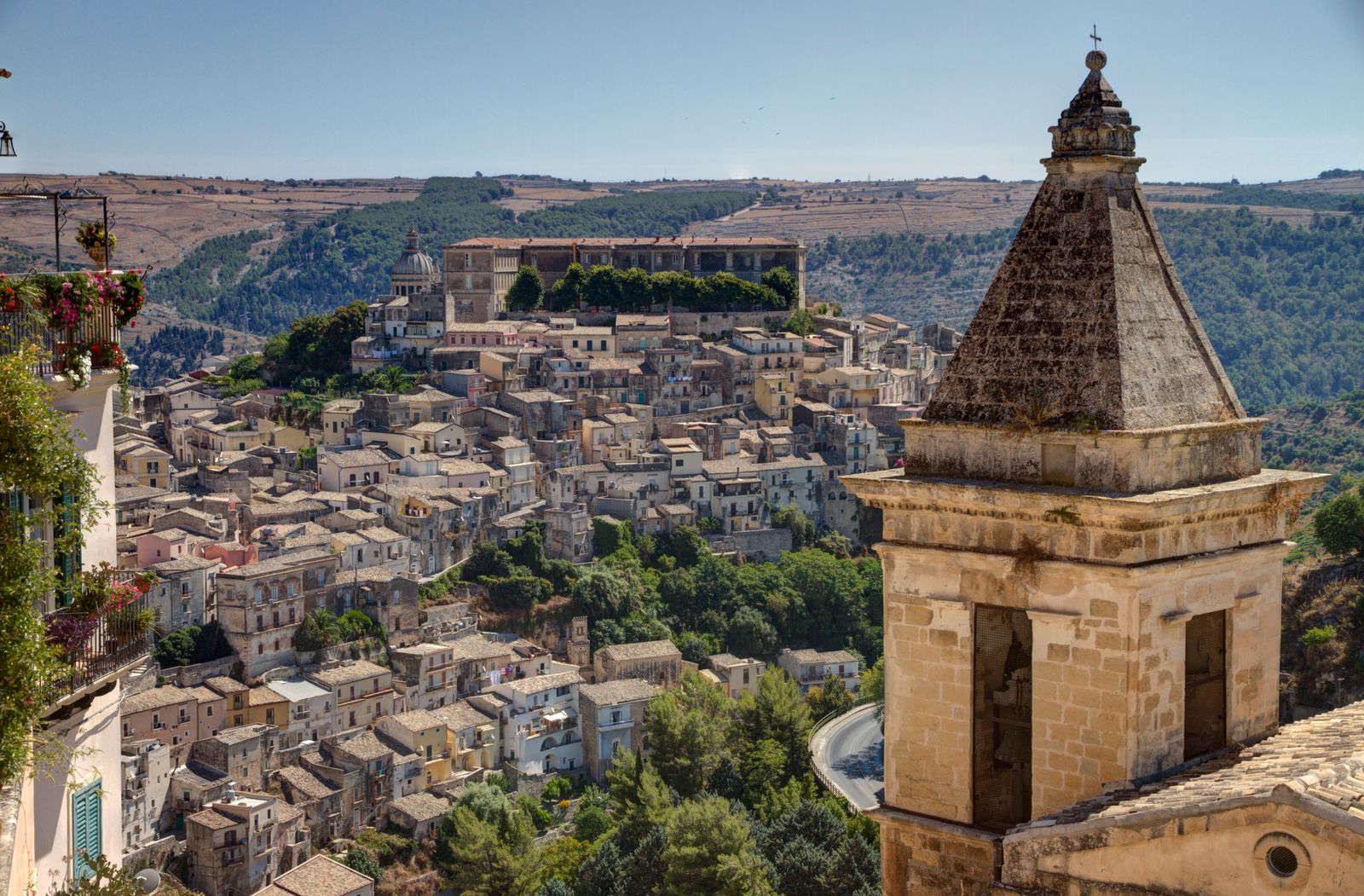
The real cultural draw of basing a trip in Marina di Ragusa is its proximity to Ragusa itself, a town split into two distinct halves after the catastrophic 1693 earthquake that devastated much of southeastern Sicily. The upper town, Ragusa Superiore, was rebuilt on a more practical, gridded plan, while the lower town, Ragusa Ibla, was reconstructed on its original medieval footprint in an extravagant Baroque style, resulting in one of the most architecturally cohesive and visually striking historic centers anywhere in Italy. Ibla’s Duomo di San Giorgio, with its dramatic stepped approach and elaborately carved facade, is widely considered one of the finest examples of Sicilian Baroque architecture, and the tangle of narrow streets and hidden courtyards surrounding it reward slow, unhurried wandering considerably more than a rushed visit.
Both halves of Ragusa, along with Modica, Noto, and several other towns across this corner of Sicily, were collectively inscribed as a UNESCO World Heritage Site in 2002, recognized for representing a uniquely unified, large-scale example of late Baroque urban reconstruction following a single catastrophic event, a rare case of architectural disaster response producing genuinely great art rather than merely functional rebuilding.
A Landscape Familiar From Television
For many international visitors, this stretch of Sicily carries an additional layer of recognition entirely separate from its Baroque credentials: it served as the primary filming location for “Il Commissario Montalbano,” the enormously popular Italian television series based on Andrea Camilleri’s crime novels, which aired for over two decades and built a devoted international following well beyond Italy’s borders. Ragusa Ibla and the surrounding towns and coastline stand in for the fictional Sicilian town of Vigàta throughout the series, and fans making the pilgrimage to recognize specific piazzas, staircases, and coastal views from the show have become a genuine, if niche, part of the area’s tourism economy. Marina di Ragusa’s own coastline and nearby beaches appear in several episodes, giving boat-based visitors a small additional thrill of recognition beyond the marina’s practical conveniences.
What to Eat Around Marina di Ragusa
This corner of Sicily produces two food products significant enough to have earned their own protected designations, and both are worth seeking out directly at the source rather than waiting to find them elsewhere. Ragusano DOP, a firm, stretched-curd cheese made from the milk of the local Modicana cattle breed, has been produced in this specific area for centuries, traditionally aged in the characteristic elongated shape that gives it its alternate name, caciocavallo ragusano. A short drive to Modica offers the region’s other great specialty: chocolate made using a distinctive cold-processing method inherited from Spanish colonial-era Aztec techniques, resulting in a grainy, unrefined texture and intensity unlike the smoother chocolate produced through standard conching methods elsewhere in Italy.
Along the coast itself, Marina di Ragusa’s own restaurants lean toward straightforward, well-executed Sicilian seafood, simply grilled catch, pasta with sea urchin or clams in season, and the citrus-forward desserts found throughout this part of the island, a genuinely satisfying, unpretentious complement to the more elaborate Baroque architecture waiting just a short drive inland.
Scicli and Punta Secca: More Montalbano Territory
Beyond Ragusa Ibla itself, two further towns extend the Montalbano trail for anyone genuinely committed to tracking down filming locations. Scicli, another Baroque UNESCO town a short drive south of Ragusa, doubled as the fictional police station town of Vigàta throughout the series, its Palazzo Iacono di San Giacomo standing in for the show’s police headquarters and drawing a steady stream of fans photographing themselves on its steps. Punta Secca, a small seaside village a few kilometres west of Marina di Ragusa, is instantly recognizable to fans as the exterior of Montalbano’s fictional beachfront home, a modest, genuinely lived-in-looking house that has become something of an unofficial shrine. None of this requires any prior familiarity with the show to appreciate on its own architectural or coastal merits, but for the considerable international audience who grew up watching it, the recognition adds a genuinely enjoyable extra layer to an already rewarding stretch of coastline.
Getting to Marina di Ragusa
Most visitors arrive via Catania’s international airport, roughly ninety minutes away by car, or the smaller Comiso airport, considerably closer at around thirty minutes, which has a limited schedule of flights, so check routes before you plan around it. For anyone arriving by boat rather than by air, the marina’s position roughly midway between Malta and the rest of Sicily’s southern coast makes it a sensible stop for cross-Mediterranean itineraries as well as purely Sicilian ones, a detail that partly explains the marina’s genuinely international clientele beyond just its resident expatriate community.
What to Do From the Marina
| Activity | Distance From the Marina |
|---|---|
| Explore Ragusa Ibla’s Baroque old town | About 20 minutes by car |
| Taste chocolate in Modica | About 30 minutes by car |
| Spot Montalbano filming locations | Scattered across Ragusa Ibla, Scicli, and Punta Secca |
| Relax on the marina’s own beaches | Directly alongside the harbor |
| Day sail to Marzamemi or Syracuse | A comfortable half-day’s sailing in either direction |
Yachting Beyond the Marina
Marina di Ragusa’s well-equipped facilities and central position along Sicily’s southern coast make it a genuinely practical base for exploring further afield by water. Marzamemi, with its small historic harbor and famously atmospheric evening square, sits a comfortable half-day’s sail to the east, while Syracuse and the historic old town of Ortigia offer a somewhat longer but equally worthwhile run further up the coast. Because Marina di Ragusa itself offers considerably more reliable services, fuel, provisioning, repair work, than either of those smaller, more historic harbors, many sailors treat it as the logistical anchor for a wider southeastern Sicily itinerary, returning here between day trips to smaller, less-equipped stops along the coast.
Where to Stay
Marina di Ragusa’s accommodation options reflect its dual identity as both a working marina town and a settled expatriate community. Apartments and small hotels directly along the seafront promenade put the marina, beach, and town’s restaurants within easy walking distance, a practical choice for anyone spending most of their time on or around the water. For a quieter base with easier access to Ragusa Ibla and the inland Baroque towns, several restored countryside properties and masserie, traditional Sicilian farmhouses, dot the surrounding agricultural land, trading immediate coastal access for a more rural, historically rooted atmosphere.
Best Time to Visit
Late spring through June and September into early October offer the most comfortable conditions for both sailing and exploring the inland Baroque towns on foot, avoiding the intense heat that builds across this exposed, sun-baked corner of Sicily during the height of summer. July and August bring the busiest marina traffic and the most crowded streets in Ragusa Ibla, particularly around popular Montalbano filming locations, while the shoulder seasons offer a genuinely more relaxed pace for appreciating both the architecture and the coastline without competing for space.
Where to Stay: compare hotels and current prices in Marina di Ragusa and Ragusa on Trip.com.
The Takeaway
Marina di Ragusa offers something genuinely rare along the Sicilian coast: a modern, fully equipped yachting base that also happens to sit at the doorstep of some of the finest Baroque architecture in Italy, a chocolate-making tradition with genuine Aztec-era roots, and a landscape millions of television viewers already recognize without knowing its real name. For anyone building a southeastern Sicily itinerary around both the water and the culture waiting just inland, this marina makes a considerably stronger case for itself than its relatively low profile among international sailors might suggest.
Planning a trip? See our guides to a baroque road trip through Noto, Modica and Ragusa.