This post contains affiliate links. If you book through them, we may earn a small commission at no extra cost to you. Learn more.
Piedmont rarely gets the first-time-visitor attention that Tuscany or the Amalfi Coast commands, and locals here seem largely content to keep it that way. Tucked into Italy’s northwest corner, wedged between the Alps and the Apennines, this is the region that gave unified Italy its first capital, its best truffles, one of its most important culinary movements, and, quietly, some of the country’s finest golf. Here’s the history behind it, what the region is actually famous for, and what fills the days once you’ve arrived.
Plan Your Trip
- Egyptian Museum skip-the-line tour with a Turin city walk
- Turin museum and attraction tickets
- eSIM for Italy, set up before you fly
From Roman Garrison to the Cradle of Italian Unity
Turin’s origins trace back to a Roman military colony, Augusta Taurinorum, founded under Augustus in the 1st century BC, and the city’s historic center still preserves the rigid grid plan of that original Roman settlement, visible today in the geometric layout of streets around Piazza Castello. For most of the medieval and early modern periods, Piedmont developed under the House of Savoy, an ambitious dynasty that steadily expanded its territory and influence from a modest Alpine base into one of the most powerful ruling houses in Europe, eventually acquiring the Kingdom of Sardinia and positioning Piedmont as the single most consequential political force in the movement toward Italian unification.
That role reached its culmination in the 19th century, when Piedmont’s own statesman, Camillo Benso, Count of Cavour, engineered the diplomatic and military campaigns that unified the fractured Italian peninsula under the Savoy crown. Turin served as the first capital of the newly unified Kingdom of Italy from 1861 to 1865, before the seat of government moved first to Florence and eventually to Rome, a relatively brief tenure that nonetheless left the city with a legacy of grand royal architecture, ministries, and monuments built for a role considerably larger than the one it would ultimately keep. The Palazzo Reale, the former royal residence, and the sweeping Piazza Castello it faces remain the clearest physical reminders of Turin’s brief but genuinely formative moment at the center of Italian political life.
What Piedmont Is Actually Famous For
Ask an Italian what Piedmont means to them, and wine is usually the first answer. Barolo and Barbaresco, both built from the Nebbiolo grape in the Langhe hills southeast of Turin, are widely regarded among the most serious, age-worthy red wines produced anywhere in Italy, earning the region comparisons to Burgundy for its combination of small-scale, terroir-obsessed producers and genuinely world-class quality. The region’s other major wine export, Moscato d’Asti, covered in more depth in its own dedicated guide, offers a completely different, lighter, aromatic counterpoint from the same broader wine country.
Wine is only part of the picture. The white truffle of Alba, Tuber magnatum, is considered by most serious gastronomes to be the finest and most valuable truffle in the world, commanding extraordinary prices at the annual Alba truffle auction and drawing chefs and collectors from across the globe each autumn. Piedmont is also, less widely known outside Italy, the birthplace of the modern Slow Food movement, founded in the town of Bra in 1986 by Carlo Petrini as a direct response to the opening of a McDonald’s near Rome’s Spanish Steps, a movement that has since grown into a genuinely global advocacy network for local, sustainable food traditions, fittingly born in a region that has never had much trouble taking its own food seriously.
The region’s culinary identity extends to chocolate as well: Turin has produced fine chocolate since the 16th century and is credited with inventing gianduja, the smooth hazelnut-chocolate paste that eventually gave the world Nutella, a considerably later and more commercial descendant of a genuinely old Turinese confectionery tradition. On the industrial side, Turin has been the historic home of Fiat since 1899, the automotive giant that shaped the city’s 20th-century identity as thoroughly as the House of Savoy shaped its earlier centuries, and the city’s successful hosting of the 2006 Winter Olympics brought Piedmont a level of modern international visibility that its wine and food reputation alone had never quite achieved.
Piedmont at a Glance
| Known For | Detail |
|---|---|
| Wine | Barolo, Barbaresco, and Moscato d’Asti from the Langhe and Monferrato hills |
| White truffles | The Tuber magnatum of Alba, the world’s most prized truffle |
| Slow Food | Founded in Bra in 1986, now a global movement |
| Chocolate | Turin’s centuries-old tradition and the invention of gianduja |
| Royal history | The House of Savoy and Italy’s first capital |
| Golf | A genuinely serious, under-crowded golf destination |
Turin: The Royal and Industrial Capital
Beyond the Palazzo Reale, Turin’s Egyptian Museum holds the largest collection of Egyptian antiquities outside Cairo itself, a genuinely surprising specialty for a northern Italian city, built on 18th-century royal collecting and later expanded through Italian archaeological expeditions to Egypt in the early 20th century. The Mole Antonelliana, originally conceived as a synagogue before its dramatic, spire-topped silhouette became Turin’s defining landmark, now houses the National Museum of Cinema, a fitting home given Turin’s own significant early role in Italian film production, and its panoramic glass elevator ride to the base of the spire offers one of the best views over the city and the Alps beyond.
Wine Country: The Langhe and Truffle Season
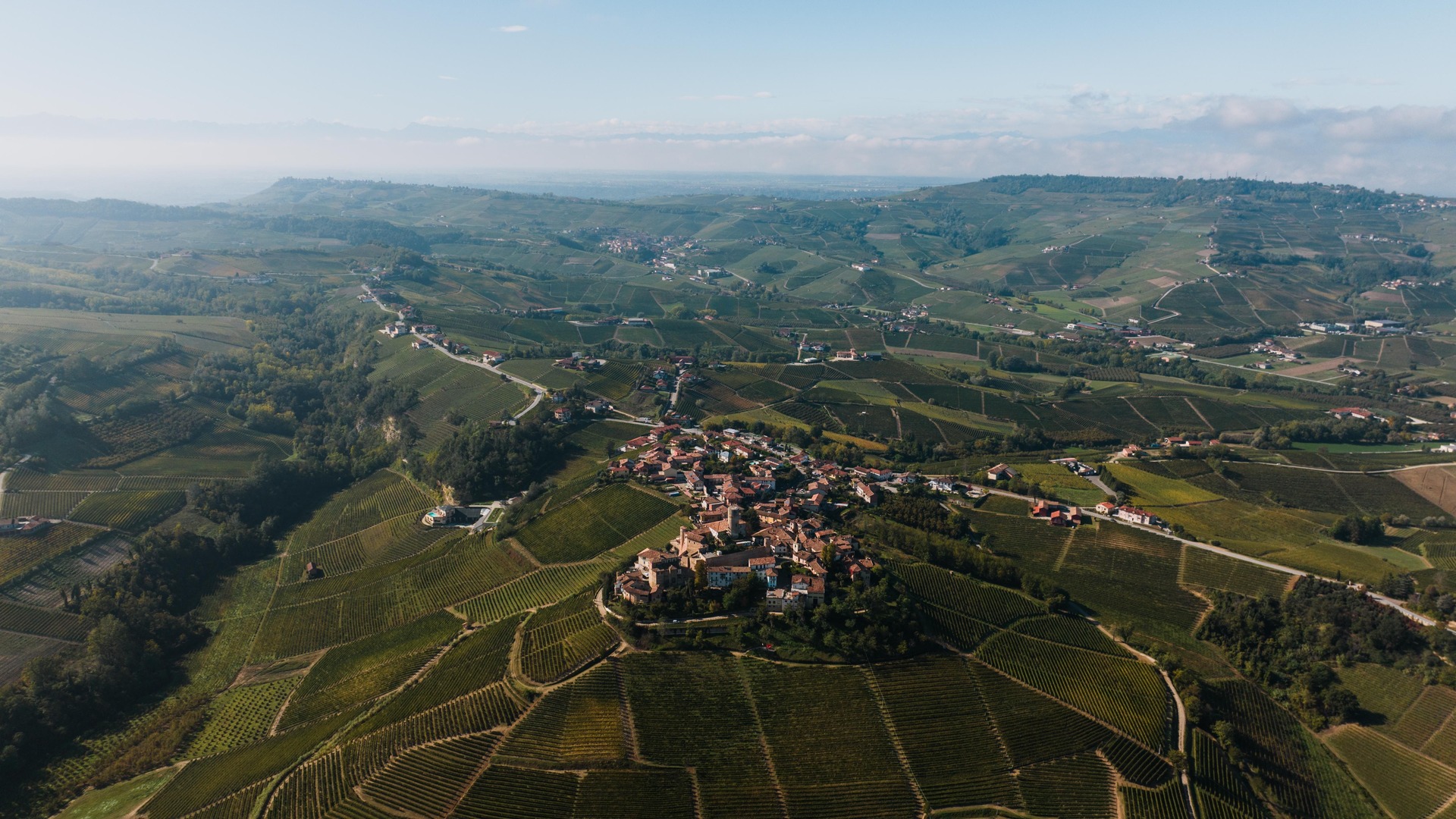
South of Turin, the Langhe hills, already covered in depth through our guide to Moscato d’Asti and worth a full trip in their own right for Barolo and Barbaresco specifically, offer some of the most rewarding wine country driving anywhere in Italy, a landscape of vineyard-striped hills, fog-prone valleys, and small medieval hill towns considerably less crowded than Tuscany’s more famous wine roads. Autumn brings truffle season to Alba, when the town’s white truffle market and the surrounding countryside’s truffle-hunting excursions, typically led by a local hunter and a trained dog, draw serious gastronomes willing to pay considerably for the privilege of watching, and eventually eating, what they find.
Golf: Piedmont’s Quiet Reputation
Piedmont holds a genuinely strong, if internationally under-recognized, position in Italian golf. Royal Park I Roveri, a 36-hole complex near Turin that has hosted European Tour events, ranks among the region’s most complete modern facilities, while Golf Club Castelconturbia, Piedmont’s oldest club, dating to 1898, was substantially redesigned by Robert Trent Jones Sr. into the 27-hole course that draws serious golfers today, its layout woven through century-old trees, small lakes, and the gentle undulations of the countryside near Lake Maggiore. Golf Club Torino La Mandria, set within the historic royal hunting park of the same name just outside Turin, offers one of the more atmospheric golf settings in northern Italy, while Golf Club Biella Le Betulle, tucked into the hills above Biella, has earned a reputation among international course critics as one of Europe’s more genuinely underrated layouts. For golfers who enjoy playing without competing for tee times, and who don’t mind combining a round with a serious wine and truffle itinerary afterward, Piedmont offers a version of golf tourism considerably less crowded than better-known Mediterranean golf destinations.
Best Time to Visit
Autumn, specifically October, is Piedmont’s signature season, coinciding with truffle season in Alba, the grape harvest across the Langhe and Monferrato, and some of the most atmospheric fog-laced hillside scenery anywhere in Italy. Spring offers milder golfing weather and quieter wine-country roads before the autumn truffle crowds arrive, while summer, though warm, remains considerably less oppressive here than in much of central and southern Italy given Piedmont’s more northerly, Alpine-influenced climate.
Putting Piedmont in the Wider Italian Wine Picture
For anyone building a broader Italian wine trip, Piedmont’s Nebbiolo-based reds and aromatic Moscato make a genuinely useful counterpoint to the Sangiovese-driven wines further south, a contrast covered in more depth in our complete guide to Italian wine regions. Few single regions offer quite this concentrated a combination of serious wine, serious food, and serious golf within such a compact and comparatively uncrowded stretch of countryside.
The Takeaway
Piedmont’s relatively low international profile has always been something of a mismatch with what it actually offers: the political cradle of modern Italy, some of the country’s most serious wine and food traditions, and a golf scene that quietly rivals better-known Mediterranean destinations without the crowds. Spend a few days moving between Turin’s royal and industrial history, a truffle hunt in the Langhe fog, and a round at a course like Castelconturbia or La Mandria, and it becomes clear why the region’s most devoted visitors tend to guard it a little jealously rather than shout about it.
Planning a trip? See our guides to Turin tickets and a two-day guide.
For food, chocolate and wine, see our guide to Turin for food lovers.
Where to stay: our guide to wine hotels in the Langhe covers estate hotels with their own cellars and tastings, and our Italy-wide list of vineyard hotels and wine resorts covers ten more regions.