This post contains affiliate links. If you book through them, we may earn a small commission at no extra cost to you. Learn more.
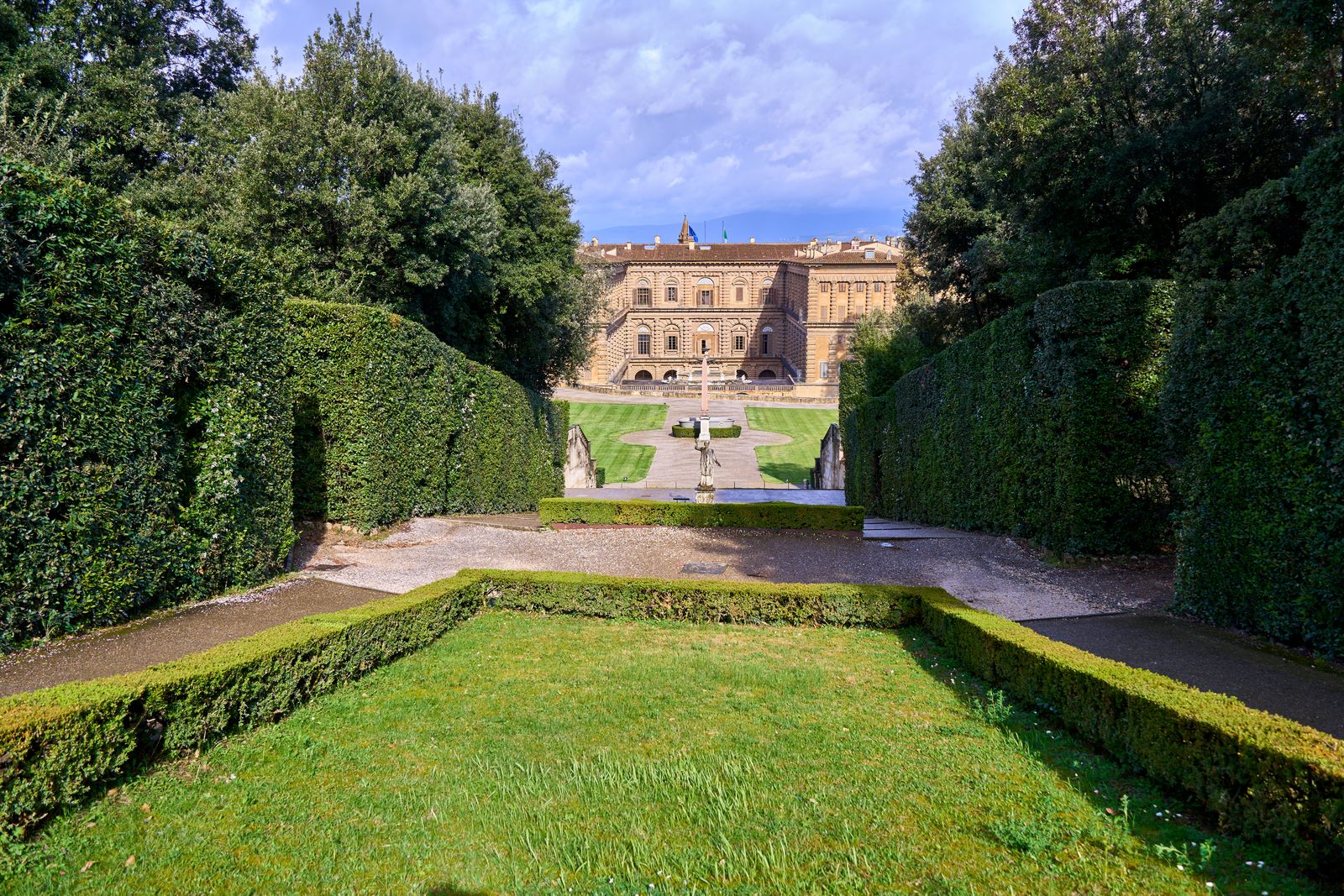
Most visitors to Florence spend their museum hours on the north bank of the Arno, queueing for the Uffizi and the David, then cross the Ponte Vecchio for a gelato and turn back. That is a mistake, and a pleasant one to correct. Ten minutes south of the bridge sits Palazzo Pitti, the largest palace in the city and for three centuries the home of whoever ruled Tuscany. Behind it climbs the Boboli Garden, the prototype of the Italian formal garden and one of the few places in central Florence where you can walk for an hour without touching traffic.
This guide covers what is actually inside the palace (five museums, not one), how the garden is laid out and where the best views are, which ticket makes sense for which kind of visitor, and how to fit both into a day that also includes the Oltrarno, the city’s most liveable neighbourhood.
Quick answer
If you have half a day and want both the art and the garden, book the Palazzo Pitti and Boboli reserved entrance with audio guide. If you only want the garden and the views, the Boboli Gardens skip-the-line ticket is enough. Staying four or five days and planning the Uffizi too? The Uffizi, Pitti and Boboli 5-day combo pass usually works out better than three separate tickets.
A palace built to outdo the Medici, then bought by them
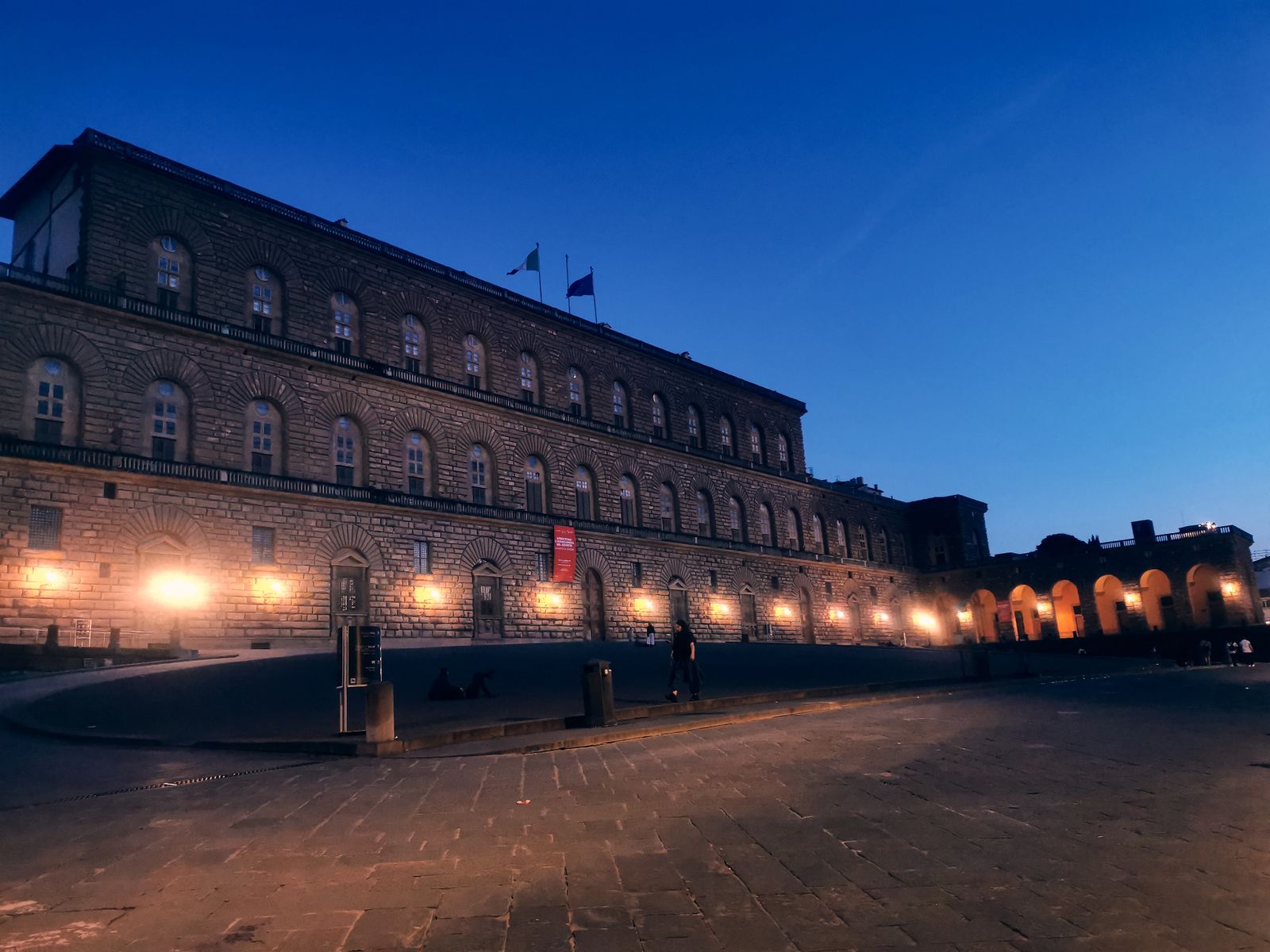
Palazzo Pitti began in the late 1450s as a statement of rivalry. Luca Pitti, a banker who had grown rich alongside the Medici, wanted a residence that made the Medici palace on Via Larga look modest. The design is often attributed to Brunelleschi, although historians still argue about how much he had to do with it. What everyone agrees on is the effect: a rusticated stone front so long and so plain that it reads less like a house than a fortress wall.
The Pitti family never finished it. In 1550 Eleonora di Toledo, wife of Duke Cosimo I de’ Medici, bought the property, and the rivals’ palace became the rulers’ palace. Bartolomeo Ammannati added the great courtyard and the wings, and the building kept growing for two centuries. After the Medici line died out it housed the Habsburg-Lorraine grand dukes, and in the 1860s, when Florence was briefly the capital of the new Kingdom of Italy, the House of Savoy lived here. Each dynasty left a layer, which is why a walk through the palace jumps from Baroque ceilings to Neoclassical bedrooms to nineteenth-century salons.
What is inside: five museums under one roof
The single biggest source of confusion about Pitti is that “the palace” is really a cluster of separate collections, all run by the Uffizi Galleries. Your ticket normally covers the lot, but knowing what each one is helps you decide where to spend your energy.
The Palatine Gallery
This is the reason to come. The Palatine Gallery fills the first floor’s grand apartments with the Medici’s private picture collection, hung the way a prince would hang it: frame to frame, chosen for effect rather than chronology. The ceilings by Pietro da Cortona in the rooms named after the planets are as much a part of the show as the paintings beneath them.
The highlights are serious. Raphael is represented by the Madonna della Seggiola, the round painting reproduced on half the souvenirs in Florence, and by the portrait known as La Velata. Titian’s Mary Magdalene and The Concert are here, along with Rubens’s huge allegory on the consequences of war and a small sleeping Cupid by Caravaggio. If you have already seen the Uffizi, this is the natural second course, quieter and more intimate.
The Royal Apartments
Connected to the Palatine Gallery, the Royal (or Imperial) Apartments show how the later rulers actually lived: silk walls, gilded beds, throne rooms, chapels. It is the closest thing in Florence to a Versailles-style state apartment, and a useful contrast with the Renaissance austerity you see almost everywhere else in the city.
The Gallery of Modern Art
On the second floor, the Galleria d’Arte Moderna covers Italian painting from the late eighteenth century to the early twentieth. The Macchiaioli, the Tuscan painters who worked in patches of light and colour a little before the French Impressionists, are the stars, Giovanni Fattori above all. Most visitors skip this floor. If you like nineteenth-century painting, that is your gain.
The Treasury of the Grand Dukes
On the ground floor, the Tesoro dei Granduchi holds the Medici’s jewels, cameos, ivories, rock crystal and the sort of objects that existed purely to impress visiting ambassadors. The frescoed reception rooms are worth the detour on their own.
The Museum of Costume and Fashion
Italy’s first state museum dedicated to fashion history sits in the Palazzina della Meridiana wing. Rooms here have closed and reopened for renovation over recent years, so check on the day whether it is open. When it is, it rounds out a palace visit nicely, particularly for anyone who came to Florence for its artisan and fashion heritage as much as its paintings.

The Boboli Garden: how to walk it
The Medici began laying out the garden behind the palace almost as soon as they moved in, first under Niccolò Tribolo and then Ammannati and Bernardo Buontalenti. It became the model for court gardens across Europe: geometric, theatrical, full of statues and set pieces, using the slope of the hill to create long views. Allow at least ninety minutes, and wear proper shoes. The paths are gravel and the gradients are real.
A good loop starts in the palace courtyard and climbs straight up through the amphitheatre, a horseshoe of stone tiers cut into the hill, with an ancient Egyptian obelisk at its centre. Above it the Neptune Fountain sits in a pond the Florentines nicknamed “the fork”. Keep climbing to the Porcelain Museum in the Casino del Cavaliere at the very top. The view from the terrace beside it, over olive groves and the hills toward Fiesole, is one of the best in the city and almost never crowded.
From there, drop down the long cypress avenue known as the Viottolone, lined with statues, to the Isolotto, a small island in an oval pond with a fountain of Oceanus at its centre (the original Giambologna statue is now in the Bargello). On the way back toward the palace, look out for the Kaffeehaus, an eighteenth-century pavilion built so the Lorraine court had somewhere to take coffee with a view, and finish at the Grotta del Buontalenti near the exit. The grotto is the strangest thing in the garden: a Mannerist cave dripping with artificial stalactites, shells and half-formed figures emerging from the rock. Casts of Michelangelo’s unfinished Prisoners stand in its corners; the originals stood here until 1909 and are now in the Accademia, which you can book through our guide to Florence museum tickets.
Garden tip
Go in the morning on hot days. Boboli has far less shade than it looks from the bottom, and by mid afternoon in July the upper terraces are punishing. Spring, when the roses and wisteria are out, and October, when the light softens, are the best months.
Which ticket should you book?
Pitti and Boboli have separate ticket offices, separate queues and, depending on the season, separate prices. Third-party tickets with a reserved time slot cost a little more than the bare entry fee but save you the line at the window, which can stretch past thirty minutes on spring weekends and cruise days. Prices change by season, so check the current figure on the booking page.
| Ticket | What it covers | Best for |
|---|---|---|
| Pitti Palace and Boboli Gardens pass | Entry to the palace museums and the garden | Independent visitors who want both |
| Pitti and Boboli reserved entrance + audio guide | Timed entry to both, plus app audio guide | First visits, half a day |
| Palatine Gallery reserved entrance + audio guide | Palace museums with timed entry | Art lovers short on time |
| Palazzo Pitti and Palatine Gallery guided tour | Guided visit of the main apartments | Anyone who wants the stories behind the paintings |
| Pitti Palace and Boboli entry with guided tour | Guided tour plus garden access | Families and couples who prefer a guide |
| Boboli Gardens skip-the-line | Garden only | Views, walks, a sunny morning |
| Boboli Gardens guided tour | Guided walk through the garden | Garden and landscape enthusiasts |
| Uffizi, Pitti and Boboli reserved entry + audio guide | All three sites | Two or three culture-heavy days |
| Uffizi, Pitti and Boboli 5-day combo pass | All three over five consecutive days | Longer stays, no rushing |
Two practical notes. The palace museums are closed on Mondays, and the garden also closes on some Mondays each month, so plan your Oltrarno day for Tuesday to Sunday. State museums in Italy have also traditionally opened free on the first Sunday of the month; that sounds tempting but means the longest queues of the year, with no reservations. We would avoid it.
The Vasari Corridor: the private route from the Uffizi
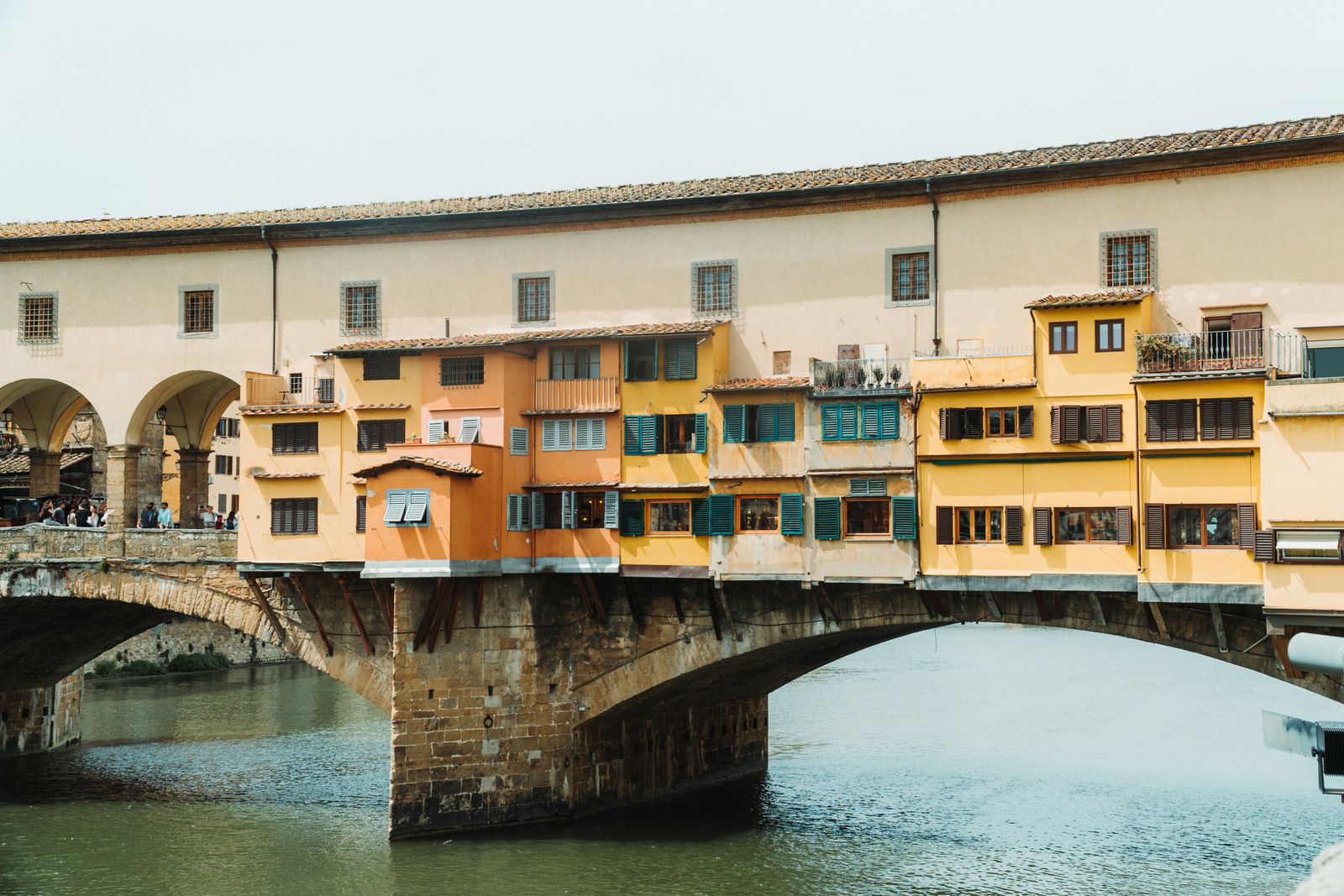
When Cosimo I moved into Pitti, he did not want to walk among his subjects to get to work. In 1565 Giorgio Vasari built him an elevated passage, nearly a kilometre long, running from the Uffizi over the top of the Ponte Vecchio and through the houses of the Oltrarno to the Boboli Garden. After a long closure for restoration it reopened to visitors at the end of 2024, with limited, timed tickets sold through the Uffizi Galleries. Availability and access rules are still settling, so check what is on offer when you plan your dates. If you can get in, it is the most memorable way to arrive at Pitti.
A full Oltrarno day around Pitti
The neighbourhood around the palace is where Florentines still live and work. Workshops for gilders, bookbinders and furniture restorers line the side streets, and the evenings are noticeably calmer than across the river. Here is how we would build a day.
| Time | Plan |
|---|---|
| 9:00 | Coffee on Piazza Pitti, then the first entry slot at Palazzo Pitti and Boboli |
| 9:15 to 11:30 | Palatine Gallery and Royal Apartments, Treasury if time allows |
| 11:30 to 13:00 | Boboli loop: amphitheatre, Porcelain Museum terrace, Viottolone, Isolotto |
| 13:00 | Lunch around Piazza Santo Spirito |
| 15:00 | Santo Spirito church and the artisan streets of Via Maggio and Via Toscanella |
| 17:30 | Walk up to Piazzale Michelangelo and San Miniato al Monte for sunset |
| 20:00 | Dinner back in the Oltrarno, or a taxi to your hotel |
Santo Spirito is Brunelleschi’s last great church, plain-fronted and quietly perfect inside, and it holds a wooden crucifix attributed to the young Michelangelo. The square in front fills with locals at aperitivo time. Further east, the climb to Piazzale Michelangelo takes about twenty minutes from the river; carry on another ten to San Miniato al Monte, the Romanesque church above it, where the monks sing vespers in the late afternoon and the view is just as good with a fraction of the crowd.

If you want this day folded into a broader itinerary, our perfect day in Florence covers the north bank, and the Duomo guide explains how to get up the dome without a two-hour wait.
Where to stay nearby
Staying south of the river makes sense if you like quiet evenings and do not mind a short walk to the centre. The grandest option on this side is the hillside villa covered in our review of Villa Cora, a few minutes’ walk from the Porta Romana gate of Boboli. For a wider comparison, including the river-view palaces on the north bank, see the best luxury hotels in Florence.
Getting there and practicalities
Palazzo Pitti is a ten-minute walk from the Ponte Vecchio and about twenty minutes from Santa Maria Novella station. Cars are restricted in the historic centre, so if you arrive by train or plane with luggage, a pre-booked car is much easier than queuing for taxis: a private transfer with Welcome Pickups meets you at Florence airport or the station. For eSIMs, car hire for a Tuscan road trip afterwards and luggage storage on departure day, our Italy travel planner lists the services we use.
- Time needed: two hours for the palace highlights, ninety minutes for Boboli, half a day for both.
- Bags: large bags and backpacks go in the cloakroom; travel light.
- Accessibility: the palace has lifts, but much of Boboli is steep gravel. The lower garden near the palace is the most manageable part.
- Food: there is a café inside, but the Oltrarno’s trattorias are better and five minutes away.
Pitti and Boboli in a wider Florence trip
Pitti pairs naturally with the big north-bank museums, and the combined passes make the most sense if you are in town for three nights or more. Use the rest of the week for the countryside: our guides to wine tours from Florence and the best day trips from Florence cover Chianti, Siena, Pisa and the coast. For the bigger picture, start with our luxury guide to Florence.
Prefer to explore at your own pace?
Self-guided audio tours play on your phone, work offline and let you pause for coffee whenever you like. Good options here are the Pitti Palace ticket with Palatine Gallery audio tour or the Pitti, Boboli and Bardini Gardens ticket with audio tour.
Charlotte’s pick
If I could recommend only one thing here, it would be the reserved entrance to Palazzo Pitti and the Boboli Gardens with audio guide. It covers the Palatine Gallery and the garden in one timed slot, which is exactly the right pace for a first visit. Go in the morning, see the Raphaels first, then climb to the Porcelain Museum terrace before the midday heat.
Where to Stay: compare hotels and current prices in Florence on Trip.com.
FAQ
Is Palazzo Pitti worth it if I have already seen the Uffizi?
Yes. The Palatine Gallery has some of the finest Raphaels and Titians anywhere, and it is far less crowded. The rooms themselves, with their painted ceilings, make it a different experience rather than more of the same.
Can I visit Boboli without entering the palace?
Yes. The garden has its own ticket, such as the Boboli skip-the-line ticket, and you can enter from the palace courtyard or from the Porta Romana side.
How long does the Boboli Garden take?
A relaxed loop to the top and back takes about ninety minutes. Add time if you want the Porcelain Museum or a coffee at the Kaffeehaus when it is open.
Do I need to book in advance?
Outside the peak months you can usually buy on the spot, but a reserved slot removes the queue and fixes your morning. Between April and October we would always book.
Is the Bardini Garden included?
The neighbouring Bardini Garden, with its famous wisteria tunnel and views of the Duomo, has been part of combined tickets in some years and separate in others. Check the conditions on your ticket before you go.
What is the best time of day?
First entry in the morning for the palace, then the garden before the midday heat. In winter, reverse it: garden late morning when the sun is up, palace in the afternoon.
To follow the Medici through the city, see our guide to Medici Florence: Palazzo Vecchio and the Medici Chapels.
For fashion, shopping and artisan workshops, see our guide to Florence for fashion lovers.