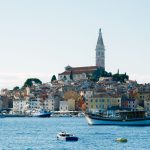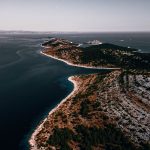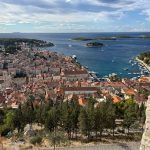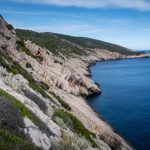

Croatia’s coast is a maze of more than a thousand islands, islets and reefs, most of them within a few hours of a marina. Distances between harbours are short, the water is clear, and the summer maestral gives steady afternoon sailing without the long open passages of much of Italy: a different island, stone harbour and konoba every night, with a sheltered channel nearby. This hub opens our Croatia by Boat series and covers regions, bases, paperwork and routes for 2026.
This article contains affiliate links. If you book through them, we may earn a small commission at no extra cost to you. Read our affiliate disclosure.
Quick answer: Croatia by boat in 2026
- Best departure harbour: Split or Trogir, with Brač, Šolta, Hvar and Vis all within a day’s sail and Split Airport close by.
- Best half day route: Trogir to the Blue Lagoon at Krknjaši and the south coast of Šolta.
- Best full day route: Hvar town and the Pakleni Islands from Split, or Vis and the Blue Cave on Biševo for a longer run.
- Best months: June and September; late May and early October for quiet harbours and cooler sailing.
- What to book ahead: the boat and skipper, national park tickets online, and town quay or buoy berths in Hvar, Vis and Korčula in July and August.
Check prices and availability
Split is the most practical first base: airport, marinas and islands are close together.
Croatia’s cruising regions at a glance
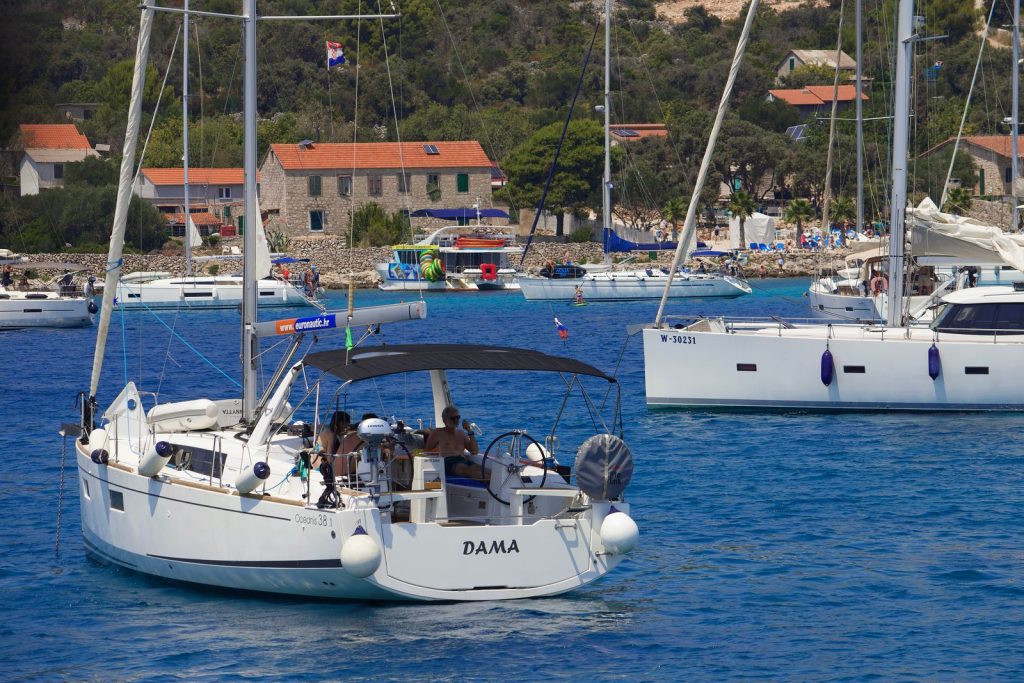
The coast divides into five cruising areas. Most charter weeks stay inside one of them.
- Istria: the peninsula facing Venice: Rovinj, the Lim channel, Brijuni National Park and Pula. Our Istria by Boat guide covers it in detail.
- Kvarner: Opatija and the islands of Cres, Lošinj, Krk and Rab; green, quiet and exposed to the bura. See Kvarner by Boat.
- North Dalmatia: Zadar, Biograd and Šibenik, with the Kornati, Telašćica and the Krka river to Skradin. Read Kornati and Krka by Boat.
- Central Dalmatia: Split and Trogir with Brač, Šolta, Hvar, Vis and the Pakleni Islands, the busiest region. Start with Split by Boat and Hvar and the Pakleni Islands by Boat.
- South Dalmatia: Dubrovnik, the Elaphiti Islands, Mljet and Korčula, with longer distances. See Dubrovnik by Boat.
Harbours and marinas: where the boats leave from
Drive times are approximate; allow extra in July and August.
- Pula: ACI Pula, about 15 minutes from Pula Airport; suits Brijuni.
- Rovinj: ACI Rovinj, beside the old town, about 45 minutes from Pula Airport; half days around the Rovinj islands.
- Opatija: ACI Opatija in Ičići, roughly 45 minutes from Rijeka Airport on Krk; the base for Cres and Lošinj.
- Zadar and Biograd: 15 to 30 minutes from Zadar Airport; Biograd is the classic start for the Kornati.
- Šibenik: about 40 minutes from Split or Zadar airports; best for the Krka and the Šibenik archipelago.
- Trogir: ACI Trogir on Čiovo, around 15 minutes from Split Airport.
- Split: ACI Split below Marjan, roughly 30 minutes from the airport.
- Dubrovnik: ACI Dubrovnik at Komolac, around 40 minutes from the airport; many day boats leave from Gruž or the Old Town harbour.
Five routes in detail
1. Half day: Trogir to the Blue Lagoon and Šolta
From Trogir, a fast motorboat reaches the shallow, sandy-bottomed Blue Lagoon between Krknjaši and Drvenik Veli in roughly 30 to 45 minutes. Swim there before the excursion boats arrive, then cross to Šolta’s south coast; Maslinica has a small harbour and places to eat ashore.
2. Full day: Split, Hvar and the Pakleni Islands
Hvar town is around an hour from Split by fast motorboat. Skippers usually head first to the pine-covered Pakleni Islands for swims around Palmižana on Sveti Klement, where restaurants with their own landing points make lunch easy, then stop in Hvar town before the return.
3. Full day: Vis, Biševo and the Blue Cave
The longer run from Split or Hvar to Vis takes roughly 1.5 to 2 hours by fast boat. The Blue Cave on Biševo is entered by small boat through an opening 1.5 metres high, and the local tourist board recommends visiting between about 10:00 and 14:00, when sunlight through an underwater passage lights the water. Arrangements for private boats, tickets and weather closures are set locally and can change, so check with your skipper or the Komiža Tourist Board. Lunch in Komiža, then back across the open channel. This route needs calm sea.
4. Full day: Dubrovnik and the Elaphiti Islands
Koločep is about 30 minutes from Dubrovnik, Lopud a little further and Šipan beyond that. Swim off Koločep, at sandy Šunj bay on Lopud, and lunch in Šipanska Luka. Mljet and Korčula need two or three days.
5. Longer: 7 days from Split to Split
A classic skippered week, with legs of roughly 10 to 25 nautical miles.
- Day 1: Split to Milna on Brač, a protected harbour for the first night.
- Day 2: Milna to Vis town, crossing the open channel in the morning.
- Day 3: Vis to Komiža via Biševo and the Blue Cave.
- Day 4: Komiža to the Pakleni Islands, overnight at Palmižana or on a buoy.
- Day 5: Hvar town in the morning, then to Bol on Brač for the Zlatni Rat beach.
- Day 6: Bol to Stomorska or Nečujam on Šolta, two quiet bays for the last night out.
- Day 7: Back to Split, usually by mid afternoon for refuelling and check-out.
In bura or jugo, skippers often reverse the loop or swap Vis for Stari Grad.
Rules, parks and fees in 2026

Croatia updated its small craft rules in 2025.
Navigation and anchoring rules
Under the Regulation on the Safety of Maritime Navigation that took effect at the end of March 2025, as reported by nautical publications, boats under 15 metres must keep at least 50 metres from the coast while underway, and boats of 30 metres and over at least 300 metres; an amendment published in April 2026 (Narodne novine 40/2026) set the distance for boats of 15 to 30 metres at 100 metres. Speed is limited to 8 knots within 300 metres of the coast. Anchoring is reported as prohibited within 150 metres of natural beaches. Mooring with lines ashore is not allowed if the boat and its gear extend too far from the shore: the 2025 limit of 50 metres was raised to 70 metres by the 2026 amendment, so check the current text with the harbour master. Tenders may run freely within 500 metres of the mother vessel. Harbour masters can add local bans, so the skipper’s word is final.
National parks and nature parks
- Kornati National Park: every visitor needs a valid ticket for each day in the park. Fees are charged per boat and vary with length, number of days and month. Buy before you enter.
- Telašćica Nature Park: a separate nature park next to the Kornati with its own tickets and mooring fields in several bays. Nautical guides report that anchoring over Posidonia seagrass is banned; check the current rules on the park’s website.
- Krka National Park: boats can reach Skradin; from there the park boat to Skradinski buk is included in the single entry ticket. Swimming is permitted only at Roški slap, Stinice and Pisak, from 1 June to 30 September.
- Mljet National Park: the official 2026 vessel price list charges by boat length and season, and tickets bought online cost less than those bought in the park.
- Brijuni National Park: boats can moor in the Veli Brijun harbour, where the park gives instructions on arrival. Check other anchoring with the park.
We found no 2026 closures announced in the official sources we checked, but closures can be posted at short notice; check the park website the day before.
Crew list, tourist tax and navigation fee
For any charter with overnight stays, the charter company must register the crew and passengers in the Ministry of the Sea’s eCrew system no later than departure, and notify any change. The tourist (sojourn) tax for guests on charter and cruising boats is paid to the company you contract with, usually at check-in. The navigation safety fee is paid per vessel for the calendar year; on a Croatian charter boat this is the operator’s job. Owners arriving on their own boat from Italy pay it online through the Ministry’s e-Nautika portal or at a harbour master’s office, and pay their tourist tax online through e-Visitor.
Types of boat and what a charter includes
- Private day boat with skipper: a fast RIB or motorboat for half or full days.
- Skippered week charter: a sailing yacht or catamaran with a local skipper; you run the galley or eat ashore.
- Fully crewed yacht: skipper, host or cook, sometimes a deckhand.
- Bareboat: you sail yourself, subject to the licence rules below.
Inclusions vary, so get them in writing: fuel, the skipper’s food and berth, final cleaning, tourist tax, marina, quay and buoy fees, and park tickets. Park tickets, berths and lunch ashore are usually extra.
Bareboat: licence and VHF
The Ministry of the Sea publishes a table of foreign boating licences it recognises under memoranda with individual countries, including Italy, the UK, the USA, Germany and Switzerland, plus the ICC issued under UN ECE Resolution 40 where it is valid for coastal waters. Where the boat carries a fixed VHF radio, which charter yachts do, a valid radio operator certificate is also required. Send copies in advance.
Routes compared
| Route | Departure | Duration | Highlights | Best for |
|---|---|---|---|---|
| Blue Lagoon and Šolta | Trogir | Half day | Shallow lagoon, Maslinica | Families, arrival day |
| Hvar and Pakleni Islands | Split | Full day | Palmižana, Hvar town | First-timers, lunch ashore |
| Vis and Blue Cave | Split or Hvar | Long full day | Biševo, Komiža | Calm days, good sailors |
| Elaphiti Islands | Dubrovnik | Full day | Šunj bay, Šipanska Luka | Couples, relaxed pace |
| Split loop | Split | 7 days | Brač, Vis, Hvar, Šolta | Island hopping |
Best months, winds and practical tips
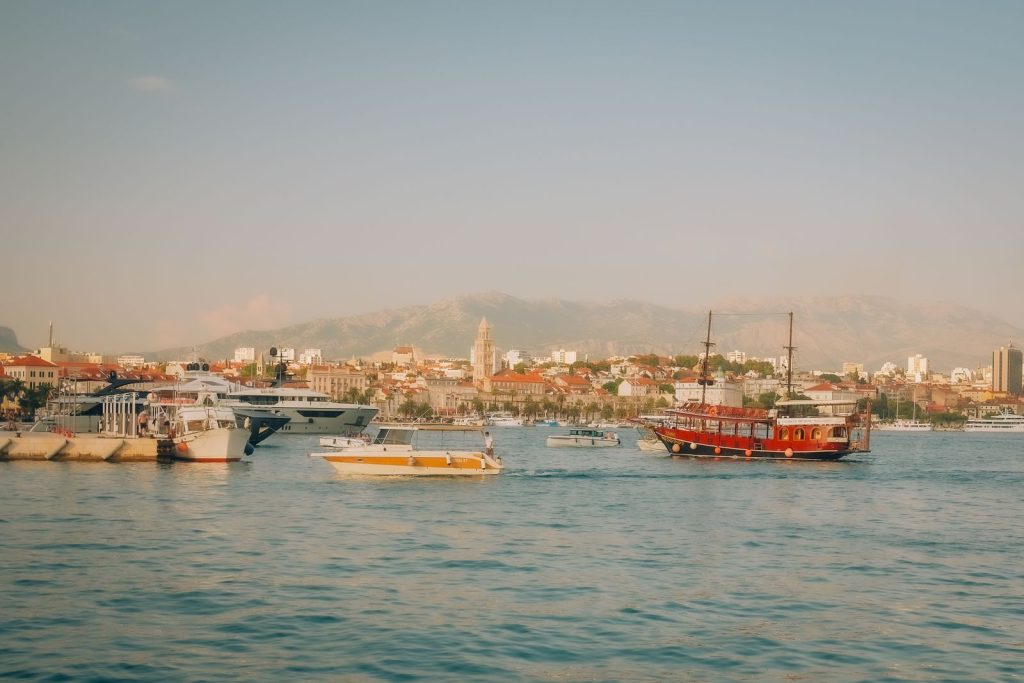
June and September are the sweet spot: warm sea, long days and space on the buoys. In July and August, buoy fields and quays in Hvar, Vis and the Pakleni Islands can fill by early afternoon.
Three winds shape every itinerary. The maestral is the summer north-westerly that builds around midday and drops at sunset, ideal for sailing. The bura is a cold, gusty north-easterly that can arrive quickly with clear skies and is strongest in Kvarner and under the mountains; skippers seek shelter on the mainland side of islands. The jugo is a warm south-easterly that builds over a day or two, brings cloud and a long swell, and makes open crossings to Vis or Lastovo uncomfortable.
- What to bring: soft luggage, water shoes, a light layer and cash for small konobas.
- Seasickness: stay in the island channels in a jugo and take remedies before departure.
- Booking timing: book July and August boats in winter; reserve popular restaurant buoys a day ahead through the skipper.
- August: start early, swim before 10:00, and plan nights in quieter harbours such as Stari Grad, Vrboska or Šipanska Luka.
Getting there from Italy
Jadrolinija normally runs Ancona to Split all year, overnight in roughly 10 to 11.5 hours, and Bari to Dubrovnik as a seasonal summer line. In 2026, however, its international lines were repeatedly suspended, and Jadrolinija has announced that all its international sailings are cancelled until 5 January 2027 because of a technical problem with the ferry Dalmacija, so check the current timetable before planning around a crossing. If you know the Italian side already, our Italy to Croatia by Boat guide explains the crossing for private yachts, and Puglia by Boat pairs well with a Dubrovnik week. Istria is the natural next step after Venice by Boat, across the same northern Adriatic.
Charlotte’s tip: build the week around the weather, not the map
Agree with your skipper on two versions of the itinerary before you leave the base: one for settled maestral weather and one for bura or jugo. Book only the first and last nights in marinas and keep the middle flexible. Buy park tickets online the evening before rather than weeks ahead.
Where to stay near the departure harbours
Le Méridien Lav, Split
On the seafront at Podstrana, roughly 15 minutes by car south-east of Split and about 30 minutes from Split Airport. The resort has its own pebble beach, a private pier with berths for yachts, outdoor and indoor pools and a spa. Ask whether a skippered boat can collect you from the pier.
Best for: combining resort days with day charters from Split.
Check rates at Le Méridien Lav
D-Resort Šibenik
Set inside the D-Marin Mandalina marina in Šibenik, which handles superyachts, so the boat is a short walk from your room. About 40 minutes by car from Split and Zadar airports. Spa, fitness centre and restaurants on site.
Best for: Krka and Kornati days with almost no transfer.
Check rates at D-Resort Šibenik
Grand Park Hotel Rovinj
Right by the shore above the marina, facing Rovinj old town and the island of Sveta Katarina, so ACI Rovinj is a few minutes on foot. Indoor and outdoor pools with views of the town and a wellness centre. Ask the hotel about winter opening.
Best for: half days in the Rovinj archipelago and a Brijuni day.
Check rates at Grand Park Hotel Rovinj
Hotel Excelsior Dubrovnik
A five-star seafront hotel in Ploče, about 600 metres from the Old Town, with a spa, an indoor pool and a sea terrace for swimming. The Old Town harbour is walkable; Gruž is a short taxi ride.
Best for: Elaphiti days and Old Town evenings.
Check rates at Hotel Excelsior Dubrovnik
Check prices and availability
Compare hotels near ACI Split before fixing charter dates.
Ashore, the Croatia coast deserves time of its own: see our Dubrovnik travel guide, our guide to Split and Diocletian’s Palace and our Rovinj and Istria guide, our pick of the best luxury hotels in Croatia, our Croatia wine guide and tennis in Croatia.
Frequently Asked Questions
Do I need a licence to charter a boat in Croatia?
Not for a skippered or crewed charter. For bareboat, one person on board needs a licence recognised by the Croatian Ministry of the Sea, such as a valid ICC for coastal waters, plus a radio operator certificate for the fixed VHF.
Which is the best region for a first Croatian charter?
Central Dalmatia around Split: short crossings, sheltered harbours and a nearby airport.
Are national park fees included in a charter price?
Usually not. Kornati, Telašćica, Mljet, Krka and Brijuni charge their own fees, often per boat and lower online. Confirm with the charter company and the park.
How does Croatia compare with chartering in Italy?
Distances between harbours are generally shorter and the island channels more sheltered, while Italy offers more variety in a single trip. Our Yacht Charter in Italy hub covers the Italian side.