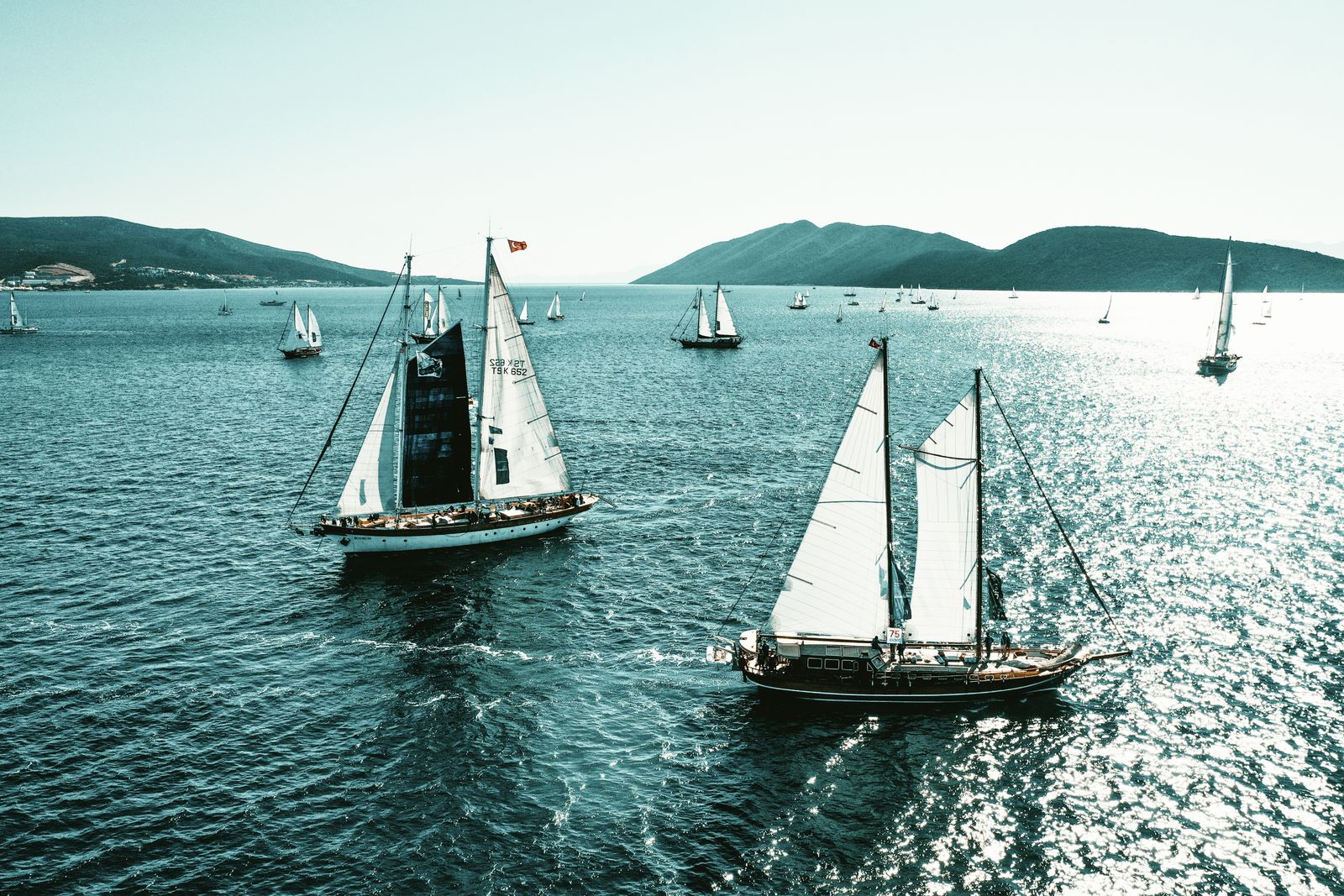
The Adriatic is narrow enough to cross in a morning on a fast boat and wide enough to feel like a proper voyage. You leave Italy’s low, sandy coast and arrive among Croatia’s limestone islands and deep, clear water. Crossing by sea lets you finish a week in Venice or Puglia and wake up in Istria, Split or Dubrovnik, with the car below deck or on a private yacht of your own.
This article contains affiliate links. If you book through them, we may earn a small commission at no extra cost to you. Read our affiliate disclosure.
Quick answer: Italy to Croatia by boat
- Best departure harbour: Ancona for the car ferry to Split (normally year round, but suspended until 5 January 2027); Venice or Trieste for summer fast boats to Istria; Bari for Dubrovnik in season.
- Best half day route: Trieste to Umag by private yacht, with a swim on the Istrian coast.
- Best full day route: Venice to Rovinj by motor yacht, ending among the Rovinj islets.
- Best months: June and September.
- Book ahead: a car space on the ferry, a marina berth on arrival, and park tickets online.
This guide bridges our Italy by boat series and our new Croatia yacht charter guide, covering both the scheduled ferry and the private yacht.
Check prices and availability
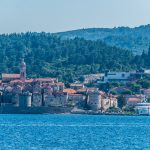
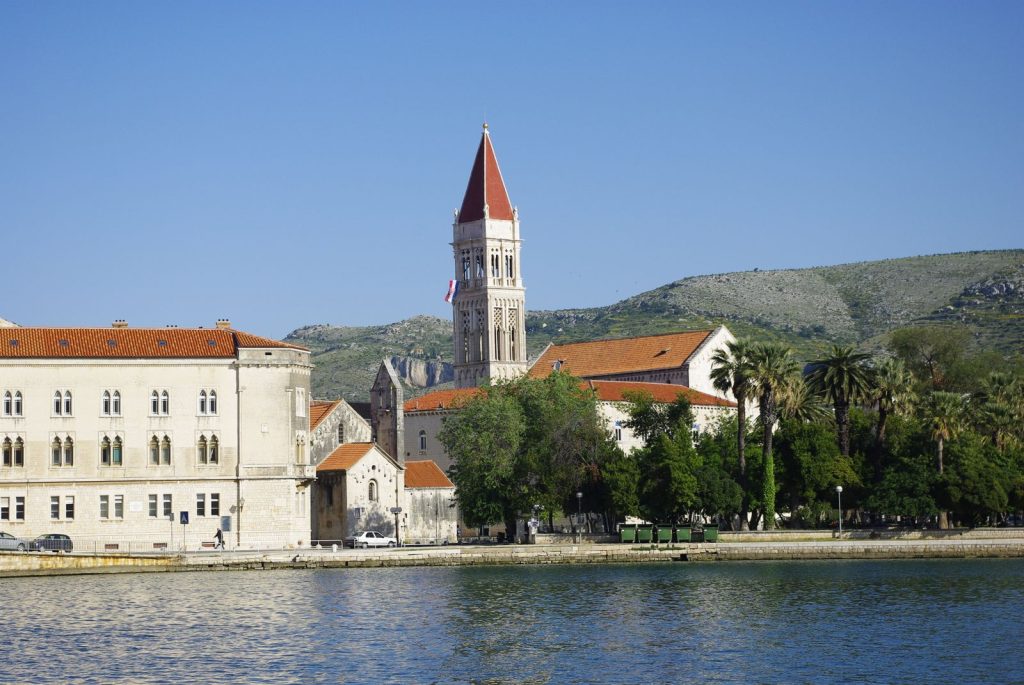
Split is the usual ferry landing from Ancona (sailings suspended until 5 January 2027) and the gateway to the central Dalmatian islands.
Harbours and marinas: where the boats leave from
The ferry lines
Seasons and times below come from the operators and Croatian tourist boards for 2026. Timetables change, so check before you plan around a sailing.
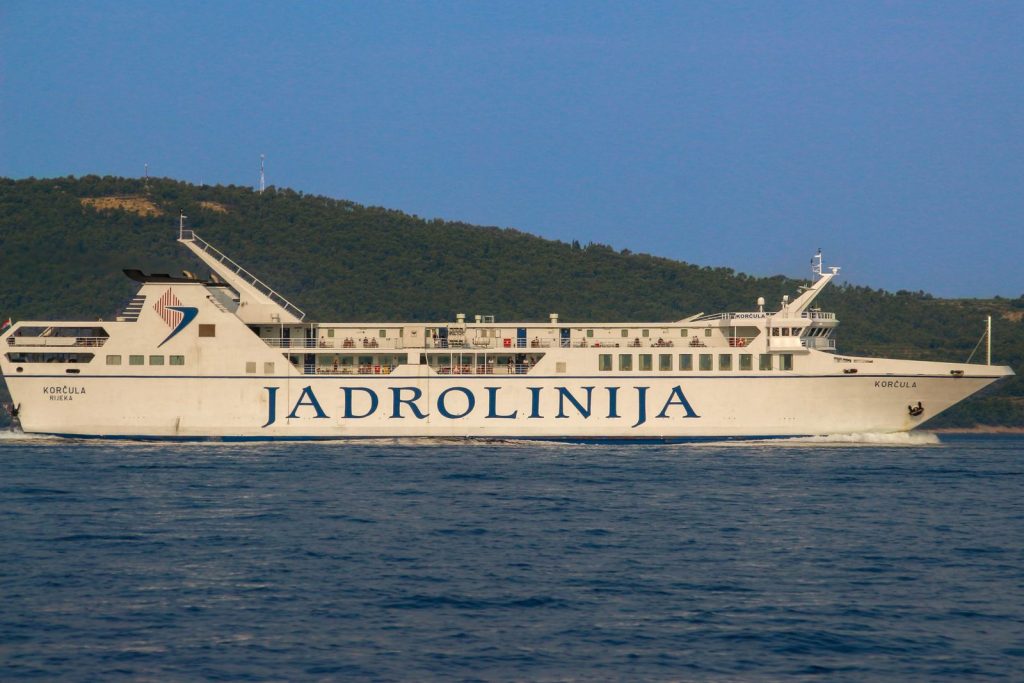
- Ancona to Split (Jadrolinija): normally the only international line Jadrolinija runs all year, on the car ferry Dalmacija, with a daytime crossing of around nine hours or an overnight one of around 11 hours. In 2026 the line was suspended several times, and Jadrolinija has announced that all its international sailings are cancelled until 5 January 2027 because of a technical problem with Dalmacija, so the December 2026 sailings will not run. Check the timetable before you plan around this route.
- Ancona to Zadar (Jadrolinija): a new fast catamaran, about four hours, which ran from 26 June to 6 September in 2026. Jadrolinija mentions only passengers, not vehicles, so confirm before booking. It lands at Zadar’s Gaženica port.
- Bari to Dubrovnik and Bari to Split (Jadrolinija): seasonal summer car ferry lines; check the timetable for dates.
- Venice to Istria (Adriatic Lines): seasonal fast boats to Poreč, Rovinj, Pula and Umag, listed by the Istria Tourist Board for 1 May to 13 October 2026.
- Trieste to Istria (Liberty Lines): a summer hydrofoil to Poreč and Rovinj, listed for 25 June to 31 August 2026. In 2025 the tourist board gave Trieste to Poreč as about 80 minutes, on a 180 seat hydrofoil that takes bicycles.
The yacht harbours
- Venice: marinas on the Lido and around the lagoon, roughly half an hour by water taxi from the airport. Our Venice by Boat guide covers the lagoon.
- Trieste, Ancona, Pescara, Bari, Brindisi: all have marinas within a short drive of their airports.
- Croatian landings: ACI Marina Rovinj (196 berths, beside the Grand Park Hotel), Umag, Split, Zadar and Dubrovnik.
The routes in detail
Distances are our own straight line estimates; the real course is a little longer. Times assume a motor yacht at about 20 knots or a sailing yacht averaging about 6.
Route 1, half day: Trieste to Umag
The shortest crossing: roughly 17 nautical miles, under an hour by motor yacht, about three hours under sail. You pass Piran on the Slovenian coast and Savudrija lighthouse before reaching Umag. Swim off the rocky shore south of town, then return or continue to Novigrad and Poreč. Rovinj is about 35 miles from Trieste. Our Istria by Boat guide picks up from there.
Route 2, full day: Venice to Rovinj
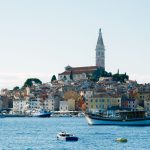
About 59 nautical miles of open water: three hours on a fast motor yacht, ten or more under sail. Leave the lagoon early, before the afternoon breeze, and you see St Euphemia’s bell tower by late morning. Before mooring, swim at anchor off Sveta Katarina, in front of the old town, or Crveni otok (Red Island) just south. The next day, the Brijuni islands are within easy reach.
Route 3, full day or overnight: Pescara or Ancona to Vis and Split
Pescara to Vis is roughly 93 nautical miles, around five hours by motor yacht or a night passage under sail; Ancona to Split is about 127. Vis is the first island you meet. From Komiža it is a short run to the Blue Cave on Biševo and the Green Cave on the islet of Ravnik, before heading east to Šolta, Brač and Split. See our Split by Boat guide.
Route 4, two to four days: Bari or Brindisi to Dubrovnik
Bari to Dubrovnik is roughly 106 nautical miles and Brindisi about 120: five to six hours by motor yacht or a night under sail. Then spend the next days among the Elaphiti: lunch ashore on Šipan, the sandy bay of Šunj on Lopud, a swim off Koločep, and with another day, the national park on Mljet. Our Dubrovnik by Boat guide has more.
Two ten day plans combining Italy and Croatia
- Venice to Istria: days 1 to 3 in Venice; day 4, cross to Rovinj; days 5 to 7 in Rovinj with Brijuni and Poreč; days 8 to 10 in Pula or Kvarner, flying home from Pula or Trieste.
- Puglia to Dubrovnik: days 1 to 4 on the Puglian coast (see Puglia by Boat and our Salento guide); day 5, cross from Bari; days 6 to 10 in Dubrovnik, the Elaphiti and Mljet.
The rules: entering Croatia by yacht, parks and fees in 2026
Based on the Croatian National Tourist Board’s information for boaters and the parks’ own pages. Confirm with the harbour master, park or skipper before you sail.
Entry after Schengen
- From Italy: since Croatia joined Schengen in 2023, people on a yacht arriving from a Schengen port are not subject to border checks and may enter a port that is not a border crossing. From a non Schengen country such as Montenegro, you must use a port with an open border crossing.
- Crew list: our research turned up contradictory information here. The tourist board’s boaters’ page says the crew and passenger list must be certified at a harbour master’s office before departure, while a Croatian marina’s notice on the Schengen changes says a crew list is no longer required. It was not clear to us which applies, so ask the harbour master’s office at your first port.
- Navigation safety fee: foreign boats pay once per calendar year, based on length and engine power, through the Ministry’s e-Nautika portal or at a harbour master’s office.
- Tourist tax: on boats over 7 metres with berths, paid for everyone sleeping aboard, as a lump sum through e-Visitor or per night. Keep the receipt on board.
Speed limits and beaches
- Our research turned up contradictory information on speed limits: the tourist board’s boaters’ page gives 5 knots within 150 metres of shore and 8 knots between 150 and 300 metres, while nautical publications citing the 2025 regulation give a single limit of 8 knots within 300 metres. Harbour masters can set lower local limits, so confirm with the harbour master’s office.
- Underway, boats under 15 metres keep at least 50 metres from the coast, boats of 15 to 30 metres at least 100 metres (since an April 2026 amendment) and boats of 30 metres and over at least 300 metres; anchoring is reported as banned within 150 metres of a natural beach.
- Speedboats may only plane more than 300 metres from shore, where allowed.
Parks and protected areas on these routes
- Brijuni: berth only in the port of Veli Brijun, anchor only in ports and mooring sites, no stops between Jerolim and Veli Brijun, and swimming only at marked bathing areas.
- Mljet: a ticket per vessel by length, valid until noon the next day, cheaper on the park’s webshop. In peak season (June to September) an 11 to 17.99 metre yacht pays 90 euros online in 2026.
- Kornati (from Zadar): you need a valid ticket to sail through the park, sold online; rules and buoy locations are on the park’s website.
- Blue Cave, Biševo: visitors enter in small boats through an opening about 1.5 metres high; the Komiža Tourist Board says the light is best from 10am to 2pm. Check visiting arrangements for private boats with your skipper.
We found no official notice of closures for 2026; check with the park or harbour master shortly before you sail.
Types of boat and what a skippered charter includes
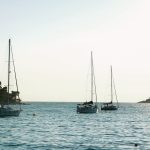
A fast motor yacht turns the long crossings into a single day, at a high fuel cost. A skippered sailing yacht or catamaran suits overnight passages and slow island hopping, and a crewed motor yacht or gulet suits a week with cabins and a cook.
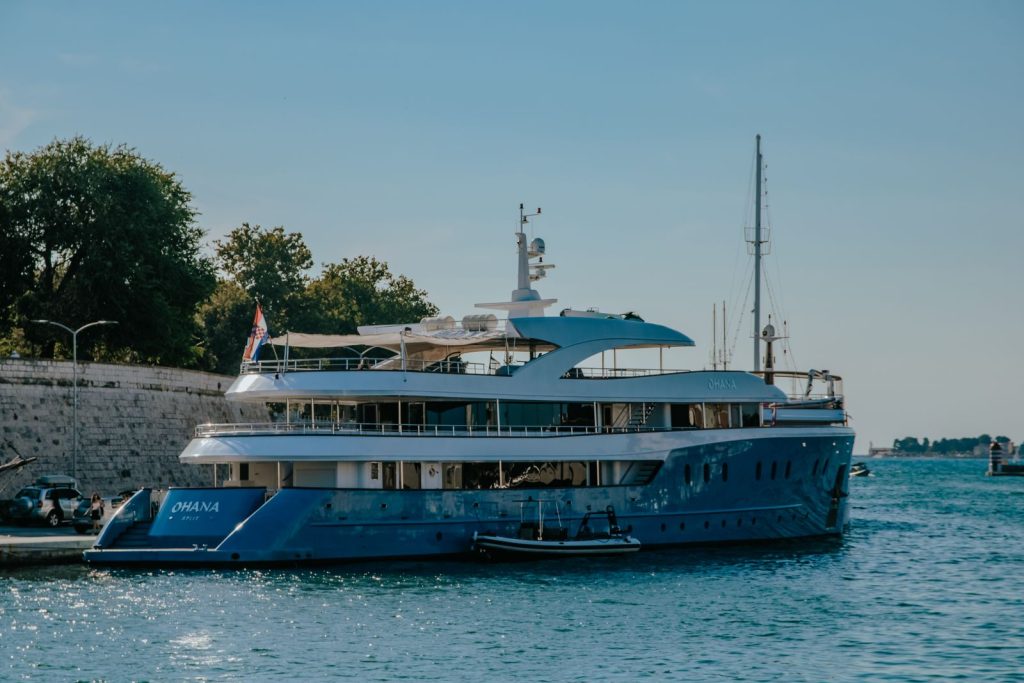
A skippered charter typically includes the boat, the skipper and basic equipment. Usually extra: fuel, marina fees, park tickets, tourist tax, the navigation fee, food, drinks and the skipper’s meals. Get inclusions in writing. If an Italian based boat takes you across, ask the operator to confirm in writing what it may do in Croatian waters, including whether it may carry you between Croatian ports.
For bareboat sailing, the tourist board says you need the licence required by the boat’s flag state; on a Croatian flagged boat, a Croatian licence or a foreign one the Ministry recognises. Charter bases commonly also ask for a VHF radio certificate; confirm with the base.
Routes at a glance
| Route | Departure | Duration | Highlights | Best for |
|---|---|---|---|---|
| Car ferry to Split | Ancona | About 9 hours or overnight | Normally year round (suspended until 5 January 2027), car on board | Road trippers |
| Catamaran to Zadar | Ancona | About 4 hours | Gateway to Kornati | Summer foot passengers |
| Trieste to Umag | Trieste | Half day | Piran, Savudrija | A first taste |
| Venice to Rovinj | Venice | Full day | Sveta Katarina, Red Island | Venice plus Istria |
| To Vis and Split | Pescara, Ancona | Full day or overnight | Komiža, Blue and Green Caves | Experienced sailors |
| To Dubrovnik | Bari, Brindisi | 2 to 4 days | Elaphiti, Mljet | Puglia plus Dubrovnik |
Best months, winds and practical tips
June and September are the sweet spot: the seasonal lines run, the sea is warm and harbours are calmer than in August. July and August bring steady weather but crowds and peak park prices. Outside summer only the Ancona to Split ferry normally runs, and Jadrolinija has suspended it until 5 January 2027, so check before you plan an autumn or winter crossing.
Three winds matter. The maestral is the summer north westerly that builds in the afternoon, which is why crossings start early. The bura is a cold north easterly that can arrive suddenly with strong gusts. The jugo is a south easterly that builds over a day or more and raises a long swell. Open water crossings need a settled forecast for the whole passage; your skipper decides on the day.
- What to bring: ID for everyone, the boat’s papers, fee and tourist tax receipts, a warm layer for an early start.
- Seasickness: take remedies before leaving, sit low and amidships, watch the horizon.
- Booking: reserve summer ferry car spaces, yachts and marina berths several months ahead.
- August: expect queues at the Blue Cave and busy anchorages; start early.
Charlotte’s tip: build in a spare crossing day
Do not pin a private crossing to a single date. Keep a spare day on the Italian side so the skipper can wait out a bura or jugo without costing you a hotel night in Croatia. If the window comes early, it becomes a bonus island day.
Check prices and availability
Arriving from Puglia? Dubrovnik’s best rooms go early for June and September.
Where to stay near the Croatian landings
Grand Park Hotel Rovinj, Rovinj
Right by the shore above ACI Marina Rovinj, looking across to the old town and Sveta Katarina. It has 209 rooms, indoor and seasonal outdoor pools, and a spa with sauna and Turkish bath. Ask the hotel about winter opening.
Best for: yacht arrivals from Venice and Trieste.
Check rates at Grand Park Hotel Rovinj
Le Méridien Lav, Split
In Podstrana, about 8 km south of Split, with its own marina beneath the hotel for yachts up to 40 metres. Marriott lists an 800 metre beach, infinity and indoor pools, a spa, and Split airport about 16 miles away.
Best for: Ancona ferry arrivals who want a resort with a marina.
Check rates at Le Méridien Lav
Hotel Excelsior Dubrovnik, Dubrovnik
About 600 metres from the old town walls, with its own beach, the seasonal Prora restaurant by the water, an indoor pool and spa. Ferries from Bari dock at Gruž across town, a short taxi ride away.
Best for: couples arriving from Puglia.
Check rates at Hotel Excelsior Dubrovnik
Hotel Bastion, Zadar
A 28 room heritage hotel in Zadar’s old town on the remains of a 13th century fortress, some rooms overlooking the marina, with a small spa and the Kaštel restaurant. The Ancona catamaran lands at Gaženica, outside the centre, so arrange a transfer.
Best for: catamaran passengers heading for Kornati.
On the Italian side, see Trieste by boat for the northern gulf and the Tremiti Islands and the Gargano by boat for the Gargano.
Once you land, see our Dubrovnik travel guide, our guide to Split and Diocletian’s Palace, our Rovinj and Istria guide and our pick of the best luxury hotels in Croatia.
Frequently Asked Questions
Can I take my car from Italy to Croatia by ferry?
Yes, normally on the Ancona to Split ferry and the seasonal Bari lines, although Jadrolinija has cancelled all its international sailings until 5 January 2027, so check the timetable first. For the fast boats from Ancona, Venice and Trieste, check vehicle carriage with the operator.
Is there a passport check when sailing from Italy?
Not from a Schengen port. You still pay the navigation fee and tourist tax, and should carry ID for everyone aboard.
How long is the crossing by private yacht?
From under an hour (Trieste to Umag) to about six hours (Brindisi to Dubrovnik) by fast motor yacht. Under sail, the long crossings become night passages.
When is the best time to cross?
June and September, in a settled spell, leaving early before the afternoon breeze.
Planning more days on the water?