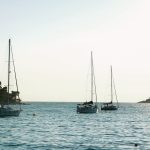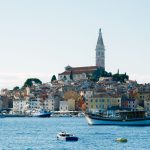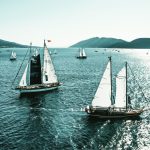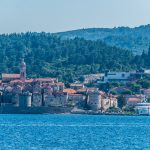
The Kvarner Gulf is the northernmost island world of the Croatian Adriatic and, from Italy, the closest. One bay holds the belle époque riviera of Opatija, the port city of Rijeka and four large islands: Krk busy and well connected, Cres wild and high, Lošinj green and gentle, Rab known for Lopar’s sandy beaches. Dolphins live around Lošinj, griffon vultures nest on the cliffs of Cres and Plavnik, and the bura can turn a calm morning dangerous. Here are the harbours, five routes, the 2026 rules and what a skippered day includes.
This article contains affiliate links. If you book through them, we may earn a small commission at no extra cost to you. Read our affiliate disclosure.
Quick answer: Kvarner by boat
- Best departure harbour: Punat on Krk for the central islands; Mali Lošinj for dolphins, Susak and Ilovik.
- Best half day route: Punat to Plavnik’s sea cave and the coves of southern Krk.
- Best full day route: Mali Lošinj to Susak and Ilovik, with lunch ashore on Ilovik.
- Best months: June and September; May and early October for quieter water if you accept cooler swims.
- What to book ahead: skippered boats for July and August, ferry crossings to Cres and Lošinj, and island hotels.
This guide is part of our Croatia by Boat series; the hub on Croatia yacht charter compares every region, from Istria to Dubrovnik.
Check prices and availability
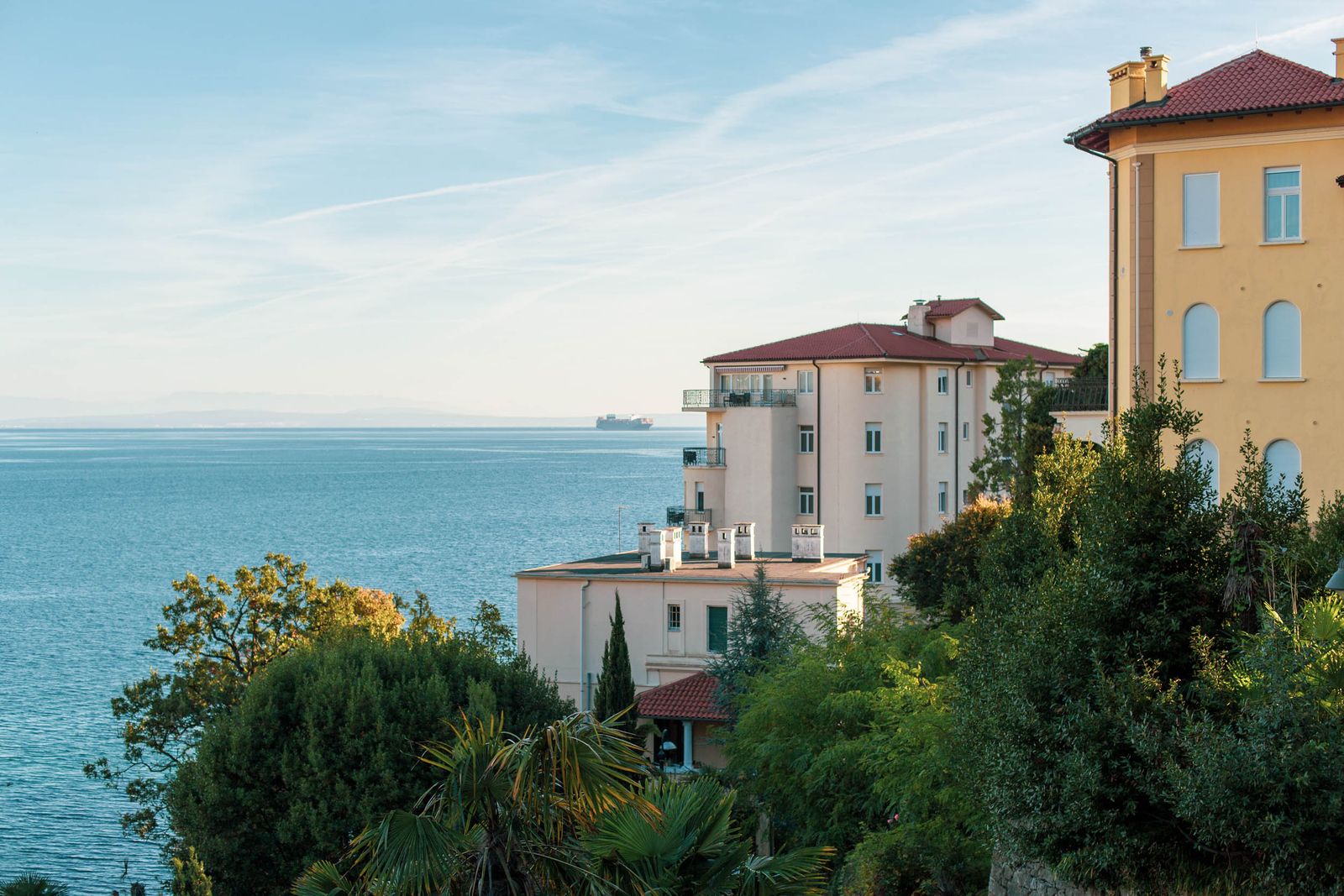
Opatija is the most comfortable mainland base, with grand seafront hotels and quick access to Krk and the Cres ferry.
Harbours and marinas: where boats leave from
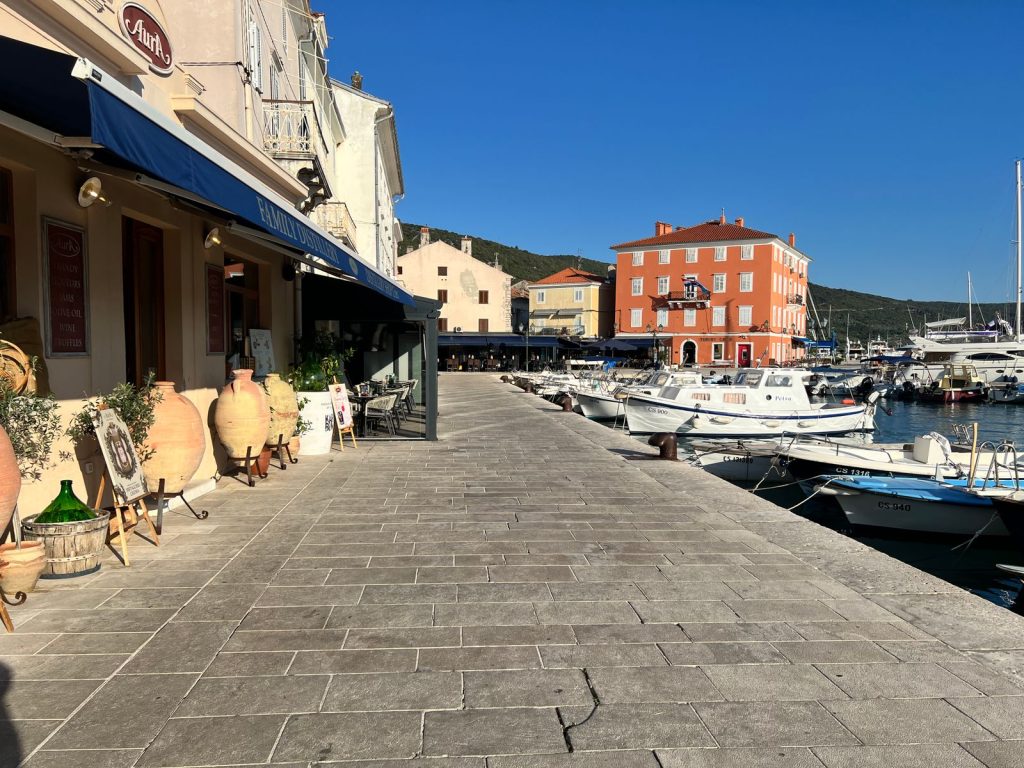
Rijeka Airport sits on Krk, near Omišalj, so Krk is the natural start if you fly in. Drive times are rough guides; summer queues at the Krk bridge and ferry ports add a lot.
- Opatija and Ičići: ACI Marina Opatija lies at Ičići, just south of town, with small harbours at Opatija and Volosko. Good for riviera evenings, but the open gulf crossing makes it the most weather dependent start. Allow under an hour from the airport.
- Rijeka: ACI Marina Rijeka is a practical city base, less charming for a swim day.
- Punat (Krk): a large marina in a sheltered bay opposite the monastery islet of Košljun. The handiest base for Plavnik, Cres, Rab and Lošinj, a short drive from the airport.
- Krk town: small harbour under the old walls, suited to half days.
- Cres town: ACI Marina Cres sits beside the old town. Car ferries run from Brestova (near Opatija) to Porozina and from Valbiska on Krk to Merag.
- Mali Lošinj and Veli Lošinj: most boats for Susak, Ilovik and the dolphin waters leave Mali Lošinj’s long harbour; Veli Lošinj and Rovenska are quieter. From Cres town the drive south takes well over an hour.
- Rab town and Supetarska Draga: ACI Marina Rab faces the old town; ACI Marina Supetarska Draga lies further north west. Ferries link Rab with Stinica on the mainland and Valbiska on Krk.
Five routes in detail
Times assume a fast motor boat in calm seas; sailing boats are slower, and the bura can cancel any route.
1. Half day: Punat, Plavnik’s sea cave and southern Krk
Leave Punat past Košljun for Plavnik, the uninhabited island between Krk and Cres, where a swimmable sea cave glows blue in sunlight. Our research turned up contradictory information here: some operators place a “Blue Cave” on Plavnik, others on Cres. It was not clear to us whether these are the same cave, so ask your skipper which one they mean. Return via the beaches of Stara Baška. Plavnik’s cliffs are a vulture nesting site, so keep speed and voices low. Allow about four hours.
2. Full day: Mali Lošinj to Susak and Ilovik
Susak is a low island of sand and vineyards with a village up the hill; excursion boats from Mali Lošinj take a little over an hour, a private boat less. Swim off Susak, then cross to Ilovik for lunch ashore and a swim in the channel between Ilovik and Sveti Petar. Return via Veli Lošinj. Plan on seven to eight hours.
3. Full day: Cres, Valun and Beli
From Cres town, head to Valun, a tiny village with a pebble beach and a church keeping the Valun tablet, an early Glagolitic inscription. Continue north along the high limestone coast to the harbour below Beli, where a steep path climbs to the hilltop village and its griffon vulture visitor centre. Hold the vulture distances below. Allow six to seven hours with lunch.
4. Half or full day: Rab town to Lopar’s sandy beaches
Leave Rab town, its four bell towers above the harbour, for the Lopar peninsula. Rajska plaža (Paradise Beach) is sandy and shallow; Livačina in the same bay is quieter; Sturič, facing the island of Grgur, has two sandy bays reached on foot or by boat. Sahara and Stolac are naturist. Add Kampor bay for a full day.
5. Three to five days: Punat to Lošinj and Rab
Day one to Cres town; day two through the Osor channel, where the swing bridge opens at set times (check with the harbour master), to Mali Lošinj; day three Susak and Ilovik; day four across the Kvarnerić to Rab; day five back via Lopar. Every leg is bura exposed, so keep a spare day.
Charlotte’s tip: book your Lošinj day for the morning
Leave Mali Lošinj early and ask at booking for a slow, quiet dolphin approach with no chasing. Mornings tend to be calmer, the excursion fleet is still in harbour, and the afternoon stays free for Ilovik or a spa treatment.
Rules: dolphins, vultures, anchoring and speed in 2026
Kvarner has no national park, so no park tickets. What matters is national navigation law and nature protection. This is what we verified on official sources for 2025 and 2026; check with the harbour master before you sail.
Dolphins around Lošinj
About 200 bottlenose dolphins live around the archipelago, says the Lošinj tourist board, and the Blue World Institute’s recent estimate is around 180. Research began in 1987 with the Adriatic Dolphin Project, which the Blue World Institute in Veli Lošinj has run since 1999. All marine mammals in Croatia have been protected by law since 1995. We found no legally binding approach distance; the published guidance is a code of conduct:
- Never steer at or chase dolphins; approach slowly and parallel.
- Engine at idle or off; no sudden changes of speed or course.
- Keep away from mothers with calves; never swim with, feed or touch them.
- Leave slowly and speed up only when well clear.
Griffon vultures on Cres, Krk, Prvić and Plavnik
Vultures nest on sea cliffs, sometimes only about 10 metres above the water, and young birds can land in the sea on first flights. Nesting sites lie in Natura 2000 areas or reserves, and disturbing the birds is prohibited by law. Conservation guidance asks boats to stay at least 80 metres off the cliffs at about 5 knots, and to avoid shouting, clapping, loud music and drones. A vulture in the water: call 112.
Speed and distance from the coast
Croatia’s maritime safety regulation (2025, amended April 2026) sets minimum distances from the coast: 50 metres for boats under 15 metres, 100 metres for 15 to 30 metres (lowered from 150 metres by the April 2026 amendment), 300 metres above that, except when entering harbour, anchoring or mooring. Planing is allowed only beyond 300 metres. On speed, our research turned up contradictory information: the regulation text sets 8 knots within 300 metres, while the Croatian National Tourist Board’s boaters’ information gives 5 knots within 150 metres and 8 knots from 150 to 300 metres. It was not clear to us which applies everywhere, so follow the lower limit and ask your skipper.
Anchoring, buoys and beaches
- No anchoring within 50 metres of a marked bathing area or within 150 metres of a natural beach.
- No mooring to the shore in bathing areas, and no shore lines that damage vegetation.
- Keep at least 50 metres from a diver’s buoy.
- Tenders belonging to a parent yacht may operate within 500 metres of it, except for runs to shore or harbour.
- Many bays have paid buoy fields under local concessions; check fees with the skipper.
Closures in 2026
We found no announced 2026 closures. The harbour master can restrict anchoring at any time, published on charts and the Ministry of the Sea’s website.
Types of boat and what a skippered charter includes
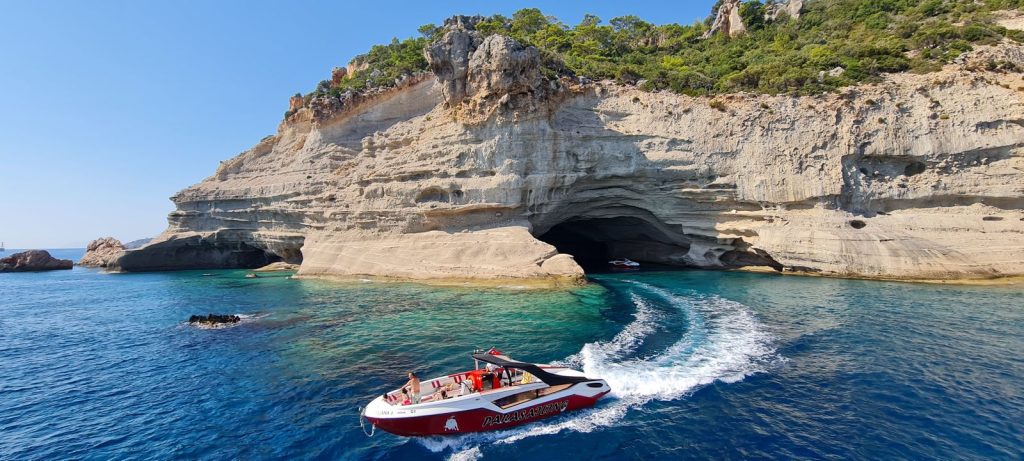
- RIBs and speedboats: fast, ideal for half days; little shade.
- Motor yachts: comfortable in the open gulf.
- Sailing yachts and catamarans: best for multi day hopping; catamarans suit families.
- Traditional wooden boats: slow, atmospheric, for gentle half days.
A skippered day usually includes boat, skipper, fuel for a stated route and water. Commonly extra: further fuel, lunch ashore, buoy or harbour fees. Get a written list.
Bareboat: the skipper needs a licence recognised by Croatia (the Ministry of the Sea lists accepted foreign certificates). Bases usually also ask for a VHF radio certificate; confirm with the base or harbour master. Tourist tax is due for everyone sleeping on boats over 7 metres, and the crew list is certified at a harbour master’s office. Owners arriving from Italy pay an annual navigation safety fee via e-Nautika; our guide to crossing from Italy to Croatia by boat covers this.
Route comparison
| Route | Departure | Duration | Highlights | Best for |
|---|---|---|---|---|
| Plavnik and southern Krk | Punat | About 4 hours | Sea cave, Stara Baška cliffs, Košljun | First day after landing |
| Susak and Ilovik | Mali Lošinj | 7 to 8 hours | Sand island, dolphin waters, lunch on Ilovik | Couples, nature lovers |
| Valun and Beli | Cres town | 6 to 7 hours | Wild cliffs, vultures, hill villages | Walkers, birdwatchers |
| Lopar beaches | Rab town | Half or full day | Sandy, shallow bays, Rab’s bell towers | Families with young children |
| Island loop | Punat | 3 to 5 days | Cres, Osor, Lošinj, Susak, Rab | Sailors with flexible dates |
Best months, the bura and practical tips
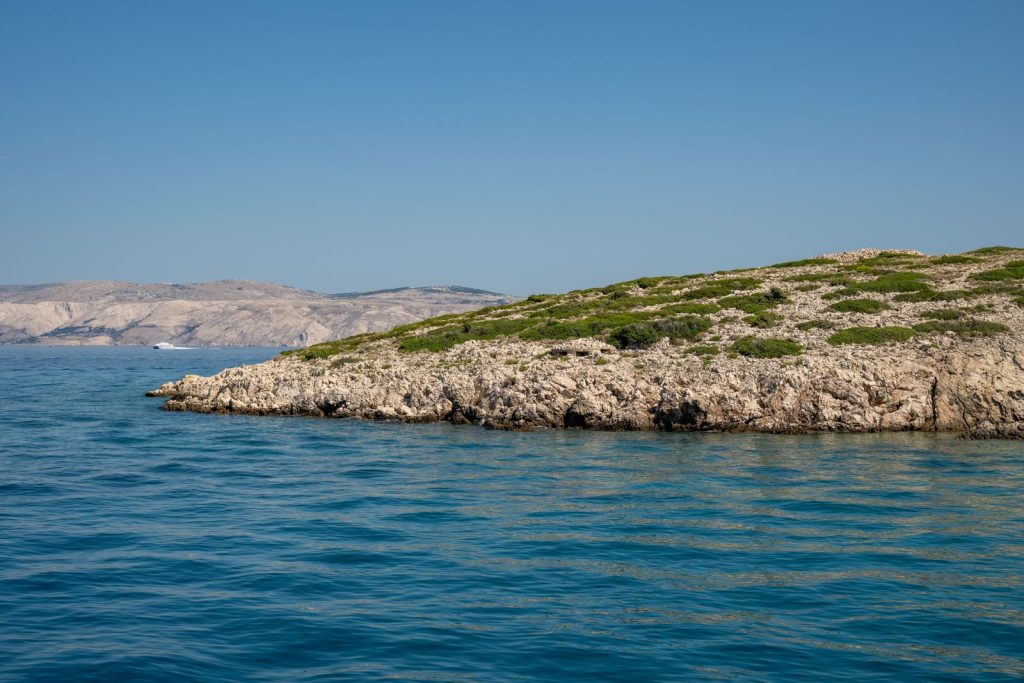
June and September balance warm water, settled weather and space. July and August are busiest; May and October are quiet but cooler.
The bura is the cold north easterly falling off the mountains. It is strongest around Senj and the Velebit Channel but reaches the whole gulf, with violent gusts and short, steep seas. The Croatian meteorological service (DHMZ) issues marine forecasts and wind warnings for Kvarner; when one is out, a good skipper will cancel or shorten the route, and some ferries stop. Accept that decision. The southerly jugo brings swell; the summer maestral is the friendly afternoon breeze.
- What to bring: reef shoes, a windproof layer, sun cream, cash for buoys.
- Seasickness: crossings to Lošinj and Rab are open water; take a remedy beforehand.
- Booking timing: book July and August boats and ferries well ahead.
- August crowds: start early and save Lopar and Susak for weekdays.
From northern Italy, Kvarner pairs naturally with Venice; see our Venice by boat guide, or the wider yacht charter in Italy hub. Next door is Istria by boat, and further south Kornati and Krka by boat.
Check prices and availability
Mali Lošinj is the base for dolphin waters, Susak and Ilovik.
Where to stay near the harbours
Lošinj has been a wellness island since 1892, when the Austro-Hungarian authorities declared it a climatic health resort.
Hotel Ambasador, Opatija
A five star hotel above its own beach and the Lungomare, between Opatija and Volosko, with a spa of about 1,300 square metres and an indoor seawater pool open all year. Volosko’s harbour is a walk along the Lungomare; ACI Marina Opatija is a short drive.
Best for: a mainland base with riviera evenings and day trips by boat.
Check rates at Hotel Ambasador
Boutique Hotel Marina, Krk
An adults only, ten room hotel on the Krk town waterfront. Boats are steps away; Punat is a short drive. Ask the hotel about winter opening.
Best for: couples who want to step from breakfast onto the boat.
Check rates at Boutique Hotel Marina
Boutique Hotel Alhambra, Mali Lošinj
A 51 room hotel on Čikat bay with a private beach, an indoor saltwater pool and the Alfred Keller restaurant, listed in the Michelin Guide. Mali Lošinj’s harbour is a short drive; ask whether boats can collect you from the bay.
Best for: a quiet, polished base for the Susak and Ilovik day.
Check rates at Boutique Hotel Alhambra
Vitality Hotel Punta, Veli Lošinj
Right beside Veli Lošinj, with a large Vitality Center and spa, an infinity seawater pool, a fitness centre and health programmes. Our research turned up contradictory information on the size of the spa and the opening season (the hotel’s own fact sheet gives over 5,400 square metres and April to October), so confirm dates and facilities with the hotel.
Best for: combining boat days with a serious wellness stay.
Check rates at Vitality Hotel Punta
Arbiana Heritage Hotel, Rab
A 1924 hotel by the town walls at the southern tip of Rab harbour, with a terrace restaurant. Boats leave from the waterfront in front. Open April to early November.
Best for: old town charm with Lopar’s sandy bays a short boat ride away.
Check rates at Arbiana Heritage Hotel
For time ashore, see our guide to Opatija and the Kvarner Riviera, our Plitvice Lakes guide and our pick of the best luxury hotels in Croatia.
Frequently Asked Questions
Can I see dolphins on a private boat trip from Lošinj?
Often, as a population is resident, but sightings are never guaranteed.
Is there a national park fee in Kvarner?
No. Expect buoy and harbour fees, and tourist tax if you sleep on board.
How dangerous is the bura?
Very, for small boats. Check DHMZ warnings and let the skipper cancel.
Which island is best for a first visit by boat?
Lošinj, for dolphins, Susak and wellness hotels; Krk if time is short.
Planning more days on the water?