This post contains affiliate links. If you book through them, we may earn a small commission at no extra cost to you. Learn more.
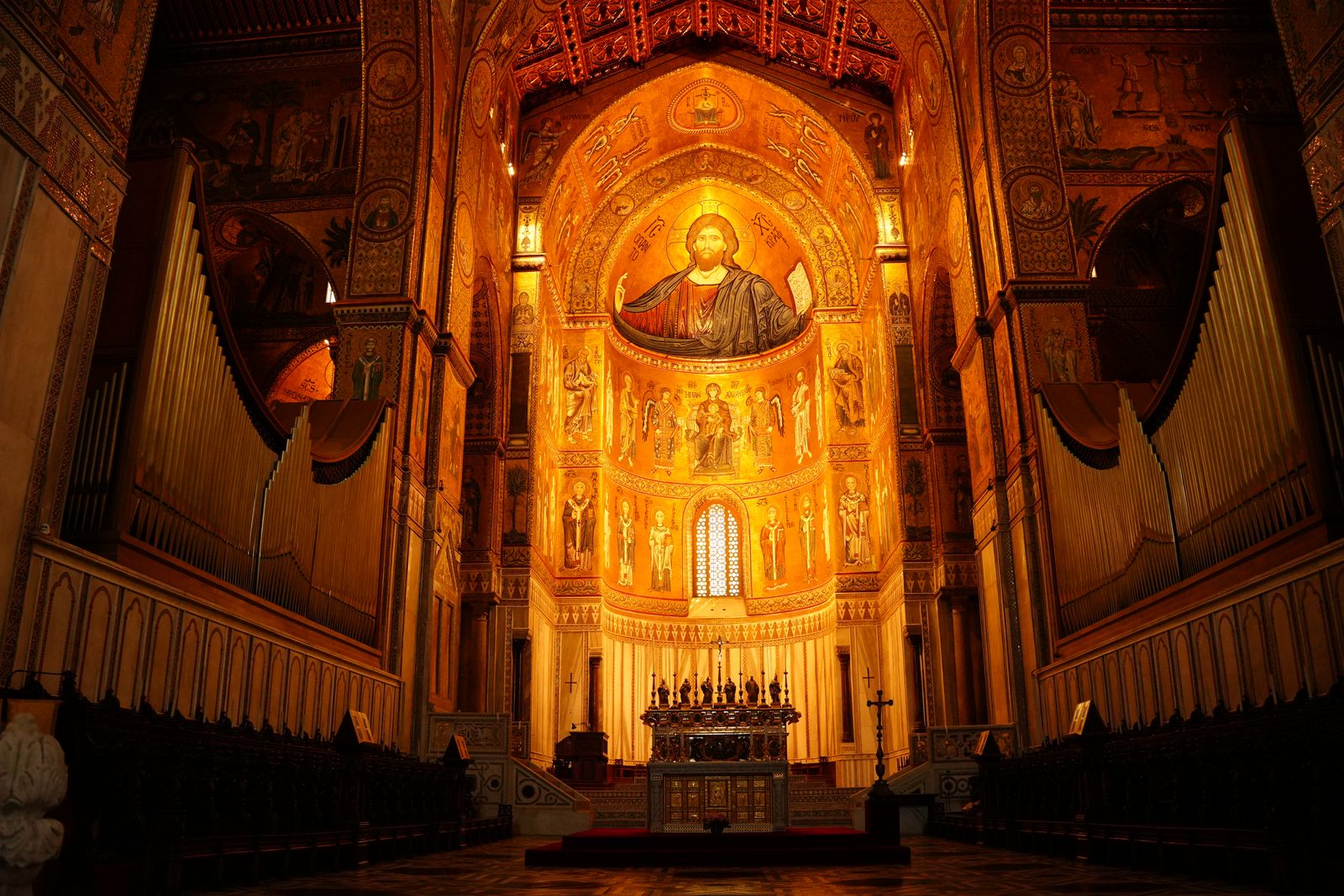
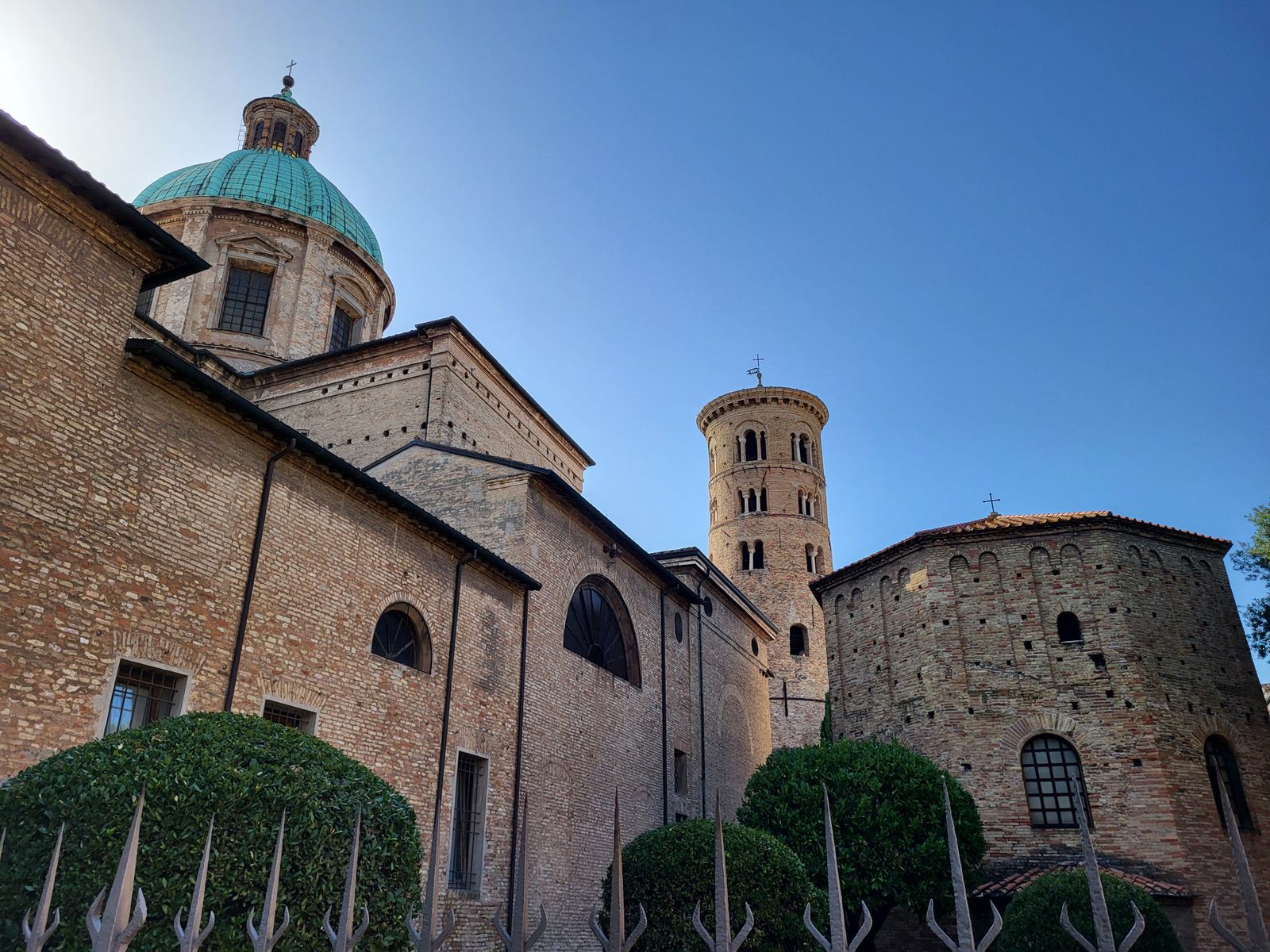
From the outside, the churches of Ravenna look plain, almost humble: simple brick walls, small windows, modest bell towers. Step inside and you enter another world. Walls and domes glitter with gold, deep blue and emerald, covered in mosaics more than fourteen centuries old, as fresh as the day they were made. No other place on earth has such a complete collection of early Christian and Byzantine mosaics, and eight of Ravenna’s monuments together form a UNESCO World Heritage Site.
Ravenna is also an easy and rewarding trip from Bologna, an hour away by train, and a quiet, elegant city in its own right. This guide explains the history behind the mosaics, which tickets to buy and how to see the highlights in a day.
Ravenna Tickets
- Ravenna Pass: the main mosaic monuments on one ticket
- Classis Museum and Basilica of Sant’Apollinare in Classe
- Domus dei Tappeti di Pietra: the “house of stone carpets”
Why Ravenna Has the World’s Finest Mosaics
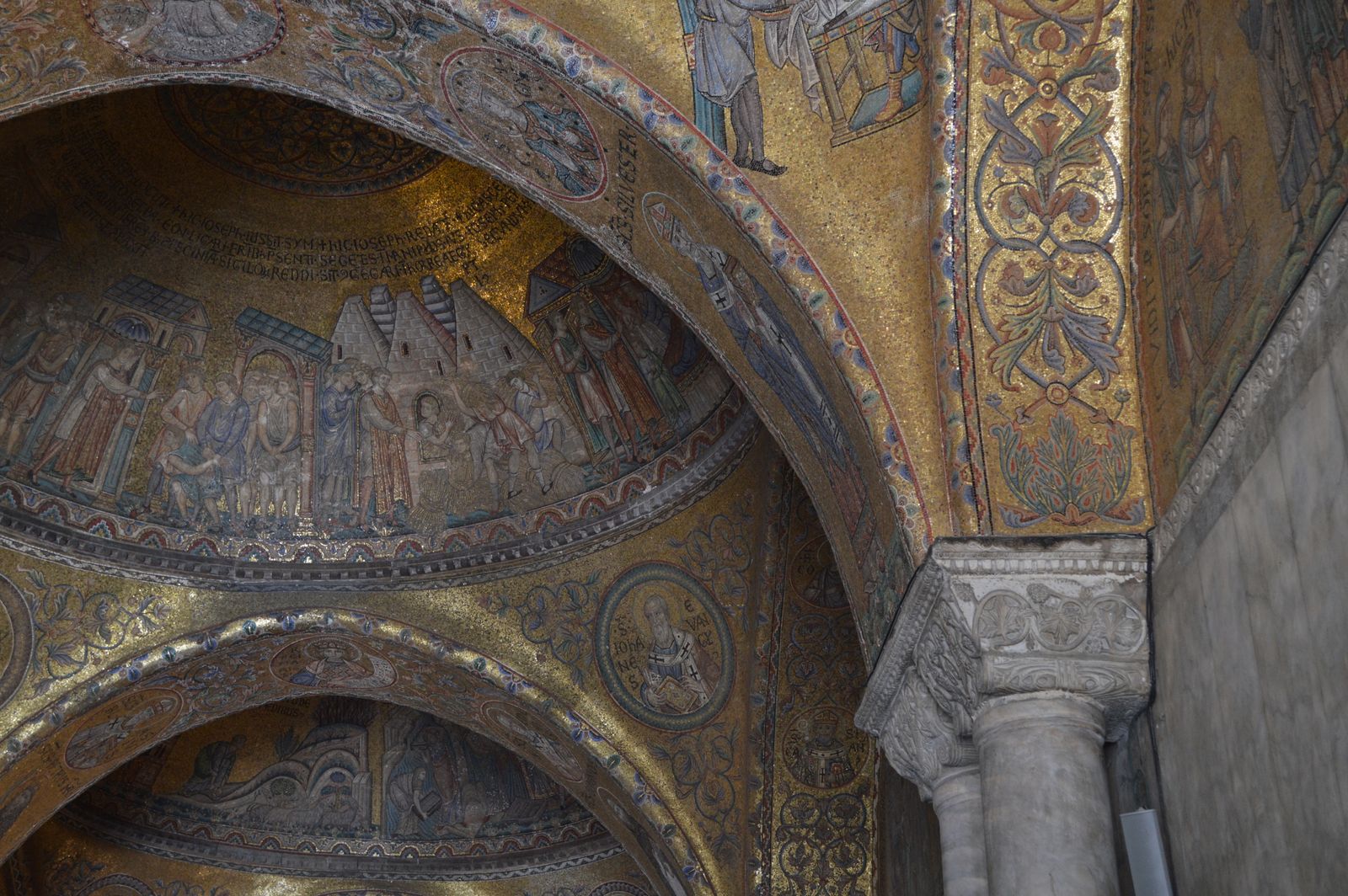
For a brief, brilliant period, Ravenna was one of the most important cities in the world. In 402, the Western Roman Emperor Honorius moved his capital here from Milan, protected by marshes and close to the fleet at Classe. After the fall of the Western Empire, Ravenna became the capital of the Ostrogothic king Theodoric, and in 540 it was conquered by the Byzantine Empire, becoming its seat in Italy. Each of these rulers built churches and decorated them with the finest mosaics money could buy. When Ravenna’s political importance faded, the city was spared the grand rebuilding that transformed so much of Italy, and its mosaics survived.
The Monuments at a Glance
| Monument | Highlights |
|---|---|
| Basilica of San Vitale | The famous panels of Emperor Justinian and Empress Theodora and their courts |
| Mausoleum of Galla Placidia | A tiny chapel with a deep blue starry vault, the oldest mosaics in the city |
| Basilica of Sant’Apollinare Nuovo | Long processions of saints and virgins on gold backgrounds |
| Neonian Baptistery | The baptism of Christ in the dome, ringed by the apostles |
| Archiepiscopal Chapel | A small chapel in the archbishop’s museum, with mosaics and treasures |
| Sant’Apollinare in Classe | A vast basilica outside the city with a green apse of lambs and trees |
| Arian Baptistery and Mausoleum of Theodoric | Theodoric’s legacy, including his stone mausoleum with a single-block dome |
San Vitale and Galla Placidia
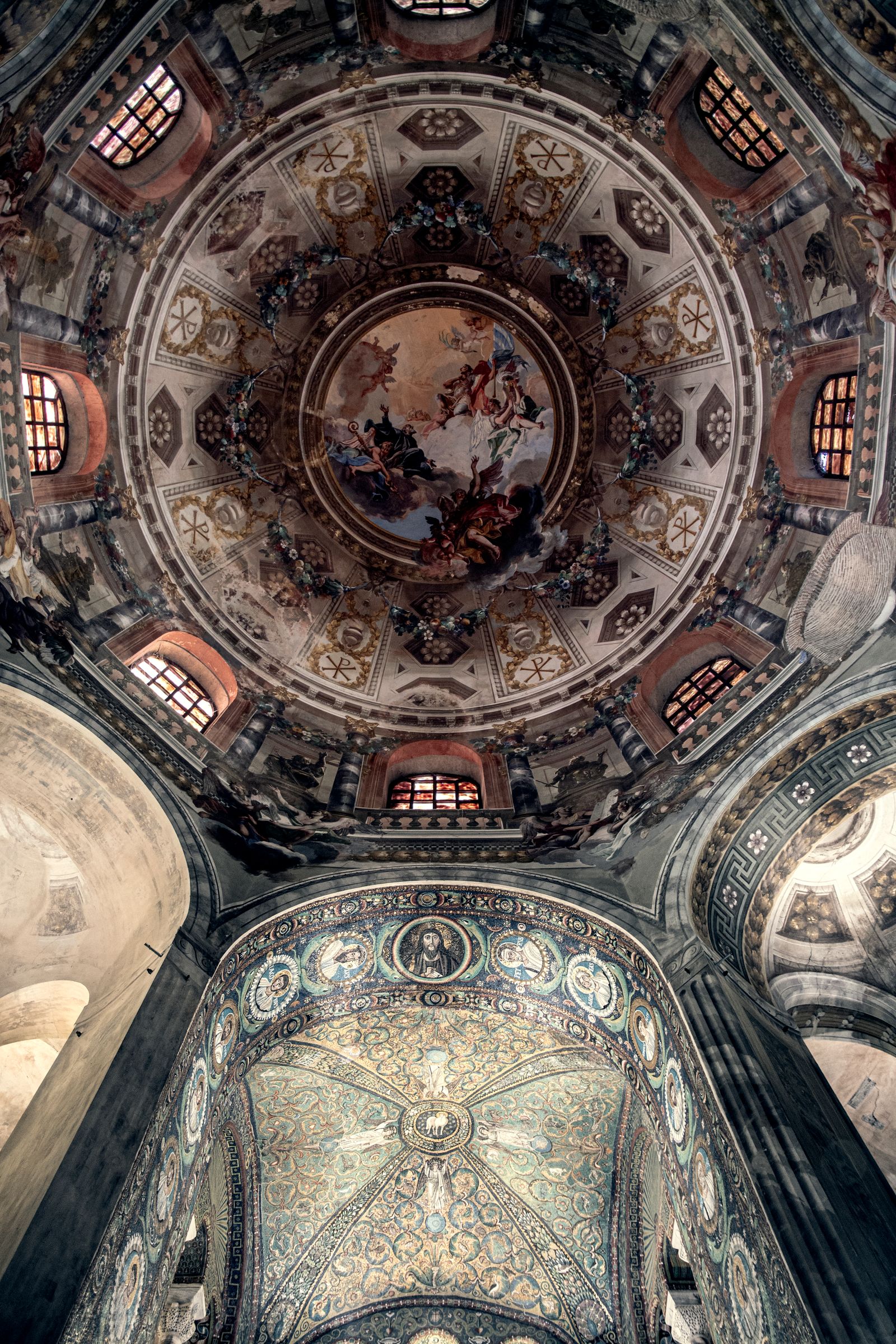
The Basilica of San Vitale, consecrated in 547, is the masterpiece. Its octagonal interior rises to a dome, and in the apse, two of the most famous images of the ancient world face each other: Emperor Justinian with his court, clergy and soldiers, and Empress Theodora with her ladies, dressed in jewels and silk. The colours, the faces and the details of their robes are astonishing at close range.
In the same garden stands the Mausoleum of Galla Placidia, sister of Emperor Honorius. From the outside, it is a small cross-shaped brick building; inside, a vault of deep blue mosaic scattered with golden stars arches over the visitor, with the Good Shepherd above the entrance. It is small, and visits are timed and limited; in busy periods, a reservation is required.
Sant’Apollinare Nuovo and the Baptisteries
Built by Theodoric in the early sixth century, Sant’Apollinare Nuovo has two great mosaic friezes running the length of the nave: on one side, a procession of martyrs leaving Theodoric’s palace, on the other, virgins advancing from the port of Classe, each figure distinct, all heading towards Christ and the Madonna. The Neonian Baptistery, the oldest monument in the city, has a dome showing the baptism of Christ in the river Jordan surrounded by the twelve apostles, while the Arian Baptistery, built for Theodoric’s Arian Christians, has a simpler but strikingly similar scene.
Sant’Apollinare in Classe
A few kilometres south of the centre, in what was once Ravenna’s port, the Basilica of Sant’Apollinare in Classe rises alone among fields. Its apse is a luminous vision of green meadows, trees and white lambs around Saint Apollinaris, the first bishop of Ravenna, beneath a jewelled cross set in a starry sky. Nearby, the Classis Museum tells the story of the city and its harbour from the Romans to the Byzantines. The combined ticket for the museum and the basilica covers both, and there are frequent buses and trains from the centre.
The Mausoleum of Theodoric
On the northern edge of the centre, the Mausoleum of Theodoric is unlike anything else in Ravenna. Built around 520 by the Ostrogothic king for his own burial, it is a two-storey building of white Istrian stone, roofed by a single monolithic dome some ten metres across and weighing around three hundred tonnes, carried here across the Adriatic. How it was lifted into place remains a subject of debate. Inside, a porphyry tub, possibly once a Roman bath, stands where the king’s remains are believed to have lain. It is a powerful reminder that Ravenna’s history was shaped by Goths as well as Romans and Byzantines.
The Adriatic Coast and Romagna’s Hills
Ravenna is only a few kilometres from the sea. The beaches of Marina di Ravenna and the pine forests of the Po Delta park, a landscape of lagoons, flamingos and fishing huts on stilts, make a peaceful afternoon. Inland, the hills of Romagna hide medieval villages, wineries and the ceramics town of Faenza.
Which Ticket to Buy
A single combined ticket covers the main monuments in the centre: San Vitale, the Mausoleum of Galla Placidia, Sant’Apollinare Nuovo, the Neonian Baptistery and the Archiepiscopal Museum. The Ravenna Pass simplifies entry to the main mosaic sites. Some monuments, such as Sant’Apollinare in Classe, the Mausoleum of Theodoric and the Arian Baptistery, are run by the state and have separate tickets.
Ravenna has more than Byzantine treasures. The Domus dei Tappeti di Pietra, discovered beneath a church in the 1990s, preserves the beautifully patterned floor mosaics of a Byzantine palace. Ravenna also guards the tomb of Dante, who died here in exile in 1321; the simple neoclassical tomb and the surrounding quiet zone are an essential stop for lovers of Italian literature.
A Day in Ravenna
- Morning: San Vitale and the Mausoleum of Galla Placidia as soon as they open, before the groups arrive.
- Late morning: the Neonian Baptistery and the Archiepiscopal Museum.
- Lunch: piadina, the flatbread of Romagna, filled with local ham and squacquerone cheese, in Piazza del Popolo.
- Afternoon: Sant’Apollinare Nuovo, Dante’s tomb and the Domus dei Tappeti di Pietra.
- Late afternoon: Sant’Apollinare in Classe in the softer light, then a glass of Sangiovese di Romagna.
Getting There
Regional trains link Bologna and Ravenna in about an hour, and the station is a ten-minute walk from the centre. The nearest major airport is Bologna. Ravenna is flat and compact, ideal for walking or cycling; many hotels lend bicycles. A car is useful for combining Ravenna with the hills of Romagna or the Adriatic coast; Localrent lists local agencies. On travel days, leave your bags with Radical Storage.
Food and Wine of Romagna
Ravenna lies in Romagna, the eastern half of Emilia-Romagna, with its own proud food culture. Piadina, a soft flatbread cooked on a griddle, is everywhere; cappelletti, small filled pasta, are served in broth or with ragù; and the local red wine is Sangiovese di Romagna, a lively, approachable version of Italy’s most planted grape. Our article on Sangiovese di Romagna and our guide to wine in Emilia-Romagna explain the region’s wines.
Practical Tips
- Dress code: several monuments are active churches; cover shoulders and knees.
- Book Galla Placidia in season: visits are timed and limited.
- Photography: generally allowed without flash in most monuments.
- Stay connected: an eSIM for Italy keeps tickets and maps on your phone; AirHelp can check compensation if your flight is delayed.
Frequently Asked Questions
Is Ravenna worth a day trip from Bologna?
Absolutely. It is only an hour away by train, and its mosaics are among the most beautiful works of art in Italy.
How many UNESCO monuments are in Ravenna?
Eight early Christian and Byzantine monuments together form the UNESCO World Heritage Site.
Do I need to book in advance?
For the Mausoleum of Galla Placidia in busy periods, yes; for the other monuments, booking is useful but usually not essential.
How long do you need in Ravenna?
A full day covers the main monuments; stay overnight to add Classe and the city’s quieter corners.
Where is Dante buried?
In Ravenna, where he died in exile in 1321, in a small tomb next to the Basilica of San Francesco.
Plan Your Trip
Ravenna is the perfect add-on to Emilia-Romagna. Read our guide to Emilia-Romagna from Bologna to Ravenna, visit Modena and the Motor Valley, and continue to Venice, around two and a half hours away. Use our Italy travel planner for transfers and connectivity, and browse more things to do in Ravenna.
For the region’s food, see our guide to Bologna and the Food Valley.