
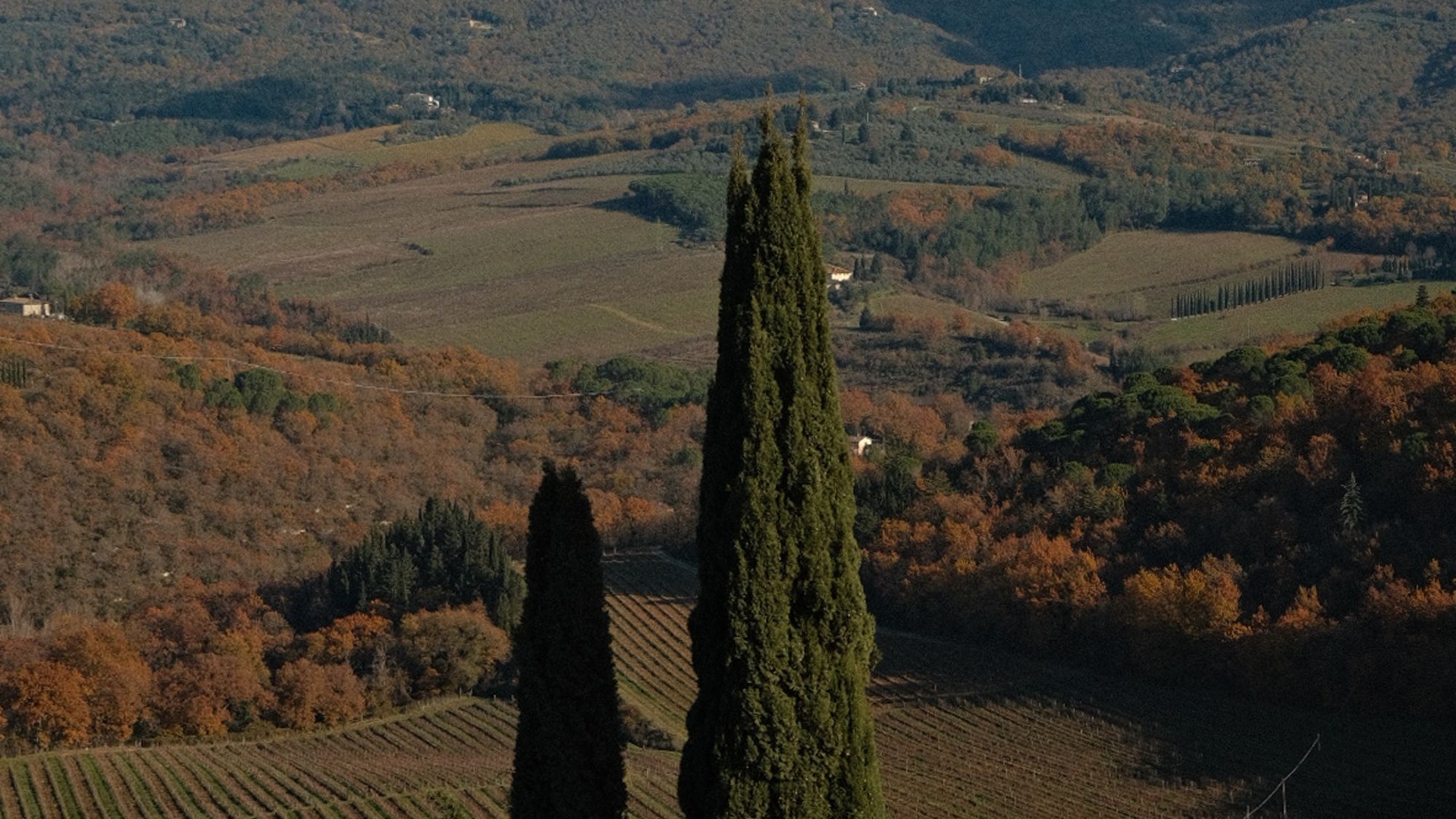
Ask a wine-focused traveler about Chianti and nine times out of ten they mean Chianti Classico, the famous black-rooster zone stretching between Florence and Siena. Fair enough — it earns the attention. But tucked into the hills northeast of Florence, in the opposite direction from the crowds, sits a much smaller, much quieter sub-zone that many serious Tuscan producers will privately tell you makes some of the most age-worthy Sangiovese in the entire region: Chianti Rùfina. It’s the smallest of all the Chianti sub-zones by production volume, and arguably the one most overlooked by visitors who assume „Chianti“ means one single style of wine.
If you’ve already spent time working through Chianti Classico, Rùfina is the natural next chapter — a cooler, higher-altitude counterpoint that shows what Sangiovese does under different conditions, without the crowds or the tour buses.
Where It Sits, and Why That Matters
Chianti Rùfina lies roughly 30 to 40 minutes northeast of Florence, in the upper Sieve River valley, hemmed in by the Apennine foothills. It is by far the smallest of the eight Chianti sub-zones — its total vineyard area is a fraction of Chianti Classico’s — and that scarcity is part of the story. Fewer producers, fewer bottles, and a terroir shaped by altitude and mountain proximity rather than the gentler, sun-drenched hills further south.
This geography gives Rùfina a genuinely different climate profile. The Apennines to the north and east funnel cooler air down into the valley, days can be warm but nights drop noticeably, and the diurnal temperature swing is larger than almost anywhere else in the wider Chianti area. For Sangiovese, a grape that thrives on exactly this kind of day-night contrast, the result is wine with unusually high acidity, firm tannin, and a certain austere, mineral edge that producers further south rarely achieve.
The Wine: Sangiovese with a Cooler Accent
Like all Chianti sub-zones, Rùfina wines must be made predominantly from Sangiovese, and here too the best producers push toward very high percentages, often 90% or more. What sets the finished wine apart is character rather than composition. Where a Chianti Classico from Panzano might show ripe cherry and a certain generosity on the palate, a Chianti Rùfina from the same vintage will typically show more red currant and pomegranate, sharper acidity, a leaner frame, and tannins that need real time in the bottle to soften.
This is not a wine built for immediate gratification, and that’s precisely its appeal to collectors and serious drinkers. Rùfina wines, particularly the Riserva bottlings, are frequently cited by Tuscan sommeliers as among the longest-lived Sangiovese-based wines produced anywhere, with well-stored examples from top producers still showing beautifully after fifteen or twenty years — a claim relatively few Chianti Classico bottles can make with the same consistency.
A Region Defined by a Handful of Estates
Because Chianti Rùfina is so small, its reputation rests disproportionately on a small number of historically significant estates rather than a dense patchwork of family producers the way Chianti Classico does. Several of these properties have documented winemaking histories stretching back centuries, and a handful are genuinely aristocratic estates — grand villas with working cellars beneath them, still producing wine using vineyards that have been cultivated by the same families for generations.
This gives a Rùfina estate visit a slightly different texture than the more casual, family-kitchen-table tastings common further south. Expect a bit more formality, often a proper guided tour through historic cellars alongside the tasting itself, and a genuine sense of stepping into Tuscan agricultural history rather than a modern hospitality operation bolted onto a working farm. That said, appointments are still essential almost everywhere — this remains a working wine region first, not a tourist circuit, and spontaneous walk-ins are the exception rather than the rule.
The Town of Rùfina and the Surrounding Villages
The zone takes its name from the small town of Rùfina itself, a modest, unglamorous place that nonetheless serves as the practical hub for the region — home to the local wine consortium and a small but worthwhile wine museum housed in a historic villa, useful for anyone who wants context before heading out to the estates themselves.
Beyond the town, the zone spreads across a scattering of small villages and hamlets along the Sieve valley, most of them little more than a church, a handful of houses, and vineyards climbing the hillsides beyond. Pontassieve, slightly larger and sitting closer to Florence, makes a reasonable base if you’d rather not commit to a full countryside stay, while Dicomano and Londa, further up the valley, sit deeper into the cooler, more mountainous terrain that gives Rùfina wine its distinctive edge.
Unlike Chianti Classico’s well-worn village-hopping day trip, a day in Rùfina tends to center on one or two estate visits with a slower, more contemplative pace in between — a reflection of how few visitors pass through and how little the region has built up around tourism.
Chianti Rùfina vs. Chianti Classico
Climate
Rùfina: cooler, higher altitude, sharper day-night swing. Classico: warmer, more Mediterranean, gentler nights.
Wine style
Rùfina: leaner, higher acid, mineral, built for long aging. Classico: rounder, riper fruit, more immediately approachable.
Producer landscape
Rùfina: a small number of historic, often grand estates. Classico: hundreds of producers, from tiny family plots to large historic houses.
Visitor experience
Rùfina: quiet, slower, appointment-only, little tourism infrastructure. Classico: well-developed for visitors, village-hopping day trips, easier logistics.
Chianti Rùfina at a Glance
| Location / Base | Character | Best For |
|---|---|---|
| Rùfina (town) | Small hub, consortium and wine museum | Orientation before estate visits |
| Pontassieve | Larger, closer to Florence | A lighter countryside base |
| Dicomano | Deeper valley, mountain proximity | A quieter, more remote day |
| Londa | Cool, high, understated | Serious tasters chasing structure |
Food in the Rùfina Valley
The Sieve valley’s food culture follows the same understated, ingredient-first logic as the wine. Expect hearty, mountain-adjacent Tuscan cooking rather than the more refined trattoria fare of central Florence: game dishes in the cooler months, chestnut-based specialties from the nearby forests, and simple grilled meats that hold their own against a young, high-acid Rùfina red. Pecorino and cured meats remain a constant across all of Tuscany, and here they’re often served with a rougher, more rustic bread than you’ll find in the city, exactly the kind of pairing that makes a Rùfina Riserva’s firm tannin feel purposeful rather than austere.
Because the region sees so few visitors, restaurant options are sparser and more locally oriented than in Chianti Classico’s tourist-friendly villages — reason enough to ask any estate you visit for a lunch recommendation, since they’ll usually know exactly which small, unmarked place nearby is worth the detour.
Best Time to Visit
Rùfina’s cooler climate makes it a genuinely pleasant option even in the heart of summer, when Chianti Classico’s more exposed hillsides can feel relentless. July and August here are warm rather than punishing, and the altitude brings real relief once the sun starts to dip. That said, harvest season in late September and October remains the standout window, just as it does further south — the valley’s steep, forested hills turn color earlier than the gentler Classico landscape, and estates are at their most active and welcoming to visitors who book ahead.
Spring is quieter still, cooler than in Chianti Classico, and worth considering only if you don’t mind the occasional rainy day trading off against near-total solitude on the estate visits you do manage to book.
Combining Rùfina with the Rest of a Tuscany Trip
Because Rùfina sits so close to Florence, it slots naturally into a Tuscany itinerary as a contrast day rather than a destination in its own right. Many visitors spend a day in Chianti Classico’s villages, a second day working through Rùfina’s quieter estates, and use Florence itself as the base connecting the two — a far more efficient way to understand the range of what Sangiovese can do than sticking to a single sub-zone.
If the itinerary continues beyond Tuscany, the contrast can go further still. Trading vineyard hillsides for open water is one of the more satisfying pivots an Italy trip can make, and Sicily’s best bays and coves for swimming, yachts, and boat trips is worth reading before booking the coastal half of a trip that starts in these cooler northern hills.
Owning a Piece of the Valley
Rùfina’s relative obscurity, compared to the far more sought-after (and far more expensive) Chianti Classico zone, makes it an interesting corner of Tuscany for anyone quietly weighing a countryside property purchase. Restored farmhouses and smaller vineyard parcels here can represent meaningful value relative to the more famous zones further south, precisely because so few buyers think to look this far northeast of Florence. Our real estate coverage is a useful starting point if a Rùfina afternoon has you doing the mental math on what a small stone farmhouse in these hills might actually cost.
Don’t Land Without a Plan for Connectivity
Rùfina’s appeal is precisely its lack of tourist infrastructure, but that cuts both ways — signal can be patchy in the deeper parts of the valley, estate visits are appointment-only and often confirmed by a quick message the morning of, and finding your way to an unmarked farmhouse tasting room without reliable navigation is a genuinely frustrating way to lose half a day. Sorting out an eSIM before you travel solves this cleanly and takes only a few minutes to set up. Our full guide to staying connected with an eSIM walks through exactly how to do it, and it’s especially worth doing before a day built around a region this quiet.
The Takeaway
Chianti Rùfina will never draw the crowds that Chianti Classico does, and that is precisely the point. It’s a small, cool-climate corner of Tuscany producing some of the region’s longest-lived, most structured Sangiovese, visited by a fraction of the travelers who pass through the more famous zone just twenty minutes to the south. For anyone who has already done the Classico circuit and wants to see what else Sangiovese can become under different conditions, or who simply wants a quiet, uncrowded day of serious tasting close to Florence, Rùfina is very much worth the detour.
0 Kommentare zu „Chianti Rùfina: Tuscany’s Quietest Serious Wine Region“