Pelješac is the long, mountainous peninsula between Dubrovnik and Korčula, and it is where Croatia grows its most famous red grape, Plavac Mali. The best sites, Dingač and Postup, are vineyards so steep that they fall almost straight into the Adriatic, and on the inland side a handful of villages, above all Potomje, are lined with family cellars. Since the Pelješac Bridge opened in 2022, it is an easy drive from Dubrovnik, and the Orebić ferry links it to Korčula. This guide explains the wines, covers seven estates that list visitor hours, and gives a two day plan that also suits a partner who would rather walk the walls of Ston and eat oysters.
This article contains affiliate links. If you book through them, we may earn a small commission at no extra cost to you. Read our affiliate disclosure.
Quick answer: Pelješac wine in brief
- Best estate for a first visit: Korta Katarina in Orebić, a modern winery with a boutique hotel on the same estate.
- Best tasting experience: Saints Hills at Oskorušno, with barrel samples and a culinary format in a restored stone house, by reservation only.
- Best base: Orebić, for the sea, the Korčula ferry and short drives to Potomje and the Dingač slopes.
- Best months: May to June and September to early October. The Plavac Mali harvest usually falls in September, depending on the year.
- What to book ahead: a driver, Saints Hills, any food pairing, and hotels in Orebić and Korčula for July and August.
For the bigger picture, see our Croatia wine guide, and, to compare styles across the Adriatic, our guide to Italian wine regions.
Check prices and availability
Orebić puts you between the Dingač slopes and the Korčula ferry, with most of the cellars on this list within half an hour.
The wines in plain English
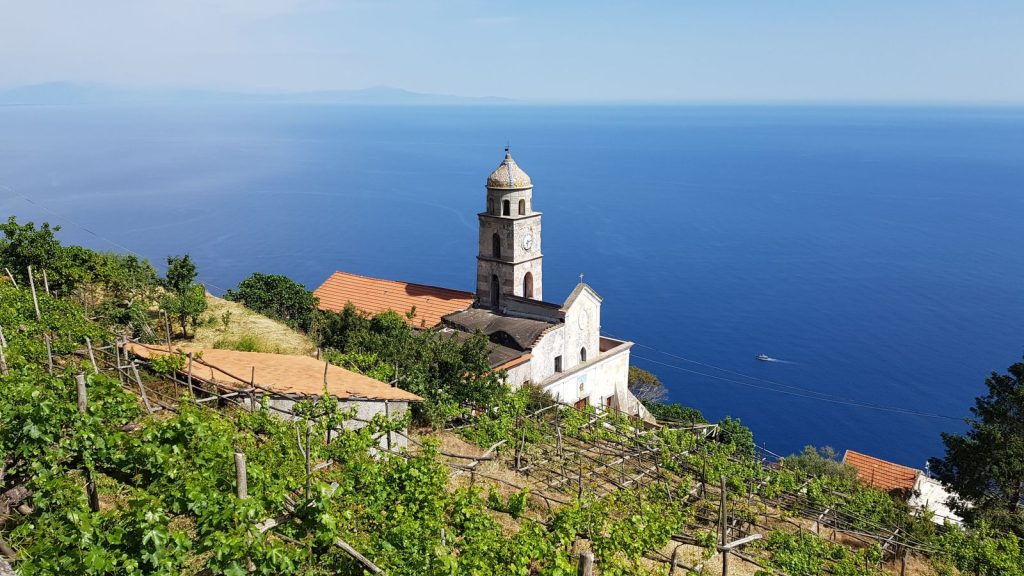
Pelješac wine is mostly red and mostly one grape. Some labels carry the grape name, others a place name.
- Plavac Mali: the indigenous red grape that dominates the peninsula. DNA research has shown it is a cross of Dobričić and Crljenak Kaštelanski, the grape known in Italy as Primitivo and in California as Zinfandel. If you know Puglia, you are meeting a close relative; our Puglia wine guide covers the Italian side of the family.
- Dingač: a protected vineyard area on the southwest-facing coast below Potomje. According to Croatia Week, it was granted international protection as a “famous wine” in 1964, and the designation covers 758 hectares, of which more than 78 are planted. Dingač is the peninsula’s most prestigious label.
- Postup: the second protected site, on the slopes near the entrance to Orebić. Producers generally position it just below Dingač.
- Plain Plavac Mali: wines from inland vineyards around Potomje, Kuna and Ponikve, often the everyday bottle on restaurant lists.
- The rest: some cellars also pour Pošip and Rukatac (whites), Plavac Mali rosé and Prošek, a traditional sweet wine. For island whites, see our Korčula and Hvar wine guide.
The slopes and the Dingač tunnel
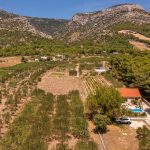
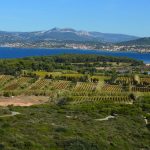
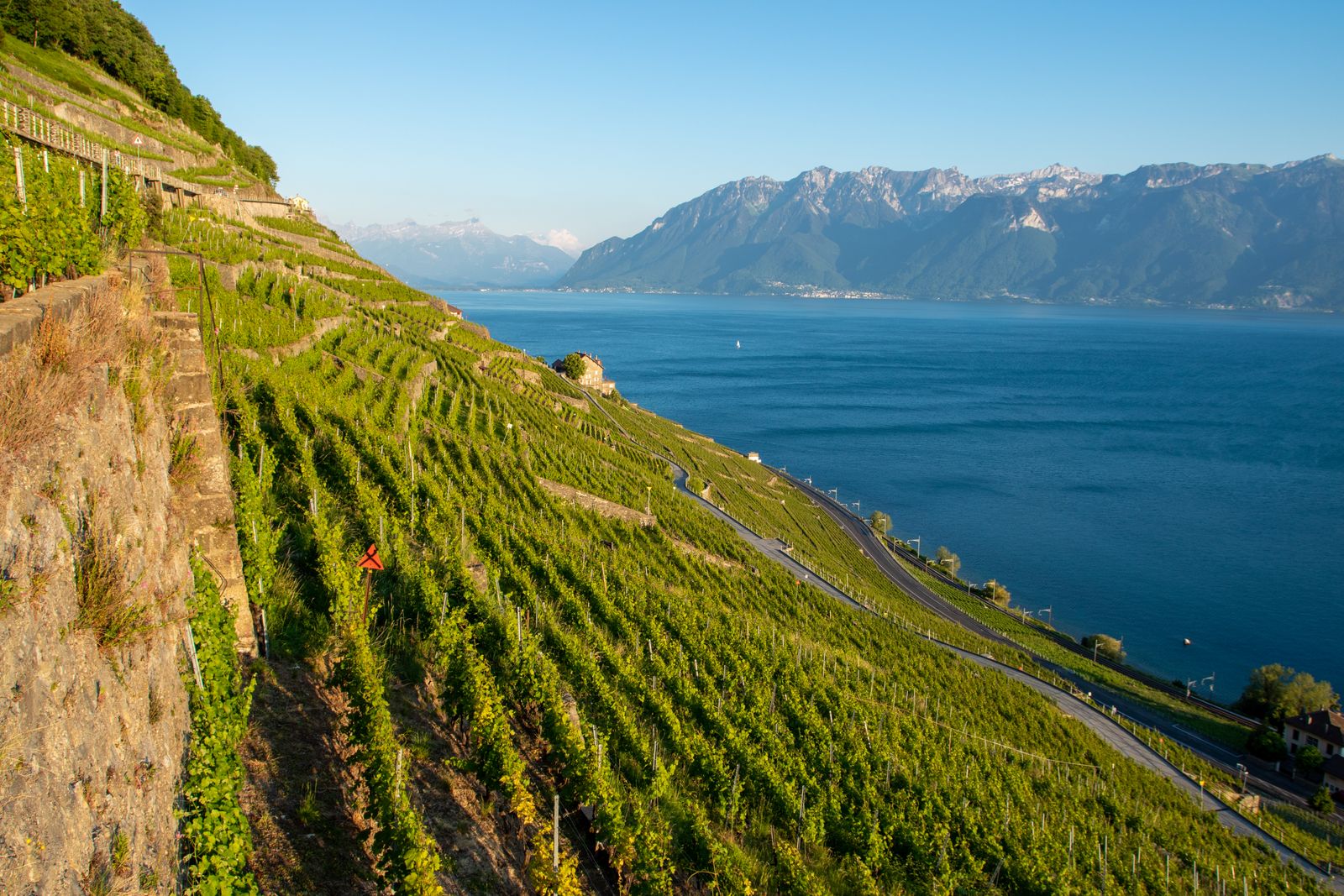
The Dingač vineyards sit on the sea side of a ridge, with Potomje on the inland side. In 1975 the local cooperative financed a 400 metre tunnel through the rock, opened on 29 November that year, and it is still the single-lane route from Potomje to the vineyards and the small beaches below. Producers describe slopes of up to about 50 degrees, worked largely by hand. Drive through for the view of just how vertical these vineyards are.
The wineries: seven estates that list visitor hours
All seven list visitor hours in the Ston tourist board’s official wine brochure (the 2024 edition is the most recent we found). We could not confirm 2026 hours for every estate, and none publishes 2026 prices on a source we could check, so confirm with the estate before you go. Times are approximate drives from Orebić.
Korta Katarina, Orebić
A modern winery set up by an American couple, Lee and Penny Anderson, at the edge of Orebić, which released its first vintage in 2006. It sits steps from the estate’s eight-suite villa hotel and the new seaside Hotel Katarina, which opened in April 2026, and tasting formats range from a short guided tasting to tapas or a longer food pairing.
- Opening: our research turned up contradictory information here. The Ston tourist board brochure lists weekdays 08:00 to 16:00 out of season and daily opening in season, while a major booking platform lists Monday to Friday only and closed at weekends. Confirm with the winery before planning a weekend visit.
- Duration, languages, booking: booking platforms list about one to two hours, in English; book ahead, especially for food pairings.
- Distance: in Orebić itself.
Saints Hills, Oskorušno
Saints Hills makes wine from Dingač and from Komarna on the mainland coast, plus a white from Istria. Its cellar is a restored stone house in Oskorušno. Tastings include a “treasury” room, barrel samples and a culinary experience, and its booking page offers three, four or five wines with optional Dalmatian tapas.
- Opening: the 2024 brochure lists the experience from May to September, Tuesday, Thursday and Saturday 17:00 to 23:00 and Wednesday and Friday 13:00 to 19:00, closed Mondays, with winter visits by request. Check the 2026 schedule.
- Booking: reservation only; ask about duration and languages.
- Distance: about 15 to 20 minutes.
Matuško, Potomje
One of the larger family wineries in Potomje, beside the Dingač tunnel. The range runs from Dingač and Postup to Rukatac, Pošip and Chardonnay, with long barrel cellars below the shop.
- Opening: daily 08:00 to 20:00 according to the 2024 brochure.
- Booking, duration, languages: not published; book for a guided cellar visit.
- Distance: about 15 to 20 minutes.
Madirazza, Potomje
Another Potomje producer, making wines from both Postup and Dingač, with a production capacity the tourist board puts at about 600,000 litres. A useful second stop in the same village.
- Opening: daily 08:00 to 21:00 according to the 2024 brochure.
- Booking, duration and languages: not published; call ahead for a guided tasting.
- Distance: about 15 to 20 minutes.
Vinarija Dingač, Potomje
The Dingač cooperative, by far the biggest producer in the area with around 290 member families, sits beside the tunnel entrance. Its tasting and sales area is the simplest stop on the peninsula.
- Opening: June to October, 08:00 to 20:00 according to the 2024 brochure. Outside those months, contact the cooperative.
- Booking: not needed for the shop; ask ahead for a group tasting.
- Distance: about 15 to 20 minutes.
Grgić Vina, Trstenik
Founded in 1996 by Miljenko Grgić, the Croatian-born Napa Valley winemaker, in the small harbour village of Trstenik on the north coast of the peninsula. The focus is Pošip and Plavac Mali. A short detour from Potomje.
- Opening: April to November, 09:00 to 17:00, according to both the Ston and Dubrovnik-Neretva tourist boards.
- Booking, duration and languages: not published; email or call ahead.
- Distance: about 25 to 30 minutes.
Miloš, Ponikve (near Ston)
A family winery in Ponikve, a few minutes from Ston, focused on Plavac Mali made with a natural, low-intervention approach. Its best-known red is Stagnum, named after the Latin for Ston. It fits neatly into a day of walls, salt pans and oysters in Ston.
- Opening: daily 08:00 to 20:00 according to the 2024 brochure.
- Booking, duration and languages: not published; book ahead for a guided tasting.
- Distance: about 50 minutes from Orebić, roughly 1 hour from Dubrovnik.
Also in Potomje, the small Bura-Mrgudić cellar (listed by the tourist board as Podrum Bura) opens May to October by request only.
Comparison table
| Estate | Village | Listed opening | Best for |
|---|---|---|---|
| Korta Katarina | Orebić | Sources disagree on weekends | First visit, food pairing |
| Saints Hills | Oskorušno | May to Sept, set days | A special occasion |
| Matuško | Potomje | Daily | Cellars and a broad range |
| Madirazza | Potomje | Daily | Dingač and Postup side by side |
| Vinarija Dingač | Potomje | June to Oct | A quick stop by the tunnel |
| Grgić Vina | Trstenik | April to Nov | Pošip, a harbour lunch |
| Miloš | Ponikve | Daily | Combining with Ston |
A 2 day Pelješac itinerary
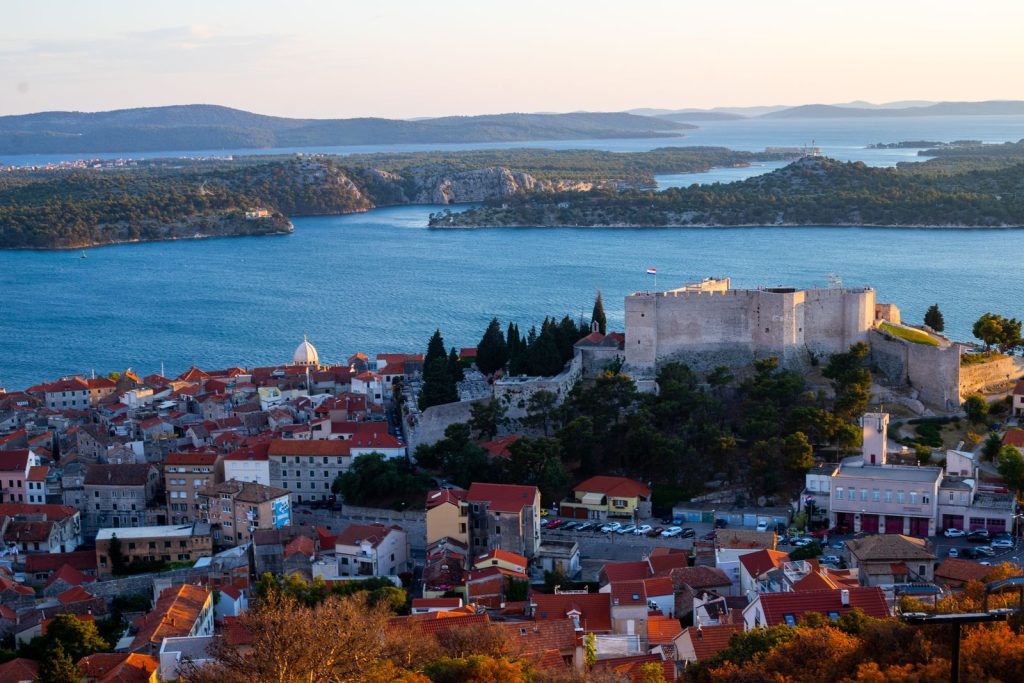
From Dubrovnik to Orebić, with the option of continuing to Korčula. Driving times are approximate.
Day 1: Ston, oysters and Potomje
- Morning: drive from Dubrovnik to Ston across the Pelješac Bridge, about 1 hour. Walk the Ston walls, begun in 1358 after Dubrovnik acquired Ston in 1333, and see the salt pans, still worked today.
- Lunch: oysters and mussels from the Bay of Mali Ston, where shellfish have been farmed since Roman times, at one of the waterside restaurants in Mali Ston.
- Afternoon: a tasting at Miloš in Ponikve, five minutes away, then about 45 to 50 minutes along the peninsula to Potomje for Matuško or Madirazza.
- Early evening: drive through the Dingač tunnel to see the slopes, then 15 to 20 minutes on to Orebić.
Day 2: Orebić, Saints Hills and Korčula
- Morning: a tasting at Korta Katarina in Orebić, or a detour to Grgić Vina in Trstenik (about 25 to 30 minutes).
- Midday: a swim on Orebić’s pebble beaches.
- Afternoon or evening: the Saints Hills experience at Oskorušno, about 15 to 20 minutes away, timed to its afternoon or evening slots.
- Option: take the short ferry to Korčula and spend the night in the old town; our Korčula and Pelješac guide covers the island.
Use a driver. Roads are narrow, the tunnel is single lane and tastings add up. Our research suggests Croatia’s blood alcohol limit is 0.5 g/kg for most drivers and zero for drivers under 24 and professional drivers, but we could not confirm the current rule on an official source, so check it with the Croatian Auto Club (HAK) before you travel. Book a private driver or guided tour from Dubrovnik or Korčula.
Coming from Italy? A seasonal Jadrolinija car ferry normally links Bari with Dubrovnik in summer (all its international sailings are suspended until 5 January 2027, so check the timetable), so Primitivo in Puglia pairs neatly with Plavac Mali here.
Best months, events and practical tips
- May and June: green vineyards, warm sea, most cellars open.
- July and August: everything open, but the busiest roads and ferry queues.
- September to early October: harvest, usually September for Plavac Mali; call ahead as cellars are busy.
- November to April: many smaller cellars open by request only.
Events: the Dingač Festival in Potomje was held in late June in 2024, and the Pelješac Wine Cellar Open Days, with guided cellar visits from Ston to Orebić, in early December 2024. We could not find confirmed 2026 dates, so check the Dubrovnik-Neretva County tourist board’s events calendar.
Practical tips:
- Croatia uses the euro. Small family cellars may prefer cash, so carry some.
- Many family wineries have no booking system; call or email a few days ahead.
- From Dubrovnik, a full day is the minimum. From Korčula, the ferry to Orebić makes a half day possible.
Charlotte’s tip: split the day by interest
If one of you is less into wine, start in Ston: the walls, salt pans and an oyster lunch in Mali Ston are a highlight in their own right, while the wine lover slips away to Miloš for an hour. End in Orebić, where beaches and the Korčula ferry keep everyone happy.
Where to stay
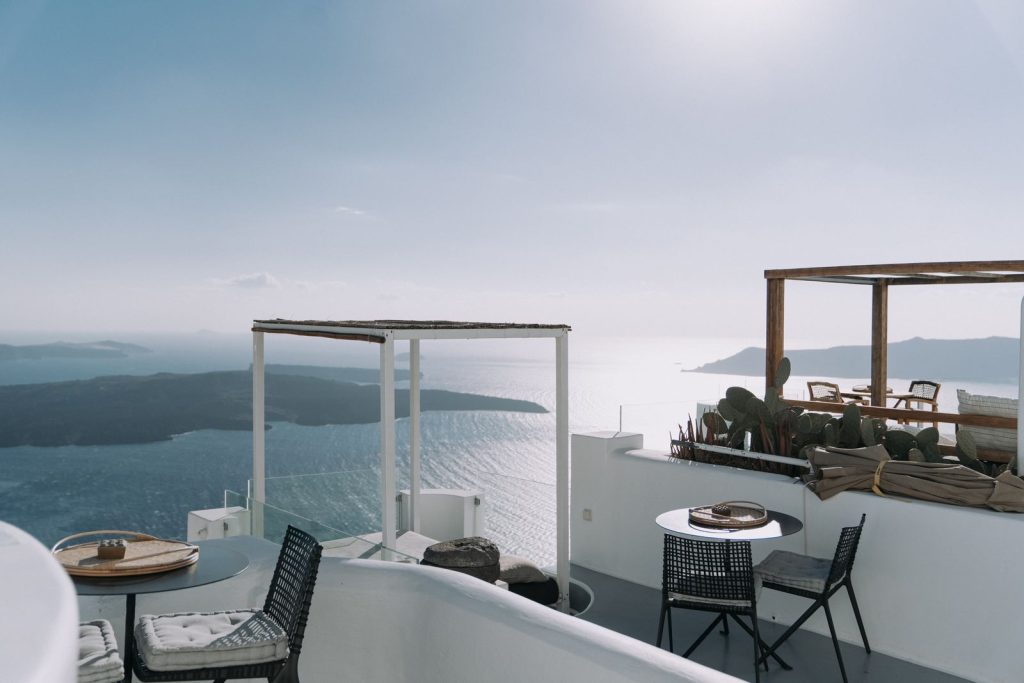
Pelješac has few luxury hotels, so most travellers stay in Orebić, Korčula or Dubrovnik. See also our guides to where to stay in Dubrovnik and the best luxury hotels in Croatia.
Villa Korta Katarina & Winery, Orebić
A 1930s villa on the hillside above the sea in Orebić, restored and opened as a hotel in 2018 by the owners of the Korta Katarina winery. There are eight suites, a pool, a restaurant and access to the sea, and it holds one Michelin Key and belongs to Relais & Châteaux. In April 2026 the same owners opened Hotel Katarina, a seaside boutique hotel in Orebić, which is worth comparing if the villa is full. Winter opening was not clear from our sources, so ask the hotel.
Best for: staying at the winery.
Check rates at Villa Korta Katarina & Winery
Lešić Dimitri Palace, Korčula
Residences set in an 18th-century bishop’s palace and medieval houses in pedestrianised Korčula old town, a short walk from the harbour, with the LD restaurant on site. Published sources disagree on the number of residences and on winter opening, so check with the hotel.
Best for: combining Pelješac wine with an island stay.
Check rates at Lešić Dimitri Palace
Villa Dubrovnik, Dubrovnik
A five-star hotel on terraces above the sea, about 1.3 km east of the Old Town, with a shuttle into town (check whether it runs by boat or road), an indoor pool and a sea platform for swimming. It closes over the winter; ask the hotel for this year’s dates.
Best for: a Pelješac day trip from a Dubrovnik base.
Check rates at Villa Dubrovnik
Hotel Excelsior Dubrovnik, Dubrovnik
A five-star waterfront hotel in Ploče, around 600 m from the Old Town, with an indoor pool, a spa and bathing terraces with direct sea access. Some restaurants and outdoor services are seasonal.
Best for: shoulder season trips.
Check rates at Hotel Excelsior Dubrovnik
Check prices and availability
Compare villas, apartments and small hotels in Orebić, close to the Dingač slopes and the ferry to Korčula.
Arriving by sea? See our Dubrovnik by boat guide for the route to Korčula, and our Dubrovnik travel guide covers the city itself.
Frequently Asked Questions
Can you visit Pelješac wineries as a day trip from Dubrovnik?
Yes. Ston is about an hour from Dubrovnik across the Pelješac Bridge and Potomje roughly another 45 to 50 minutes. Ston, two or three cellars and the tunnel fit into one day with a driver.
What is the difference between Dingač and Postup?
Both are protected Plavac Mali vineyard areas on steep coastal slopes. Dingač lies below Potomje, reached through the tunnel; Postup is near the entrance to Orebić. Producers generally position Dingač as their top wine.
Do I need to book wine tastings on Pelješac?
Saints Hills is reservation only. Larger cellars such as Matuško list daily opening, but book ahead for guided tastings, food pairings and small family cellars.
Is Pelješac worth it for someone who does not drink wine?
Yes. Ston’s walls and salt pans, Mali Ston oysters, Orebić’s beaches and Korčula fill a day without a tasting.