
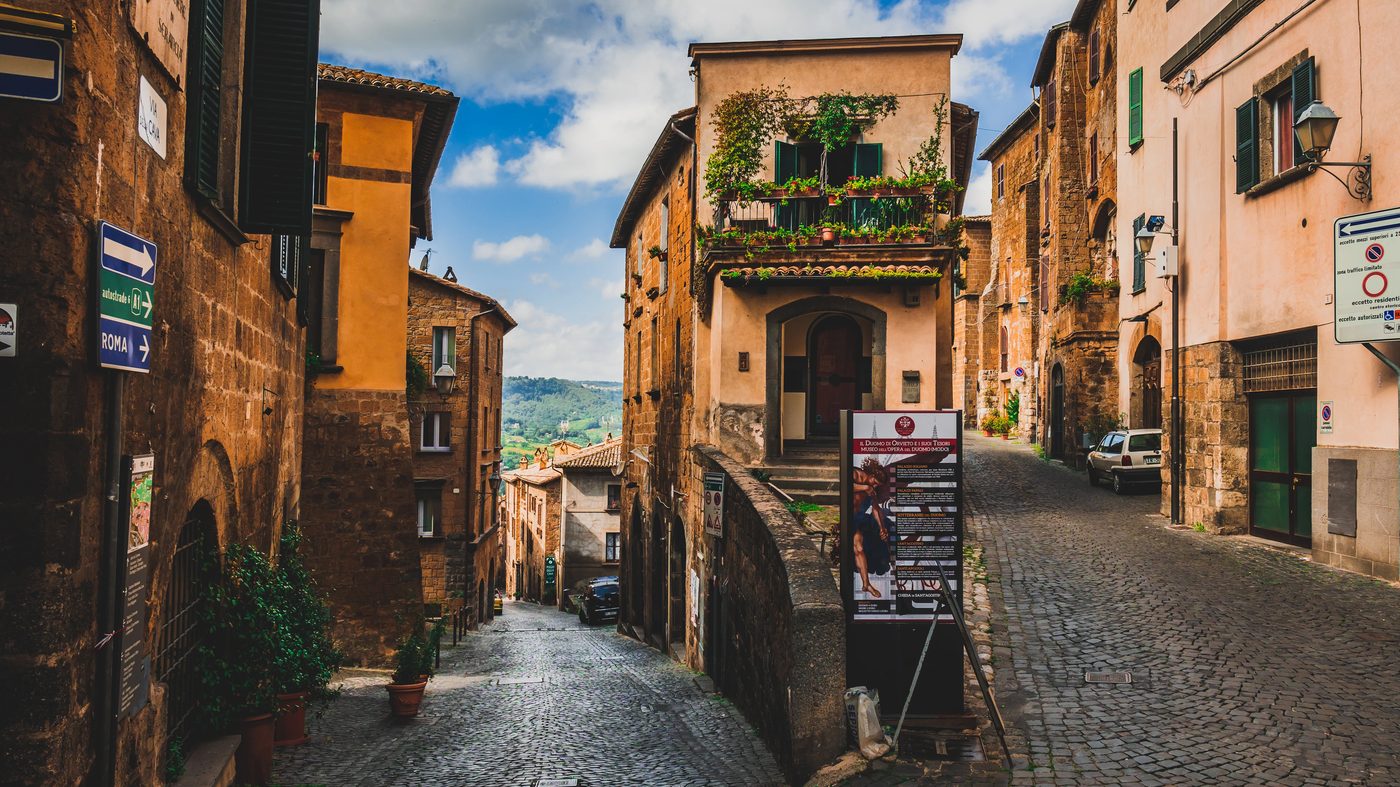
Umbria property represents one of the most compelling value propositions in Italian real estate. The region sits directly south of Tuscany, shares much of the same landscape – medieval hilltowns, vineyards, olive groves, cypress-lined roads – and yet commands significantly lower prices. For buyers priced out of Chianti or Montalcino, Umbria is not a consolation prize. It is a conscious choice with its own appellations, its own wine identity, and a quality of life that competes with anything Tuscany can offer.
Average residential property prices in Umbria sit at approximately €1,178 per square metre in early 2026. That is roughly half the price of comparable property in the Chianti Classico zone of Tuscany. Additionally, rental yields in Umbria are running at 8–9% gross – among the highest of any Italian region. For context on the wines produced here, our Italian wine regions guide covers Sagrantino di Montefalco and Orvieto in the Umbria section.
Why Umbria Property Is Attracting International Buyers
Umbria has long been a secondary consideration for buyers who came to Italy looking at Tuscany first. That dynamic is changing. Remote work flexibility, rising Tuscan prices and increased coverage of Umbrian hill towns – particularly Todi, Orvieto, Assisi, Spello and Montefalco – have brought a new wave of buyers to the region. Furthermore, the region’s rental market has tightened considerably: rents have risen approximately 10% year-over-year, significantly outpacing sale price growth and improving the investment case for buy-to-let purchasers.
The Twitter post below captures something that is increasingly discussed in international property circles – the Apennine longevity belt that runs through Umbria and the Marche, where local doctors and journalists have described centenarian rates above the national average. Whether that influences property decisions or simply adds to the region’s appeal as a place to live well, it is part of the Umbria story.
3/ Sibillini (Marche / Umbria). Reported, no academic studies.
The Apennine longevity belt by reputation. Visso, Castelluccio, Norcia, Acquasanta Terme. Italian press and local doctors describe centenarian rates above the national average, but no peer-reviewed Blue Zone-style… pic.twitter.com/M1GaK4MOmQ
— Alessandro Palombo (@thealepalombo) May 17, 2026
Price Comparison – Umbria Zone by Zone
The cards below show current property prices across Umbria’s key zones. However, prices vary considerably depending on property condition, views and proximity to historic town centres.
Montefalco
Vineyard / rural estate
€60k–€120k /ha
- Sagrantino DOCG vineyard land
- Fraction of Tuscany’s premium
- Small DOCG zone – scarcity rising
Montefalco estate
Working winery + residence
€800k–€3M
- Sagrantino DOCG production
- Agriturismo potential
- Often off-market
Perugia / Assisi
Residential
~€1,221 /m²
- Province of Perugia peak
- Yields 8%+ in rental hotspots
- University city demand in Perugia
Lake Trasimeno
Country estate / villa
From €1.5M
- Large frontage estates available
- Remote worker & lifestyle demand
- 3–7% annual appreciation
Todi / Orvieto / Spello
Townhouse / farmhouse
€900–€1,400 /m²
- Medieval stone architecture
- Picture-perfect settings
- Strong holiday rental demand
Province of Terni
Residential / rural
~€1,000–€1,067 /m²
- Umbria’s lowest prices
- Includes Narni & Amelia
- Renovation opportunity zone
Montefalco and Sagrantino – Umbria’s Wine Investment Case
The wine zone that most interests property investors in Umbria is Montefalco – specifically the Sagrantino di Montefalco DOCG. Sagrantino is a grape found almost nowhere else in the world: approximately 90% of all plantings are in Umbria, concentrated in a small zone of around 357 hectares around the medieval hilltop town of Montefalco.
The wine is extraordinary in its structure. Sagrantino has the highest natural tannin levels of any Italian variety and requires a minimum of 37 months of ageing before release – 12 months in oak and 4 months in bottle. The result is a wine that competes with Barolo and Brunello di Montalcino as one of Italy’s most ambitious and age-worthy reds. However, it remains significantly less known internationally, which has kept both wine prices and land prices lower than those appellations. That gap is narrowing. Therefore, buyers who understand the wine have a window that Tuscany no longer offers at comparable quality levels.
Vineyard land in the Montefalco zone is priced at approximately €60,000–€120,000 per hectare – a fraction of Chianti Classico (€150,000–€200,000) and far below Brunello di Montalcino (€250,000–€700,000). For a more detailed breakdown of Tuscan appellation pricing, see our Tuscany vineyard buying guide.
Umbria vs. Tuscany – A Direct Comparison
The comparison below reflects the most common decision international buyers face when considering central Italy. Both regions offer medieval towns, world-class wine, olive groves and the quintessential Italian countryside. However, the two markets have meaningfully different price profiles and investment characteristics.
What Buyers Need to Know Before Purchasing in Umbria
Umbria follows the same Italian property purchase process as Tuscany and Sicily. Foreign buyers from most countries – including the United States, the United Kingdom and Canada – can purchase on the same terms as Italian buyers. The notary (notaio) is the only person who can legally finalise a transfer of ownership, and due diligence on land registry status (Catasto) and DOC/DOCG registration is essential for agricultural purchases.
Renovation costs deserve careful attention. Many of Umbria’s most attractive properties – the old stone farmhouses, fortified hilltop buildings and rural estates – require significant investment to bring to a liveable standard. However, renovation costs in Umbria are generally lower than in Tuscany, and the regulatory environment for rural restoration is considered more manageable in many municipalities. Furthermore, EU funds and Italian state incentives for energy-efficient renovation have made upgrading historic rural properties more financially accessible since 2023.
The agriturismo model works particularly well in Umbria. Many buyers combine vineyard or olive production with accommodation, wine tasting and farm experiences. The dual revenue stream supports the investment case and benefits from favourable Italian tax treatment for agriturismo operations. Additionally, the region’s relative lack of mass tourism means guests who come to Umbria tend to be more engaged visitors – exactly the audience that supports premium agriturismo pricing.
Realistic Budget Ranges for Umbria Property
The following budget ranges represent realistic expectations for buyers entering the Umbrian market in 2026. However, condition, location and DOC status will significantly influence actual pricing within each band.
For buyers comparing Umbria with neighbouring regions, our complete Tuscany vineyard guide covers Chianti Classico, Brunello di Montalcino and Bolgheri in detail. For Sicily’s Etna zone – a very different but equally compelling alternative – see our Etna property guide. Our broader Italian wine regions guide provides the full context on Sagrantino, Orvieto and what makes Umbrian viticulture so distinctive.
0 Kommentare zu „Umbria Instead of Tuscany – What Property Really Costs“