June 2026 · Charlotte Hill
Why Taormina is the most compelling town in Sicily – and why the most discerning travellers, wine lovers, yacht crews, and property investors keep coming back.
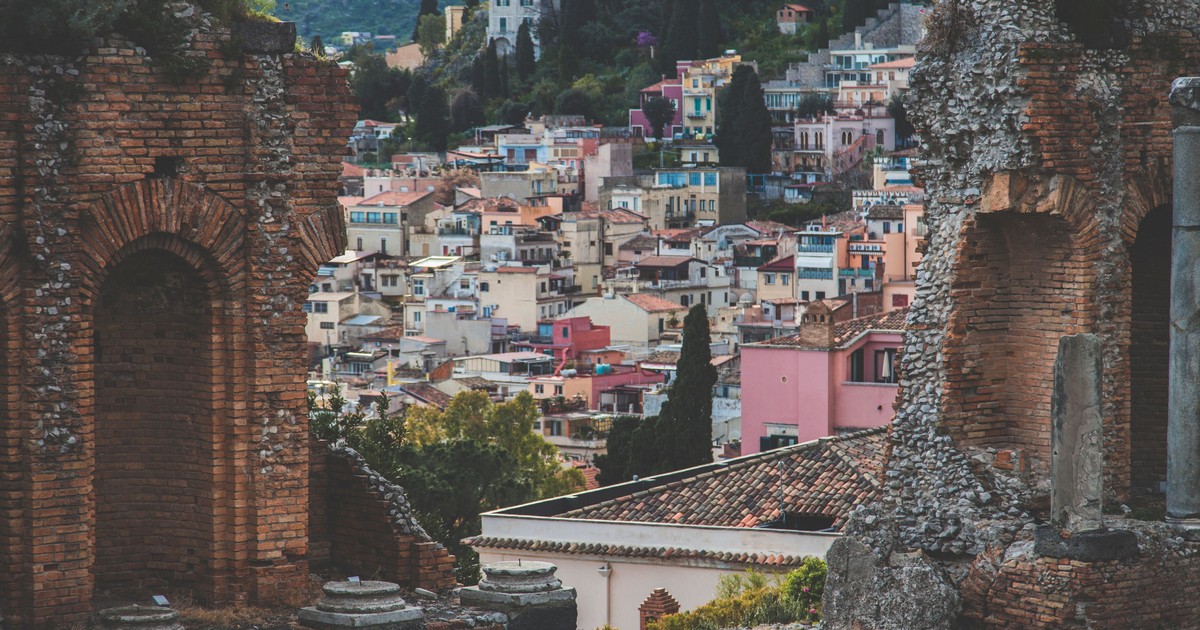
There is a particular kind of place that gets under your skin the first time and simply does not let go. Taormina is that kind of place. Perched at 200 metres above the Ionian Sea on a ridge of the Peloritani mountains, it holds a view that ranks among the finest in Europe: the ancient Greek theatre in the foreground, the blue arc of the coast below, and Mount Etna – Europe’s largest active volcano – rising in the distance, often dusted with snow even in spring. It is a view that has stopped travellers in their tracks since Goethe described it in 1787 as the greatest work of art and nature combined.
However, Taormina is considerably more than its view. In recent years, moreover, it has evolved into one of the most complete luxury destinations in the Mediterranean – a place where exceptional hotels, serious wine, active outdoor pursuits, yacht access to some of the clearest water in Italy, and a real estate market in confident growth all coexist within walking distance of a medieval main street. What follows is a complete guide to why Taormina deserves more than a day trip – and why, for many who discover it properly, it becomes something close to a necessity.
Why Taormina is Unlike Anywhere Else in Sicily
The Setting
Taormina occupies a natural terrace on the east coast of Sicily, positioned between the Ionian Sea and the slopes of Etna. The combination is, by any measure, extraordinary: you can swim in clear, sheltered water in the morning, walk a medieval corso lined with centuries-old palazzi in the afternoon, and look up from dinner to see a live volcano glowing orange against the night sky. Additionally, the town’s relatively compact size means that everything – theatre, beaches, restaurants, wine bars, viewpoints – is accessible on foot. No other town in Sicily offers this particular combination in the same concentrated form.
The Greek Theatre
The Teatro Antico di Taormina – founded in the 3rd century BC and substantially rebuilt by the Romans – is the second largest Greek theatre in Sicily after Syracuse, and arguably the most dramatically situated ancient site in Italy. The stage faces the sea; Etna fills the skyline behind it. Furthermore, the theatre is not merely a monument to visit – it is a living cultural venue, hosting an international arts festival each summer (Taormina Arte) with concerts, film screenings, and theatre performances running from June through August. Seeing a performance here at dusk, as the light fades over Etna and the first stars appear above the ruined columns, is one of the defining experiences of the Mediterranean.
Corso Umberto and the Old Town
The main street of Taormina – Corso Umberto – runs the length of the medieval town between two ancient city gates, Porta Messina and Porta Catania. Along it and in the lanes that branch off it, you find everything that makes the town work: the baroque Piazza IX Aprile with its terrace views directly over the sea, the Norman-Arab Palazzo Corvaja, the Cathedral of San Nicola, independent jewellery and ceramics shops, serious wine bars, and some of the best espresso in eastern Sicily. Moreover, because the town is pedestrianised for much of its length, the pace here is inherently slow – one of the reasons Taormina rewards those who stay rather than those who pass through.
Where to Stay in Taormina
Both the Belmond Grand Hotel Timeo and the San Domenico Palace should be booked three to six months in advance for July and August. Shoulder season – May, June, and September – offers meaningful value and considerably fewer crowds.
Etna Wine: The Vineyards Above the Volcano
Taormina sits at the edge of one of Italy’s most exciting wine zones – the Etna DOC, whose vineyards climb the northern and eastern flanks of the volcano at elevations between 400 and 1,000 metres. The primary grape is Nerello Mascalese: a thin-skinned, high-acid red that produces wines of striking delicacy and aromatic complexity, grown on ancient ungrafted vines in volcanic soils of ash, pumice, and lava. The comparison to Burgundy’s Pinot Noir is made frequently and, however much wine writers resist easy parallels, it is not unfounded.
The Contrada system – in which individual lava-flow zones on the volcano produce wines of measurably distinct character – has emerged over the past decade as the Etna wine world’s equivalent of premier and grand cru classification. Producers including Benanti (the pioneer of quality Etna wine, operating since 1988), Terre Nere, Frank Cornelissen, and Passopisciaro all offer visits and tastings by appointment. Furthermore, the drive from Taormina to the Etna wine country takes under forty minutes, making it one of the most rewarding half-day excursions from the town.
In Taormina itself, moreover, a growing number of serious wine bars and hotel restaurants have built Etna-focused lists that provide a thorough introduction without leaving town. The bar at the Grand Hotel Timeo pours Nerello Mascalese by the glass; the San Domenico’s wine list is among the most comprehensive Etna selections in the province. For whites, Carricante – grown on Etna’s eastern slope at altitude – produces wines of mineral precision that pair exceptionally well with the local seafood.
Sport and the Active Life Around Taormina
Hiking Mount Etna
The most dramatic active pursuit available from Taormina is the hike to the summit crater of Etna. Guided treks depart from the Rifugio Sapienza on the southern approach or from Piano Provenzana in the north – the northern route is closer to Taormina and generally preferred for the quality of the volcanic landscape it crosses. Guides are mandatory above 2,900 metres; a full crater-rim excursion takes between four and six hours and requires reasonable fitness but no technical climbing experience. Additionally, the views from the summit – when Etna permits them, which is not always – encompass the entire eastern coast of Sicily and, on clear days, the toe of the Italian mainland across the Strait of Messina.
Mountain Biking and Trail Running
The Etna Regional Park, which surrounds the volcano’s slopes, contains an extensive network of tracks suitable for mountain biking and trail running, from gentle lava-field trails at lower elevations to serious technical descents from altitude. Several operators in the area offer guided e-bike and mountain bike excursions across the lava fields, including the spectacular descent from the 1,800-metre zone through chestnut and birch forest to the coastal plain. Furthermore, the area around Castelmola – the hilltop village 5 kilometres above Taormina – has well-marked trails with outstanding views over the Strait of Messina.
Diving and Snorkelling at Isola Bella
Isola Bella – the small tidal island directly below Taormina, accessible by cable car and a short walk – is a protected marine reserve with some of the clearest water on the east coast of Sicily. The shallow bay is excellent for snorkelling; moray eels, octopus, sea bream, and a wide variety of Mediterranean reef fish are reliably present. For those who prefer scuba, dive centres operating from the Mazzarò waterfront offer PADI courses and guided dives to the rocky seabed formations around the island. Moreover, the water temperature in Taormina’s bay reaches 26–28°C by August and remains warm well into October.
Taormina by Yacht: The Ionian Coast from the Water
Taormina’s position on the Ionian Sea makes it one of the premier bases for yacht charter in the central Mediterranean. The coastline north and south of the town – dramatic limestone cliffs, sea caves, pebble coves accessible only by water, and the extraordinary backdrop of Etna viewed from the sea – is best understood from a boat. Day charters of motor yachts, sailing yachts, and catamarans depart from the small marinas at Mazzarò, Letojanni, and Giardini Naxos, with skippers and fully equipped boats available for half-day or full-day excursions.
The standard east-coast day itinerary from Taormina runs north to Isola Bella for a morning swim, then up the coast to the sea caves and arches at Capo Taormina, with stops for snorkelling in the clearest of the sheltered coves. A further day’s sail north reaches the Aeolian Islands – Vulcano, Lipari, and Panarea are all within comfortable range – with Stromboli’s continuous eruptions visible at night from the anchorage. Furthermore, for those arriving or departing by superyacht, the deeper anchorages at Mazzarò Bay and off Isola Bella are well established: Taormina appears regularly on the schedules of larger yachts transiting between Malta, the Aeolians, and the Amalfi Coast.
Day charter operators including Taormina Boat and Tripping Sicily offer private half-day and full-day excursions from Mazzarò and Letojanni. Bareboat and skippered charters for multi-day Aeolian itineraries are bookable from Milazzo (90 minutes by road). The cruising season runs from late April through October; June and September offer the best balance of weather, sea conditions, and availability.
Investing in Taormina: What the Property Market Looks Like
Taormina’s real estate market has been in consistent upward motion. According to data from Immobiliare.it, the average asking price for residential property reached €3,637 per square metre in early 2026 – representing an increase of more than 10% compared to February 2025, and a peak for the market over the preceding two years. Luxury properties listed through Sotheby’s International Realty and Lionard range from around €600,000 for a sea-view apartment in the historic centre to well above €15 million for significant cliff-top villas with private pools and direct sea access.
The drivers behind the appreciation are consistent and structural rather than speculative. Taormina has a genuinely constrained supply of property: the town sits on a narrow ridge, is largely pedestrianised, and has strict heritage protections that limit new development. Demand, however, continues to grow – both from international buyers seeking a second home in an internationally recognised luxury destination, and from investors drawn by the town’s strong short-term rental performance during a season that stretches from April through October.
Additionally, properties in the historic centre – particularly those with sea views or proximity to the Greek theatre – command the strongest premiums and the most consistent rental yields. Furthermore, the presence of Four Seasons and Belmond as anchor hotel brands has had a well-documented effect on surrounding property values: their continued investment in Taormina functions as a visible institutional endorsement of the market’s long-term trajectory.
Average asking price: €3,637/m² (February 2026, up 10.5% year-on-year). Luxury listings range from €600,000 to €15+ million. Strong short-term rental demand from April–October. Constrained supply due to heritage protections. Key agencies active in the market include Italy Sotheby’s International Realty, Lionard, and local specialists. Note: this article is for informational purposes only and does not constitute investment advice. Always consult a qualified Italian property lawyer and registered estate agent before purchasing.
Eating and Drinking Well in Taormina
Where to Eat
The restaurant scene in Taormina has risen considerably in quality over the past five years. At the top end, the San Domenico Palace’s dining room – operating with Michelin-star ambitions under Four Seasons management – offers technically ambitious Sicilian cooking in one of the most beautiful dining rooms in southern Italy. However, for a more local experience, the trattorias in the lanes off Corso Umberto serve the dishes that define the eastern Sicilian table: pasta alla Norma, fresh swordfish and tuna from the Ionian, granita and brioche for breakfast, and arancini from the street vendors at the market entrance near Porta Messina.
Coffee and the Piazza
Piazza IX Aprile is one of the great terrace squares in Italy – a wide stone platform cantilevered above the coast, with views south to Etna and north along the cliff coast. The bars on the square serve coffee to the kind of standard that Sicilians, who take espresso seriously, consider acceptable. Morning granita with a warm brioche here, watching the light come up over the Ionian, is the most reliable good start to a day that Taormina offers.
When to Visit Taormina
May, June, and September are the optimal months. In May and early June, the bougainvillea is at its most vivid, the sea is warming, the crowds are manageable, and the town has not yet entered its peak summer gear. September, meanwhile, brings harvest on Etna, a sea temperature at its peak for swimming, and the Taormina Arte festival still running into the month. October is underrated – the interior light turns golden, the tourist numbers drop sharply, and the town returns to something closer to its own rhythm.
July and August are the months of maximum international visibility – and maximum pressure. The hotels are at capacity, the Corso Umberto is crowded shoulder-to-shoulder in the evenings, and the cable car queues at Mazzarò test patience. However, for those who want to experience Taormina Arte at its fullest, or who are drawn to the sheer social energy of a Sicilian summer, July and August have their own particular intensity. Book everything – hotel, restaurant, cable car ticket, theatre seats – well in advance if visiting in these months. As a general rule, moreover, a stay of at least three nights is the minimum that allows Taormina to make its full case. Four or five is better still.
Charlotte Hill Taormina Sicily Italy Real Estate
June 2026 · Charlotte Hill
Why Taormina is the most compelling town in Sicily – and why the most discerning travellers, wine lovers, yacht crews, and property investors keep coming back.
There is a particular kind of place that gets under your skin the first time and simply does not let go. Taormina is that kind of place. Perched at 200 metres above the Ionian Sea on a ridge of the Peloritani mountains, it holds a view that ranks among the finest in Europe: the ancient Greek theatre in the foreground, the blue arc of the coast below, and Mount Etna – Europe’s largest active volcano – rising in the distance, often dusted with snow even in spring. It is a view that has stopped travellers in their tracks since Goethe described it in 1787 as the greatest work of art and nature combined.
However, Taormina is considerably more than its view. In recent years, moreover, it has evolved into one of the most complete luxury destinations in the Mediterranean – a place where exceptional hotels, serious wine, active outdoor pursuits, yacht access to some of the clearest water in Italy, and a real estate market in confident growth all coexist within walking distance of a medieval main street. What follows is a complete guide to why Taormina deserves more than a day trip – and why, for many who discover it properly, it becomes something close to a necessity.
Why Taormina is Unlike Anywhere Else in Sicily
The Setting
Taormina occupies a natural terrace on the east coast of Sicily, positioned between the Ionian Sea and the slopes of Etna. The combination is, by any measure, extraordinary: you can swim in clear, sheltered water in the morning, walk a medieval corso lined with centuries-old palazzi in the afternoon, and look up from dinner to see a live volcano glowing orange against the night sky. Additionally, the town’s relatively compact size means that everything – theatre, beaches, restaurants, wine bars, viewpoints – is accessible on foot. No other town in Sicily offers this particular combination in the same concentrated form.
The Greek Theatre
The Teatro Antico di Taormina – founded in the 3rd century BC and substantially rebuilt by the Romans – is the second largest Greek theatre in Sicily after Syracuse, and arguably the most dramatically situated ancient site in Italy. The stage faces the sea; Etna fills the skyline behind it. Furthermore, the theatre is not merely a monument to visit – it is a living cultural venue, hosting an international arts festival each summer (Taormina Arte) with concerts, film screenings, and theatre performances running from June through August. Seeing a performance here at dusk, as the light fades over Etna and the first stars appear above the ruined columns, is one of the defining experiences of the Mediterranean.
Corso Umberto and the Old Town
The main street of Taormina – Corso Umberto – runs the length of the medieval town between two ancient city gates, Porta Messina and Porta Catania. Along it and in the lanes that branch off it, you find everything that makes the town work: the baroque Piazza IX Aprile with its terrace views directly over the sea, the Norman-Arab Palazzo Corvaja, the Cathedral of San Nicola, independent jewellery and ceramics shops, serious wine bars, and some of the best espresso in eastern Sicily. Moreover, because the town is pedestrianised for much of its length, the pace here is inherently slow – one of the reasons Taormina rewards those who stay rather than those who pass through.
Where to Stay in Taormina
Both the Belmond Grand Hotel Timeo and the San Domenico Palace should be booked three to six months in advance for July and August. Shoulder season – May, June, and September – offers meaningful value and considerably fewer crowds.
Etna Wine: The Vineyards Above the Volcano
Taormina sits at the edge of one of Italy’s most exciting wine zones – the Etna DOC, whose vineyards climb the northern and eastern flanks of the volcano at elevations between 400 and 1,000 metres. The primary grape is Nerello Mascalese: a thin-skinned, high-acid red that produces wines of striking delicacy and aromatic complexity, grown on ancient ungrafted vines in volcanic soils of ash, pumice, and lava. The comparison to Burgundy’s Pinot Noir is made frequently and, however much wine writers resist easy parallels, it is not unfounded.
The Contrada system – in which individual lava-flow zones on the volcano produce wines of measurably distinct character – has emerged over the past decade as the Etna wine world’s equivalent of premier and grand cru classification. Producers including Benanti (the pioneer of quality Etna wine, operating since 1988), Terre Nere, Frank Cornelissen, and Passopisciaro all offer visits and tastings by appointment. Furthermore, the drive from Taormina to the Etna wine country takes under forty minutes, making it one of the most rewarding half-day excursions from the town.
In Taormina itself, moreover, a growing number of serious wine bars and hotel restaurants have built Etna-focused lists that provide a thorough introduction without leaving town. The bar at the Grand Hotel Timeo pours Nerello Mascalese by the glass; the San Domenico’s wine list is among the most comprehensive Etna selections in the province. For whites, Carricante – grown on Etna’s eastern slope at altitude – produces wines of mineral precision that pair exceptionally well with the local seafood.
Sport and the Active Life Around Taormina
Hiking Mount Etna
The most dramatic active pursuit available from Taormina is the hike to the summit crater of Etna. Guided treks depart from the Rifugio Sapienza on the southern approach or from Piano Provenzana in the north – the northern route is closer to Taormina and generally preferred for the quality of the volcanic landscape it crosses. Guides are mandatory above 2,900 metres; a full crater-rim excursion takes between four and six hours and requires reasonable fitness but no technical climbing experience. Additionally, the views from the summit – when Etna permits them, which is not always – encompass the entire eastern coast of Sicily and, on clear days, the toe of the Italian mainland across the Strait of Messina.
Mountain Biking and Trail Running
The Etna Regional Park, which surrounds the volcano’s slopes, contains an extensive network of tracks suitable for mountain biking and trail running, from gentle lava-field trails at lower elevations to serious technical descents from altitude. Several operators in the area offer guided e-bike and mountain bike excursions across the lava fields, including the spectacular descent from the 1,800-metre zone through chestnut and birch forest to the coastal plain. Furthermore, the area around Castelmola – the hilltop village 5 kilometres above Taormina – has well-marked trails with outstanding views over the Strait of Messina.
Diving and Snorkelling at Isola Bella
Isola Bella – the small tidal island directly below Taormina, accessible by cable car and a short walk – is a protected marine reserve with some of the clearest water on the east coast of Sicily. The shallow bay is excellent for snorkelling; moray eels, octopus, sea bream, and a wide variety of Mediterranean reef fish are reliably present. For those who prefer scuba, dive centres operating from the Mazzarò waterfront offer PADI courses and guided dives to the rocky seabed formations around the island. Moreover, the water temperature in Taormina’s bay reaches 26–28°C by August and remains warm well into October.
Taormina by Yacht: The Ionian Coast from the Water
Taormina’s position on the Ionian Sea makes it one of the premier bases for yacht charter in the central Mediterranean. The coastline north and south of the town – dramatic limestone cliffs, sea caves, pebble coves accessible only by water, and the extraordinary backdrop of Etna viewed from the sea – is best understood from a boat. Day charters of motor yachts, sailing yachts, and catamarans depart from the small marinas at Mazzarò, Letojanni, and Giardini Naxos, with skippers and fully equipped boats available for half-day or full-day excursions.
The standard east-coast day itinerary from Taormina runs north to Isola Bella for a morning swim, then up the coast to the sea caves and arches at Capo Taormina, with stops for snorkelling in the clearest of the sheltered coves. A further day’s sail north reaches the Aeolian Islands – Vulcano, Lipari, and Panarea are all within comfortable range – with Stromboli’s continuous eruptions visible at night from the anchorage. Furthermore, for those arriving or departing by superyacht, the deeper anchorages at Mazzarò Bay and off Isola Bella are well established: Taormina appears regularly on the schedules of larger yachts transiting between Malta, the Aeolians, and the Amalfi Coast.
Day charter operators including Taormina Boat and Tripping Sicily offer private half-day and full-day excursions from Mazzarò and Letojanni. Bareboat and skippered charters for multi-day Aeolian itineraries are bookable from Milazzo (90 minutes by road). The cruising season runs from late April through October; June and September offer the best balance of weather, sea conditions, and availability.
Investing in Taormina: What the Property Market Looks Like
Taormina’s real estate market has been in consistent upward motion. According to data from Immobiliare.it, the average asking price for residential property reached €3,637 per square metre in early 2026 – representing an increase of more than 10% compared to February 2025, and a peak for the market over the preceding two years. Luxury properties listed through Sotheby’s International Realty and Lionard range from around €600,000 for a sea-view apartment in the historic centre to well above €15 million for significant cliff-top villas with private pools and direct sea access.
The drivers behind the appreciation are consistent and structural rather than speculative. Taormina has a genuinely constrained supply of property: the town sits on a narrow ridge, is largely pedestrianised, and has strict heritage protections that limit new development. Demand, however, continues to grow – both from international buyers seeking a second home in an internationally recognised luxury destination, and from investors drawn by the town’s strong short-term rental performance during a season that stretches from April through October.
Additionally, properties in the historic centre – particularly those with sea views or proximity to the Greek theatre – command the strongest premiums and the most consistent rental yields. Furthermore, the presence of Four Seasons and Belmond as anchor hotel brands has had a well-documented effect on surrounding property values: their continued investment in Taormina functions as a visible institutional endorsement of the market’s long-term trajectory.
Average asking price: €3,637/m² (February 2026, up 10.5% year-on-year). Luxury listings range from €600,000 to €15+ million. Strong short-term rental demand from April–October. Constrained supply due to heritage protections. Key agencies active in the market include Italy Sotheby’s International Realty, Lionard, and local specialists. Note: this article is for informational purposes only and does not constitute investment advice. Always consult a qualified Italian property lawyer and registered estate agent before purchasing.
Eating and Drinking Well in Taormina
Where to Eat
The restaurant scene in Taormina has risen considerably in quality over the past five years. At the top end, the San Domenico Palace’s dining room – operating with Michelin-star ambitions under Four Seasons management – offers technically ambitious Sicilian cooking in one of the most beautiful dining rooms in southern Italy. However, for a more local experience, the trattorias in the lanes off Corso Umberto serve the dishes that define the eastern Sicilian table: pasta alla Norma, fresh swordfish and tuna from the Ionian, granita and brioche for breakfast, and arancini from the street vendors at the market entrance near Porta Messina.
Coffee and the Piazza
Piazza IX Aprile is one of the great terrace squares in Italy – a wide stone platform cantilevered above the coast, with views south to Etna and north along the cliff coast. The bars on the square serve coffee to the kind of standard that Sicilians, who take espresso seriously, consider acceptable. Morning granita with a warm brioche here, watching the light come up over the Ionian, is the most reliable good start to a day that Taormina offers.
When to Visit Taormina
May, June, and September are the optimal months. In May and early June, the bougainvillea is at its most vivid, the sea is warming, the crowds are manageable, and the town has not yet entered its peak summer gear. September, meanwhile, brings harvest on Etna, a sea temperature at its peak for swimming, and the Taormina Arte festival still running into the month. October is underrated – the interior light turns golden, the tourist numbers drop sharply, and the town returns to something closer to its own rhythm.
July and August are the months of maximum international visibility – and maximum pressure. The hotels are at capacity, the Corso Umberto is crowded shoulder-to-shoulder in the evenings, and the cable car queues at Mazzarò test patience. However, for those who want to experience Taormina Arte at its fullest, or who are drawn to the sheer social energy of a Sicilian summer, July and August have their own particular intensity. Book everything – hotel, restaurant, cable car ticket, theatre seats – well in advance if visiting in these months. As a general rule, moreover, a stay of at least three nights is the minimum that allows Taormina to make its full case. Four or five is better still.
Charlotte Hill Taormina Sicily Italy Real Estate
0 Kommentare zu „Why Taormina Keeps You Coming Back – Wine, Yachts, Sport and the Case for Staying Longer“